How social work interns are changing lives at Sacramento public libraries
AI-generated summary reviewed by our newsroom.
- Social work interns help patrons navigate homelessness, healthcare, and aid access.
- Libraries offer real-world training for students tackling systemic social service gaps.
- Program expansion signals demand for embedded social work in public library systems.
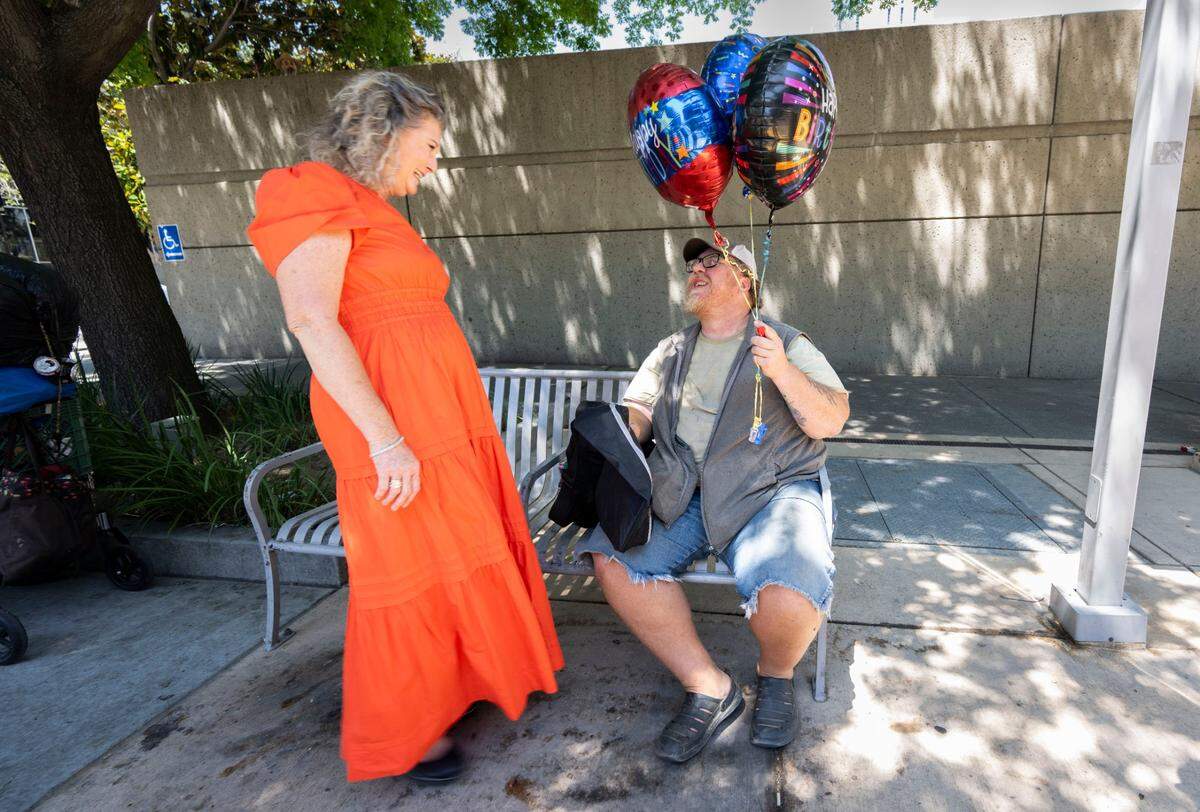
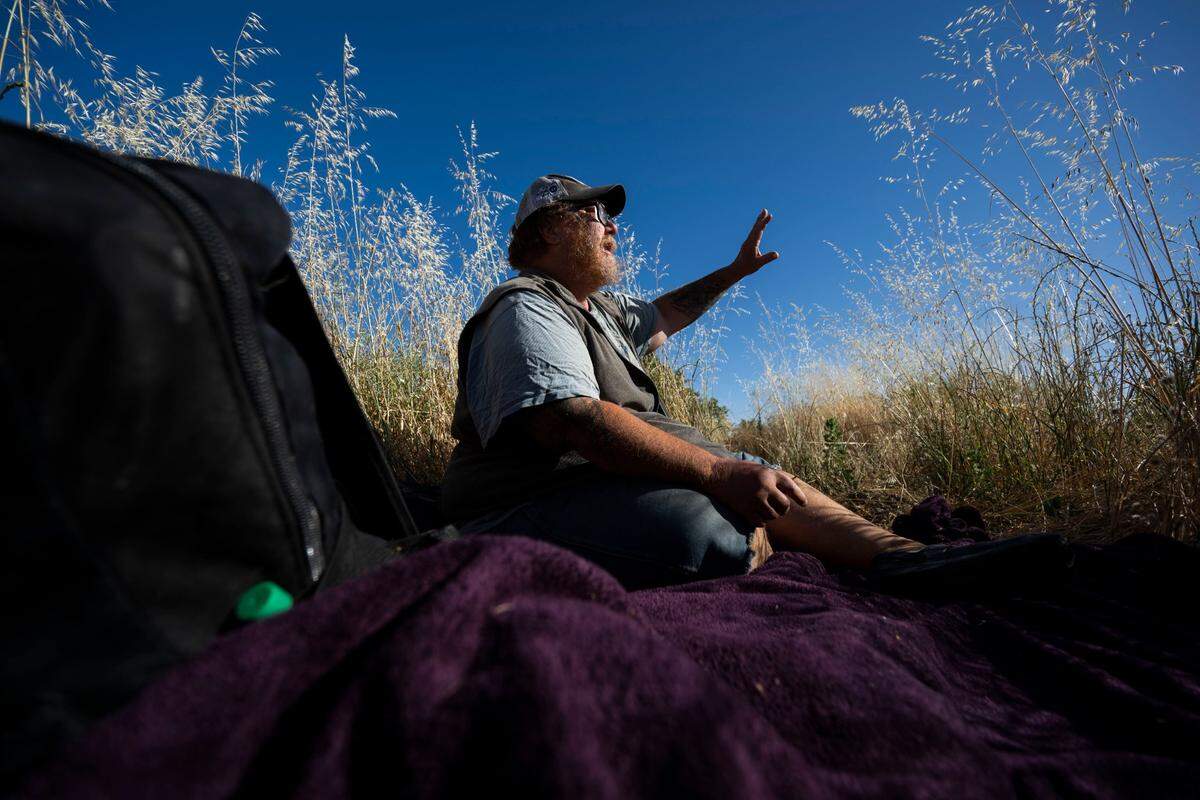
“That bench, that’s where I used to sleep,” Paul Jackson said, pointing across the street from the Sacramento Central Library. “I went to sleep over there one night. I woke up with one shoe, and my glasses were gone.”
Blind in one eye and living with seizures, Jackson was alone and struggling with access to services until he met Maria Montano, a social worker at the library. In less than two years, she’s become his lifeline, helping him navigate housing, disability applications and access to health care.
Jackson and hundreds of other Sacramentans’ lives have been touched by Montano and a team of student interns through a quiet but groundbreaking social work program at the public library.
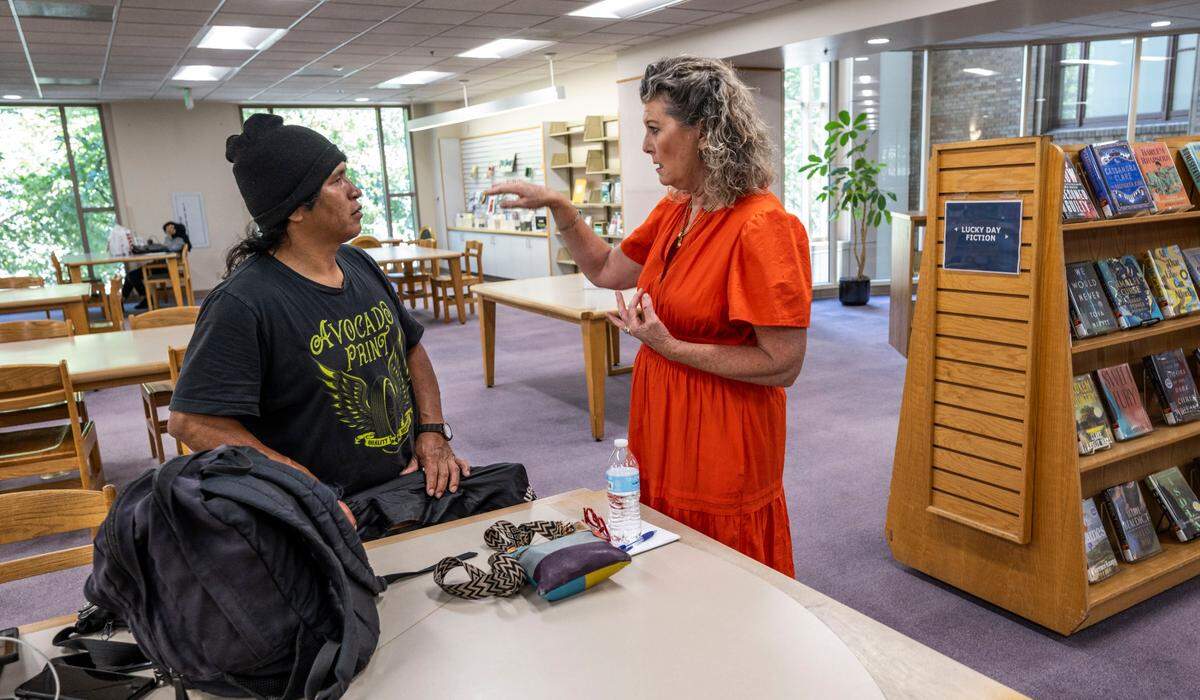
Montano described herself as “a social worker from A to Z,” assisting library patrons with overcoming housing instability, mental health crises, joblessness and other real-world hardships. And she’s training college students from across Northern California how to do the same.
Montano was recruited to be the inaugural social work lead at the Central Library by a longtime social worker who helped to train her. Crystal Sheffield, once a social worker at the Federal Defender’s Office for the Eastern District of California, had started her own consulting business, and the library contracted with her to create and launch its social work program.
Since 2023, Sheffield has been working with Montano to lead a transformation of Sacramento libraries into a lifeline for the community’s most vulnerable — and a rigorous frontline classroom for the next generation of social workers.
“Our community sees libraries as safe spaces where information can be sought without barriers, and those in need can seek resources and assistance,” said Liana Acevedo, the public services manager at the Sacramento Public Library.
While library staff can provide info on a range of topics, they cannot offer the level of support that patrons often requested, Acevedo said. Montano said librarians cannot handle sensitive personal information such as social security numbers that patrons must provide to social service agencies.
“Social work Interns offer in-depth computer assistance, provide individualized consultations for questions requiring resource referrals, and can assist with paperwork and applications,” Acevedo said.
A nontraditional role for public libraries
While the Sacramento Central Library used to have navigators to assist homeless residents and those with mental illness, the social work internship program takes advantage of a student population passionate about helping those facing hardships.
Of the thousands of public library branches across the nation, only about 160 of them offered a social work program like the one here in Sacramento in 2023. according to Sara Zettervall, author of “Whole Person Librarianship.” The first Library Social Work Conference will convene in October at the Richland Library in Columbia, South Carolina.
The Sacramento program has garnered attention from libraries in other counties, and they are looking for ways to partner with social work programs to help their patrons, said Lisa Marsh, director of field education at Sacramento State’s School of Social Work.
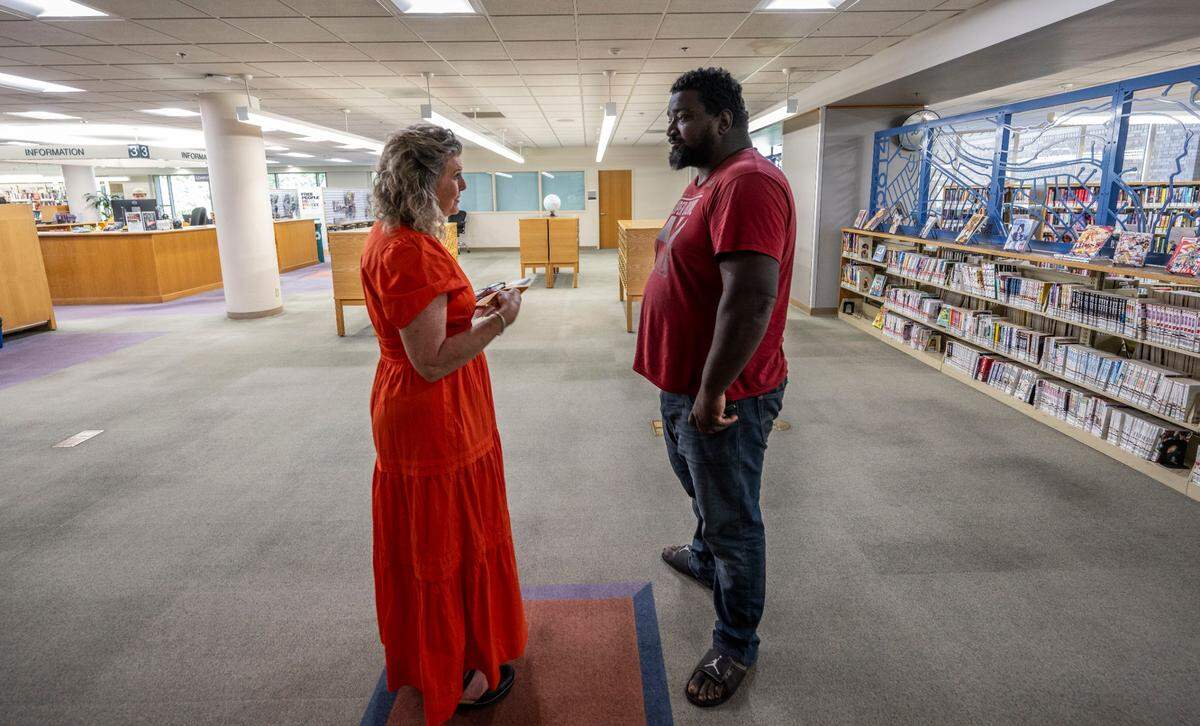
The tough part, she said, is that they haven’t been appropriated enough money to contract with a site supervisor like the Sacramento Public Library has done with Sheffield. By investing in a social work internship program like this one, Marsh said, communities are increasing the chances that students will want to return to their communities to work health care, government or nonprofit settings.
“It’s an unusual opportunity for them to really engage with community people,” Marsh said of the library internships. “It’s a little bit more informal. It’s a little more organic. Our students learn to be more adaptable, working in an area where there’s not a lot of predictability.”
Students must deepen their understanding of the social determinants of health, those non-medical factors like income, employment, job security and food security that affect people’s ability to access resources essential for health and well-being.
Not only do interns come from Sacramento State, they also come from UC Davis, UC Berkeley, and Cosumnes River College. The Central Library is moving the interns from a tucked-away third-floor room to a more visible second-floor space, reflecting their growing role, and they soon will be working two days a week in the Valley Hi/North Laguna and Southgate branches as well.
“Students have expressed appreciation for the real world practice of meeting people where they are both literally and figuratively,” Marsh said.
Some of this is taking students back to the roots of the profession when social workers were known as “friendly visitors,” Marsh said, but it’s also ensuring that students are comfortable with being uncomfortable, with being proactive, with operating in an environment of ambiguity.
He says he couldn’t have done it without help
Jackson said he had nowhere to go and no one to help until he and a buddy met Montano at the library. He was born at the Sacramento County Hospital in 1976, two years before it became the UC Davis Medical Center, but as a child, he moved around with family, living at times in Utah and Southern California.
He was living in Long Beach in 2018 when he was attacked and beaten on his way home from a bar. His head injuries resulted in an injury that required the removal of his left eye and left him suffering with seizures and pain.
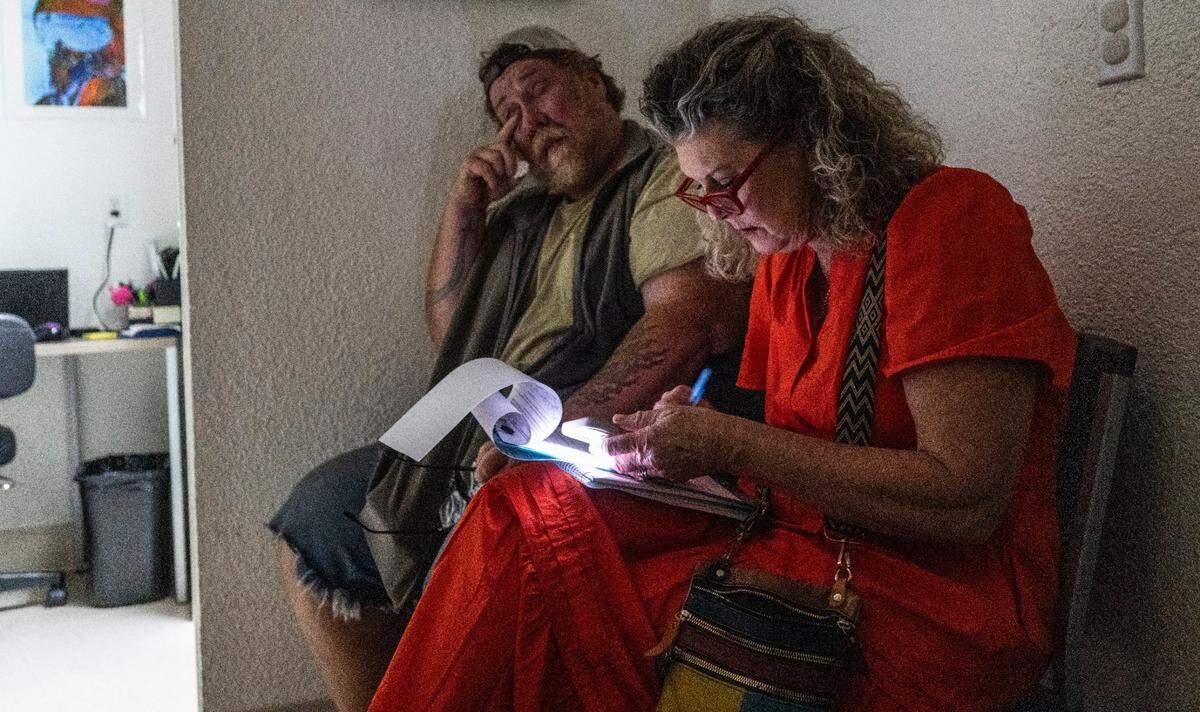
Jackson said he tried but found it impossible to find a specialist in the Medi-Cal network who would do the surgery to remove his eye. California’s Medi-Cal reimbursements were for many years so low that specialists said they couldn’t cover the costs of providing such complex procedures.
Then, Jackson said, he learned that the University of Utah’s Moran Eye Center would do the surgery if he paid a $150 deposit and made small incremental payments to cover the cost. Since he had lived in Salt Lake City for a short time as a child, he decided to relocate to get the care he desperately needed.
He worked as a dishwasher for a short time to save up the money he needed for a place to stay, but his seizures and other health problems became so debilitating that he frequently had to call in sick at work. Ultimately, he was terminated, so in 2023, he moved back to Sacramento where he’d lived until he was about 12 years old.
As he roughed it, he learned that, if he didn’t lock his belongings to the bench where he slept, they would be stolen in the night. He went three months without glasses for just that reason, until Montano connected him to health care providers and helped him get replacements.
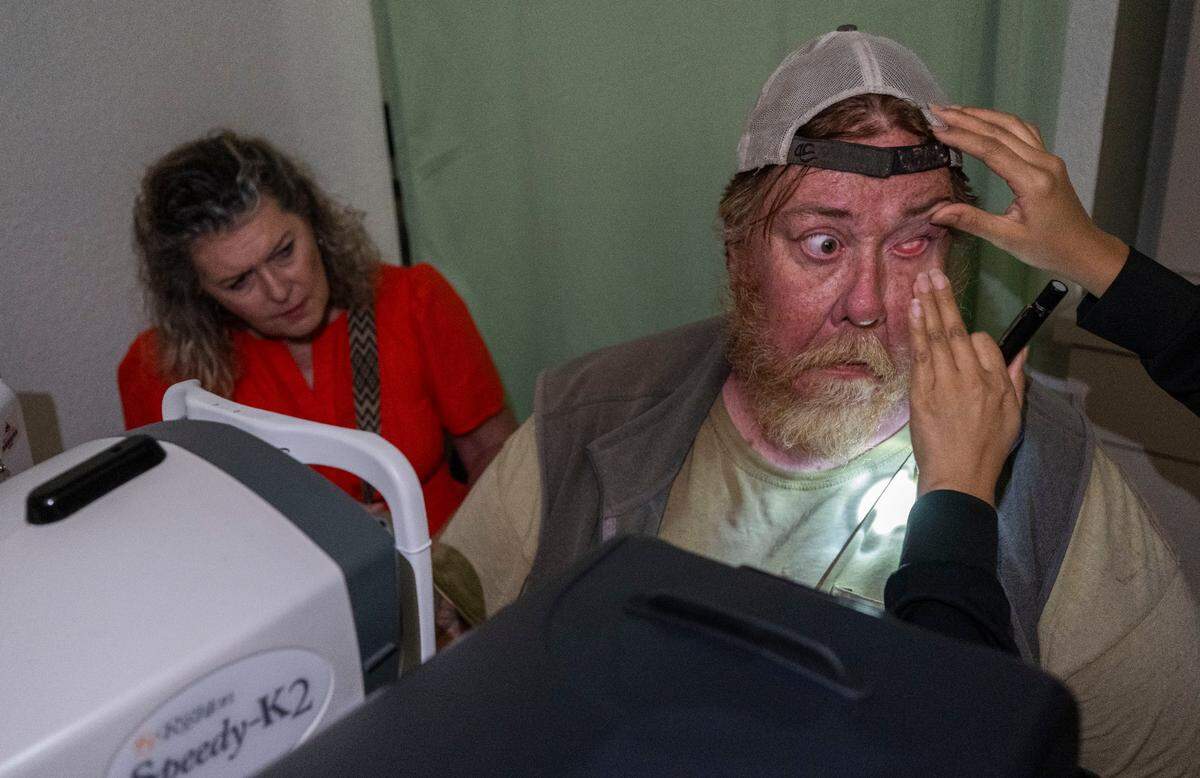
“Honestly, if all this stuff was left to me to get done,” Jackson said. “there would not be any chance at all that I could have gotten everything done that we have.”
Frontline training for future social workers
During the pilot phase of the social work internship program, Montano and three undergraduate interns helped more than 70 patrons over just eight weeks during summer 2023. In fall 2025, the program will expand to eight interns — some pursing bachelor’s degrees and others master’s — at three library branches.
For a one-year period ending in August 2024, the library’s social work program served about 160 patrons, Montano said, and from September 2024 to present, it has served 260 patrons. Many, she said, are seeking help with multiple challenges.
As they have assisted patrons, Montano and former intern Edgar Caro Sevilla said, they have encountered service gaps, loopholes and frustrating rules that limit who can access help from the social safety net constructed by government and nonprofit agencies.
For instance, Montano said, it took so long for Jackson to be assigned a claims specialist in the Social Security Administration that he ran out of time recently at the 90-day shelter they had found, and because he had a temporary shelter, he was no longer considered “homeless.” That meant he didn’t qualify for a longer-term transitional housing space they had requested, she said.
Caro Sevilla said he experienced triumphs and disappointments during his internship that taught him valuable lessons. He worked with Montano to get a chronically unhoused man fast-tracked for a shelter bed, but when they found it, he was too afraid to move in.
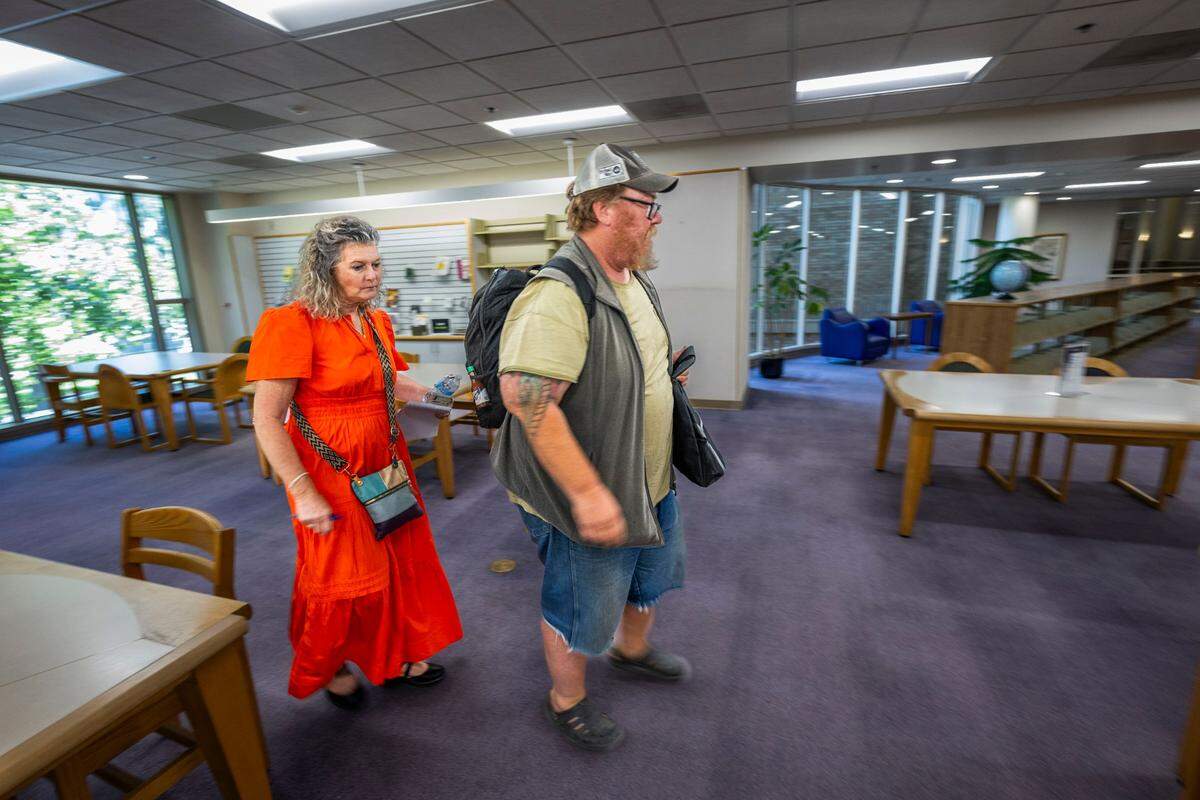
He had endured numerous traumas over more than a decade, being attacked while asleep, being robbed and almost being sexually assaulted within facilities and outside of them, Caro Sevilla said, and in this facility, he would have several roommates.
“He told me, ‘I’m afraid to go to sleep,’” Caro Sevilla said. “I broke down after work because I couldn’t imagine someone not being able to sleep, being afraid to sleep.”
Still, Caro Sevilla said, he doesn’t feel he or the library program failed this patron. Rather, he said, the social safety net had.
In another case, Caro Sevilla skipped a day of work at his regular job to drive a library patron to a state office to resolve an issue with his CalFresh food benefits. It took hours, Caro Sevilla said.
“We managed to get his (benefits) card, and I still have the photo we took with each other after he got his new card, and he’s had it since then.”
Soon to be a junior at UC Davis, Caro Sevilla described his internship as a motivating factor in his plan to pursue a career in social work when he graduates. A psychology major, Caro Sevilla had initially planned on seeking a doctorate and going into a behavioral health practice.
Meeting people where they are
Montano came to social work as a second career. After running a restaurant near Donner Summit for 16 years, she decided to pursue a degree in social work when her daughter went off to college. Now a graduate of Sacramento State, Montano juggles her time between Nevada County Behavioral Health and coordinating the library internship program.
While many homeless library patrons seek assistance, Montano said, others like 76-year-old Elizabeth Fresquez see the library as their last hope to keep their housing and find other services.
After leaving San Francisco due to unsafe living conditions, Fresquez found herself on the brink of homelessness in Sacramento, surviving on just $16 a month after paying her rent.
Montano has helped her to get on the Section 8 waitlist for San Francisco, sign up for food assistance and connect with senior job programs and local aging services.
“Last night, I actually slept,” Fresquez said. “I had all these problems, but I feel that they’re sliding away slowly.”
After serving 20 years in prison, Gregory Summers received $200 and abruptly released without any guidance on where he could go for help. His mother had retired and relocated to Raleigh, he said, and he didn’t have a telephone to reach her.
“They dropped us off at the Vacaville-Fairfield train station and said goodbye,” Summers said. “I had to get on the train without a ticket because there was nowhere to buy a ticket. I rode all the way to Sacramento without a ticket, and I got off and walked down to a motel and got a room.”
Summers, 61, still expected to be able to find a pay phone, but it wasn’t easy. When he asked someone about it, they suggested he go to the Sacramento Central Library. There, he told a librarian his story and she went to Montano to lobby her to fit Summers in as a walk-in.
Montano had a long list, but she felt a sense of accomplishment when she was able to call Summers’ name. After speaking with him and learning that he wanted to find a way to get to his mom in North Carolina, Montano connected him with the Exodus Project. They helped him to secure an ID and footed his temporary housing when his money ran out.
Of the library staff and social work team, Summers said, “They don’t kick the homeless out. The clerks listen to you, the ones downstairs, the ones on every floor I’ve been on. They listen to you, and they’re willing to help. It’s amazing.”
This story was originally published July 3, 2025 at 5:00 AM.
CORRECTION: This story was updated to reflect that social work consultant Crystal Sheffield developed the Sacramento Public Library’s social work program and continues to lead it. Additionally, it has been updated to correct Sheffield was once a social worker at the Federal Defender’s Office for the Eastern District of California.