
Black students alleged discrimination by Sacramento school district. Here’s what happened
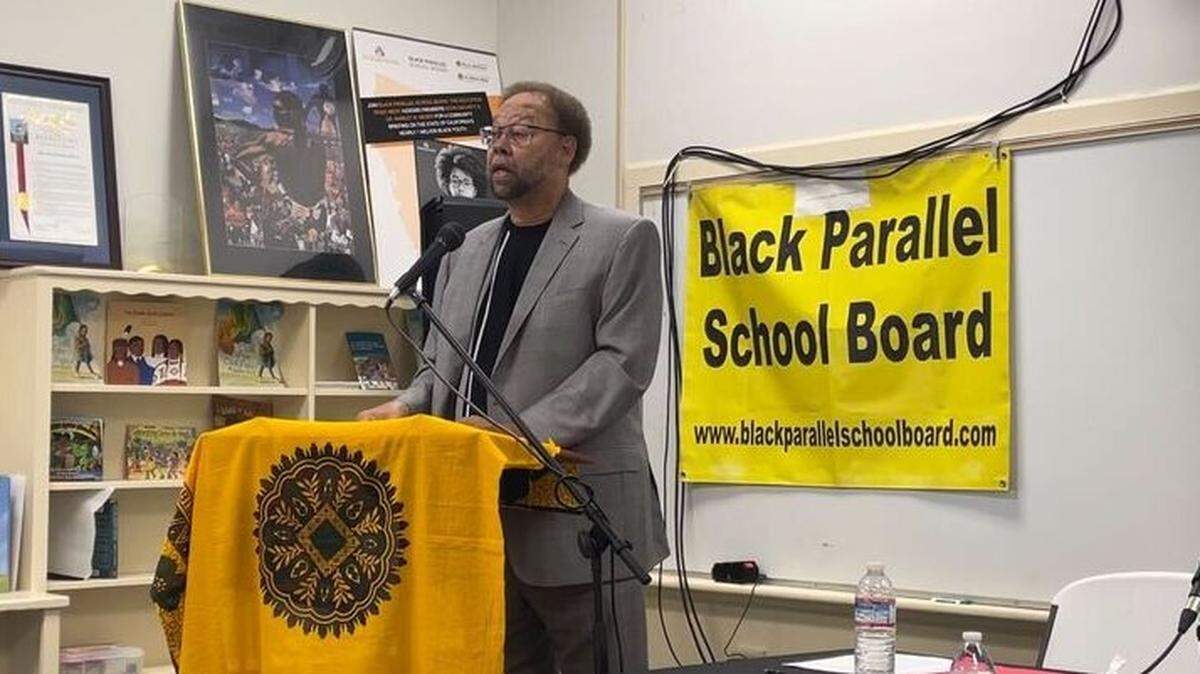
Black students with disabilities who attend public schools in Sacramento will receive more support to remain in class with their peers thanks to a settlement between a nonprofit and the school district.
After four years of litigation, the nonprofit, Black Parallel School Board (BPSB), and the Sacramento City Unified School District have come to a settlement agreement in a lawsuit that alleged students of color, particularly Black students, experienced excessive and disparate exclusionary disciplinary measures such as suspension, expulsion, and involuntary and undocumented removal from classrooms.
“The settlement is a result of years of advocacy. Not just by the Black Parallel School Board, but by the broader community of Sacramento, advocates for disability rights and racial equity in education as well,” said Darryl White, senior chair of BPSB.
The BPSB is a community-based membership organization that developed in 2007 to serve Black children, primarily those attending public school in Sacramento. The nonprofit was assisted by the Equal Justice Society, Disability Rights California, National Center for Youth Law and Western Center on Law and Poverty in coming to the settlement.
“This agreement is designed to substantially reduce the unfair and extremely high rates of suspension and expulsion of students with disabilities and Black students with disabilities compared to their classmates,” attorney Mona Tawatao of the Equal Justice Society said.
A 2017 independent audit of the district’s services to students with disabilities found that the district placed students with disabilities in separate classes and schools at a rate that significantly surpassed both state and nationwide averages.
The district segregated students with mental health conditions, autism spectrum disorder and intellectual disabilities at grossly disproportionate rates, with Black students with disabilities experiencing the highest rates of segregated placements.
The lawsuit alleges that instead of taking steps to fix the issue, the district instead increased its use of segregated classrooms and schools for students with disabilities.
Following the settlement agreement, the school district is mandated to create and follow a strategic action plan to address the issue of disparate and disproportionate discipline.
The action plan must also create avenues to increase inclusive placements, provide ongoing support and training for school staff, and help create a reliable data collection system. Beyond that, the action plan must hold the district accountable to meeting measurable goals and deadlines.
The plan, according to the agreement, would be implemented for five years.
“This agreement is also designed to greatly increase placement of students with disabilities into integrated classrooms and schools with their peers rather than relegating those students to segregated classrooms and schools that deprive them of the education the law requires and the learning environment that they deserve,” Tawatao said.
An independent monitor selected by the BPSB and the district will be the one to enforce the action plan and hold the district responsible for adhering to the policy and program changes.
During a Monday news conference, White called this settlement “precedent setting.”
“We are hoping for a stronger relationship with the school district that helps us help them to ensure all Black children graduate from school with the largest array of career and school options,” White said.
Experiences of students with disabilities in SCUSD
There are approximately 6,000 students in the district with identified disabilities, including approximately 1,200 Black students.
About half of these students are in segregated settings. And more than 10% of students with disabilities receive recorded suspensions each year. However, this figure does not capture the number of times that students with disabilities are removed from the classroom without formal documentation taking place. In 2017, the independent auditors noted Black students with disabilities were 2.8 times more likely to be suspended than all other students with disabilities.
The experiences of three Black students were detailed in the lawsuit. The students, who were all minors at the time the suit was filed, were not named.
One of the students was a fifth-grade Black male, who was diagnosed with autism spectrum disorder and anxiety disorder. The student was one of few remaining Black students at his school, according to the lawsuit.
The lawsuit states that he was capable of learning grade-level curriculum alongside his peers without disabilities, but he never received support from “properly-credentialed” teachers.
Instead, he experienced frequent exclusionary disciplinary actions such as being removed from the classroom for disability-based behaviors. He has been a victim of harassment and bullying from staff and peers based on his race and disabilities, the lawsuit alleges.
He’s treated, according to the lawsuit, as if his disability is to be feared by his peers.
For example, his teacher locked the classroom door and refused to let him in. The teacher told other students it was a “lockdown” which is usually the response to a threat of violence.
In another instance, according to the lawsuit, the student was allegedly called a “stupid Black boy” by some of his peers and physically attacked.
Another student named in the lawsuit was an 11th grade Black male student with mental health conditions and a history of trauma. His needs were unclear because he had yet to receive a proper comprehensive assessment.
The student, according to the lawsuit, was pushed out of his school which relegated him to a nonpublic school outside of his neighborhood for students with disabilities.
His new school served less than 100 students and he felt isolated from peers without disabilities. He felt unchallenged academically and frustrated that he was forced to miss out on a “normal” high school experience.
He faced two options for his education, both of which the lawsuit alleges were discriminatory: Stay in a segregated school where he’s not learning or return to a school that is not equipped to support him educationally, as it relates to his disability.
The third plaintiff was a 4th grade Black male student at a public elementary school who had been diagnosed with autism spectrum disorder, dyslexia, and attention-deficit hyperactivity disorder (ADHD).
His needs and conditions were ignored by the district, the lawsuit alleges. He experienced repeated and excessive disciplinary exclusions, shortened school days, and countless hours of missed instruction because his conditions went unidentified.
These experiences are just a few examples of the disparate and exclusionary treatment of Black students with disabilities that the lawsuit alleges.
“Why is it all necessary?” White said of the settlement agreement with the district. “African American children continue to be the most undereducated, the most suspended, most expelled and experience the lowest graduation rates.”
LaRayvian Barnes, a member of the BPSB, has a son who is a student in the district and has been diagnosed with autism spectrum disorder. Her son was not part of the lawsuit but experienced similar treatment.
During the BPSB news conference, Barnes stated that she or her oldest son would receive phone calls from the schools to pick up her son.
They would tell her that her son “isn’t ready to come to school today.”
Sometimes he would chew on pencils, or even break them. Barnes said there was no support from the district in addressing the behaviors her son showed that are characteristic of his autism. Instead, he was disciplined and removed from his general education class and it was recommended that he’d be placed in special education classes.
Although Barnes continued to fight and support her son, she felt the most frustrated and hopeless when the school gave her an ultimatum regarding her son’s educational environment.
“(I) felt like I was fighting a system that was not setup to give my son the best educational opportunities, I seeked the advocacy of the (BPSB) for four years during this process,” Barnes said.
Since finding the BPSB and gaining support, Barnes said her son is now socially thriving.
Now in the eighth grade, he’s a member of the basketball team and the track program and he’s performing at grade level in math and language.
“This settlement, as a parent and for parents like myself and families like ours, holds the district accountable for the systemic processes that they’ve had to keep our children out of general education classes. I thank you all for all of the hard work in these last four years. I’m hoping that not just my child, but children like mine continue to benefit from this work,” Barnes said.
SCUSD response to settlement
The district’s Superintendent Jorge Aguilar said in a news release that the district is looking forward to partnering with the BPSB to produce better student outcomes moving forward.
“This is an important day for the future of Sac City Unified and our commitment to meeting the social, emotional and academic needs of all students, and uniquely so, our Black/ African-American students with disabilities. We are proud of the work the District has already done to be more inclusive and less punitive,” said Aguilar.
Aguilar believes the independent monitor will help the district better identify areas for improvement within the system, while correcting the implicit bias and exclusionary discipline that has disproportionately and negatively impacted students with disabilities.
In addition to designating an independent monitor who will implement an action plan, the district has already begun to take some short-term measures to ensure accountability on their part.
The district announced the following:
a town hall meeting conducted jointly by the district and BPSB to discuss the settlement and its goals;
the passage of a Board of Education resolution on the rights of students with disabilities;
a commitment to specific data review practices; and
further implementation of existing de-escalation practices and training.
The district said the end result is an agreement with the best interest of the district’s most vulnerable students in mind.
This story was originally published May 23, 2023 at 12:43 PM.