Sacramento sheriff no longer responds to some mental health calls. Community members concerned
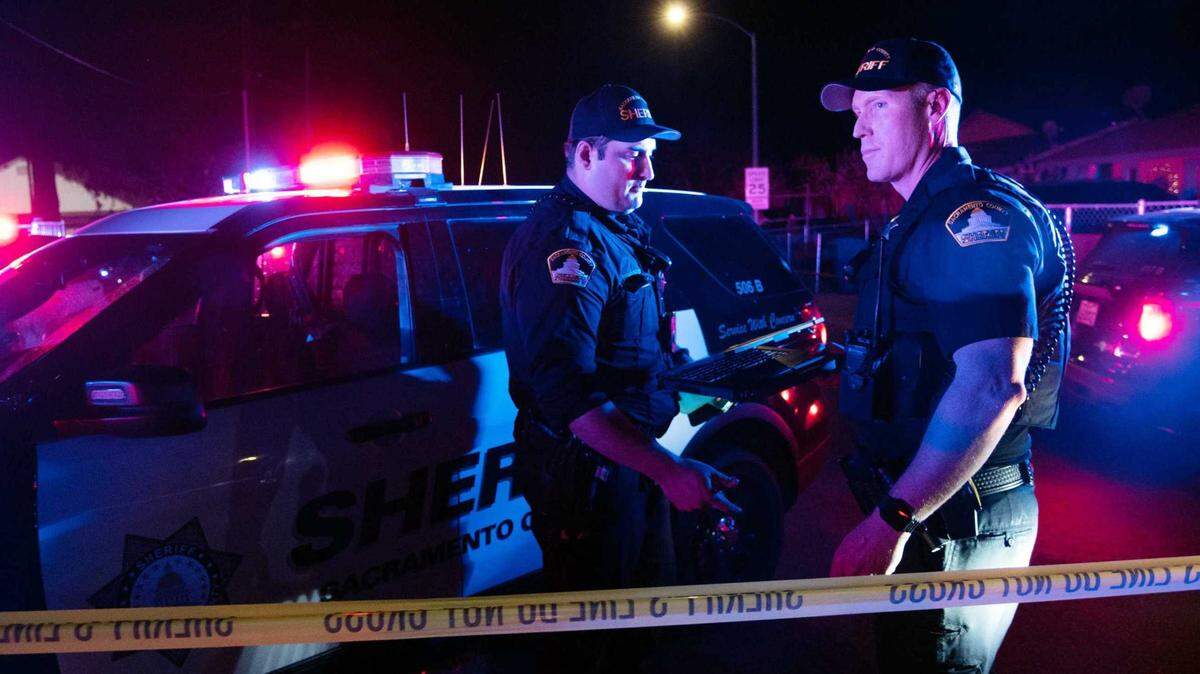
Sacramento County Sheriff’s Office deputies have limited their response to certain mental health related 911 calls which has resulted in community concerns brought to the county Board of Supervisors.
Sheriff Jim Cooper, in a press conference Tuesday, said deputies will continue to respond if the call is classified a “criminal mental health call,” while non-criminal calls will be directed to the county’s 988 mental health crisis line.
Cooper said the Sheriff’s Office is taking precautions to avoid potential lawsuits and legal liability, either against the county or individual deputies. The change comes from the interpretation of a federal court ruling surrounding the legal protections for use of excessive force in response to mental distress calls.
Cooper said deputies get “minimal training in deescalation.”
“We’re not the bodyguards for everybody,” Cooper said. “If there’s no crime being committed, why is law enforcement there?”
The shift in policy has caused concern among county residents who have brought their thoughts to the Board of Supervisors. Members said Tuesday they are unable to change the response.
Supervisor Phil Serna, who represents District 1, said the board could “certainly attempt to influence” the Sheriff’s Office, but the only way the county can “directly influence” the department is through its budget.
“At least I can speak for myself that I was extremely concerned when I first heard of the simple statement that the sheriff’s department is no longer responding to these mental health crisis calls involving weapons. That, on its face, would concern anyone,” Serna said on Tuesday morning. “Obviously, there’s more to it than just that. There’s the interpretation of state law. There is the fact that we have other jurisdictions.”
During the Tuesday press conference, Cooper said his office had “a great relationship” with the Board of Supervisors on working with the policy.
Meanwhile, Allison Smith, a spokesperson with Sacramento Police Department, said the department will continue to respond to the all mental health related calls per its previous policy.
“I can’t speculate on if it’ll change, how it would be in the future,” Smith said. “How we respond to those calls will stay the same for the time being.”
Who has oversight of Sheriff’s Office?
At Tuesday’s Board of Supervisors meeting, the Sacramento County Sheriff Review Commission recommended a name change to clarify the group’s relationship to law enforcement and powers during an annual report.
Community advocates called on the group’s name to be changed from the “Sheriff Community Review Commission” to “Sheriff Oversight Commission” to reflect and implement transparency and accountability toward the operations of the Sheriff’s Office. The resolution passed unanimously.
Allen Ash, the chair of the Sacramento chapter of the American Civil Liberties Union, said the name change, as well as the authorities, would “reflect the role that the community wanted.” By including the word “oversight,” it would clarify the independent monitoring of the sheriff’s department, he said.
“Oversight increases government accountability, and transparency enhances public safety and builds community trust in law enforcement,” Ash said. “Otherwise, the commission is at risk of appearing to be just a public relations arm of the sheriff.”
In response to public opposition, supervisors of the board defended the current name. Supervisor Patrick Kennedy, who represents District 2, said the resolution was created “with ACLU support and participation.”
“I disagree with the assertion that this board exists to be a public relations arm of the sheriff,” Hume said. “However, it’s not uncommon for members of the public to form opinions not based entirely on facts.”
The commission was created in compliance with Assembly Bill 1885, which requires Sacramento County to create an oversight board for the Sheriff’s Office with subpoena authority, said Paul Curtis, the chair of the County Community Review Commission.
The goal of the commission is to “improve public transparency and accountability with respect to the Sacramento County Sheriff’s Office and provide greater community interaction and communication with the Office of Inspector General,” according to the resolution.
Curtis described the commission as a “conduit from the public to the inspector general,” and gathers public concerns. The Inspector General’s Office is then responsible for relaying recommendations to the Sheriff’s Office, he explained.
In the past, the commission has focused on racial profiling in Sacramento County, where Black and Latino residents have been stopped at disproportionate rates, Curtis said.
The commission has proposed a policy to limit police interrogations or questioning during vehicle stops, as well as adopt a policy focusing on building “public trust” during police stops. Both policies were not approved by the entire commission, Curtis added.
Keyan Bliss, a member of NorCal Resist, criticized the name change resolution, as well as disciplinary actions for misconduct and a lack of transparency from the Sheriff’s Office on budget and operations.
“The unchecked power of local sheriffs leads to a profound lack of accountability,” Bliss said.
This story was originally published February 5, 2025 at 7:00 AM.