Get The State Worker Bee newsletter in your inbox
This is a preview of our weekly newsletter. Sign up here to receive exclusive tidbits like this one, as well as a weekly roundup of all our state worker coverage. Email tips to wmelhado@sacbee.com.
The state worker census released this week confirmed the pay gap between men and women working for California remains wide, with a nearly $14,000 difference between each gender’s median salary, according to the latest numbers from the California Department of Human Resources.
While the pay gap has been trending downward in the last decade, the difference in median pay for men and women working for the state in 2022 was marginally higher compared to the previous year’s census numbers.
Last year, CalHR reported the pay gap was 14.5% based on full-time salaries. CalHR said the census data may not reflect the most accurate wage gap because it includes salary data for both full-time and part-time employees. Camille Travis, a spokesperson for CalHR, said California is committed to closing the gender pay gap.
“Our efforts go beyond compliance — they are a reflection of our core commitment to fostering opportunity and ensuring respect for every employee,” Travis said in a statement.
One of the primary reasons for the pay gap: Men hold higher paying jobs with the state.
According to the most recent census data, in nearly all state positions with a salary range of $100,000 or above, men hold 60%. Meanwhile, women hold the majority of state jobs that have a salary less than $70,000. (Men made up a slightly larger share, 54%, of the public workforce in 2022.)
The 2021 Women’s Earning Report from CalHR revealed that several bargaining units predominantly representing men — corrections, highway patrol and professional engineers — have higher median salaries compared to other public labor groups. The wage gap is reduced when comparing the salaries of men and women who have the same job classification.
The State Worker Bee newsletter is here!
Sign up here to get our weekly newsletter for California employees.
The issue was highlighted earlier this year when both chambers of the Legislature passed a bill that would have required the state to close the civil service pay gap. It was vetoed for a second year in a row by Gov. Gavin Newsom, who said the legislation undermined the collective bargaining process.
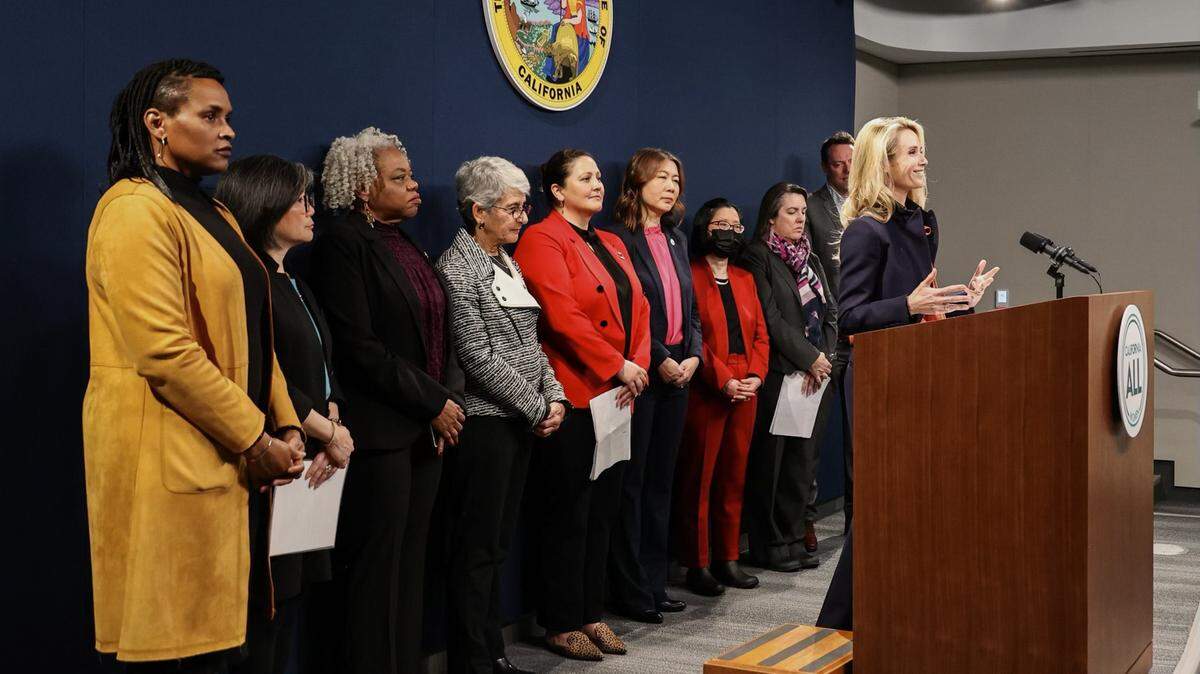
The state encouraged California-based companies to address the pay gap through the governor and First Partner Jennifer Siebel Newsom’s 2019 Equal Pay Pledge, which prompted CalHR to reevaluate its analysis of state workers’ pay to help close the state’s own discrepancies.
CalHR pointed to several initiatives that were designed to address the pay gap. Those included leadership training, apprenticeships and an upward mobility program meant to support low-wage state workers who want to advance to higher-earning professions.
SEIU Local 1000 President Anica Walls said the wage gap shows that the upward mobility programs are falling short.
“That’s why we continue to prioritize wage increases that reflect the high cost of living in California and ensure that state jobs can truly support a middle-class life,” Walls said, noting the state’s largest public union is pushing for a 4% raise when contract negotiations begin in 2026.
The salary numbers represented just a fraction of the data released as part of CalHR’s annual civil service census. The 2022 census, published this week, also includes data on state employees’ race, ethnicity, disability, veteran status, and age.
The state’s human resources department unveiled a public-facing dashboard that allows users to sort census data by department and job classification.
William Melhado
The Sacramento Bee
William Melhado is the State Worker reporter for The Sacramento Bee’s Capitol Bureau. Previously, he reported from Texas and New Mexico. Before that, he taught high school chemistry in New York and Tanzania.