
Supreme Court correctly ruled in favor of student speech for first time since 1969
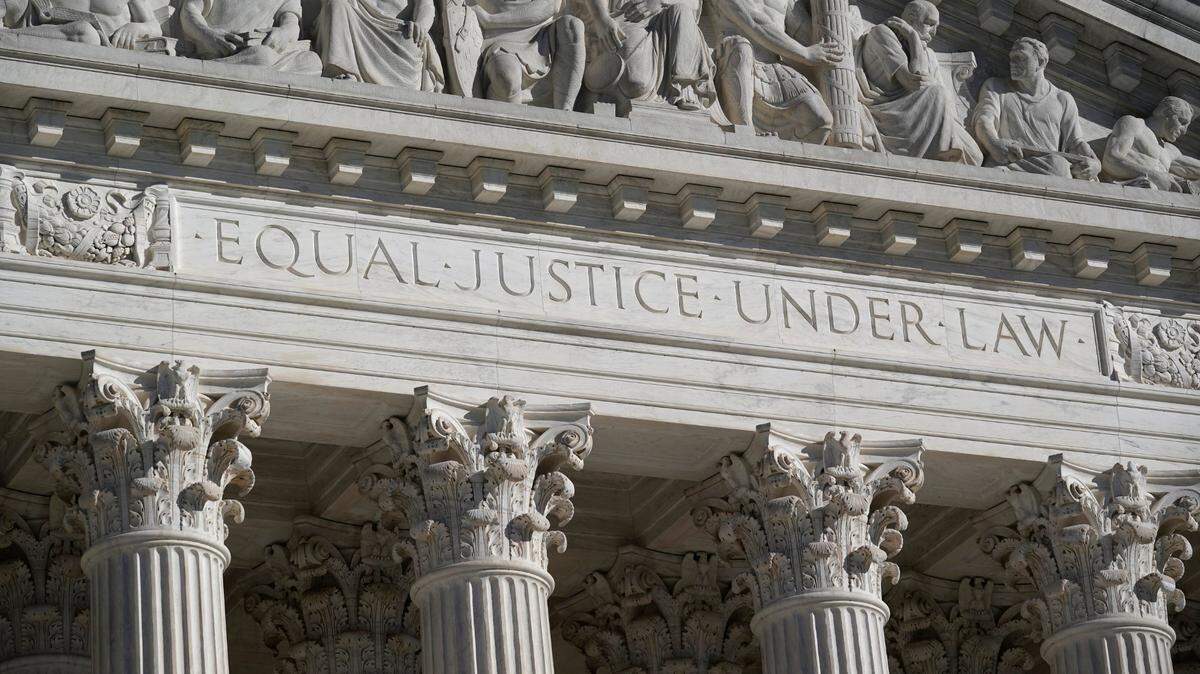
The Supreme Court got it exactly right in ruling in favor of student speech in Mahaney Area School District v. B.L. while also protecting the ability of schools to punish students engaged in bullying or harassment over social media.
For the first time in a half century, the court came down on the side of students’ speech rights and did so in the important context of contemporary media.
B.L. made the Mahoney Area High School junior varsity cheerleading team as a freshman. She tried out for the varsity as a sophomore, but was again assigned to the junior varsity squad. She was especially upset because an incoming freshman made varsity.
On a Saturday, from off-campus, B.L. posted two messages on Snapchat, visible for 24 hours. Her first message consisted of a photo in which she and a classmate raised their middle fingers at the camera, with the caption: “F--- school f--- softball f--- cheer f--- everything.” B.L.’s second message, posted shortly thereafter, complained that she and another student were on junior varsity again, but did not contain profanities.
The coaches determined that B.L.’s posts “could impact students in the school,” and had violated team rules that B.L. had agreed to follow, including that cheerleaders “have respect for (their) school, coaches, teachers, (and) other cheerleaders” and avoid “foul language and inappropriate gestures.” The coaches removed B.L. from the cheer team for the school year, but informed B.L. that she could try out again as a rising junior. No other disciplinary action was taken.
B.L. and her parents sued in federal district court, which granted a preliminary injunction reinstating her to the team and a summary judgment in her favor. The United States Court of Appeals for the Third Circuit affirmed, stressing that schools cannot punish off-campus speech.
In 1969, in Tinker v. Des Moines Independent Community School District, the Supreme Court ruled that schools can punish speech if there is a substantial disruption of school activities. In that case, the court said students had a First Amendment right to wear armbands at school to protest the Vietnam War.
The Third Circuit, though, said Tinker “does not apply to off-campus speech,” to “speech that is outside school-owned, -operated, or -supervised channels and that is not reasonably interpreted as bearing the school’s imprimatur.”
The court elaborated that schools cannot invoke Tinker even to address “off-campus student speech threatening violence or harassing particular students or teachers.”
The Supreme Court, in an 8-1 decision, ruled in favor of B.L., though it wisely did not go so far as the Third Circuit in preventing schools from being able to punish bullying or harassing speech. Only Justice Clarence Thomas, who believes students have no speech rights in schools, dissented.
The court recognized that there are circumstances when schools can punish speech that occurs off-campus. But the court stressed that schools generally cannot regulate what students do out of school. Justice Stephen Breyer said it’s important that schools convey the message that unpopular speech is protected by the First Amendment.
Freedom of speech safeguards criticism of the government and government officials. That is exactly what B.L. was doing in disagreeing with the decision of the coach. And there was no evidence that her speech disrupted school activities in any meaningful way.
This is the first time the Supreme Court has ruled in favor of student speech and against school officials since the Tinker decision. This case is especially significant because so much speech today, by students and others, is over social media and the internet.
Schools should not be able to punish student speech just because they find it offensive, and that’s exactly what the Supreme Court said.