
The controversial story of the Sacramento Slavic church linked to 71 coronavirus infections
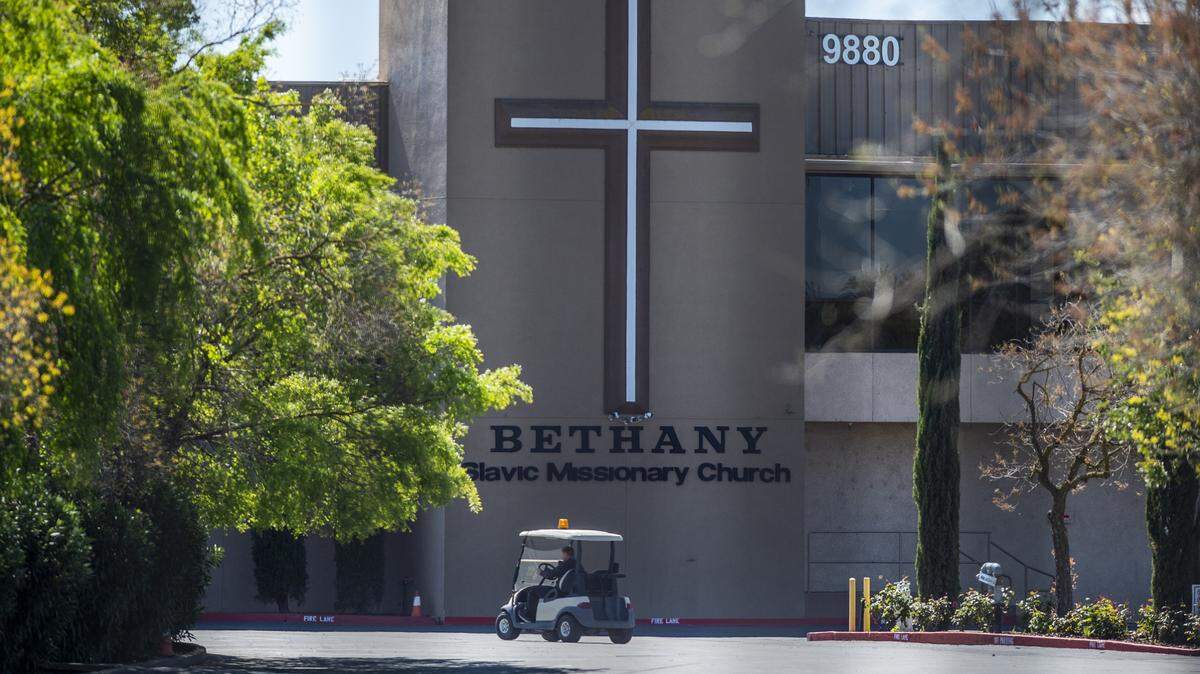
Bethany Slavic Missionary Church doesn’t shy away from controversy.
The giant Pentecostal church near Rancho Cordova, one of the cornerstones of the Sacramento area’s Eastern European immigrant community, injected itself into a fierce and borderline violent debate over gay rights more than a decade ago, earning rebukes from elected officials and scorn from the gay community over its tactics.
Last year, its members participated in protests at the state Capitol against a bill that strengthened California’s vaccination laws.
And now Bethany Slavic and its 3,500 members have found themselves accused by Sacramento County health officials of blatantly violating the stay-at-home orders designed to slow the spread of the coronavirus.
Dr. Peter Beilenson, county’s health director, said 71 people linked to the church, including congregants and people they know, have been infected with the virus, including one person who has died. The cluster at Bethany Slavic accounts for nearly one-fifth of all the COVID-19 cases in the county as of Friday.
Although the church has stopped holding services in person, Beilenson said Bethany Slavic members have continued holding fellowship meetings in their homes, in violation of the order. What’s more, church officials refuse to talk with the county, he said.
“They’ve basically told us to leave them alone,” Beilenson said.
The church on Friday adamantly denied Beilenson’s accusation. In a statement posted on its website, Bethany Slavic said it “closed its doors” one day before California Gov. Gavin Newsom issued his shutdown order, and moved all of its services and gatherings to the internet.
Longtime church member Florin Ciuriuc said he and other Bethany Slavic leaders were in touch with county leaders about COVID-19 weeks before the pandemic reached the United States. He said the church takes the risks seriously.
“We had a serious discussion about how to avoid a possible infection in our community,” he said.
Ciuriuc acknowledged hearing that some in the Slavic community — not necessarily members of his church — may be participating in large gatherings. “We heard rumors some people are gathering for prayers, some people are gathering for birthdays, some people are gathering for funerals,” he said.
The statement the church issued Friday denied that 71 members had become ill with the coronavirus. Ciuriuc, though, acknowledged that two very prominent members are sick: founder and lead pastor the Rev. Adam Bondaruk, 76, and his wife, Galina.
“The whole Slavic Christian nation around the world is praying for them,” said Ciuriuc, who runs the Sacramento Slavic Community Center. “He’s a wonderful guy. I call him a father of the Slavic community.”
Pentacostal church flourishes in Sacramento
Born in Ukraine, Adam Bondaruk arrived in Sacramento in 1988 after living in Massachusetts for a time.
At the time, the capital region’s Slavic community was beginning to mushroom. Thousands of immigrants were arriving as the Soviet Union dissolved, joining an earlier wave that had arrived in the 1950s. Today, the Slavic community in the region exceeds 90,000 residents of Sacramento and surrounding counties, Ciuriuc said.
Their original house of worship was a small Slavic Baptist church on Franklin Boulevard that was bursting at the seams, struggling to accommodate different Christian denominations.
Before long, Bondaruk and his fellow Pentecostals went their own way, buying the former Rancho Arroyo sports complex on Jackson Road for a reported $5.4 million.
The 20-acre spread became home to one of Sacramento’s mega-churches — the largest Slavic Pentecostal church in the nation, according to Ciuriuc.
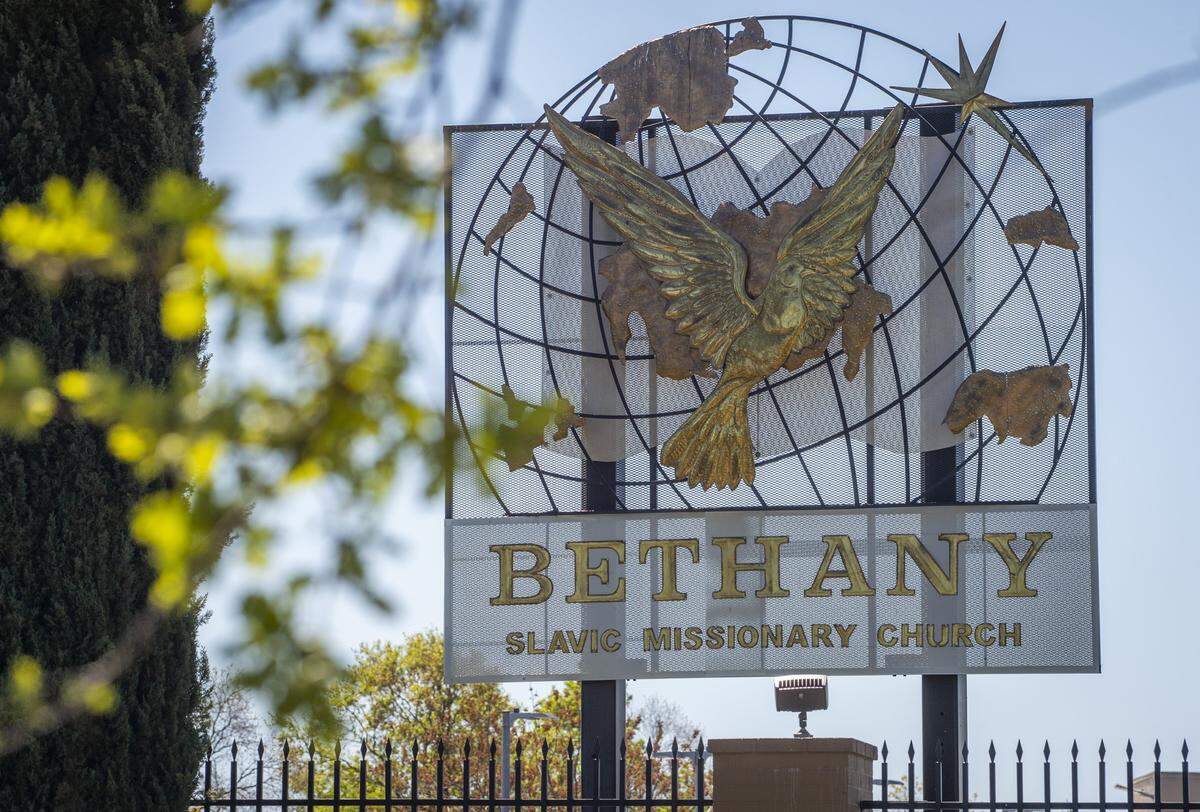
Bondaruk built a reputation as a charismatic leader in the Slavic community; a 2004 Sacramento Bee story described him as a “poetic preacher” with a global profile.
He has dealt with his share of heartache: Ciuriuc said one son died in the early 2000s of a heart attack. Another, Pyotr Bondaruk, was sentenced to prison in 2015 for his role in a mortgage fraud scheme.
Around Sacramento, the church remained largely out of the public eye until a dark day in August 2001, when 5,000 people attended a funeral at the cavernous sanctuary.
Lining the altar were six open caskets, members of the Soltys family, all of whom had been killed by a 27-year-old Ukrainian emigre named Nikolay Soltys. Police helicopters circled overhead as authorities feared Soltys, who was still at large, would show up.
He was arrested days later and told authorities he killed an aunt, uncle, two young cousins and his wife and son because he believed they were poisoning him. He hanged himself in jail.
Slavic protesters clash with LGBT community
Jerry Sloan, a co-founder of Sacramento’s LGBT Community Center, can still remember the tension rippling through the city’s annual gay pride parade.
Members of the Slavic Christian community had lined the parade route, cursing and menacing the marchers, he said.
“They were knocking people off their bikes, they were spitting on people,” Sloan said.
In 2006, the gay community and Slavic Christians were in a pitched battle over free speech, religious values and gay rights.
Slavic protesters, embracing a freedom to protest they were denied in Eastern Europe, packed school board meetings to protest what they saw as pro-gay curricula. They showed up at the Capitol to protest a bill requiring public schools to recognize the contributions of gays to society; their protests were believed to have influenced then-Gov. Arnold Schwarzenegger’s decision to veto the legislation.
Gay leaders and elected officials said there was nothing wrong with the Slavics’ protesting; it was their methods that were objectionable. According to accounts in The Sacramento Bee, gay counter-protesters who arrived at the Capitol were surrounded by Slavics yelling at them about sodomy.
While the protesters were member of the broader Slavic evangelical community, Sloan said Bethany Slavic members were at the forefront of the controversy. One Sunday morning, he led a small group to picket outside the church.
“They came out and threatened to kill us, or some of their members did,” Sloan said. “Other members came out and offered us food.”
Dennis Mangers, a longtime Capitol staffer, said the tensions started to dissolve after he and Darrell Steinberg, a former state lawmaker who became Sacramento’s mayor, convened a kind of summit meeting at the Sheraton Grand hotel in downtown Sacramento, with leaders of the Slavic community as well as representatives of law enforcement and the district attorney’s office.
Mangers said the Slavs were told, in effect, that they were crossing the line and abusing their newfound freedoms and might even be in danger of losing some of the government’s social safety net. The officials said Sacramento was willing to embrace and help the Slavic community but “you can’t continue to enjoy the benefits of this welcome and this financial support if you aren’t a good citizen,” Mangers recalled.
Ciuriuc, the leader of the Slavic community center, recalls the meeting at the Sheraton but doesn’t recall any threats about losing government benefits. Instead, he said the Slavs simply decided to “work with the gay and lesbian community in a different way.”
He added that media reports of Slavic protesters stepping over the line were pure fiction. It was the LGBT community “throwing bottles and rocks,” he said. “There is no record of the Slavic community being violent.”
Protesting California’s vaccination laws
The members of Bethany Slavic haven’t lost their appetite for politics.
Last spring, church members arrived at the Capitol to lobby against SB 276, a highly controversial bill that strengthened vaccination laws, according to bill author state Sen. Richard Pan, D-Sacramento. The bill passed and was signed by Newsom.
Pan said he believed the anti-vaccination sentiment from Slavic residents stemmed from their experience in the Soviet Union, where they faced persecution for their religious beliefs.
He said he believes many in the Slavic community “support science and public health,” but their continued mistrust of government authority may be influencing Bethany Slavic’s attitude toward the coronavirus pandemic.
“We have a large church who may or may not be engaging in social distancing,” said Pan, who is a physician. “They say they are, so this comes down to a level of trust.”
Ciuriuc said the stories about the church’s alleged role in spreading the virus that causes COVID-19 have hurt the church’s reputation, and undeservedly so. He said his phone has been ringing constantly with people blasting the church for its attitude toward the coronavirus.
“I received horrible phone calls from people,” he said.
In its press release denying the county’s allegations, the church said: “Media repetition of such unfounded representations invite ridicule, hatred and violence against our church community.”
A previous version of this story incorrectly said the church was located in Rancho Cordova, it is south of the city limits.
This story was originally published April 4, 2020 at 5:00 AM with the headline "The controversial story of the Sacramento Slavic church linked to 71 coronavirus infections."