California’s embattled high-speed rail could get a lift from Biden plan, Buttigieg says
The sweeping $2.3 trillion infrastructure-investment program put forth by President Joe Biden doesn’t have a lot in the way of specifics, but his transportation secretary said Friday that California’s ambitious – and embattled – high-speed rail project is something that may stand to benefit.
Transportation Secretary Pete Buttigieg told reporters in a White House press briefing that Biden’s American Jobs Plan – which broadly calls for about $80 billion for maintenance and expansion of rail improvements nationwide – “is not crafted in a way that’s targeting any one area.”
“This is about lifting our game as a country,” he added.
But he allowed that California’s project, for which construction has been going on since 2013 in the San Joaquin Valley, could “potentially” be funded through the infrastructure bill. About $20 billion from the Biden proposal is indicated for intercity passenger rail, which could include not only California’s bullet train but other longer-distance passenger train routes across the country.
“What’s great about the scale of the American Jobs Plan is it’s going to support both of those things: maintenance that we’ve needed to do all along, and a chance to build new routes and expand what Americans can access,” Buttigieg said.
The remarks are a glimmer of hope for leaders of California’s efforts.
“We’re encouraged by what’s coming out of the American Jobs Plan,” said Melissa Figueroa, a spokesperson for the California High-Speed Rail Authority. “It’s not just our project in California, but a growing push for green, electrified rail across the country.”
“It’s a national plan, and there are projects and jobs nationwide,” she added, noting the lack of specifics in the jobs program. “It would be inappropriate to say anything beyond ‘potentially’” about California’s project.
But, she added, “we’re pleased with ‘potentially’ at this point.”
The potential noted by Buttigieg is more than what’s been realized since the Federal Railroad Administration under President Barack Obama committed about $3.5 billion in federal stimulus money and a railroad improvement grant to the California High-Speed Rail Authority in 2010 and 2011. Those funds were conditioned – at the request of the state rail agency – upon spending the money for construction in the San Joaquin Valley.
But with the U.S. Senate evenly split between Democrats and Republicans, and Republicans gaining seats in the House of Representatives last fall, there is considerable uncertainty about what Biden’s program will look like if and when it emerges from Congress.
Rep. David Valadao, R-Hanford, said Friday that he believes California’s bullet-train project “has demonstrated itself to be a waste of taxpayers’ hard earned money”
“Sending more taxpayer dollars to fund an already wasteful project would be irresponsible,” Valadao added. “I encourage the Biden administration to work with Republican lawmakers to ensure this effort actually reflects the infrastructure needs in our districts.”
Delays, setbacks and rising costs
In the years since the federal grants were awarded, the California project has encountered setbacks: construction-schedule delays, cost increases, intense opposition including lawsuits, and growing doubts about the state rail authority’s ability to bring the effort to fruition.
The state began its efforts in 2013 to buy the property it needs for construction of the rail route though the Valley. While the number of required parcels for right of way has grown as contractors tweak the design of the route, a report to the state authority’s finance committee last month noted that there remain more than 500 pieces of property outstanding out of about 2,300 needed for the construction segments in the Valley from Madera in the north to Bakersfield in the south.
And contractors cannot build on land that the state does not yet own.
The decision to award construction contracts in the Valley before sufficient planning and land purchases had taken place was driven by a 2017 deadline for project completion that was originally contained in a grant agreement between the state and the Federal Railroad Administration for the federal stimulus funds.
The federal agency later agreed to modify the agreement to require only that the money be spent by the end of September 2017, but requiring completion of the work by the end of 2022.
The project was once promised to be an electrified line of 800 miles connecting San Francisco and Los Angeles, with future extensions to Sacramento, the Inland Empire and San Diego, with trains hauling passengers at up to 220 mph by way of Fresno and the Valley. Early cost estimated in the mid-2000s were in the range of $35 billion.
Over the years, plans have been scaled back as the state struggles with the realities of unanticipated cost increases from construction delays and utility relocations along the route, as well as the future technical challenges of tunneling through mountains separating the San Joaquin Valley from the Bay Area and the Mojave Desert and Los Angeles basin.
By late 2011, forecast costs had ballooned to more than $98 billion for 520 miles between San Francisco and Los Angeles/Anaheim. A 2012 redesign, including foregoing dedicated tracks for the entire line in favor of sharing upgraded, electrified tracks with commuter rail routes in the Bay Area and Southern California reduced the expected tab to about $68 billion.
The latest incarnation of the program under Gov. Gavin Newsom focuses on completing an initial 171-mile operating section between Merced and Bakersfield, at what is now expected to cost between $21 billion and $23 billion, and putting off future connections to San Francisco or Los Angeles until more money becomes available.
A political football
California’s project saw its first major source of funding materialize when Proposition 1A, a $9.9 billion high-speed rail bond measure, was approved by voters in November 2008.
But it wasn’t until the federal grants a couple of years later that there was another source of money for the project – a necessary requirement because Proposition 1A contained a number of requirements, including that the bond money could only be used to match other sources of revenue.
The project has also been a political football for the better part of a decade. A Republican-controlled Congress in the latter years of the Obama administration repeatedly sought to prevent any additional allocations of federal money for the California project. And in 2019, the FRA under President Donald Trump canceled a $929 million rail improvement grant that was part of the funding awarded to California almost 10 years earlier.
Trump also threatened to seek repayment by California of about $2.5 billion in grants from the American Recovery and Reinvestment Act, the Obama-era federal stimulus bill to help build the U.S. out of the 2007-09 economic recession.
The cancellation of the 2010 rail improvement grant sparked a lawsuit by California against the Trump administration. That litigation is now the subject of settlement negotiations between Biden’s FRA and California’s rail authority, Figueroa said, but there is no timeline for when the discussions among lawyers for the two sides could come to fruition.
“It’s encouraging to have a federal partner that is willing to talk,” Figueroa said, referring to a months-long fracture in the relationship between the state and federal rail agencies.
Not only is the state agency hopeful for reinstatement of the canceled $929 million rail grant, but officials expressed hope earlier this year the Biden administration would be agreeable to providing some relief from the ARRA grant requirements for completion of the Valley construction by December 2022.
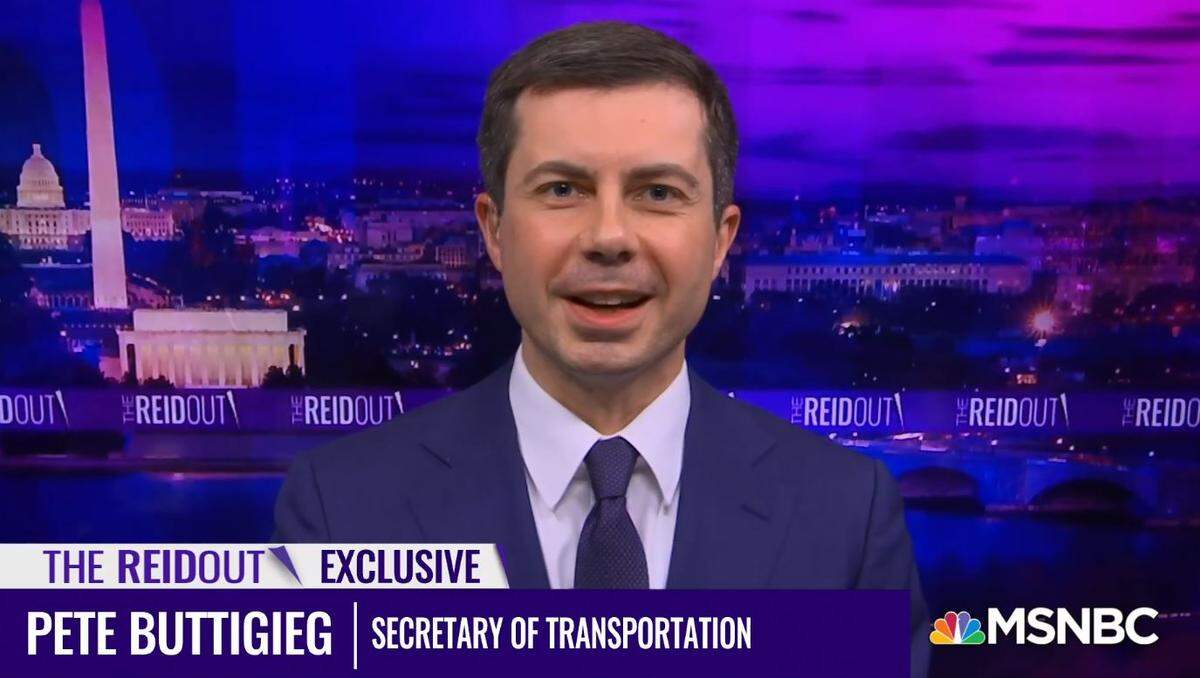
In February, prior to Biden’s rollout of his massive infrastructure proposal, Buttigieg offered support for high-speed rail on a national level, but did not specifically mention California’s project. Appearing on MSNBC’s “The Reidout” with host Joy Reid, Buttigieg said, “I want the U.S. to be leading the world when it comes to access to high-speed rail.”
Buttigieg, the former mayor of South Bend, Indiana, who was among a field of Democrats seeking the presidential nomination last year, said that Biden is “a big believer in passenger rail.”
“We’ve been asked to settle for less in this country, and I just don’t know why people in other countries ought to have better train service and more investment in high-speed train service than Americans do,” Buttigieg told Reid.
While Biden and Buttigieg have not made specific statements about high-speed rail in California, Valadao was very specific in his criticism of the project.
“Those in the Central Valley who may have been forced to sacrifice their land, businesses, and homes for a project that will offer them few, if any, benefits, know all too well how devastating the high-speed rail has been for our state,” the congressman said.
“The project is behind schedule, nearly $70 billion over budget, and will not deliver on the promises it made to voters regarding speed, travel times, and usage levels,” he added.
This story was originally published April 10, 2021 at 5:00 AM with the headline "California’s embattled high-speed rail could get a lift from Biden plan, Buttigieg says."