
Lake Tahoe’s new crisis: Families displaced, long commutes and a missing middle class
The Lake Tahoe region is in crisis.
Historic real estate prices and a lack of housing options are forcing local sheriff’s deputies and firefighters to commute an hour or more into the basin, threatening response times to emergencies.
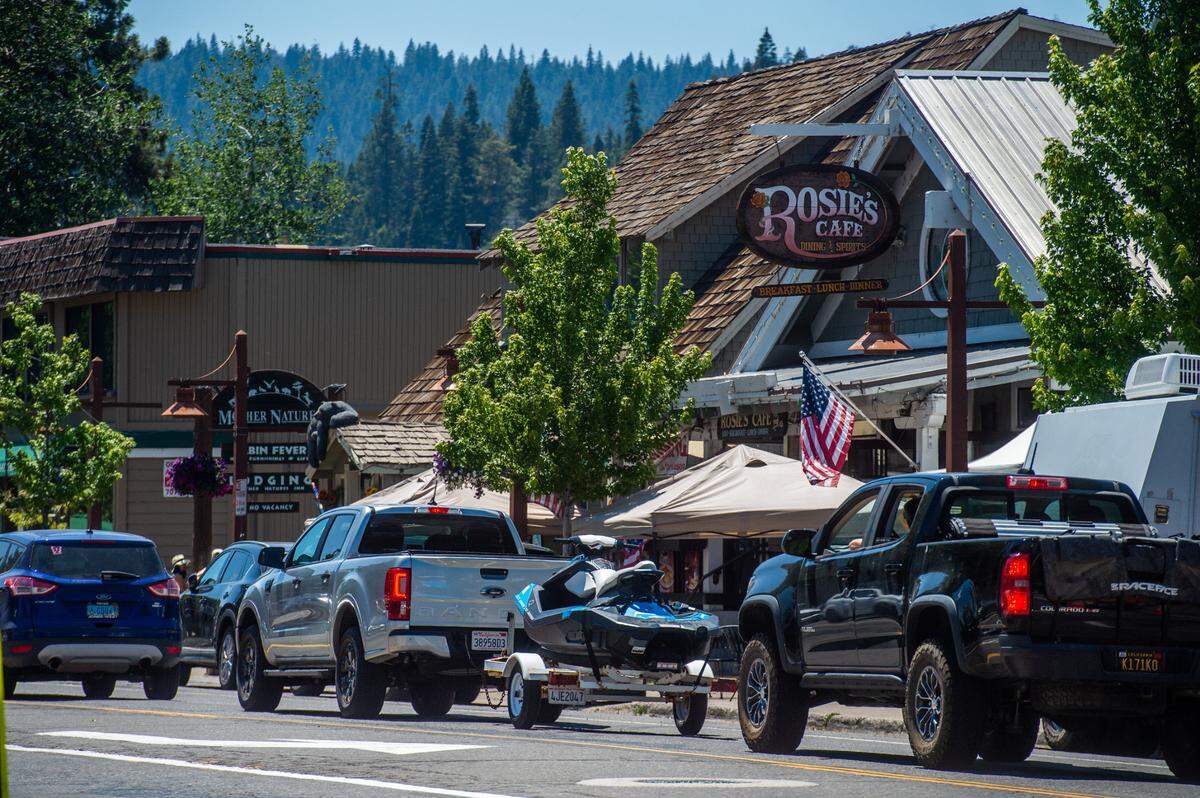
Restaurants and resorts that drive the region’s economy have had to scale back services. The hospitality industry, which lost droves of workers during the pandemic, is struggling to find workers who can afford to live there. Most businesses along Tahoe City’s main thoroughfare, North Lake Boulevard, have “Help Wanted” signs hanging in windows, some promising season ski passes to prospective employees.
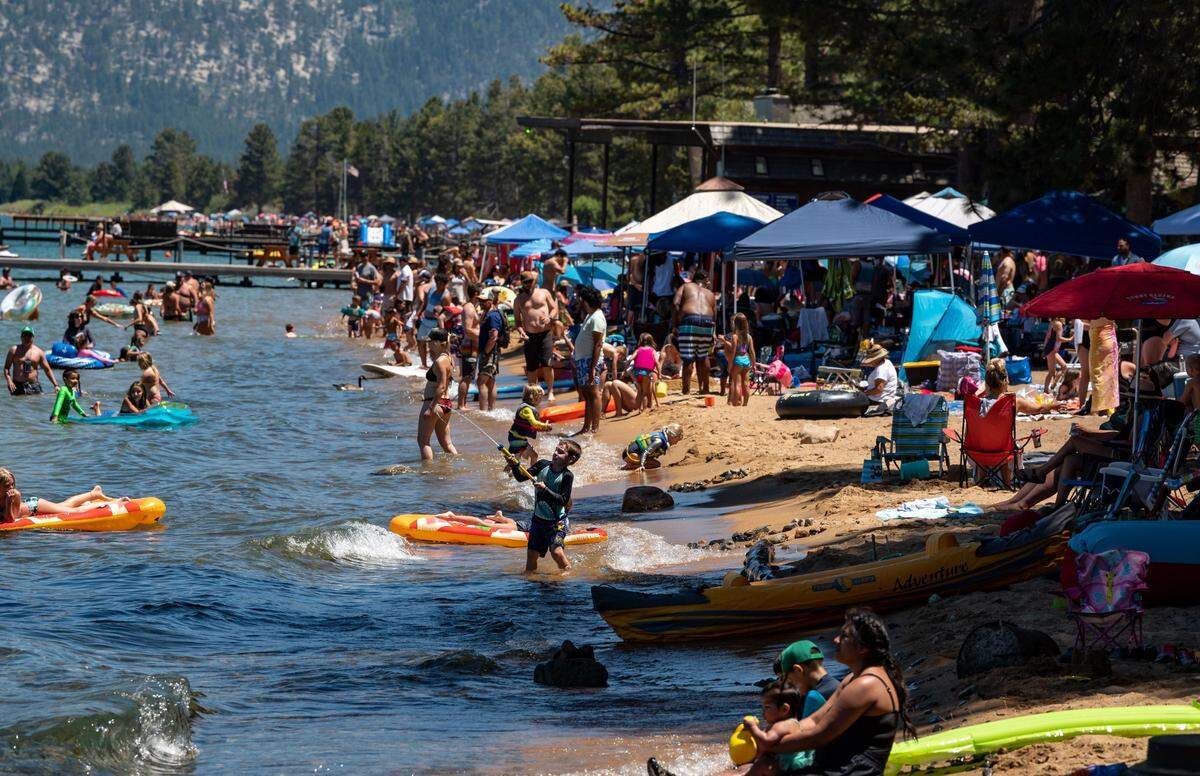
Lake Tahoe is both a destination and a home, one of the nation’s most beautiful tourist spots only 90 miles from Sacramento. Now, an exodus of low- and middle-income workers and renters, displaced by landlords selling their properties in a booming real estate market, has had a ripple effect that imperils the economy that affects 15 million people who flock there annually in the summer for hiking and water and in winter for skiing and snowboarding.
“We already knew we had a crisis, and now, I don’t know the adjective to use, it’s a tragedy to me,” said Placer County Supervisor Cindy Gustafson, who represents the North Lake Tahoe area. “What’s happening right now, it’s an emergency.”
Nowhere is the crisis being felt more than in the tourism and hospitality industries — the lifeblood of the region’s $5 billion economy. Some places, such as the PlumpJack Cafe in Squaw Valley, cut service hours back this summer due to a lack of staffing.
“If you’re coming to Tahoe, people are going to notice there’s a lot less services,” said Dave Wilderotter, owner of Tahoe Dave’s Ski and Board shops. “So when you come and you want to go to a restaurant, assume you’re going to be waiting twice as long as ever. Assume if you go to Safeway, you’re going to be waiting twice as long as ever, and they might be out of product.
“Is Tahoe still great? Yes. The lake is great, the weather is great, and the mountains are great. But if you’re coming to visit, have some patience.”
“Expect to find the business owner on site working because we can’t find the staff,” said Billy Griffin, owner of New Moon Natural Foods, a local grocery store. “That’s how bad it is.”
Many attribute the skyrocketing housing prices and a lack of affordable rentals to a wave of new residents and second home owners who bought properties during the pandemic. That wave of new residents is being driven largely by an influx of Bay Area and Sacramento-area teleworkers with enough cash to gobble up the limited available real estate.
The value of a typical home in South Lake Tahoe rose by about $181,000, or 41%, to $624,000 between June 2020 to June 2021, roughly double the pace of growth in the rest of the Sacramento metro area, according to Zillow.com. Since January 2017, the city has only issued about 100 building permits for new housing units, according to the U.S. Census Bureau.
Home values have increased elsewhere around Lake Tahoe, though not as quickly. All California ZIP codes surrounding Lake Tahoe saw home values increase between 20% and 34%.
The shift to working from home freed many Bay Area and Sacramento workers from their city living situations. The Town of Truckee, the second-most populous town in the region, went from averaging 50 new residents each year to 1,000, according to the 2020 census.
Cash-heavy, the new residents made the move to the mountains, buying up available properties, said Tara Zuardo, program director at Mountain Housing Council. The result was that local renters, especially those with families, were displaced when their leases weren’t renewed and their rentals were put up for sale, she said.
The unmet housing need has risen significantly in the last year, Zuardo said. The region now needs 9,528 units to keep up with the demand. That number has risen 12% since it was last measured in 2016.
“It’s a serious, dire situation, and I’m not sure everyone grasps how dire it is,” she said.
The housing gap is affecting the resident workforce, which represents a significant portion of the population. In Truckee, 23% of families earn less than $50,000 a year – roughly have the community’s median income. More than half the families in South Lake Tahoe earn less than $50,000 a year.
Many of those earners can only afford smaller housing units in the region. And nearly 75% of the housing units that need to be built are one- or two-bedroom homes for couples and small families.
A survey of available housing in the region last week indicated rooms for rent were easy enough to come by, but rent often started at $900 for a one-bedroom and went as high as $1,200 in some places. Apartments were harder to come by, and houses were rare.
Gustafson said her son was among those who recently lost housing. His lease was ended when the landlord decided to sell. He’s still looking for a new home.
Kristin Sprang lost her housing in October 2020 and was forced to move out of the state when she was unable to find a new home. Sprang moved to her home state of Wisconsin, where her friend offered her a home while she continued to look in Tahoe.
“I was ready to buy, too,” she said. “I have the credit and down payment, but COVID made that impossible. Condos that were selling for $250,000 are now going for $300,000, $400,000, and $500,000.”
Sprang continues to work for a Tahoe insurance agency from her Wisconsin home. It’s a situation she laments, she said, because she had to move away from her church, her friends and her community.
“The longer this goes on, the more I’m leaning toward not going back,” she said. “I’m kind of in a state of limbo right now.”
‘The missing middle’
Tahoe doesn’t just need affordable housing. Middle-income workers are also increasingly being pushed out, forcing them to seek housing in communities such as Grass Valley and Reno, and make the more than one-hour commute into the Tahoe Basin.
They’re the sheriff’s deputies, waste workers, firefighters and year-round hospitality workers.
Lt. Paul Long of the Placer County Sheriff’s Office said “virtually all the deputies” who work at the Tahoe substation commute from Reno. To his knowledge, he was the last person in the sheriff’s office who was able to buy a house in the basin, and that was in 2011.
To accommodate the long commutes, the station has a sleeping room for deputies to use in the event of bad weather, which may delay some deputies in getting home.
“We are blessed by an extraordinary workforce that move heaven and earth to get to work, but when we do have to call someone from home, the response times can be longer,” he said.
The same is true for many firefighters and fire department employees in the region.
Erin Holland, a spokeswoman for the North Tahoe Fire District, said long-term employees were able to get established in the area before housing became so expensive, but many of the younger and newer employees live outside the district’s boundaries. All the district’s fire prevention officers have to commute at least an hour each way five days a week, she said. And a fair number of the district’s firefighters also commute, some from as far as Sacramento, Roseville, Carson City, Reno and Gardnerville.
The county recently expanded waste pickup services in the area, Gustafson, the county supervisor for the area, said. But officials are having a hard time finding employees to pick up the trash.
“It does affect public health and safety,” she said.
These workers are known as “the missing middle” by locals, because they make too much to qualify for affordable workforce housing, but not enough to afford market-rate homes for their families.
“This is the most significant hemorrhage in our economy, is the middle worker, the supervisor, the manager who lived in those homes, who rented with their family, and was displaced and cannot find another home, and they leave,” said Alex Mourelatos, owner of Mourelatos Lakeshore Resort in North Lake Tahoe. “We get crippled when our experienced (employee) with six years leaves because he can’t find a place to live.”
Gustafson said it’s been a growing problem that contributes to the “eroding” of the community.
“It’s a crisis at the affordable level, but it’s also at the middle-income level, and that’s part of the tragedy,” she said. “You lose that segment of the community, and you become the haves and have nots.”
Housing crisis solutions
The county has made an effort to help middle-income earners become home buyers through its Workforce Housing Preservation Program, which offers funds to workers to buy local homes on the condition that at least one member of the household works 30 or more hours a week in the community. In return for the financial help, the home buyer agrees to a 55-year deed restriction that stipulates the homeowner will remain part of the local workforce for at least seven years before retirement.
The goal of the program is to “preserve regional housing stock for the local resident workforce in the East Placer region,” according to county documents. Workers who make 245% of the area median income, which is around $91,000, are eligible for the program.
Since the program launched last week, the county has received six applications, and more than 3,000 people have signed up for the program’s interest list, Gustafson said.
The dire housing situation has forced some employers to take matters into their own hands.
Wilderotter, owner of Tahoe Dave’s Ski and Board Shops, said he used to worry about whether it was going to snow every year, “but now I worry about employees.”
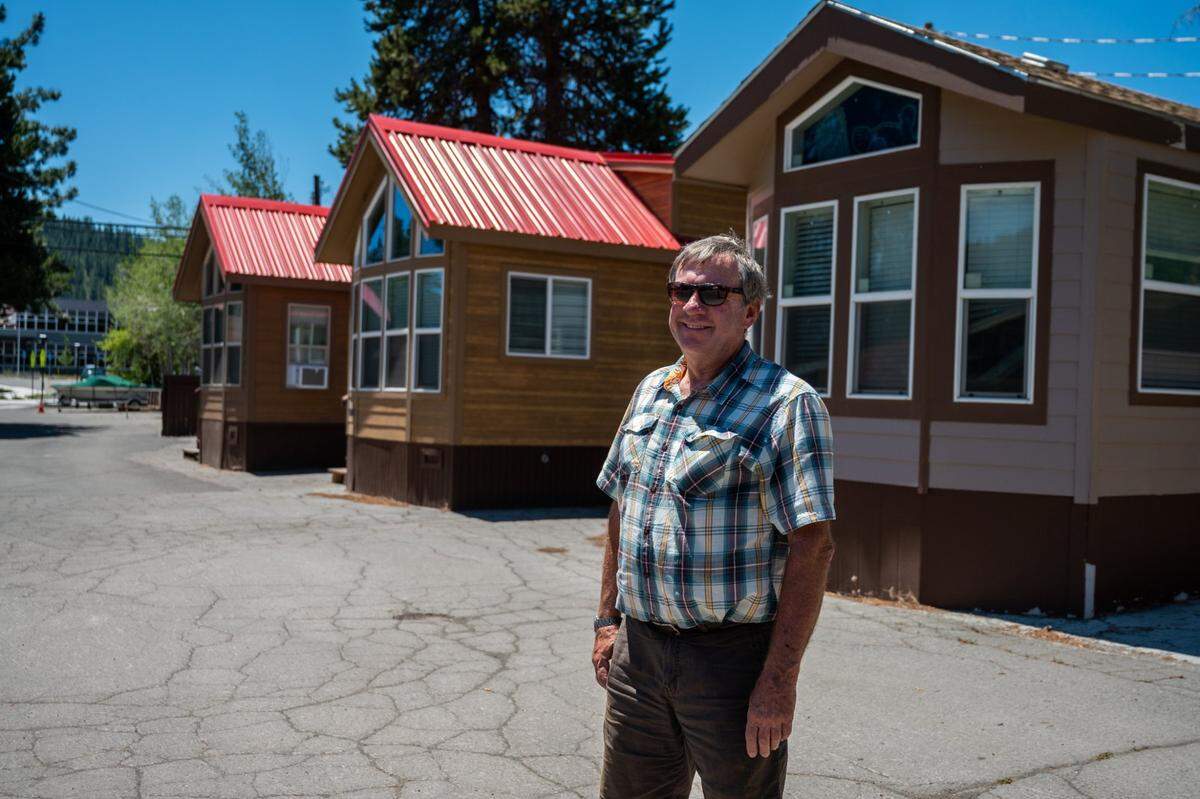
Wilderotter has been a resident of the Tahoe Basin for more than 30 years. He’s a well-known local who started as a self-described “ski bum” and began a ski rental business in 1977 that has grown to six stores across the region with more than 70 employees.
“For me personally at my stores, normally I have a waiting list of people who want to go to work, and I really don’t have to search, but now it’s big time that when I’m thinking of next winter now, the main thing I used to think about ‘is it going to snow?’ because I’m in the ski business,” he said. “Now my main thing is, ‘How am I going to find the employees?’ I have to go out and search for them. I can’t wait for them to apply. And that’s big.”
He said he can accommodate up to 90 employees but only has 75. Still, Wilderotter said he’s better off than many because most of his employees live locally. That’s in part because of his investment in housing for his employees.
Wilderotter said he’s been helping his employees get into homes for years, helping with down payments and security deposits. But about four years ago, he said he noticed people were getting more stressed and moving around too much. So he bought a trailer park in Truckee and started converting it to a tiny home village.
The only requirement to live there: be an employee of a local business.
The park consists of about a dozen homes across the street from Truckee High School and is tucked behind a Mexican restaurant. Half the homes are original to the park, but the other half are new tiny homes built to look like small cabins with wood siding and red roofs. Though smaller than a single-family home, the tiny homes are spacious enough for a small family.
“As long as I’m housing somebody’s employees, I’m happy,” Wilderotter said.
Correction: A previous version of this story incorrectly stated Alex Mourelatos’ business name. It is Mourelatos Lakeshore Resort in North Lake Tahoe.
This story was originally published July 25, 2021 at 5:00 AM with the headline "Lake Tahoe’s new crisis: Families displaced, long commutes and a missing middle class."