
Inside Gavin Newsom’s push to remake California prisons — Will a European approach work here?
Through Valley State Prison’s metal detector and double gates, beyond an electrified fence and an expanse of pavement, a garden filled with bright flowers greets new arrivals.
The small oasis of red, yellow and green inside the Chowchilla institution helps remind inmates of the world that waits outside the brown and gray of California’s 35 state-run prisons.
Planted after former Gov. Jerry Brown relaxed sentences for some low-level offenders a decade ago, the garden is a visible sign of a shift toward rehabilitation that Gov. Gavin Newsom is accelerating with a plan to reimagine life inside state institutions, starting with Valley State.
Coming soon to the medium-security institution are a barbecue patio for inmate family visits, softer furniture, laptops for all prisoners, expanded education and job training opportunities and more spaces for incarcerated people to learn how to manage emotions, navigate relationships and think through the consequences of their actions.
The state budget Newsom signed last month included $13 million for the programs and amenities, which are expected to cost about $3 million per year moving forward, according to budget documents. The changes are based on the Norwegian model of incarceration, which has gained attention in California and the U.S. during the past five years.
The Northern European country rehabilitates inmates by making life inside institutions as normal as possible, emphasizing support and services over punishment.
“We’re going to put rehabilitation back into the R at CDCR,” Newsom said when he announced the Valley State project in May, using an acronym for the state Department of Corrections and Rehabilitation. “And we’re going to do something big and bold.”
His push comes amid other big changes his administration is making to the state’s $17 billion prison system, including closing a prison in Tracy this year and another in Susanville next year.
The corrections department released thousands of inmates early as the coronavirus ravaged state institutions, reducing the prison population to 99,000 from 122,000 in a single year. Tens of thousands more inmates could be eligible for early releases through parole changes the Newsom administration wants to carry out.
District attorneys and victims’ advocates are fighting some of the changes. A group of 44 district attorneys sued the corrections department over the early release plan. Critics say it could impede the rehabilitation effort by releasing inmates who haven’t yet completed the hard work of self-examination and change.
“My biggest fear is we are rushing the rehabilitative process, and you cannot rush the rehabilitative process,” said Ralph Diaz, a former Department of Corrections and Rehabilitation secretary who now runs Stand Up for Victims, a nonprofit dedicated to victims’ advocacy.
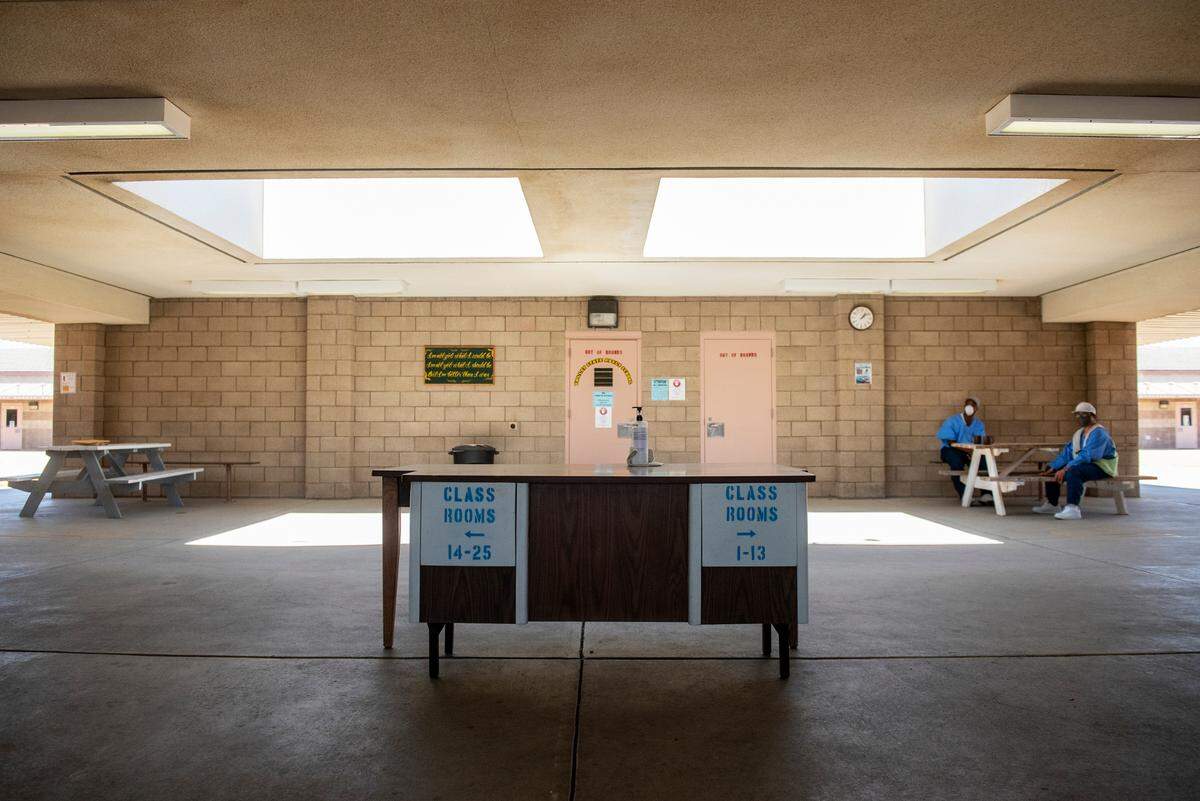
Nonetheless, Diaz fully supports the effort at Valley State Prison, which he said he helped spearhead after touring Norway’s prisons with a group in September 2019.
On that trip, Diaz and state lawmakers toured institutions with brightly painted walls, yards filled with trees and ponds and fields where staff and inmates played sports together.
Some felt inspired by what they saw.
“In 2019, it was the most encouraging thing, as far as changing the prison system, that I had ever seen, and I was extremely optimistic, to the point where I was giddy,” said Assemblyman Reggie Jones-Sawyer, D-Los Angeles. Jones-Sawyer is chairman of the Assembly’s Public Safety Committee.
Alarmed by correctional officers’ health
Criminal justice advocates have the health of correctional officers in mind when they pitch Norway’s model to American prison officials.
In California, nearly a third of officers have at least one symptom of PTSD, 38% report symptoms of depression and 10% entertain suicidal thoughts, according to a 2018 study from the University of California, Berkeley.
Nine California state correctional officers killed themselves last year alone, according to figures kept by the state correctional officers union. Thirty-four inmates killed themselves in 2018 in California, which has one of the highest rates of inmate suicides in the country.
“Everybody who sets foot in a prison is at risk of poor health outcomes,” said Dr. Brie Williams, whose nonprofit organization Amend has been organizing trips to Norway for state-level officials since 2017. “In this way, we’re all on the same side. Nobody should live in a place that makes them sick, and nobody should work in a place that makes them sick.”
Norwegian correctional officers report high levels of job satisfaction and well-being in surveys. Tom Eberhardt, a senior adviser for the Directorate of the Norwegian Correctional Service who has worked in the country’s prisons since 1992, said he doesn’t remember the last time an officer took their own life.
In Norwegian prisons, security begins with getting to know inmates and developing relationships based on mutual respect, Eberhardt said.
“We don’t want them to fear us,” he said. “In a difficult situation, it’s more likely they’ll become violent if they fear us than if they respect us.”
Officers there are trained to use the lowest level of force when approaching potentially confrontational situations with inmates.
“Unfortunately, at prisons in America, you react with the highest level of force to make sure you control the situation,” said Oregon State Penitentiary Superintendent Brandon Kelly, whose institution has adopted Norwegian principles. “From the Norwegians, we took, why not start at the lowest level needed and then escalate to a higher level if you need to?”
For example, if an inmate in a behavioral health unit refused to come out of a shower, an officer under the old methods would go in and remove them, he said. Under the new way, the officer might tell the inmate they were holding people up, but would leave them in there, allowing them to “de-escalate themselves,” he said.
Oregon inmates started to misbehave less often when they knew they wouldn’t get reactions from officers, he said.
That atmosphere has improved among Oregon officers, too.
“You talk to the people who work here, and it just feels better,” Kelly said. “I feel better at work than I used to.”
Rehabilitation at Valley State Prison
Returning home from Norway, Diaz said he and other corrections officials zeroed in on Valley State Prison as the place to try out some of the new principles.
“The environment was already there,” said Connie Gipson, director of the corrections department’s Division of Adult Institutions, who also went on the trip. “And it was, ‘How can we enhance what they’re doing on their own, with no additional resources, to see if we can be even more successful?’”
The 2,700-inmate prison doesn’t accept the worst offenders, and it doesn’t allow separation of inmates by gang affiliation the way some higher-security institutions do.
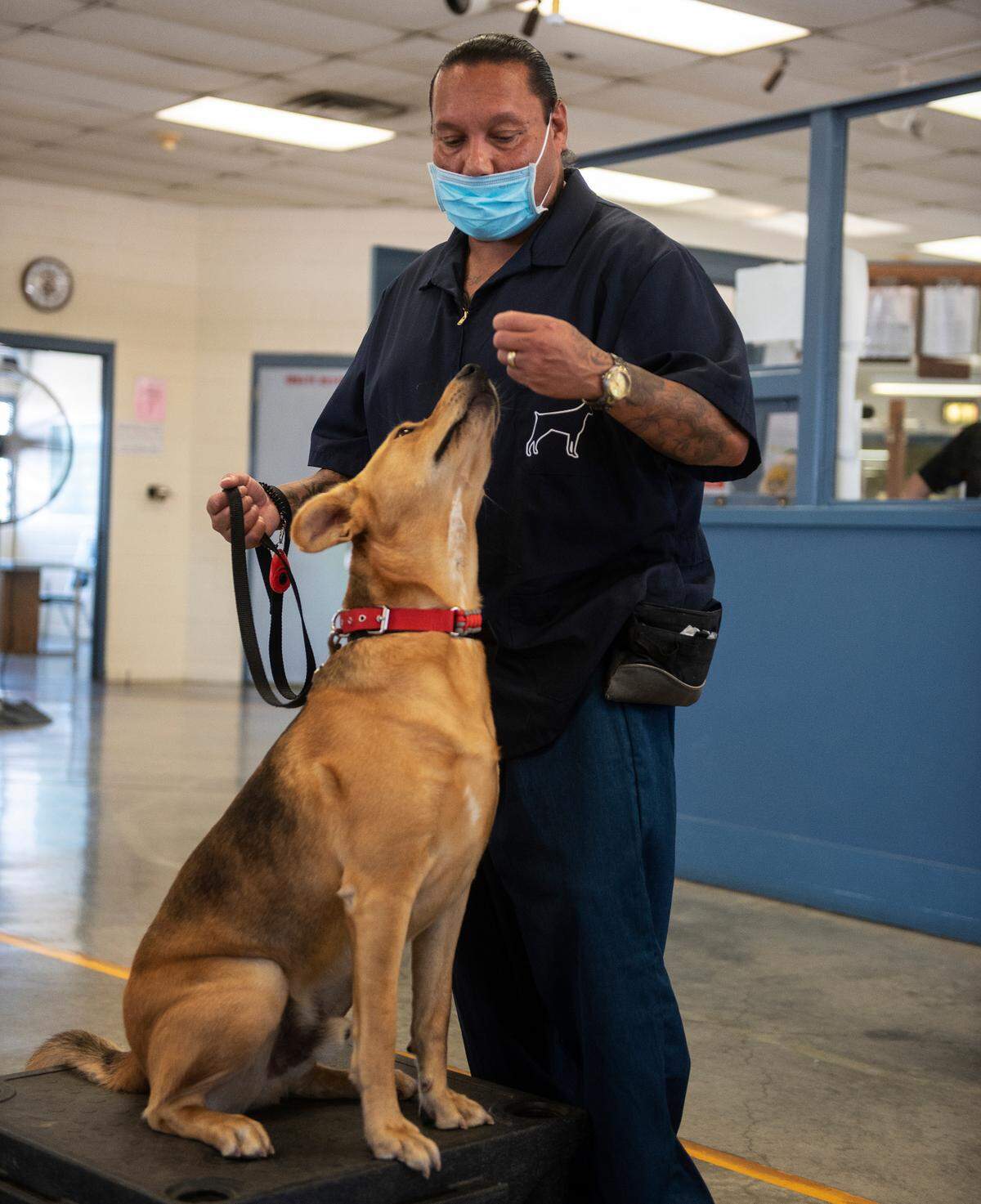
Inmates there can train service and emotional support dogs, craft paper figurines or participate in group discussions through programs such as “Seeking Safety,” an 11-week course that provides help with substance abuse and treatment for post-traumatic stress disorder. Valley State offers training in trades ranging from masonry and plumbing to optics and cosmetology.
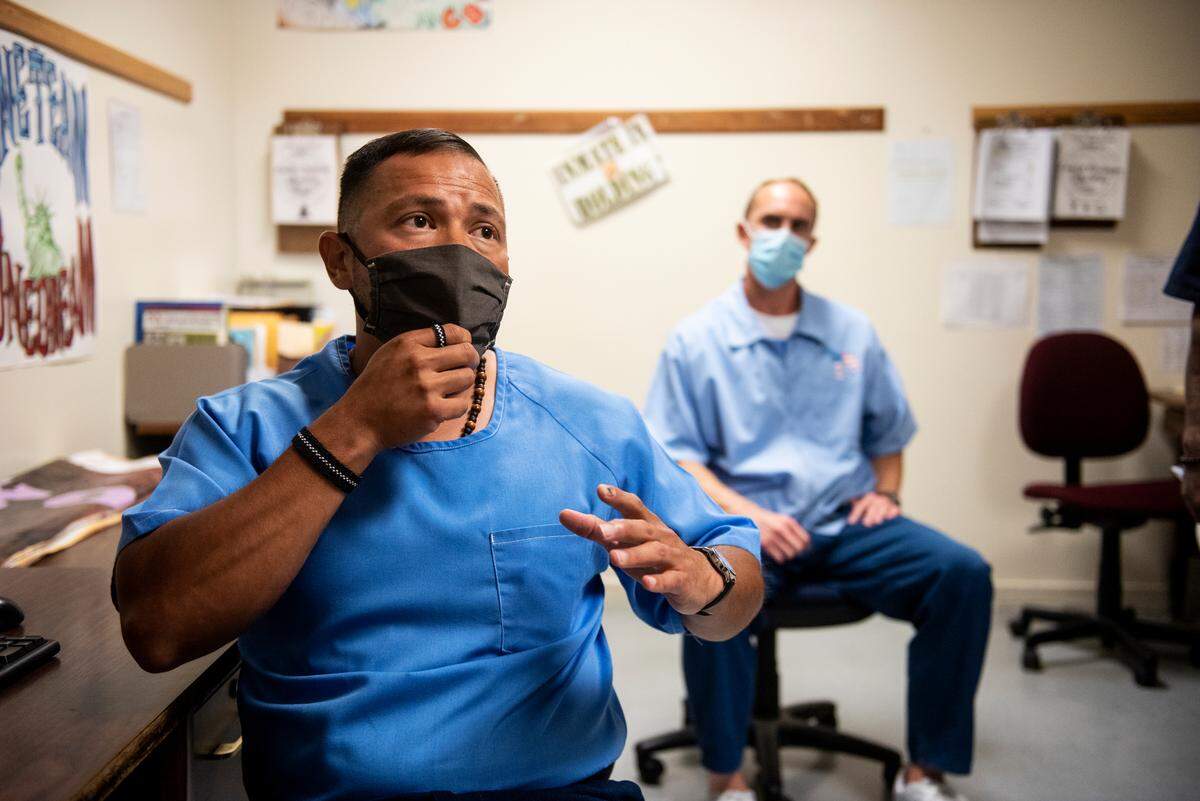
It launched a young offender program in 2017 that provides mentoring and enhanced services for inmates aged 18 through 25.
Today, 213 older inmates mentor the younger ones. They say they strive to provide positive guidance to help young inmates avoid their mistakes — and the influence of gangsters.
Bright posters with positive slogans, such as “one team, one dream” decorate the walls of the mentors’ office.
“I wanted to be the person I wish I had been when I came to the prison,” said Joseph Hader, 37, a coordinator in the program who is serving a life sentence for first-degree murder.
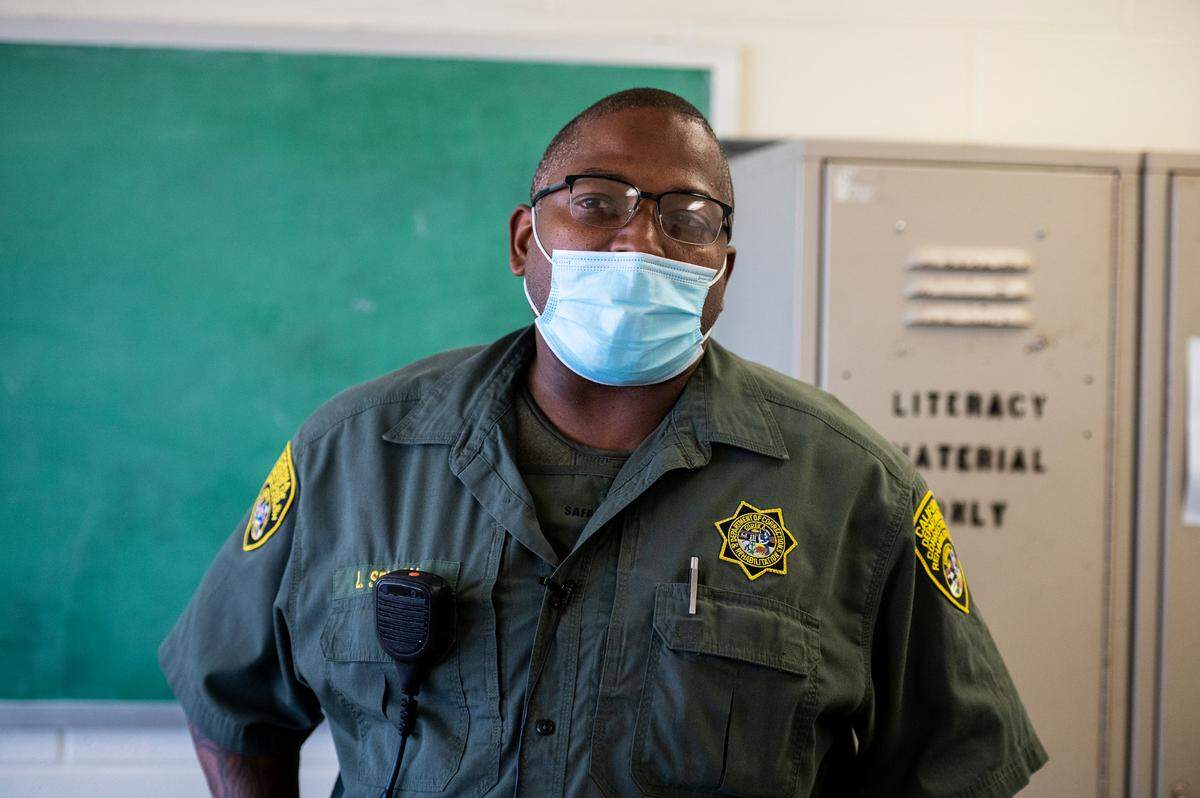
Correctional officers observed positive changes among inmates in the programs and shared in them, said Eddie Castillo, who is a chapter president with the California Correctional Peace Officers Association and has worked at the prison for 24 years.
Some of his colleagues initially had doubts, Castillo said.
“When we started off early on, many members were coming to me, saying, ‘Hey why are we allowing them to do these groups? They’re doing all these groups,’” he said. “And then I explained to them what the union is about: labor, benefits and working conditions. We’re making sure that we work within that. And what we’re gaining from that is we’re gaining the staffing, we’re making sure safety is in play so that we can go home safe. And it works perfect. Once they see that, now you have more and more people jumping on board, saying, ‘you know what, I’m thankful I work at Valley State Prison.”
Crime victims skeptical of Newsom plans
The changes at Valley State Prison are taking shape as Newsom’s adversaries challenge his criminal justice policies in the recall election.
Mark Klaas, an advocate for victims’ rights since a felon murdered his 12-year-old daughter in 1994, participated in multiple events during the past month advocating for Newsom’s removal, focusing on the governor’s 2019 decision to suspend the death penalty.
Sacramento County District Attorney Anne Marie Schubert, who is running for attorney general, said that although she supports rehabilitation, Newsom’s push to release prisoners while the programs are still being refined threatens public safety and disrespects victims.
Schubert, who is part of the lawsuit contesting the Newsom administration’s parole changes, blasted the governor for allowing inmates to earn more early-release credit by avoiding bad behavior. She said the credits should be reserved for participation in rehabilitation programs.
“How do we get them to go (to rehabilitation programs) if there’s no consequences any more for their failure to go?” she said.
And she said inmates must still be held accountable for their crimes for the sake of victims.
“I think people are willing to say, ‘OK, Mr. Jones, do the work, do the rehab,’ but when you’re ignoring the input of crime victims, that’s not justice,” she said.
The district attorneys’ lawsuit argues the corrections department doesn’t have the authority to ease parole the way it plans to do without going through a more extensive public process that would include hearing from victims.
Using an emergency process, the department is making a change to grant inmates convicted of violent crimes one day of good conduct credit for every two days served. Previously, they earned one day of credit for every four days, according to the department.
Rehabilitation takes time, Diaz said. Corrections department statistics show inmates with 12- to 36-month sentences are the most likely to commit new crimes after they are released, he said, and they’re also the group most likely to be released early under the corrections department’s proposed changes.
“If they’re getting turned out of prison faster,” he said, “what rehabilitation are they receiving?”
Corrections department spokeswoman Vicky Waters said in an email that the department views it as important to create incentives for both good behavior and participation in rehabilitation programs.
“We are laying the foundation for the future, so that incarceration is not a one-way ticket to recidivism, but an opportunity for people to become productive members of the community,” Waters said in the email. “The program at VSP includes tracking mechanisms that will allow us to measure success, and give us an opportunity to see what works and what doesn’t.”
Can the new prison model work in California?
California prison leaders say they’re excited about the Norwegian model, but even its biggest proponents acknowledge the unique challenges of importing it here.
Gangs organized by race have a strong hold on life inside many of the state’s institutions. Inmate assaults on correctional officers, including hurling urine and feces, are common at high-security institutions. “Inmate lover” is a label many correctional officers still strain to avoid.
Norwegians “don’t have to deal with Mexican Mafia, Aryan Brotherhood, Nuestra Familia gangs,” Diaz said. “They don’t have to deal with being on the border and having individuals doing business with cartel members. It’s a different dynamic. But that’s no excuse not to try it.”
It also could prove expensive.
Norway has one of the world’s lowest recidivism rates, at about 20%, but also has one of the world’s highest costs per-inmate. It has 56 custodial establishments for a prisoner population of only about 3,700 people, according to a Norwegian Correctional Services website.
Two U.S. states have found some success with Norway’s approach, though.
North Dakota launched a Norway-inspired overhaul in 2015. Three years later, the state recorded a 10% drop in former prisoners committing new crimes, according to the state’s Department of Corrections and Rehabilitation.

Oregon’s prisons have reduced assaults on staff since incorporating Norwegian principles in 2018. Employees are using less sick leave and reporting improved satisfaction at work, said Oregon State Penitentiary Superintendent Kelly.
In both states, officers and inmates now play sports and participate in communal activities such as barbecues together.
California’s corrections department plans to track recidivism and other statistics at Valley State Prison to help determine whether it is successful.
Castillo, the union president there, said he is already seeing results when he sees former offenders around town.
“The biggest change I’ve seen (is in) some of these inmates when they parole, and it’s different than in the past,” he said. “When I’m out at the 7-Eleven and I see an inmate, it’s always a little bit, is it going to be confrontational? Now they’re like, ‘Hey Castillo, how you doing?’”
He’s retiring soon. So is Warden Ray Fisher. Their departures will test the program’s durability.
“It has to be authentic for it to work,” Fisher said. “They have to understand that what we talk, we’re really trying to invest in their betterment.”
“It’s like a garden,” he said. “You have to weed it, you have to water it, you have fertilize it, and you have to keep it up, year in, year out.”

This story was originally published August 4, 2021 at 5:00 AM with the headline "Inside Gavin Newsom’s push to remake California prisons — Will a European approach work here?."