
Former West Sacramento resident Donald Hohman, Army medic taken hostage in Iran, dies at 79
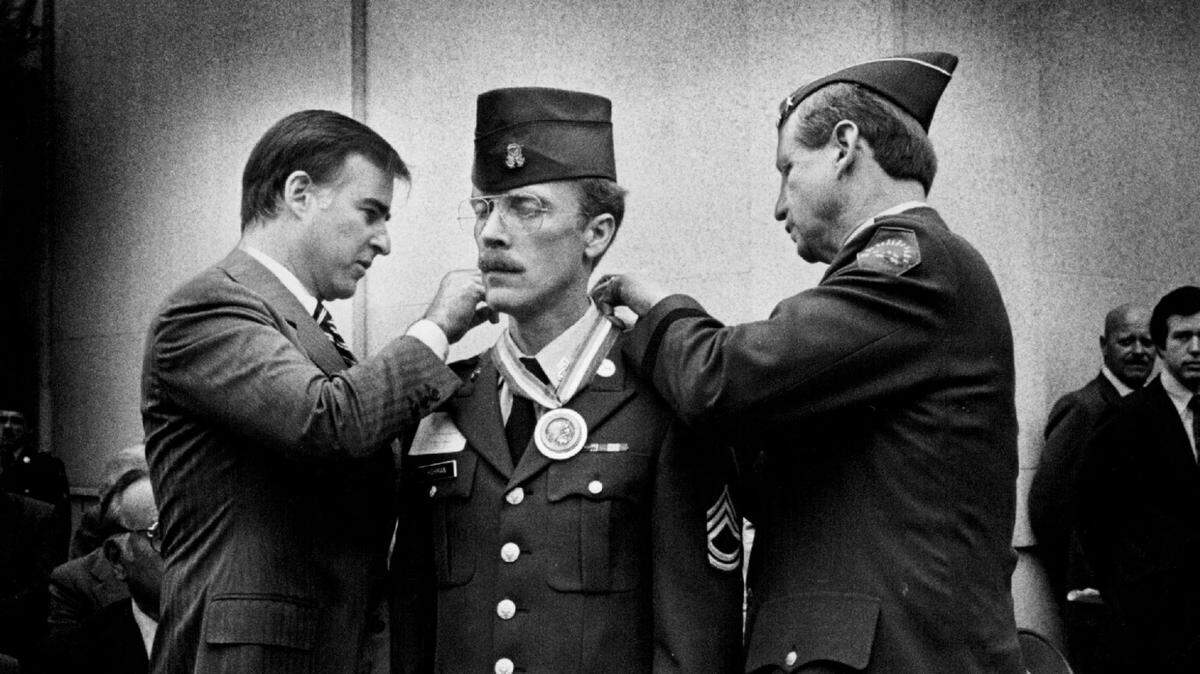
Donald Robert Hohman, a former Army medic and West Sacramento resident who was taken hostage in Iran in 1979 and held captive for 444 days, died last month at the age of 79.
Family of Hohman said he died on Sept. 22 in Elizabethtown, Kentucky.
He was one of 52 Americans taken hostage at the U.S. embassy in Tehran, Iran, on Nov. 4, 1979, and held for more than a year amid a diplomatic stalemate between the two nations before finally being released on Jan. 20, 1981.
Born on Sept. 3, 1942, in Yuba City, he attended John Marshall High School in West Sacramento before being drafted into the Army in 1968. He was assigned as a paramedic in Wiesbaden, West Germany, at the same facility where the hostages would later be debriefed following their release. After his first two years in the service, he briefly returned to the United States, only to later reenlist in the Army and return to Europe.
Hohman had been stationed in Frankfurt, Germany, before he was transferred to the embassy in August 1979 — just a few months before the embassy was seized. After Iranian revolutionary militants stormed the embassy and took it over, negotiations between the Iranian government and President Jimmy Carter’s administration quickly became deadlocked.
The paramedic was outspoken, both during his captivity and after his release. Archives from The Sacramento Bee featuring interviews with Hohman report that he argued with his captors and sometimes refused to eat, and suffered beatings and solitary confinement for it.
“The longer I’m held the more I’ve come to despise my captors ... (for) taking my freedom without me every having done an Iranian any harm,” Hohman once wrote in a letter sent home.
He was also a harsh critic of the Carter administration, which launched an abortive attempt to rescue the hostages on April 24, 1980. That attempt, known as Operation Eagle Claw, resulted in the deaths of eight American service members after a helicopter crashed into a transport aircraft.
“I still hold Carter personally responsible for what happened,” Hohman told The Bee in 1986. “He made mistakes through the whole thing ... and then he lost eight people that didn’t have to be lost.”
Just after President Ronald Reagan was sworn in as president, Hohman and the other hostages were released from captivity, but soon were interned on a whirlwind tour of parades and ceremonies.
“We started feeling like hostages to the American people. I realize that they needed heroes,” he said in 1986. “But we needed time for isolation; we needed to regroup. We went right from dead zero into the spotlight, having to behave like something we weren’t, being treated like something we weren’t. It could have been damaging.”
Six months after his release, Hohman was awarded the Army’s Soldier’s Medal — the highest honor possible for a soldier without engaging in combat — for risking his life to acquire medicine from the embassy’s dispensary to treat a fellow hostage, likely saving his life. His medical training earned him the nickname “Doc” from others taken hostage. As he grew lean under captivity and as his hair grew out, he earned the name “Messiah,” as well. He left Tehran 50 pounds lighter and craving bratwurst and beer, a welcome change from the rice, yogurt and lentils he ate in captivity.
He later said he wouldn’t go back to Iran “without an M-16 in my hands.”
Despite his pugnacious style, the twin trials of his captivity and the junket he was sent on afterward affected Hohman emotionally. He recalled breaking down, sobbing into his soup at a restaurant in New Orleans when he and other hostages were brought to Mardi Gras. He later sought psychiatric help and was treated for about a year.
In August 1981, Hohman told The Bee the pressure to be a hero to the American public made it difficult to be just “an ordinary guy from an ordinary place like West Sacramento.”
He continued serving in the military for several years, and went on to work as a civilian in the urology department at Ireland Army Community Hospital at Fort Knox in Kentucky, retiring in 2005. The former hostage was highly decorated over the course of a 25-year military career earning the Legion of Merit, the Purple Heart, the Prisoner of War Medal and the National Defense Service Medal. He achieved the rank of Chief Warrant Officer 2 in the Army.
Family members said that Hohman would be cremated and buried at the Kentucky Veterans Cemetery.
Hohman is survived by two daughters and two sons; 12 grandchildren; eight great-grandchildren; his brother, Lew Hohman; and his sister, Theresa Blue. His wife, Anna Heyer Hohman, 79, with whom he had been married 52 years, died on Oct. 1.
This story was originally published October 7, 2021 at 12:24 PM with the headline "Former West Sacramento resident Donald Hohman, Army medic taken hostage in Iran, dies at 79."