How a Sacramento boy overcame adversity to become Modesto’s 1st Black police lieutenant
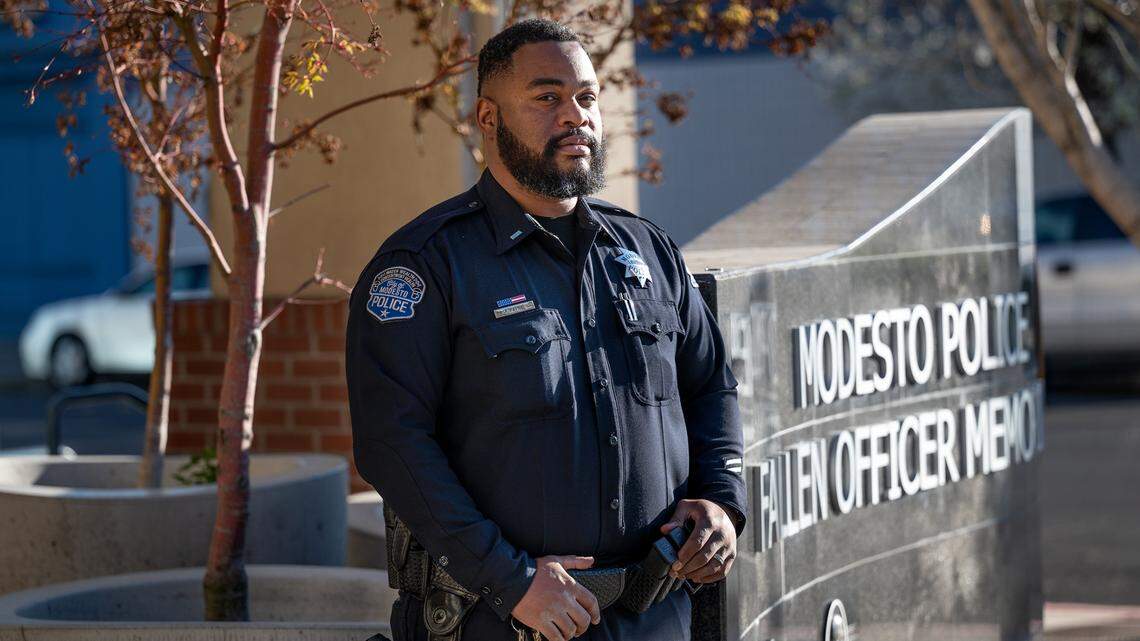
As a youth living in Sacramento’s Oak Park neighborhood in the 1990s, “When you saw the police, you ran,” said Felton Payne.
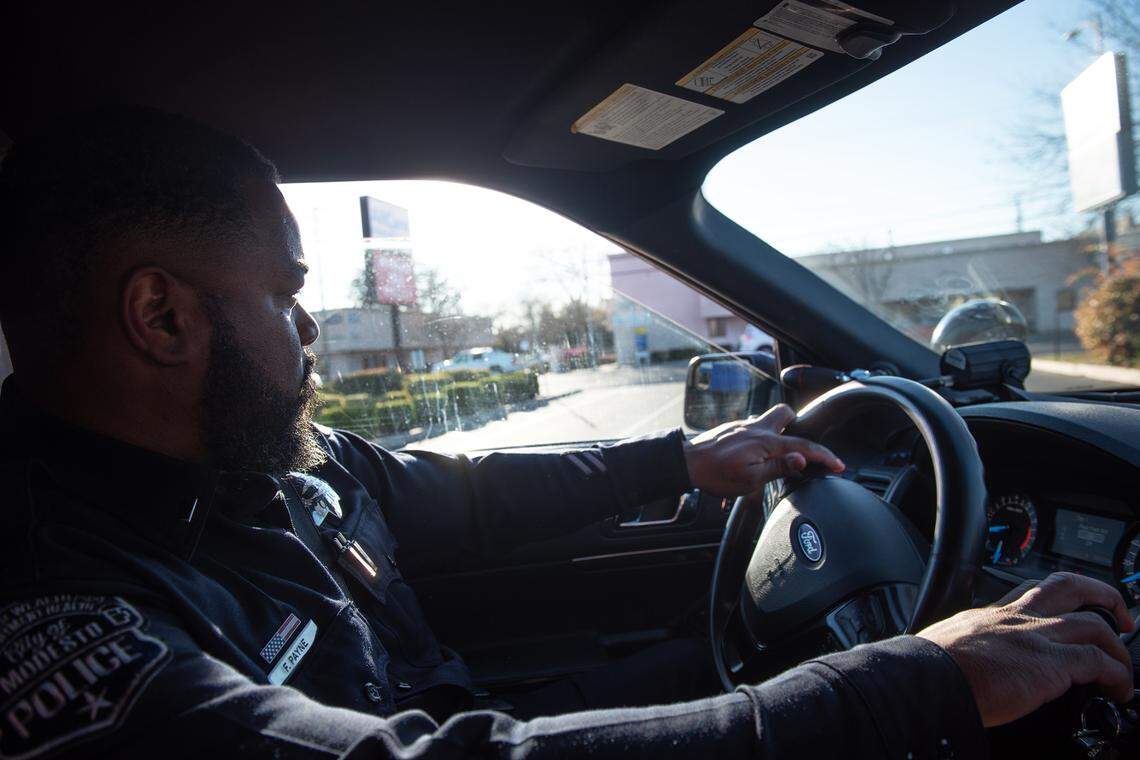
“I wasn’t doing anything wrong, but I still ran. That’s what you did,” said Payne, who recently became the first Black officer in the Modesto Police Department’s 137-year history to reach the rank of lieutenant.
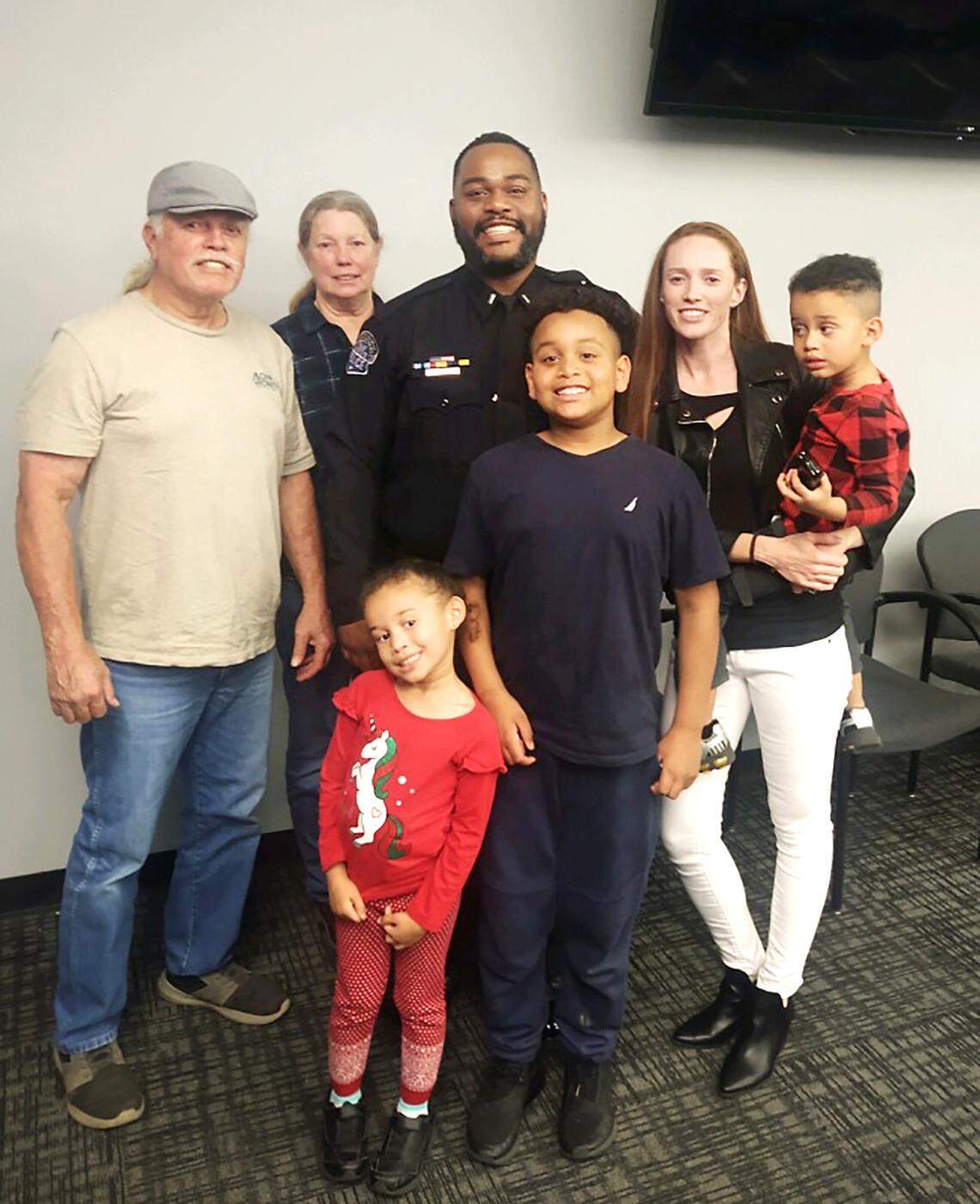
Since 2015, Payne, 39, has earned his bachelor’s and master’s degrees, was promoted to sergeant and supervised the department’s Crime Reduction Team. Along with his wife, Modesto police K9 Officer Kela Payne, he’s raising three children, too.
“He’s always been a hard worker and he’s always looked at trying to improve himself,” said Modesto Police Chief Brandon Gillespie. “I think Felton has a unique story ... one of perseverance.”
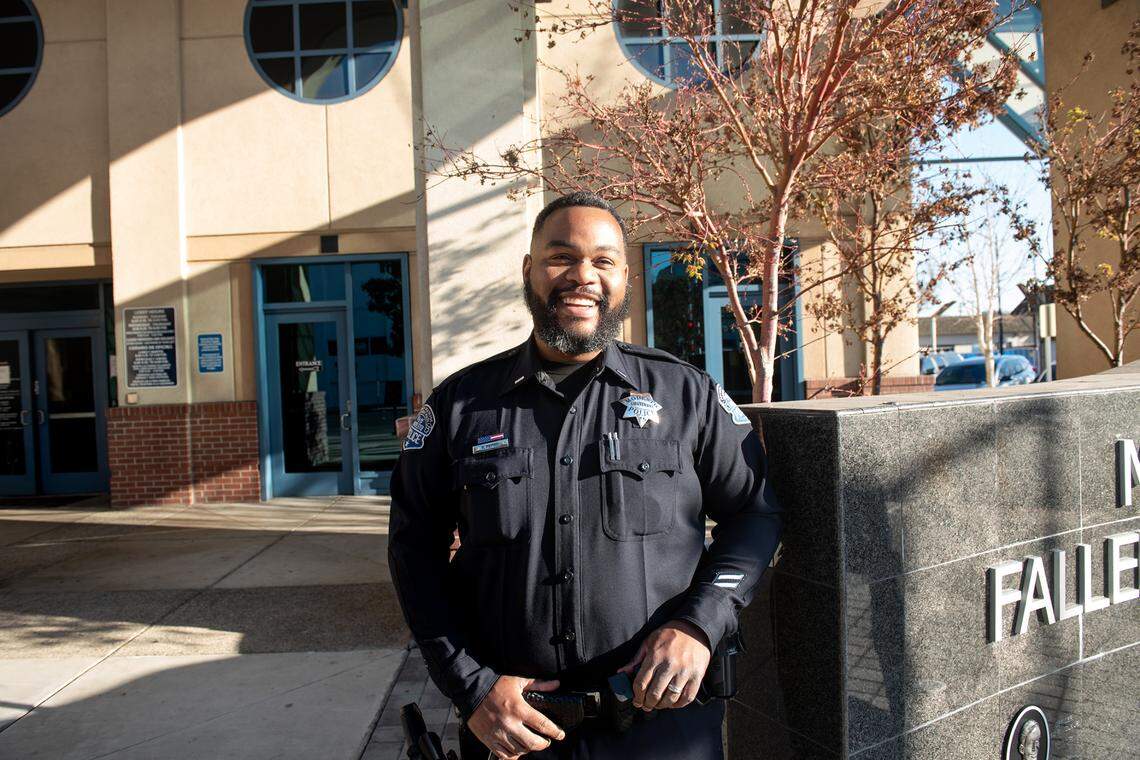
Payne’s parents were addicted to drugs and his father was in and out of prison for drug and domestic violence convictions for much of Felton’s childhood.
“When I was younger, the only thing I wanted to do was not be like my dad,” Payne said. “A lot of people I grew up with and friends I had in the past did drugs, sold drugs, and I saw what drugs did to my mom and dad and I had no interest in making money that way because that destroyed my parents at the time.”
He was no fan of cops
He certainly never dreamed of becoming a police officer, though. As a child, his image of the police was not one of heroes.
Payne said he was “roughed up” by the cops on multiple occasions as a teen.
“If you run from the cops and you got caught, they’d rough you up and send you on your way,” he said. “That was the unwritten rule.”
At the time, much of Oak Park — an area southeast of downtown — was plagued with gangs and drugs. “It was probably the worst neighborhood in Northern California,” according to Payne.
He moved to Sacramento from San Jose with his mother around the age of 10, and they spent the first year “couch surfing” before they got a home in Oak Park.
While his mom was “done with the lifestyle” when they moved to Sacramento, Payne said his parents both had a history with gangs.
“Their color of choice was blue.” he said. “I had blue stuff on and this was a red neighborhood. I got into a lot of fights with kids in the neighborhood.”
His mom used someone else’s address to enroll him in a “good school.” So every morning, he took a city bus south to the end of the line on Florin Road, then rode his bike several more miles to Florin High School.
Payne said he was a poor student but always got A’s in math and stayed busy playing football, which helped keep him out of trouble.
But with mostly absent parents, often left to fend for himself, he had a lot to be angry about. That anger led to his one and only arrest, during the summer between his sophomore and junior years.
He’d been kicked out of summer school for lack of attendance but returned to campus to turn in books and talk to his friends. That’s when he got into a fight with a police officer who’d approached him about trespassing.
“In my mind at the time, I didn’t do anything wrong because he put his hands on me first,” Payne said. “I now realize that I was 100% wrong.”
Payne spent several weeks in juvenile hall and was charged with felony assault on a peace officer, assault on a peace officer causing injuries and misdemeanor trespassing. He said he doesn’t know why he got such a “sweet deal,” but he was allowed to plead guilty to the misdemeanor and have the two felony charges dropped.
“I never looked back,” Payne said.
Expelled from Florin High due to the altercation with the officer, Payne finished school at Sheldon High near Elk Grove. His grades improved and he started getting interest from colleges for football.
He played as a defensive lineman for American River College for a year. But he worked three jobs at the time and his grades were not good enough to play a second year.
‘A real motivator’
One day, about eight months after the 9/11 terrorist attacks, Payne was walking home when he saw a Marine Corps recruiting office and decided to go in.
“The looks I got from the recruiters,” Payne said. “At the time, I was 300 pounds, I had a big ol’ old-school Afro, a beard and some fake clip-in gold teeth. I just wasn’t your typical recruit. All the recruiters looked at each other like, ‘Whose turn is it for walk-ins?’ None of them wanted to come talk to me.”
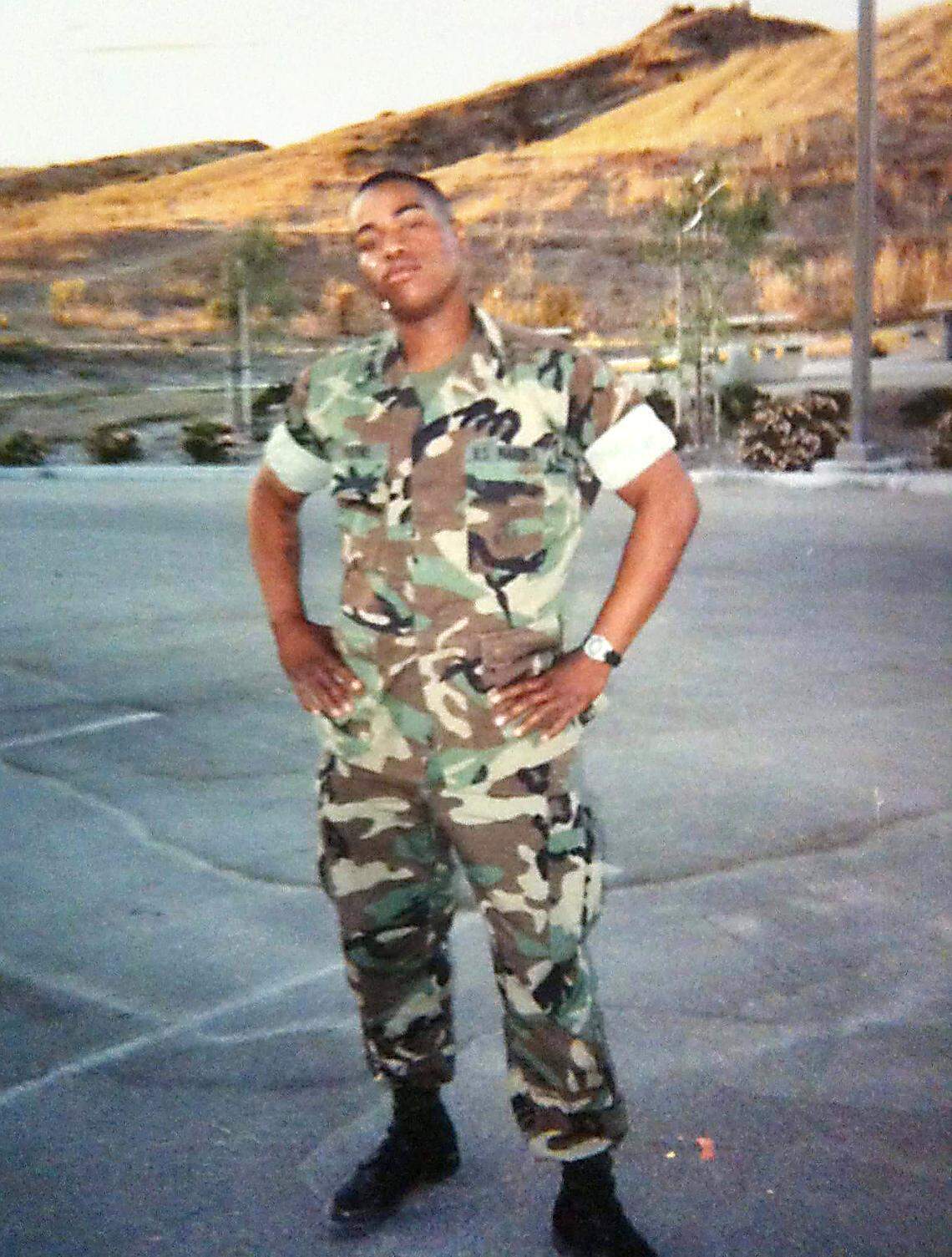
He recalls that the recruiter who did approach him said, “I will be honest with you; you are overweight, you are going to have to cut your hair and you’re going to have to take those stupid teeth out of your mouth.”
Payne also had to get a “felony waiver” by explaining his arrest for assaulting the officer and what he learned from the experience.
He still was over the weight limit when he entered boot camp, but his athletic prowess got him through the physical fitness testing.
In boot camp, Payne was made a squad leader. That meant he not only led his squad and gave directions, but he would be the one punished for any of its mistakes.
“It was a real motivator for me,” he said.
Payne was assigned to payroll and served in the Marines for four years. As his commitment came to a close, he began thinking about his next chapter and figured the skills he learned in the Corps would transfer well to law enforcement.
After spending a year working for the Federal Bureau of Prisons, Payne was hired by the Modesto Police Department in 2007. As part of the background process, he again had to address his juvenile arrest.
He explained, “This was something I have done in the past; however, look at what I have done since. That incident really turned me around. It was kind of my wake-up call. There were several in my life, but that was probably the biggest one.”
He knew the cop he wanted to be
Payne also didn’t want to perpetuate the behavior of the police he encountered as a teen.
“I knew my heart was good and I knew that I wouldn’t be able to stand and watch someone be hit or beat for no reason,” he said. “When I got here — and I can only speak for Modesto — I didn’t see any of that. That wasn’t our way of doing business. That was kind of refreshing and eye-opening.”
Payne loved being a patrol officer and for a long time didn’t consider seeking promotion. But when he started seeing other people he’d worked with on patrol promote, his priorities changed.
Payne earned his bachelor’s degree in 2015, and in 2017 became a sergeant. He was assigned to the Crime Reduction Team, which focuses on quality-of-life concerns, like issues with the homeless population, drugs and vice crimes.
It was a good opportunity for Payne to connect and “break down barriers” within the community by sharing his own story. He also spoke to youth in the Wake Up program, designed to teach kids to make good choices and learn that the decisions they make affect their future.
When Payne decided to try for the lieutenant position, he took on even more responsibilities because he felt the job required him to be pulled in many different directions and succeed at each.
Last year, while working to finish his master’s degree, Payne also completed an eight-month leadership course that had him traveling to Southern California once a month. The Crime Reduction Team achieved a high arrest rate under his supervision.
At home, he and his wife were raising two preschool-age children and a 10-year-old. Payne also coached his eldest son’s youth football team, which was undefeated and won its league championship.
In October, Payne was promoted to lieutenant.
“I never wanted anyone to question my work ethic or my character or why I got promoted,” he said. “I knew that I was going to be the (department’s) first Black lieutenant but I never wanted anyone to think that I just got promoted because I am Black.”
Payne said he knew if his qualifications were questioned, his resume would hold up against anyone else’s.
Gillespie said he promoted Payne based on his merits, the perspective he brings to the position, and his optimism. “He brings ... life experience that we haven’t had in command staff since I have been here,” the chief said. “The last couple of years have been unprecedented with a growing political and social divide, and to have people who can connect with all aspects of our community” is crucial.
Gillespie also said Payne has the glass-half-full approach he wants in a leader.
‘All the way to the top’
Payne now is working a graveyard shift as a watch commander. The position mostly involves office work but his goal is to remain connected with the officers on the street by getting out there with them a few times each week.
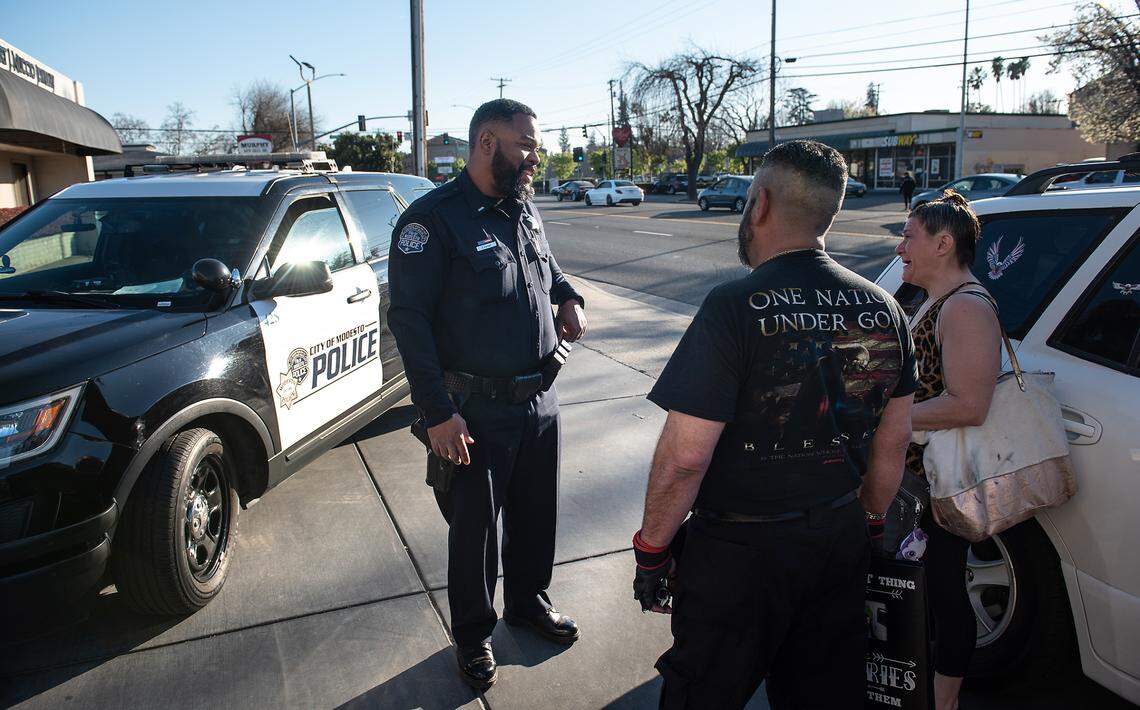
Personally, he said he now has a great relationship with his mom, who has been sober for 22 years. He said his dad is living out of his vehicle in the Bay Area but he talks to him a few times a month and remains hopeful that his kids will someday get to know their grandfather.
Payne aspires next to get a doctorate in criminal justice with an emphasis in organizational leadership and eventually promote “all the way to the top.”
“Very few things I do are for myself,” he said. “Like getting into this rank; it’s not for me, it’s to set an example for my kids and for people who may look like me, who may have a background like me, who may have made stupid decisions. You can turn things around.”
This story was originally published February 27, 2022 at 7:15 AM with the headline "How a Sacramento boy overcame adversity to become Modesto’s 1st Black police lieutenant."