
California imprisoned her for killing the abusive father of her unborn son. Now free, she fights for change
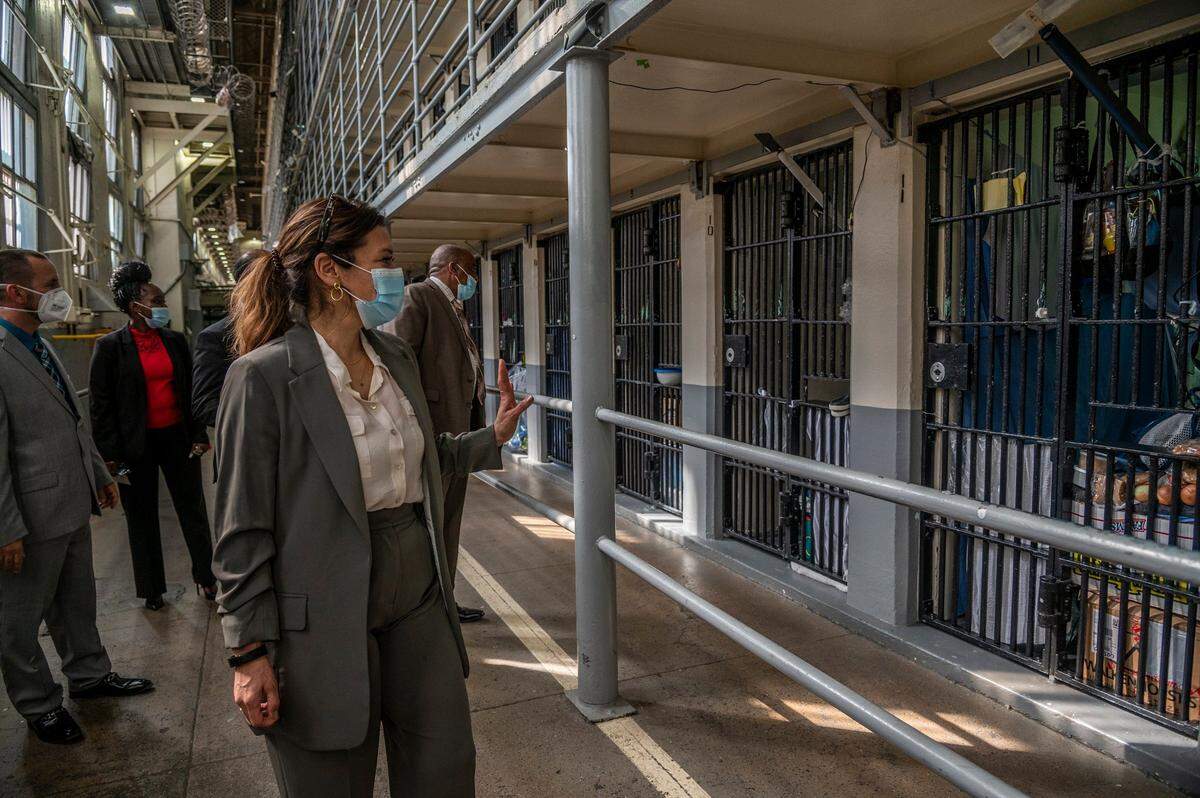
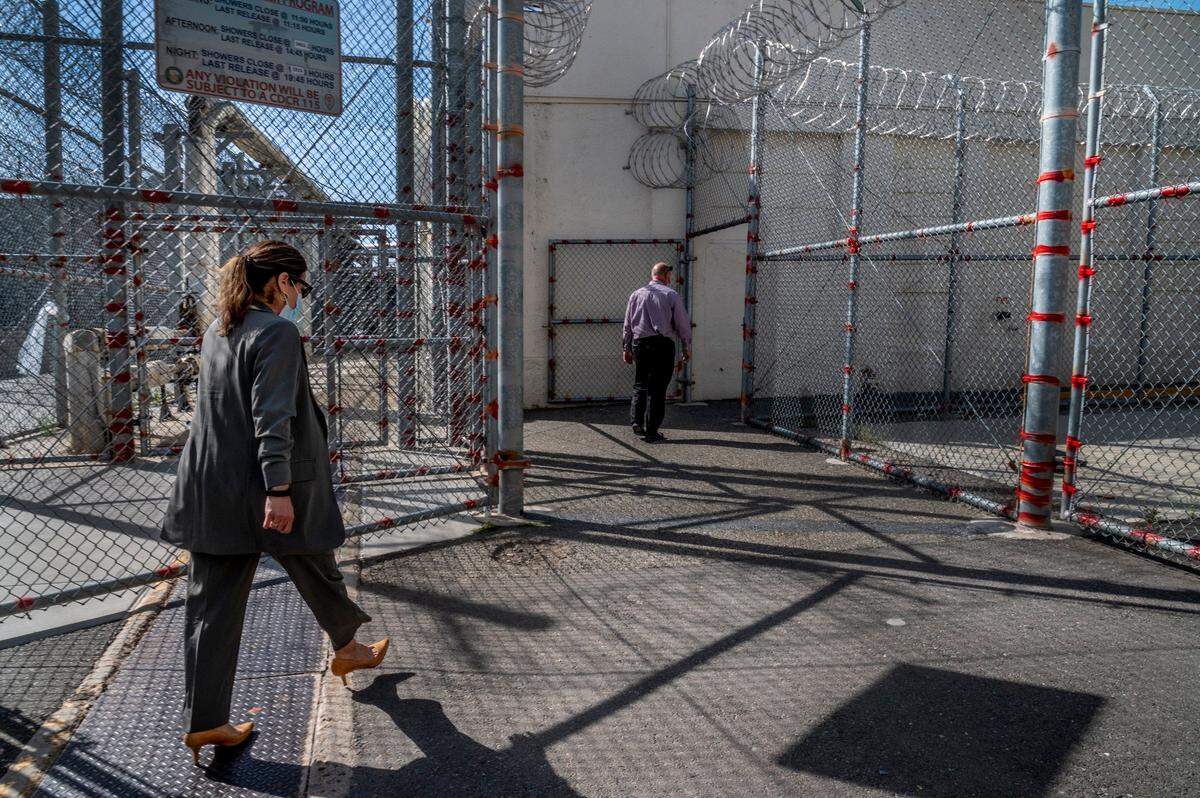
Norma Cumpian is chatty and upbeat as the prison lieutenant leads her through the steel gate, under the guard tower and along the fences ringed with concertina wire. She ambles past the grass field, scorched and barren on a 100-degree Valley day, and steps into the cooled recreation room at the Central California Women’s Facility.
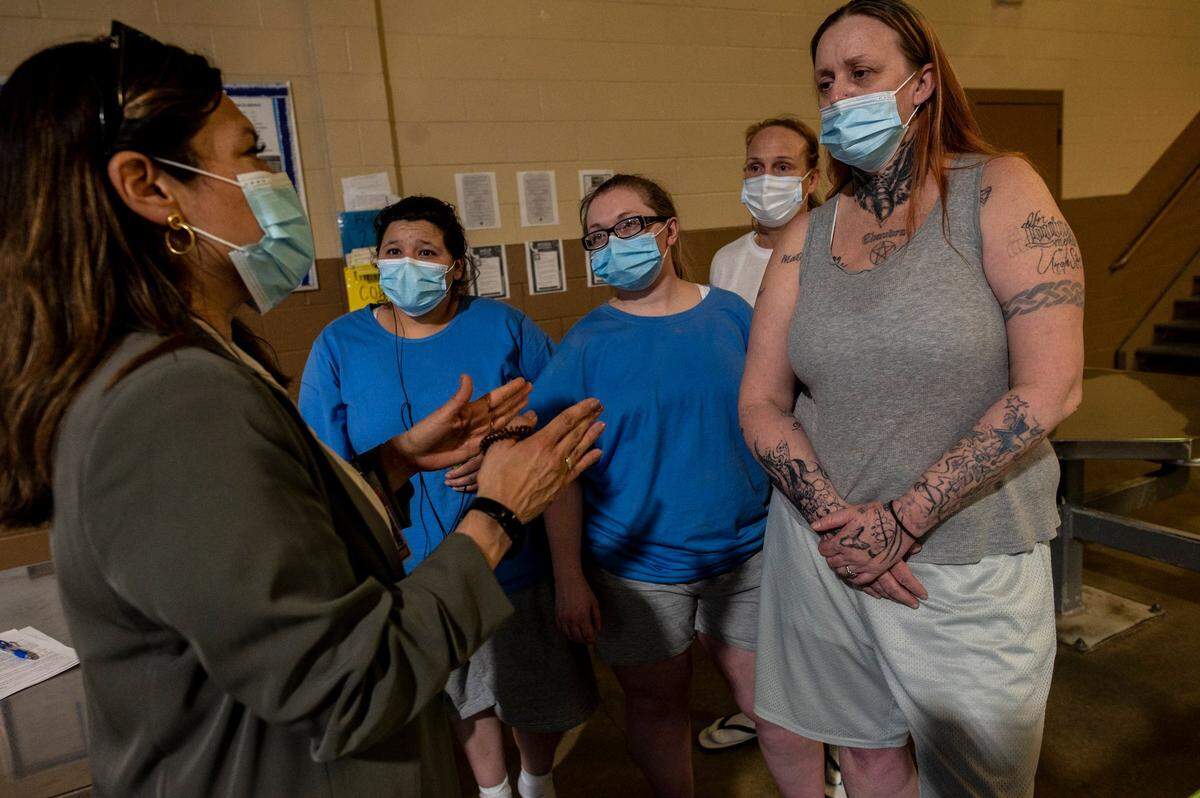
Inside the makeshift classroom a dozen women watch as she introduces the afternoon’s lesson plan. It’s about recognizing trauma, understanding broken families and learning to grow from hardships and mistakes, including their roles in drug deals, gang crime and, sometimes, murder.
For Cumpian, this lesson plan isn’t just theoretical.
On Aug. 27, 1992, Cumpian fatally shot Tim Choi, the father of her unborn son, during a fight she feared would escalate — a pattern of domestic violence she was all-too familiar with.
After she was convicted, Cumpian was convinced she would be a throwaway, doomed among California’s incarcerated people lost in the state’s then-ballooning prison system. She feared she would be one of the thousands marooned at this terrifying prison tucked between Merced and Fresno and obscured from the public by a grove of almond trees.
Instead, Cumpian’s story is one of transformation, if not redemption. It’s one of a troubled student and convicted criminal turned doting mother and fierce advocate for incarcerated parents and their children. It’s one of learning about motherhood from a former member of the Manson family and of battling for freedom against movie star California Gov. Arnold Schwarzenegger.
She would land on the radar of three governors and end up overseeing the jails and prisons she was once locked in. She would befriend a famous Hollywood producer who would forever change her life.
Now 52, Cumpian’s life is a case study in how America’s understanding of domestic violence and treatment of prisoners has shifted and how a mother’s love for her son came to motivate life inside prison and out. Now, her greatest fear is that the pendulum may shift again, as conservative voices attempt — with mixed results — to gain power across the country and try to chip away at decades of criminal justice reforms.
“It seemed so much scarier so long ago,” Cumpian said, describing her first steps into prison.
But that must feel like a lifetime ago. Today, as she walks into the prison to teach and counsel those who are so like she once was, there is an important difference.
“I’m not powerless anymore.”
Trauma and a gunshot
On that August day in 1992, Cumpian and Choi were arguing about a telephone bill.
They had started dating about six months earlier. He was “protective” of her early on, she would later tell a forensic psychologist during a pretrial interview, according to court papers. “He was a good friend. … I could talk to him. He seemed like he was really smart, and I kind of, like, looked up to him. If I needed him, he would always come right away.”
But the tenor of their relationship changed when drugs came into the picture.
A friend of Cumpian’s would tell an investigator years later that she witnessed him become hostile and controlling around Cumpian, who regularly had bruises on her arms and legs.
Choi was once high on methamphetamine and shoved Cumpian’s thin, 5-foot-3 body against a motel wall, Cumpian told the psychologist. Another time, he choked her. And in another particularly violent incident earlier that year, about a week after they moved into a Long Beach apartment Choi rented to sell drugs, he threw a bottle at Cumpian, slammed her into a wall and held a gun to her face after she asked for help carrying a mirror.
A neighbor called the police. But when the officer arrived in the doorway, Cumpian downplayed the incident. She said it was nothing to worry about.
“I knew if I had let them in… oh my God,” she anxiously told the forensic psychologist. “Timmy would have went off…I couldn’t have let them in.”
Choi apologized. He said he was stressed.
As was often the case, she said she looked past the bad and chose to focus on his redeeming qualities.
Their on-and-off relationship carried on until that night in August. He entered the apartment high on methamphetamine and fuming that she hadn’t paid the phone bill, according to investigative reports. It meant that he couldn’t arrange drug deals. He screamed at her as they moved from room to room.
The fight was also rooted in something else: Cumpian became pregnant that summer. It was a surprise, but one that she thought might be an opportunity. She quit using drugs and viewed motherhood as a chance to refocus.
Her entire life had been chaotic, according to court records and interviews. Cumpian was kicked out of Catholic school in fifth grade for being too disruptive — she felt smothered by the ceremony and mocked the school work. Her life stabilized after she moved in with a high school boyfriend and his family.
But they broke up after graduation, and by 18, Cumpian was using methamphetamine, smoking marijuana and drinking alcohol with local gang members. She’d rebelled in every way against her Catholic mother who had immigrated from Mexico and whose protective tendencies were so intense that she decided against teaching Cumpian Spanish; she was afraid an accent would make Cumpian “stick out.”
Even though Cumpian considered herself “a mess” when she became pregnant at age 22, she took the forthcoming life change as a chance to make amends.
“I thought that this was something that was the light at the end of the tunnel, something that was good, that was all good in this world,” Cumpian said during an interview this spring, reflecting on the pregnancy. “It was almost like a sign that things were going to be OK.”
But Choi kept using drugs and demanded she get an abortion.
As the argument over the telephone bill, the drugs, and the pregnancy escalated, he balled his fists and hit his head — actions that Cumpian knew to be “warning signs of his violent fits,” as one report in her case file put it. Cumpian hoped two friends who had come to the house to buy drugs would intervene, but they stood by as he screamed at her, spat in her face and hurled a wicker basket at her.
She walked to the bedroom, grabbed the gun she had acquired for protection a couple years earlier, loaded it with a single bullet and lay down on the bed to the sounds of things breaking as he ransacked the apartment. A few moments later, her hands trembling with anger and fear, she stood, tucked the gun in her waistband and headed out of the room.
He was reading her private journal. He hurled the diary at her head, then reached into the living room closet as if, she would say later, he was going to grab something with which to beat her.
Not this time, she thought. Cumpian raised the gun, turned her head and squeezed the trigger.
She later told investigators she thought the shot would hit the floor, frightening him while sending a message: She wouldn’t be intimidated any longer, and she “meant business.”
Cumpian turned her eyes toward the closet. Choi was bleeding. The bullet had torn through the man’s upper chest and hit a major vessel.
She shouted for the two bystanders to call for help.
Police and paramedics arrived.
Cumpian soon realized that the coroner was also on the way.
‘Battered woman syndrome’ on trial
A judge granted Cumpian bail after her arrest that night. In the months that followed, she was torn between two worlds. She was pregnant and struggling with simple questions, like whether to invest in a hair dryer knowing that she might be going to prison. Then there were the harder ones, like how to explain to the prenatal health care workers the reason for the father’s absence.
“He died,” she’d say simply, hoping the questioning stopped there.
She generally avoids talking about that time in her life now. It’s one of the few topics Cumpian — who’s known for her openness — tries to deflect. It’s too painful to remember that feeling of dread that one day soon, she’d likely be taken from her newborn son.
“I can’t live without him,” she kept thinking.
She also worried how much he would come to know about his father’s violent history. At one point during her interview with a psychologist that summer, before her trial, Cumpian was describing the attacks that preceded the night of the shooting. She paused and began to cry.
“My son won’t hear anything about any of this, will he?” she asked. “I don’t want him to know that his dad was so violent or cruel.”
Los Angeles County prosecutors had extended a deal where, if she pleaded guilty to manslaughter, she would face a seven-year prison term. But Cumpian, who today sees her past self as absurdly rebellious and painfully naive, insisted on taking the case to trial. Best case scenario, she thought she could win over a jury. Worst case? Be handed the seven-year sentence there.
She said she didn’t understand that her charge at trial would be for second-degree murder — a heftier crime that can carry a possible lifelong sentence.
Cumpian’s attorney argued that she was a victim of a special kind of persistent and traumatic violence. She suffered from what was known as “battered woman’s syndrome,” a subsection of post-traumatic stress disorder that affects people — primarily women — in verbally and physically abusive relationships.
The term was coined more than a decade before Cumpian’s case went to court, but its application was still relatively new at the time. The California Evidence code had only formally recognized expert testimony on battered woman’s syndrome in January 1992.
At trial, a clinical psychologist testified that Cumpian’s case was a textbook example. She was financially dependent on her boyfriend and had “self-defeating” tendencies that kept her in the relationship. Anxiety, helplessness and drugs were coping mechanisms to numb herself from the abuse. “Cumpian suffered from BWS,” the psychologist said, “and she had no choice but to kill (him) in order to protect herself and her unborn child from bodily injury.”
Prosecutors disagreed. They cited the 1991 arrest for drug and gun possession and her three-year probation sentence. She could have left the house before any possible abuse escalated, they said.
And when they cross-examined the psychologist, prosecutors highlighted Cumpian’s connections to suspected Korean gang members and letters that she’d written to gangsters in prison. That, they said, undercut any argument that she was dependent on and submissive to Choi — elements of the battered woman syndrome defense.
The jury found Cumpian guilty. A judge sentenced her to 19 years to life in prison. She still has nightmares about being handcuffed and led out of the courtroom.
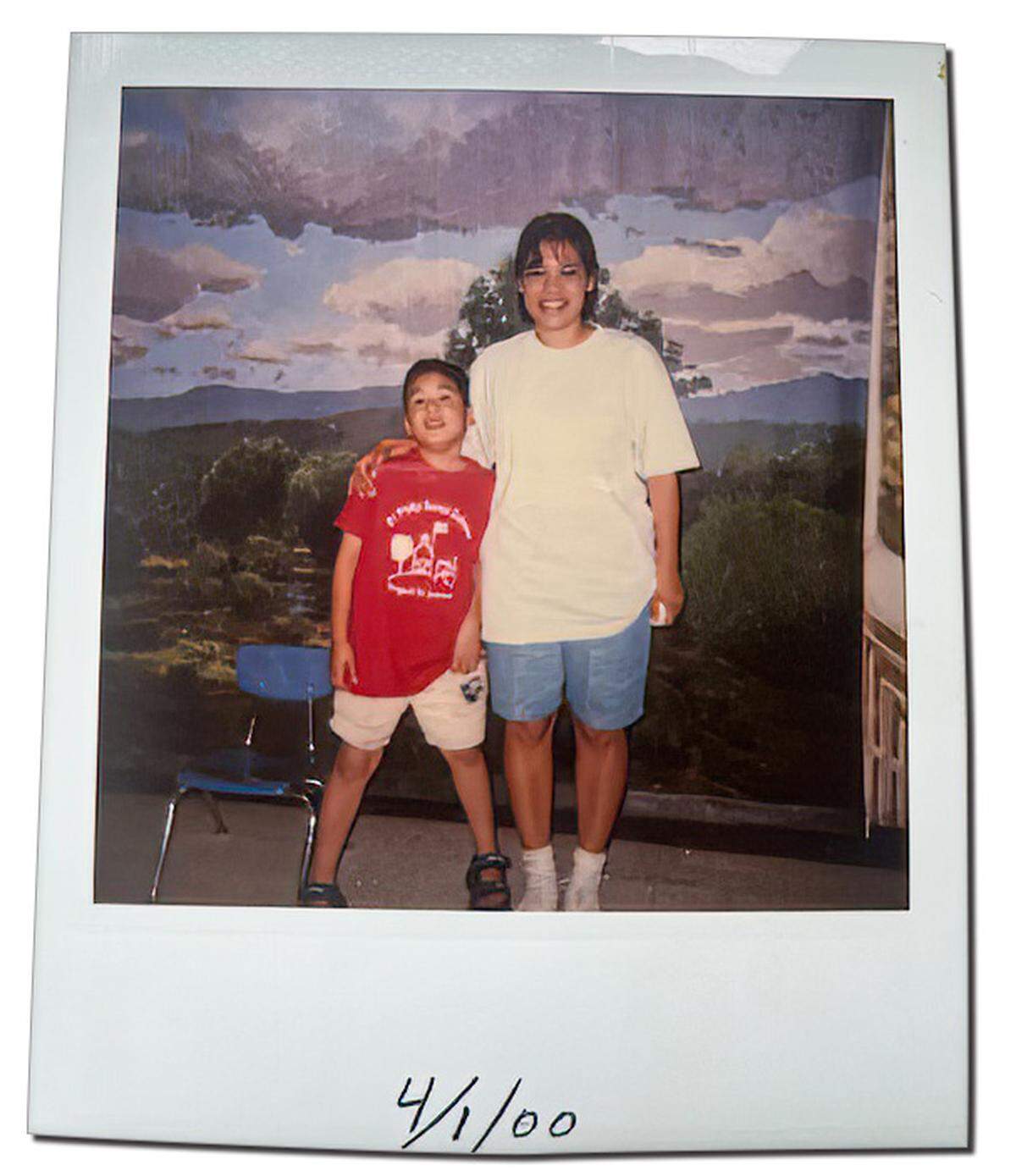
Her infant son, Anthony, was just 4 months old.
“I had this little baby,” she said, “and I just thought that I completely ruined his life and mine.”
First brush with prison life
The state shipped Cumpian to a facility surrounded by fields north of Fresno, roughly 300 miles from Los Angeles County where her parents were raising her newborn son. Her parents said they wouldn’t make the commute more than maybe once a year, and she would become almost resigned to the idea of never knowing Anthony.
But almost immediately after she walked into the Central California Women’s Facility, seemingly every incarcerated person she met told her that she needed to request a transfer to the California Institution for Women, CIW for short. It was much closer to home. There was a chance prison brass might take mercy on her. It would be her only shot at seeing her son.
“Do whatever you’ve got to do,” they told her over and over again.
Make a case to a correctional officer? Cumpian had little understanding of the best way to argue for a transfer, let alone the technicalities that go into getting one in California’s sprawling prison system. But she prepared as best as she could before she walked into the room with an official and started telling her story.
As she recounts the story three decades later, tears well in her eyes.
“I said, ‘I do not think I’m better than anybody else. But please read my case factors. I will never have another child. All I want is the opportunity to know my son.’ ”
The official told her to leave. Cumpian felt like she had failed, again. As far as she knew, the prison closer to her parents wasn’t taking in new inmates serving a life sentence. At that point, she thought, she would never get to be a part of her son’s life.
One by one in the coming days, the other women who had been waiting for their paperwork to clear got word of where they would be housed at the Chowchilla prison. Cumpian was left waiting.
And waiting.
She thought that something got screwed up. She only hoped it wasn’t something she had done.
About a week later, a prison worker slipped a piece of paper under her cell door. It had three letters on it: “CIW.” She couldn’t believe it. She didn’t believe it.
When her cell door unlocked the next day, she showed her slip to everyone she could, trying to understand. They were as shocked as she was. She soon came to realize she would be closer to her son after all.
“That really started my thing about how this community of women saved my life,” she said.
Infamous aunts, unclear futures
Anthony Cumpian still remembers the stench of manure cut by the chemical smell of highlighter ink. The manure was from the farms that surrounded the women’s prison east of Los Angeles, the highlighter ink from the reams of paperwork that officials made him and his grandparents fill out before he could be let into the visiting room.
He was 5, maybe younger, and he didn’t know who the person was that he was traveling to meet. For him, family was his grandparents. The concept of “mom” was as foreign as the prison grounds he journeyed to in his grandpa’s rundown blue sedan.
“I remember seeing a lot of stressed out adults,” he said. “I remember seeing a lot of tears.”
His mom was among the most stressed. Because of the severity of her crime, she spent her first year at CIW in administrative segregation, surrounded by prison rulebreakers and higher-risk offenders. It would be a few years before she would be transferred to the general housing area, get to know her peers, and receive visitation clearances.
During that time, she yearned to see Anthony. But she also felt “sullied” by her time inside.
She doubted whether she deserved to know him.
“I really struggled with that. Am I cruel? Am I selfish?” she thought. “Like, am I a selfish person for wanting to see my son? Am I messing up his life? Would it be better if he just had a life without me? Am I being a terrible person, again?”
Gradually, she learned that the one space she had control of was how she presented herself to Anthony. It was a gift that she lived reasonably close to him. Now she needed to be “bigger than life” for him.
The short stories that she told her son during their early visits — about her day or from the books she read to him — turned into theatrical narratives that could keep the attention of a curious first grader. Years later, that skill as a storyteller that she’d honed inside prison would pay dividends on the outside, too.
Her peers knew that these visits mattered. If they weren’t a good time for Norma Cumpian’s parents and the boy they shuttled back and forth, the visits might end. So like a network of quirky aunts, the women came to spoil Cumpian’s young son with vending machine candy bars. Some read him stories during Anthony’s sometimes-weekly visits.
It became routine, at least as much as is possible for a young child visiting a prison.
“It really wasn’t as abnormal as I thought it could be,” Anthony said.
Anthony came to understand that his family was different when he was hanging out with friends in high school. Other kids asked questions to the Korean-looking boy being raised by his Mexican grandparents who routinely took him to visit people in prison.
“I kind of accepted it was gonna be a weird life,” Anthony said.
Years later, after he enlisted in the U.S Army, Anthony was in the barracks watching a crime show on Netflix. A name came up that rang a bell. He couldn’t quite place it, so he typed it into Google: “LESLIE VAN HOUTEN.”
The woman who was doting on him when he was a young boy visiting his mom was a member of the infamous Manson family who was convicted in one of the most high-profile cult killing sprees of all time. Anthony still considers Van Houten a friend.
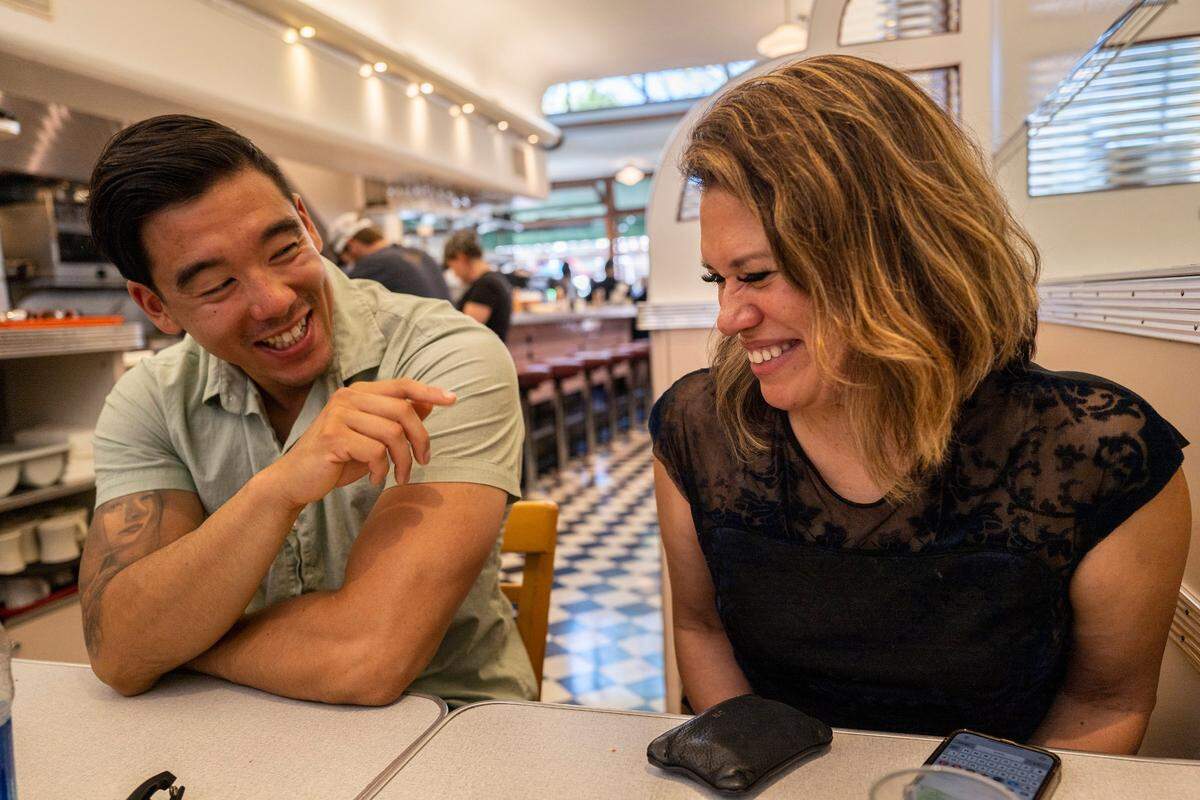
“Everyone’s a villain in someone else’s story, you know?” Anthony Cumpian said, reflecting on the women who had become his mom’s closest friends in prison. “They really made me realize that the world is not black and white at all. It’s really one big gray.”
For her part, Van Houten remembers watching the boy grow up and Cumpian evolve from a nervous new mom to a slightly less nervous parent who was active in her son’s life — even from inside prison. She would return from the visiting room and tell Van Houten and the other women stories about the visits, Van Houten wrote in an email interview from prison for this story.
“Coming of age in prison is difficult, yet Norma listened to the advice given to her by those who were familiar with the pitfalls of prison life,” wrote Van Houten. She added that Cumpian vowed to “never lose sight of her life goal of being a mom.”
But no matter how many vending machine snacks Van Houten and others bought for Anthony and how many stories they read together, there was one question that always broke Cumpian: “When are you coming home?”
She weighed her options and considered lying. Then she decided against it.
“I would rather he hated me with me being honest,” Cumpian said. “I will take the hate with the truth, rather than the hate with a lie.
“So I told him the truth, that I don’t have a date to come home. And that I’m just trying really hard to get there.”
California governor denies her parole
After a decade in prison, Cumpian was feeling good about her chances of being paroled.
She had a nearly spotless disciplinary record, had gone through drug and alcohol treatment classes and attended coping skills sessions as a peer mentor. Prison officials and program bosses gave her glowing reviews. She wrote a letter to Choi’s family expressing regret for causing the “undeserving family so much pain.” She vowed to try to make amends.
She hoped her case would be a slam dunk before the parole board that June in 2004.
Their denial humbled her.
They were unconvinced that she had gained enough “insight” into why she killed the man a decade earlier. They said there was ambiguity in how much of a risk she posed to the public.
“Get therapy,” the parole board told her bluntly. Easier said than done: Therapy services were limited and generally withheld from people serving life sentences like she was. Instead, she quit her job and began working in the mental health clinic — the closest thing to therapy she could get.
The more she spoke with people while working in the clinic, the more she came to realize that everyone who was inside had some history of trauma.
While in prison, she graduated valedictorian with an associates degree in liberal arts in 2007 and went before the parole board again in 2008. It denied her again, this time offering her a glimmer of hope: Essentially, keep doing what you’re doing, better luck next time.
At the time, California’s criminal justice system was becoming more infamous by the day, the result of overcrowded prisons and a sparse number of people actually being released. Heidi Rummel, a USC law professor and director of the Post-conviction Justice Project, a nonprofit that helps incarcerated people prepare for parole hearings, was so leery of the situation in California that she hesitated before taking the job in 2006.
But working with incarcerated women, especially Cumpian, helped fire up her interest in the fight.
“Norma was the shining star among the women that we were representing,” Rummel said.
The next year, in 2009, with Rummel at her side, Cumpian’s case went to the parole board again. She knew she checked all the boxes. And this time, the board agreed.
Hers was among the just 9% of California parole suitability hearings scheduled that year in which the Board of Parole Hearings recommended an offender be released. In a state that had — and still has — a relatively low parole grant rate, it looked as if Cumpian had won the lottery.
A quirk in California law, however, derailed those plans.
Thanks to a 1988 ballot measure passed by voters, California is among just four states where the governor has the power to review and overrule decisions made by the state’s parole board.
That’s exactly what then-Gov. Arnold Schwarzenegger did.
In his letter, Schwarzenegger listed Cumpian’s accomplishments over the years and said she’d made “creditable gains in prison.” However, what happened that night in 1992 was a “callous disregard for human life,” the governor said. It was “senseless” and “particularly heinous.”
He cited a slight shift in her story over the span of 16 years — specifically a report from a year earlier in which she said she meant to hurt Choi, rather than just scare him as she’d long claimed — as reason to believe she wasn’t taking responsibility. It showed she hadn’t come to terms with the shooting and that she “needs more time to understand why she murdered Choi.”
“I believe her release from prison would pose an unreasonable risk of danger to society at this time,” Schwarzenegger wrote. “Accordingly, I REVERSE the Board’s 2009 decision.”
Cumpian suspected something had gone wrong when she got called to the small control room at the end of the hall known as the “cop shop.” By then, she had heard enough stories to know when it comes to getting paroled, thinner stacks of paper were good news.
What she received that day, however, was multiple pages long.
“I was just devastated,” she said. It was equally crushing to have to explain to then 16-year-old Anthony — without being bitter — that the governor overruled the parole board, who had said she did everything right. “He’s still a kid.”
Schwarzenegger at the time was overturning about 60% of parole grants and sending another 20% back for review, researchers at Stanford Law School found. His predecessor, Gov. Gray Davis, reversed almost all parole board decisions recommending release.
Prisoners have one final option after their parole plan is overruled by the governor: They can put their case before a judge. These habeas corpus petitions are constitutionally guaranteed but seldom successful, a perfunctory part of the justice system that often goes nowhere.
Peter Espinoza, the judge who reviewed Cumpian’s petition, had spent two decades on the Los Angeles County Superior Court. After Cumpian submitted her request, she pinned a photo of Espinoza to her prison locker. Her parents, with whom she had steadily repaired a relationship by way of their mutual love of Anthony, pulled out their rosary.
Her case stood out among the hundreds he reviewed each year, Espinoza recalled. For starters, he said, Cumpian rejected a plea deal that could have resulted in her serving less than half as much time as she’d ended up serving. That, coupled with Cumpian’s otherwise exemplary work inside prison and society’s evolving understanding of domestic violence, convinced him that it was time she be allowed to move on with her life.
“I think the parole board recognized that she was ready to come out and start her life over,” Espinoza said. “And I agreed with them.”
He overruled Schwarzenegger’s decision.
This time, when Cumpian was summoned to the “cop shop,” she expected good news. She had been keeping an eye on the calendar and knew the clock was running out for the governor to appeal her release. The officials handed her a single sheet of paper.
“Oh my god!” she thought. “I got it.”
She did her best not to smile or show too much emotion at risk of riling the correctional officers as she turned and headed back to her cell.
That happened on a Friday, she said. She left the prison the next Tuesday morning.
Cumpian remembers the van ride away from the California Institution for Women on Dec. 7, 2010. People walking on the streets all had their heads down, staring at phones they now carried everywhere. Women wore form-fitting yoga pants, a bizarre departure from the boxy sweatpants she had come to know over the years. A shirtless man running was the first half-naked man she had seen in nearly two decades.
“It’s a good overwhelming,” she said in a short video message to supporters who’d signed an online petition of support. “Life is just wonderful.”
‘Hangover’ producer: ‘She had it all’
A nun helped Cumpian land her first post-release job as an administrative assistant for Get on the Bus, a nonprofit that, among other things, helped children visit in-person with incarcerated loved ones. It paid $10 an hour, required an hour-plus long commute into North Hollywood, and — in a twist for the rebellious teen who had once rejected her Catholic faith — was perfect.
Her work with that nonprofit led her to a panel talk in 2016 where she shared her story about life inside prison and her experience integrating into society in the years since her release. She had no idea when she agreed to tell her story that her life was about to change.
Scott Budnick, a Hollywood producer known for “The Hangover” movies, was among the people who heard Cumpian speak that day. He’d been familiar with Cumpian’s story before then.
It was hard not to be, given Budnick’s other line of work expanding his own nonprofit, the Anti-Recidivism Coalition. The Los Angeles-based group helps people released from prison adjust to life outside. Cumpian had been making waves in the justice nonprofit space and had been making trips to Sacramento to testify at the Capitol on reform legislation.
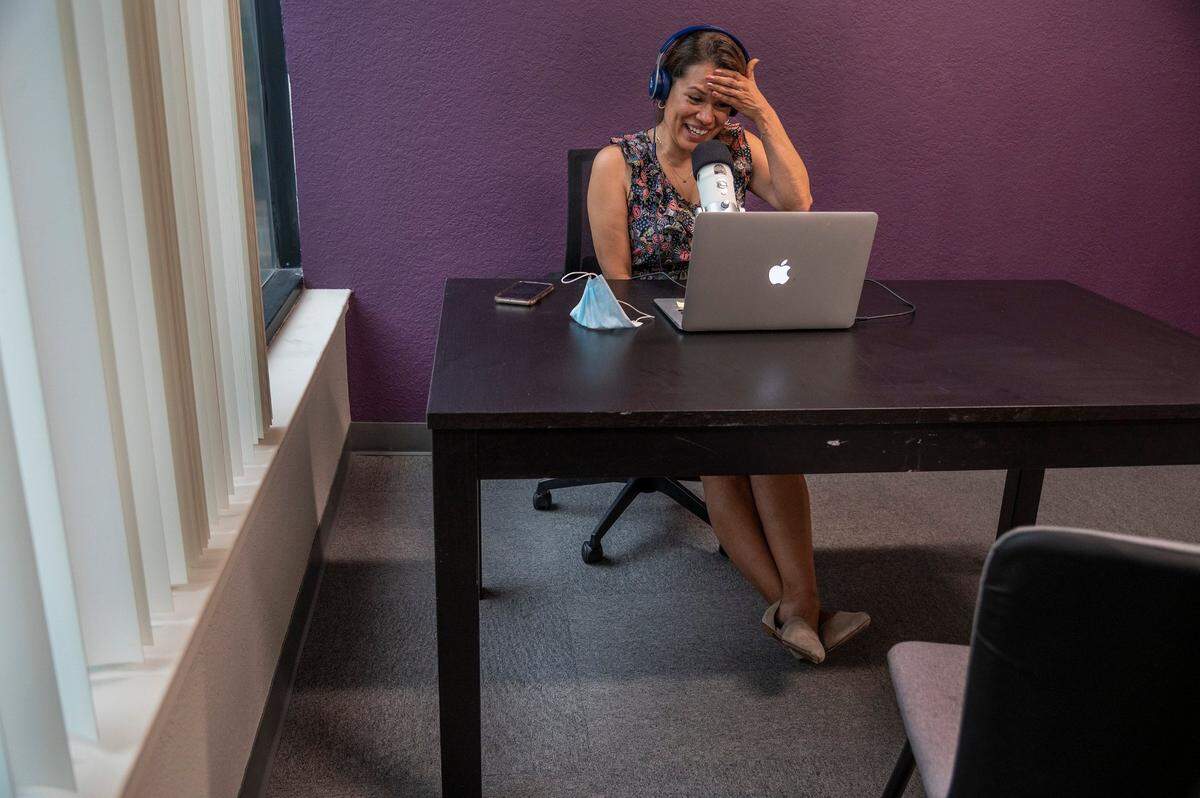
The room of attendees was hooked from the moment Cumpian started speaking, Budnick said. She was upfront about what happened the night of the shooting, and she owned her role in it. She baked twists and tension into the tales of navigating California’s tough-on-crime prison era when she was barely old enough to buy alcohol legally. She kept the audience’s attention with stories about life inside, befriending infamous killers, and raising her son from the visiting room.
As Budnick remembers, she was also “damn funny.”
“I know a good storyteller when I hear one,” Budnick said. “And she was that. She was captivating. It was serious. It was dramatic. She brought in comic relief. She had it all.”
He walked up to her after the talk ended and asked if she was looking for a job.
He said he’d get a meeting on the books.
Cumpian was floored.
When she was released six years earlier, she envisioned a perfectly fine life making $10 an hour and “flying under the radar anywhere that would take me.” Yet here she was being recruited by a movie producer-turned-justice-reform-advocate who had hobnobbed with Bradley Cooper and Barack Obama.
“I just knew that’s where I needed to be,” she said.
Success came fast. Cumpian climbed the ranks at the nonprofit from a life coach working with recently released offenders to a manager with the fast-growing group. She jumpstarted the nonprofit’s new women and nonbinary services department — a special unit focused on assisting often-overlooked populations returning home from prison. She was making a name for herself for the right reasons.
On Christmas Eve, 2018, Cumpian stepped away from her phone for a few hours. When she eventually picked it up, her phone was blowing up with text messages from a bunch of people, including Budnick. “What’s going on?!” she thought as she nervously tapped into the messages.
Budnick told Cumpian that Gov. Jerry Brown had pardoned her. The pardon celebrated her “honest and upright life.”
Around the same time, a mutual connection of Cumpian’s mentioned that he was having lunch with a judge from Los Angeles County named Peter Espinoza. “That’s my judge!” Cumpian exclaimed. She joined the two for Mexican food in downtown Los Angeles and, true to form, she regaled him with her stories of life inside and her relationship with her son since he granted her release.
“It was one of those moments in the life of the judge where the impact of a decision that I made became real to me, became real and personal,” said Espinoza, who has since retired. “It was a difficult lunch because it was hard for both of us not to cry.”
From inmate to state watchdog
Cumpian’s prominence soon caught the attention of Gov. Gavin Newsom.
The governor was facing calls to improve an often-overlooked state board tasked with writing jail and prison safety standards, inspecting facilities and doling out millions of dollars in criminal justice grants. The board has historically been dominated by law enforcement officers, which led advocacy groups and critics to deem it little more than a rubber stamp for local sheriffs.
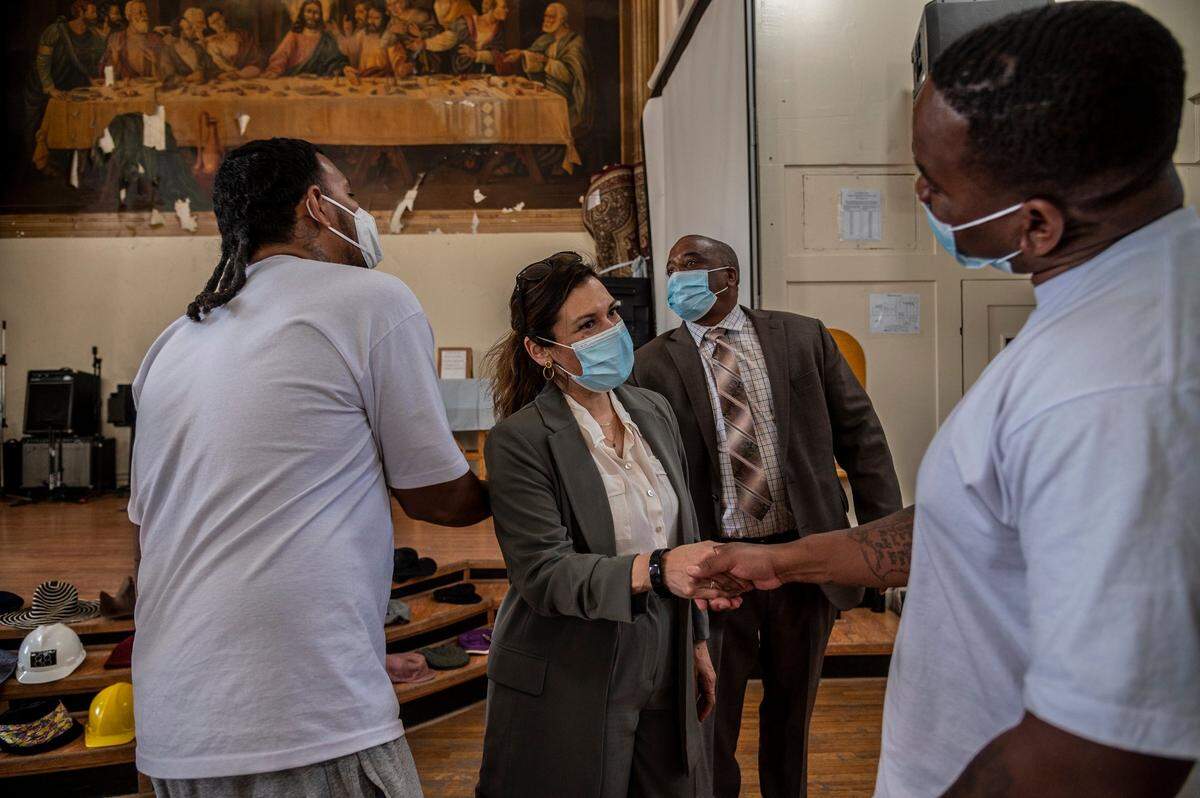
Newsom in early February 2020 appointed Cumpian to the board, making her the first formerly incarcerated person to sit on the panel. In a fluorescent-lit Sacramento conference room ringed with top cops from across the state — and hand sanitizer bottles to ward off the coronavirus — Cumpian described the solid network of people who helped her realize what was possible.
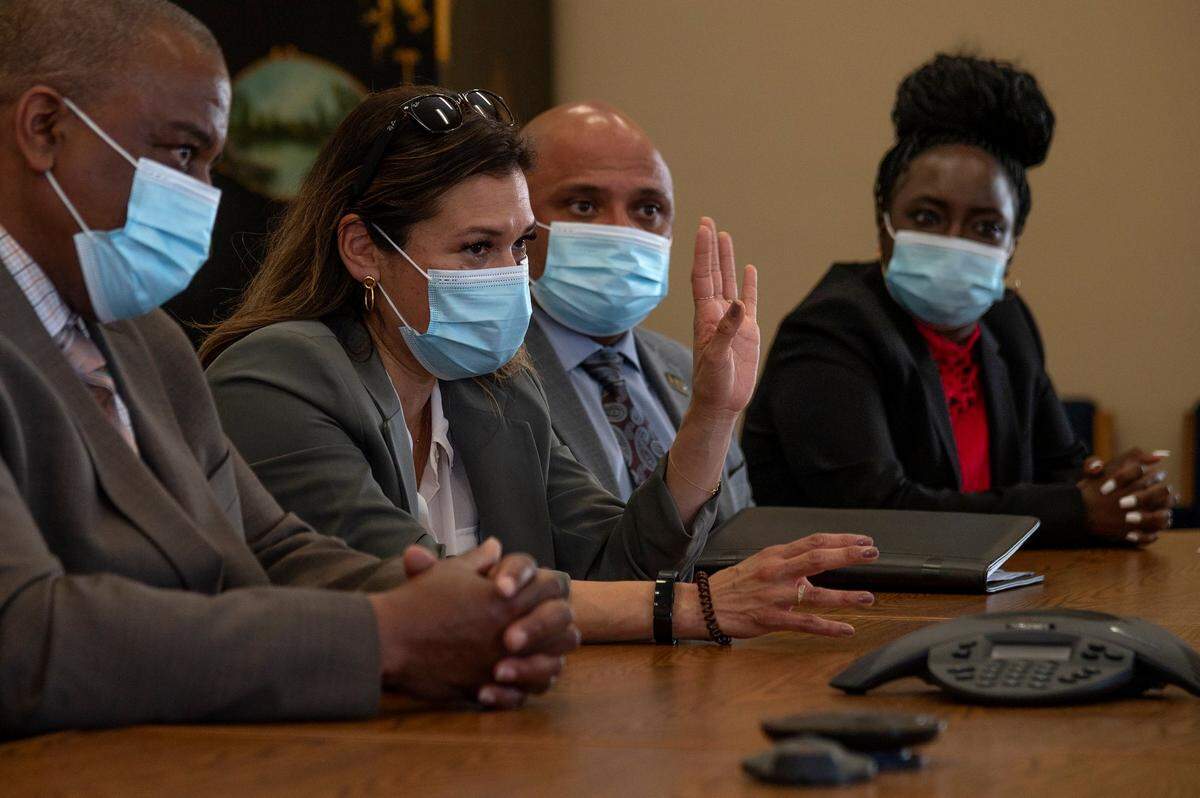
She talked about how the nuns who employed her after first leaving prison cursed more than the formerly incarcerated men she worked with at the Anti-Recidivism Coalition.
The room of longtime cops erupted in laughter.
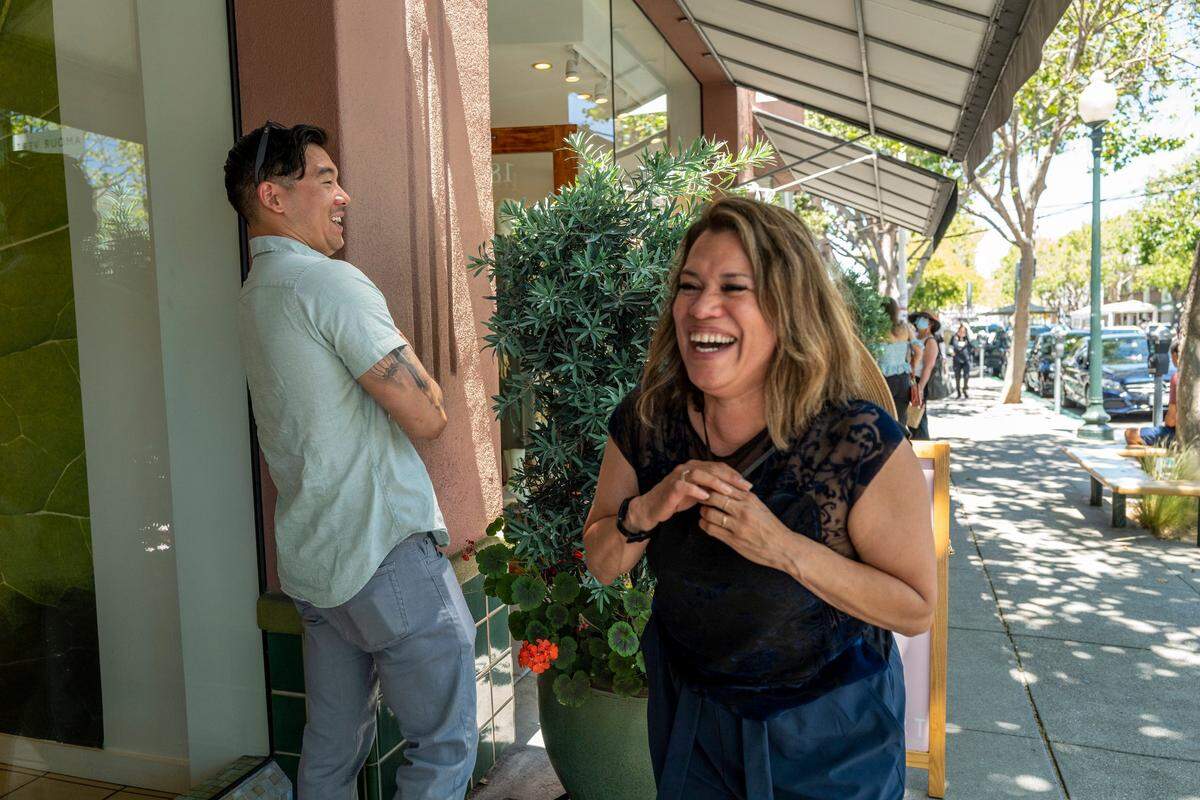
And she told her story of coming home while her son was deployed to Afghanistan, of him being wounded in combat, of them building a relationship in the years since. Now 29, he’s completing an international relations degree at Southern Methodist University in Texas. He hopes to one day become a police officer.
“I’m so honored that he turned out to be a good man,” Cumpian told the board. “And because of that, it’s really given me the strength to be able to look back at where I came from and to offer a hand, to just offer some hope.”
Cumpian believes she was put on the board to bring a face to those who are now and once were incarcerated, to signal that behind the dense meetings and reams of paperwork up for discussion are real people affected by the policies made in Sacramento.
That would become abundantly clear in the months to follow.
With COVID-19 tearing through jails and prison, Cumpian pushed for the oversight board to make unannounced visits to jail facilities — something critics and incarcerated people alike had demanded for years. In board meetings, she offered insights from her own time inside, a counterbalance to the law enforcement perspectives that had long dominated the discussions.
And when the state failed to collect data on county jail infections, she spoke up. “These are our community members,” she said at a meeting in June 2020. “These are people who are suffering.”
Those who knew her inside have continued to follow her on the outside. Betty Broderick, a mother who’s serving a life sentence at the California Institution for Women for killing her ex-husband and his wife, described Cumpian as “very diplomatic and professional when dealing with sometimes difficult people.”
“I wanted her to run for public office when she got out,” Broderick wrote in an email interview. “She can put her prison experiences to good use out there!”
‘An exceptional human being’
Cumpian sits at the center of a conference room table, across from two of the top deputy wardens at one of California’s most storied prisons. It’s April, and the Folsom State Prison brass are deciding how to go about adding programming from Cumpian’s work with the Anti-Recidivism Coalition into the menu of options for incarcerated people.
It’s a formal meeting — suits, ties and pleasantries.
Cumpian now finds herself something of an equal across the table from the wardens.
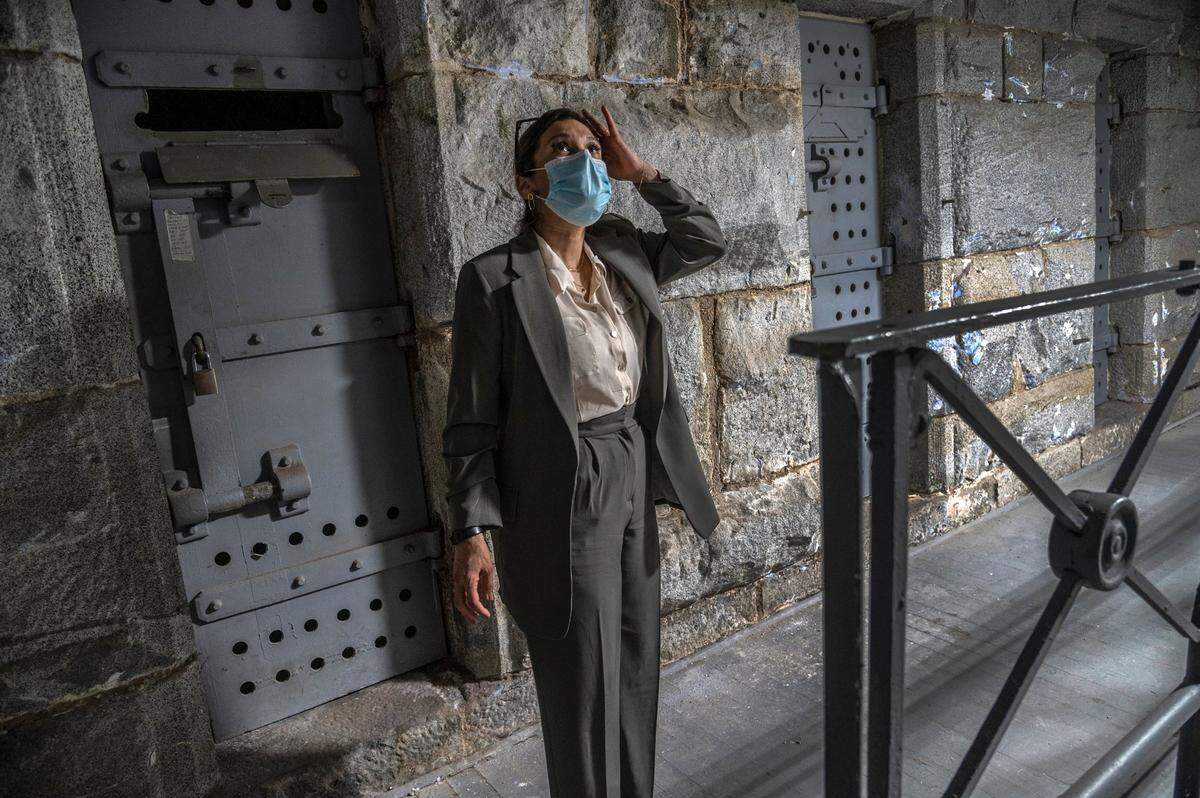
But a couple hours later while mingling with inmates is when she seems most comfortable. Her fidgeting hands calm, even as she stands inside the historic prison chapel with men who tower over her small frame and greets inmates locked in the enormous, five-level cellblock that is among the largest in the country.
Cumpian walked into prison at the height of the “tough-on-crime” era. While she was inside, lawmakers “reformed” the justice system. Now, with some politicians calling for a return to those policies amid a surge in homicides and high-profile thefts — complex trends happening nationwide — Cumpian worries that important pieces of progress may be about to roll back.
“I learned in prison that the pendulum always swings, either to the left or to the right,” Cumpian said. “I think the pendulum has been swinging in California to the left.
“I’m worried it will swing back.”
To counteract that, she said the governor and lawmakers need to involve formerly incarcerated people more in policymaking. As for her own future, Cumpian hopes to serve on the Board of Parole Hearings and be in the room making recommendations about who’s fit for release.
Cumpian isn’t so sure about public office. She would much rather hear arguments for why some people believe they should be released. But given what she’s done in the 10 years since her release, anyone who knows her will say something along the lines of the sky being the limit.
“I feel like we have barely even seen the level of leadership that Norma’s going to show in her life,” Budnick said. “I think she’s going to go on to do even much bigger and much better things.
“Because she’s just an exceptional human being.”
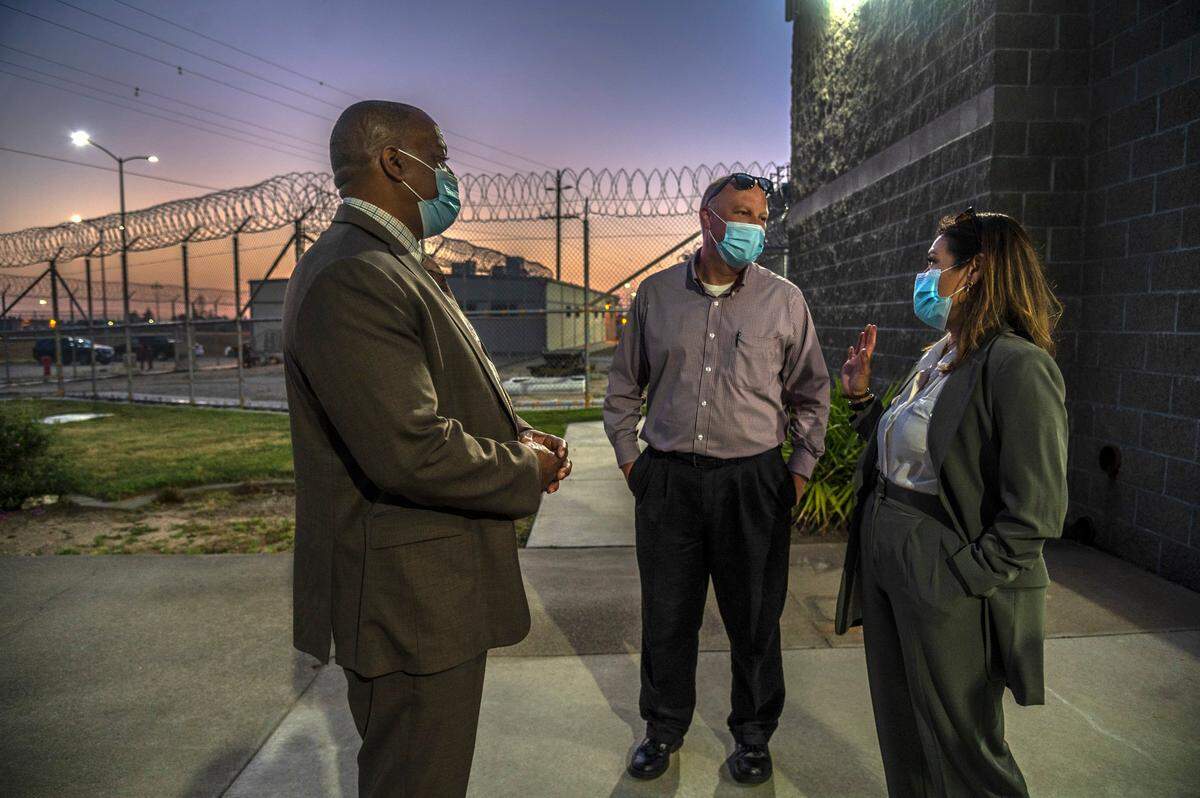
For now, the day of tours winds down. In the parking lot, Cumpian wraps up her pitch to the prison official and irons out next steps — where they’ll do the trauma-informed classes, when they’ll start, who’ll call whom.
As the sun sets below the razor-wire fence, Cumpian still beams energy.
She has a long board meeting the next morning, a flight in the afternoon.
And her weekly Sunday phone call with her son to look forward to.
This story was originally published June 26, 2022 at 5:00 AM with the headline "California imprisoned her for killing the abusive father of her unborn son. Now free, she fights for change."