When the LSAT dropped logic games in 2024 after a lawsuit over fairness for visually impaired test-takers, tutoring had to shift. There’s a bigger focus now on reasoning, timing, and getting the most out of the sections that carry the most weight. I worked with the major LSAT tutors to see how they actually perform when it counts.
In this guide, I’ll break down what stood out and help you find the one that fits your pace, your style, and the kind of support that actually helps.
Which LSAT Course is Right for You?
We’ve put together a short list of questions that will help us determine which LSAT course is the best pick for you!
Top 10 LSAT Tutors at a Glance
- Blueprint is the best overall pick, a well-balanced mix of tutoring, course access, user-friendly tools, and analytics.
- Kaplan is great if you want a structured live class plus private tutoring.
- LSATMax fits students who want flexible pacing with full course access.
- 7Sage stands out for its data-driven coaching and detailed timing analysis.
- Varsity Tutors offers a huge range of tutors with different teaching styles and price points.
- TestMasters is a solid choice for those who prefer a traditional, repetition-based approach.
- The Princeton Review is ideal if you want tons of content and a predictable, structured study plan.
- Odyssey is best for students who need high accountability and regular check-ins.
- Wyzant works well for those who want hourly tutoring with flexible scheduling and low commitment.
- LSAT Lab is a good, lightweight add-on with a couple of tutoring hours per month and a flipped-classroom course.
Best LSAT Tutor Comparison
| Best LSAT Tutors | ||
 |
| READ REVIEW |
 |
| READ REVIEW |
 |
| READ REVIEW |
 |
| READ REVIEW |
 |
| READ REVIEW |
Blueprint: Best Overall

After testing Blueprint’s LSAT tutoring, it ended up being the one option that fit into my normal routine without stressing me out. I used it after work, during short breaks, and on days when I didn’t have much energy. It always felt manageable because the platform told me exactly what to open next, and the tutor kept sessions focused. They looked at my past answers, spotted real patterns, and explained the fixes in a way that clicked immediately.
Tutoring is the priciest option on this page, so it is worth checking current LSAT course and tutoring discounts before booking hours.
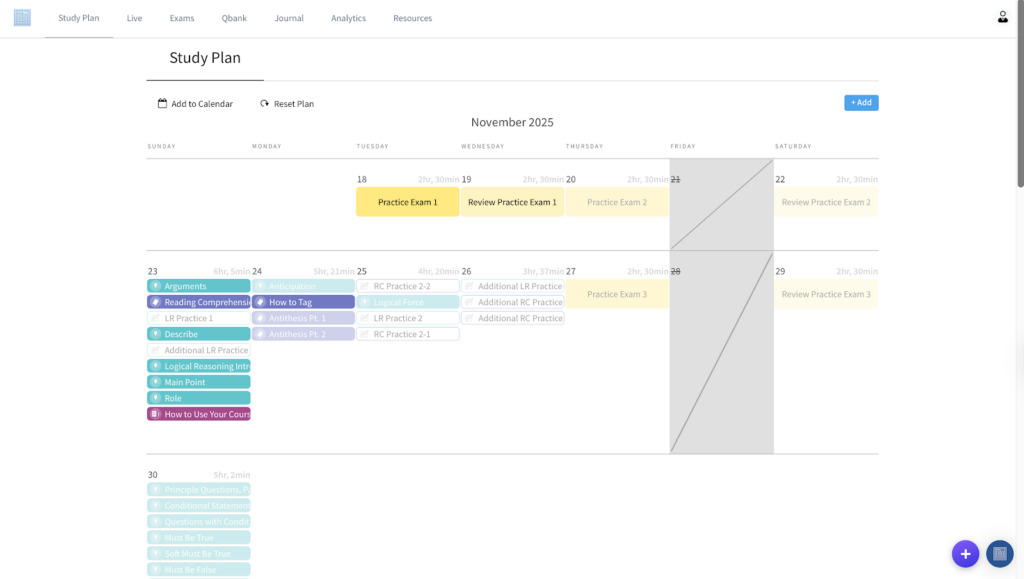
What helped a lot is that Blueprint tutoring includes access to Blueprint’s LSAT course, so the lessons, practice, and sessions all worked together. When I kept missing the same Logical Reasoning issue, my tutor pulled up my history and showed me exactly why it kept happening. Everything felt organized, targeted, and connected to real official LSAT questions, which made practice actually feel useful.
Blueprint LSAT Tutoring Ratings
| Feature | Rating |
|---|---|
| Personalization | 10.0 |
| Tutor Quality | 9.8 |
| Clarity of Instruction | 9.6 |
| Structure & Guidance | 9.5 |
| Flexibility & Scheduling | 9.4 |
| Support & Communication | 9.6 |
| Value | 9.5 |
Package Options
- ➡️ Core Tutoring
Best if you want a clear plan and a few hours of personal help. Comes with tutor sessions and six months of course access. Easy to manage on a tight work schedule. - ➡️ Premium Tutoring
Better for long-term studying. You get more hours and a year of course access. My tutor kept adjusting my homework after each session, which made late-night study sessions way easier. - ➡️ 170 Plus Tutoring
Good if you’re aiming high. Includes the live class, private sessions, and a qualifying score guarantee.
Standout Features
- One-on-one tutoring sessions focused on your specific weaknesses
- Session-by-session analysis of your logic, pacing, and question patterns
- Targeted assignments based on how you performed in previous lessons
- Real-time feedback to fix habits in Logical Reasoning, Reading Comp, and games
- Study pacing and customized scheduling guidance between sessions
- Direct support for reviewing official LSAT questions tied to your problem areas
- Personalized study plan created directly by your tutor

Compare Blueprint promo codes before you buy.
Pros
- Clear Study Flow: The platform tells you exactly what to do next, which helped me stay focused when I was studying after work and didn’t want to plan anything myself.
- High Scoring Tutors: My tutor explained patterns I was missing in Logical Reasoning in a way that actually clicked instead of overwhelming me.
- Strong Analytics: The score tracking made it easy to see where I was improving during lunch-break study sessions.
- Integrated Course and Tutoring: I liked that my homework, lessons, and tutoring notes all lived in one place without switching platforms.
- Realistic Practice: Everything I drilled came from official LSAT questions, which made practice feel very close to what I’d see on test day.
Cons
- Higher Price Point: Costs more than marketplace tutors, which can feel heavy if you’re only looking for a little extra help.
💬 “Chris Whyte was an excellent LSAT instructor. He was always kind, patient, and willing to push me the extra mile to get my goal score. Throughout my tutoring sessions with Chris, I felt more confident and prepared to tackle every part of the LSAT, and I watched my practice test scores go from the 150s to 170s…”
Student Feedback.
Bottom Line: Why Choose Blueprint?
Blueprint worked for me because the tutor didn’t waste time. They noticed my weak spots right away and explained the fixes in a way that actually stuck. Simple setup, clear guidance, and no extra noise. The mix of strong instruction, solid tools, and consistent guidance makes Blueprint a great fit if you want meaningful progress and a tutoring experience that actually feels tailored to you.
Blueprint
Kaplan: Best For Structured Live Online Class Support

When I tested Kaplan LSAT, the first thing I realized was that tutoring automatically includes the whole live online class. I didn’t expect that, but it actually helped on days when my brain was tired. The class kept me moving through the material, and the tutor filled in the gaps without repeating things I already understood. It felt like the class handled the structure, and the tutor handled the parts where I got stuck.
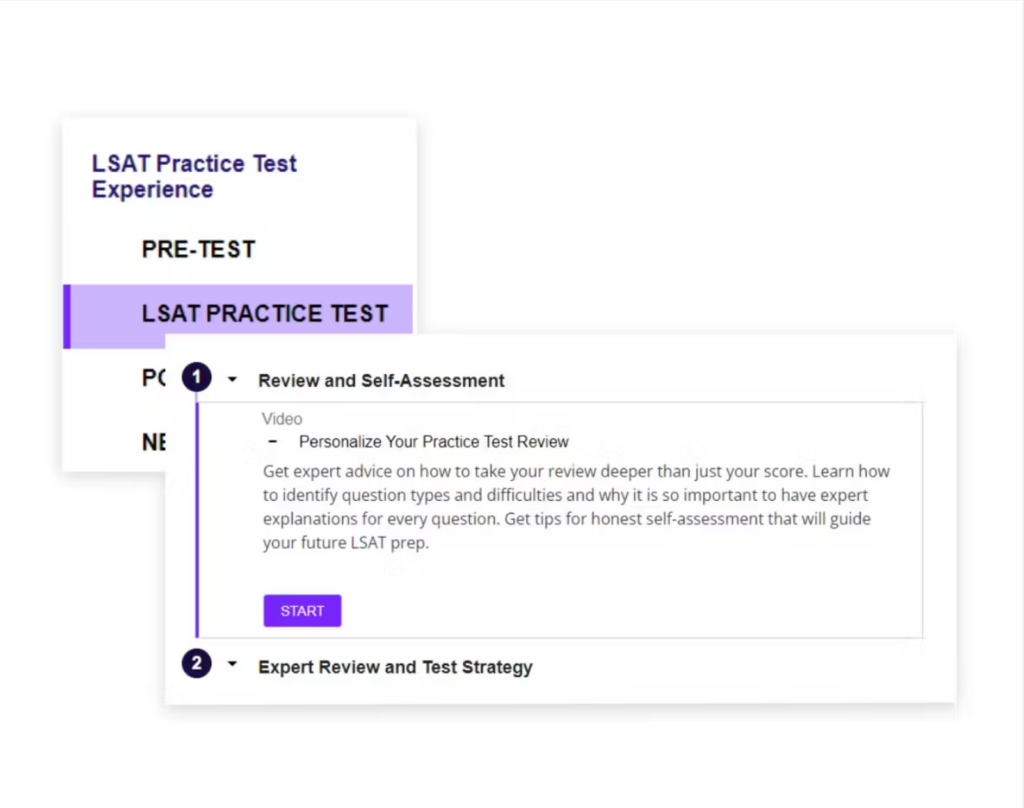
The tutors stay focused on real LSAT questions and explain the logic cleanly. They also give assignments that actually match what you worked on in the sessions, which made it easier to stay consistent even when I was juggling work and studying. The whole setup is more classic and steady compared to Blueprint, but it works really well if you like having a clear path without needing to think about it.
Kaplan LSAT Tutoring Ratings
| Feature | Rating |
|---|---|
| Personalization | 9.5 |
| Tutor Quality | 9.5 |
| Clarity of Instruction | 9.5 |
| Structure & Guidance | 9.7 |
| Flexibility & Scheduling | 9.0 |
| Support & Communication | 9.2 |
| Value | 9.1 |
Package Options
- ➡️ Standard Tutoring
Best if you want a strong structure with some flexibility. You pick your tutoring hours and get the full Kaplan live online class, plus all the tools and resources. - ➡️ Premium Tutoring
Best if you want long-term guidance, more experienced tutors, and help with things like personal statement feedback.
Standout Features
- One-to-one tutoring with experienced LSAT instructors
- Personalized assignments based on what you miss
- Real-time feedback on logic, pacing, and reasoning
- Session-by-session breakdowns of your practice tests
- Guidance on what to study between meetings
- Full access to the LSAT Live Online class
- 60+ hours of live and on-demand lessons
- Every official LSAT question ever released
- Score guarantee options depending on the package

Browse more Kaplan coupon codes.
Pros
- Built-In Structure: The live online class keeps your study routine consistent, and tutoring fills in the harder parts.
- Huge Bank of Official Questions: Easy to practice with real LSAC content.
- Reliable Tutor Support: Clear explanations that don’t feel overwhelming.
- Helpful Replays: Nice for catching up if you miss something or study late.
- Great Accountability: The schedule plus the tutor makes it harder to fall off track.
Cons
- System Feels Heavy: If you only want a few tutoring hours, the full course can feel like more than you need.
- Pricing Runs High: Costs more than smaller tutoring companies, especially if you want premium support.
💬 “My tutor Tavonia was amazing. She taught me so much and gave me great techniques to succeed while taking the LSAT…”
Student Feedback.
Bottom Line: Why Choose Kaplan?
Kaplan is a great fit if you like steady tutoring with clear direction. The tutors explain logic cleanly, keep sessions organized, and build on what you’ve already worked through. It’s not as tailored as Blueprint, but it’s reliable and structured, which makes it a comfortable option if you want straightforward guidance.
Kaplan
LSATMax: Best For Course Plus Private Tutors

LSATMax was easy to fit into my day since the tutoring comes with course access, and I could hop into the app during short breaks and drill official LSAT questions. The tutors explain things clearly and keep the sessions low-pressure, which I liked. But the whole setup can feel a little too relaxed sometimes. If you need a strict structure or someone constantly keeping you on pace, LSATMax doesn’t really push you like that.
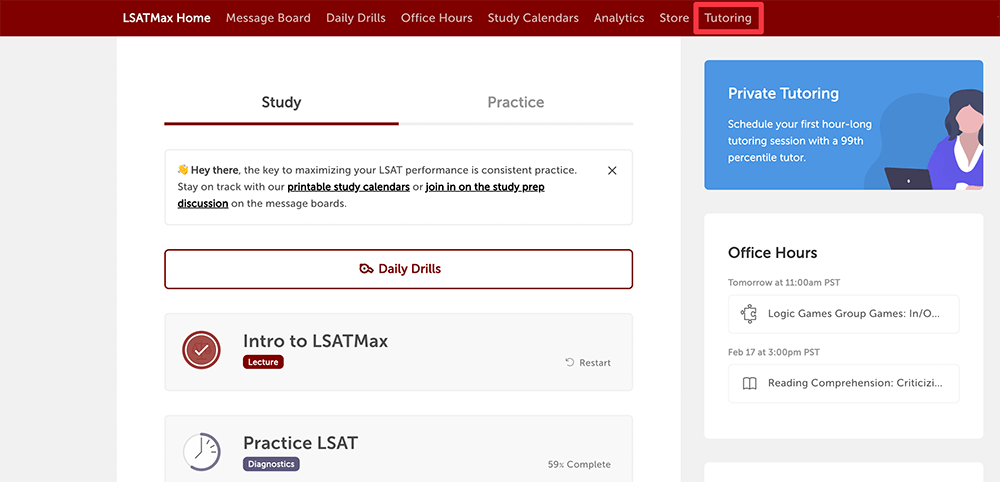
The platform is simple, but it’s definitely not as polished as Blueprint or Kaplan, and the analytics get the job done without feeling impressive. Still, it helps you see where you’re slipping. LSATMax works best if you want decent tutoring and flexibility, but it’s not the option for students who need tight guidance or really detailed tracking.
LSATMax LSAT Tutoring Ratings
| Feature | Rating |
|---|---|
| Personalization | 8.5 |
| Tutor Quality | 8.8 |
| Clarity of Instruction | 8.9 |
| Structure & Guidance | 8.2 |
| Flexibility & Scheduling | 8.9 |
| Support & Communication | 8.5 |
| Value | 8.4 |
Package Options
- ➡️ 8 Hour Package
Best for quick tune-ups or fixing a few blind spots before a test date. - ➡️ 16 Hour Package
Best for steady LSAT tutoring over a few months, especially if you want flexibility. - ➡️ 24 Hour Package
Best if you want long-term support and more time with your tutor. - ➡️ Custom Package
Best for choosing your own tutoring hours and shaping your own study plan.
Standout Features
- Private tutors with a strong LSAT teaching background
- Free half-hour assessment before your first hour
- Access to 90-plus official LSAT practice tests
- Score analytics tied to your assignments and answers
- Mobile-friendly LSAT prep course for on-the-go studying
You can find more LSATMax coupons.
Pros
- Integrated Course Access: The LSAT prep course pairs well with tutoring hours, especially when drilling official LSAT questions.
- Flexible Scheduling: Works well if you need tutoring around work, school, or last-minute study sessions.
- Clear Tutor Explanations: Tutors explain logic patterns without dragging you into long, confusing lectures.
- Mobile Friendly: Easy to use during short breaks or commutes.
Cons
- Basic Interface: Platform works fine, but isn’t as polished as Blueprint or Kaplan.
- Less Personalized: Some tutoring sessions felt broad instead of hyper-tailored.
“Good product. But needs improvement on tutor scheduling and blind review…”
Student Feedback.
Bottom Line: Why Choose LSATMax?
LSATMax works best for students who want a relaxed pace and course access bundled into tutoring. It’s less polished than Blueprint or Kaplan, and the structure isn’t as tight, but it’s flexible and simple to use. Choose LSATMax if you want one-on-one help without feeling boxed into a strict system.
LSATMax
7Sage: Best For Data-Driven Study Plans

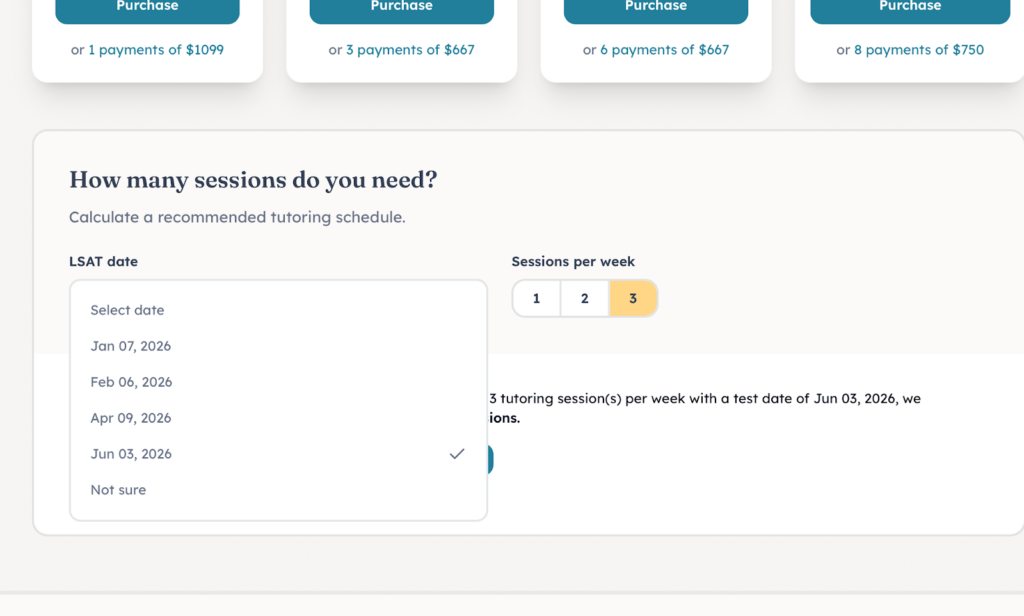
I liked 7Sage at first because the tutoring feels very intentional. They start by asking for your preferred study days each week and your planned LSAT test date. After that, they look at your actual performance data to build a schedule that makes sense for your timeline.
They don’t include a full LSAT course in the tutoring package, but the analytics themselves are a huge part of the experience. My tutor immediately spotted patterns in my mistakes and explained why certain questions kept tripping me up.
The data-first style can feel intense if you prefer a softer tutoring approach. If you’re someone who wants gentle guidance or more flexibility, 7Sage might feel too numbers-first. The sessions stay focused on stats, timing issues, and weak spots without much breathing room.
7Sage LSAT Tutoring Ratings
| Feature | Rating |
|---|---|
| Personalization | 8.2 |
| Tutor Quality | 9.0 |
| Clarity of Instruction | 8.4 |
| Structure & Guidance | 8.0 |
| Flexibility & Scheduling | 8.1 |
| Support & Communication | 8.3 |
| Value | 8.3 |
Package Options
- ➡️ 5 Hour Package
Best for quick fixes on reading comprehension or Logical Reasoning. - ➡️ 10 Hour Package
Best for focusing on a few weak areas before your LSAT exam. - ➡️ 20 Hour Package
Best for deeper LSAT tutoring with long-term tracking. - ➡️ 30 Hour Custom Plan
Best for students aiming for competitive law school admissions.
Standout Features
- Tutors who typically score at the top percent levels
- Free half-hour consultation before your first session
- Study plan shaped by analytics from your practice tests
- Access to drills, explanations, and tracking tools with a 7Sage course
- Integration with LawHub Advantage to access official LSAT questions
Pros
- Powerful Analytics: Helps you understand why you miss specific LSAT question types.
- Official LSAT Questions: Uses LawHub Advantage for accurate test prep.
- Flexible Tutoring Options: Several tutoring packages to match different needs.
- Data Driven Teaching: Good for tutoring students who learn through patterns and statistics.
Cons
- Less Personal: The heavy data focus can feel intense if you prefer a calmer tutor style.
- Complex Analytics: May be overwhelming if you prefer simpler LSAT prep.
- Scheduling Delays: Tutors can book up quickly near major LSAT test dates.
Bottom Line: Why Choose 7Sage?
7Sage fits students who think in patterns and want tutoring built around data. The analytics helped me see exactly where I was slipping, but it can feel intense if you prefer a softer approach. It’s not as personal as LSATMax or Blueprint, yet extremely useful for students who thrive on stats-driven feedback.
7Sage
Varsity Tutors: Best Marketplace For Finding a Tutor

Varsity Tutors feels very different from higher-ranked courses because it’s built around choice more than structure. When I tested it, the part I liked most was how easy it was to browse tutors, check their LSAT scores, and pick someone whose style fit what I was looking for. It’s simple to book just a few hours, switch tutors, or try different teaching approaches without locking into a big program.
The tradeoff is that the experience varies depending on who you book with. It doesn’t have the built-in structure Kaplan offers or the integrated course support you get with Blueprint, so you’re mostly shaping your own studying around the sessions. But it’s not a bad thing if you prefer flexibility.
From my experience, Varsity Tutors is a good fit for students who want control over who they work with and like the freedom to personalize their own approach.
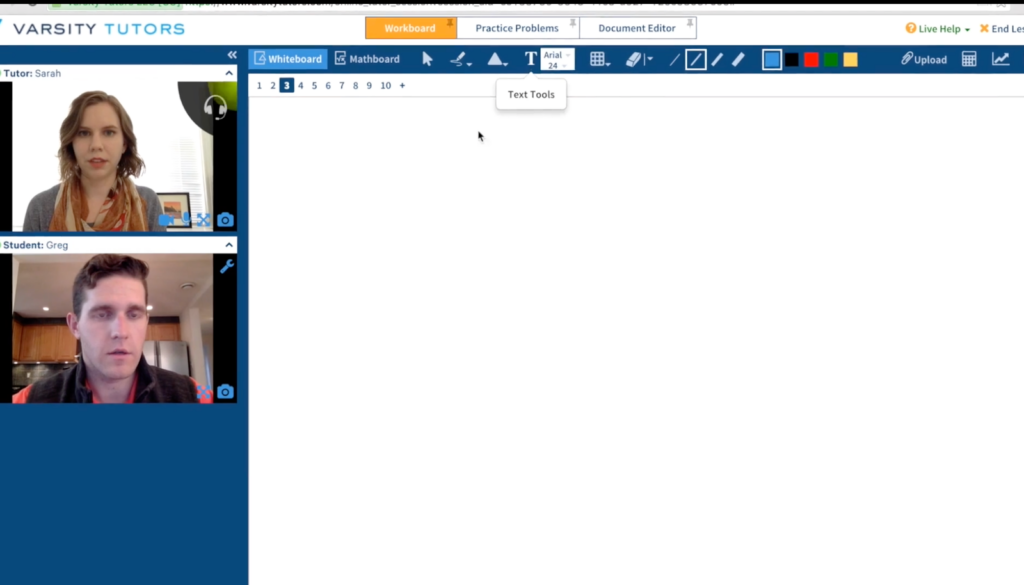
Varsity Tutors LSAT Ratings
| Feature | Rating |
|---|---|
| Personalization | 7.9 |
| Tutor Quality | 8.2 |
| Clarity of Instruction | 8.0 |
| Structure & Guidance | 6.8 |
| Flexibility & Scheduling | 9.4 |
| Support & Communication | 7.9 |
| Value | 7.5 |
Package Options
- ➡️ Private Tutoring
Best for personalized LSAT prep shaped around your schedule. - ➡️ Small Group Classes
Best for students who prefer group explanations and live instruction. - ➡️ Hybrid Packages
Best if you want a mix of class time and private tutor sessions.
Standout Features
- Customized study plans built around your score goals
- Live video tutoring sessions with clear, step-by-step instruction
- Session summaries that highlight what to review next
- Class notes tailored to your weak areas and recent progress
- Practice problems selected to target recurring mistakes
- Easy communication with your tutor for scheduling and questions
- Ongoing feedback that tracks how your accuracy improves over time
Pros
- Huge Tutor Selection: Easy to find a new tutor who fits your preferences.
- Custom Study Plans: Tutors adjust assignments to match your LSAT prep progress.
- Good Availability: Easier to book sessions quickly than most brands.
Cons
- Quality Swings: Your experience depends entirely on the tutor you end up with.
- No Unified LSAT Prep Course: You must bring your own LSAT prep materials.
- No Score Guarantee: Since it’s a marketplace, guarantees do not apply.
“I have been with varsity tutors for three months, and while my tutor is good, the customer service is not the best…”
Student Review.
Bottom Line: Why Choose Varsity Tutors?
Varsity Tutors is the best fit for students who want flexibility and control over who they work with. The downside is inconsistency; your experience depends completely on the tutor. It lacks the structure of Kaplan and the integration of Blueprint, but it’s great for testing different teaching styles without commitment.
Varsity Tutors
TestMasters: Best For Classic, Old-School Teaching

When I tested TestMasters, the whole system immediately felt very old-school. The sessions were clear, and the tutors stuck closely to their standard method, but nothing about it felt modern or adaptive. I tried a mix of online and in-person options, and the experience stayed the same: straightforward, but pretty rigid. There isn’t much flexibility in how the tutor approaches problems, and the pacing didn’t adjust much to how I work through questions.
I also noticed that the tutoring doesn’t come with anything extra unless you upgrade to their full private 1-on-1 course. Compared to other providers I reviewed, it felt bare-bones and limited in tools. Overall, TestMasters works if you prefer a very traditional style, but from my experience, it doesn’t offer much beyond the basics.
TestMasters LSAT Tutoring Ratings
| Feature | Rating |
|---|---|
| Personalization | 7.7 |
| Tutor Quality | 8.4 |
| Clarity of Instruction | 8.3 |
| Structure & Guidance | 8.6 |
| Flexibility & Scheduling | 7.4 |
| Support & Communication | 7.8 |
| Value | 7.3 |
Package Options
- ➡️ Hourly Tutoring
Best for short-term help or one specific LSAT section. - ➡️ 10 Hour Package
Best for reviewing weaknesses in a more structured way. - ➡️ 25 Hour Package
Best for multi-month LSAT prep. - ➡️ Platinum Package
Best for students who want long-term coaching and many sessions.
Standout Features
- Tutors with years of LSAT teaching experience
- Uses official LSAT questions from the Law School Admission Council
- Flexible online or in-person options
- The traditional teaching approach focused on repetition
Pros
- Support Team Included: A tutoring team helps guide your plan alongside your instructor.
- Personalized Study Plan: The tutor builds a plan around your weak areas and target score.
- Large Practice Library: Plenty of content to work through between sessions if you like extra drilling.
Cons
- Personalization Only Goes So Far: Sessions follow a set structure, so adjustments can feel limited.
- Engagement Can Drop: The slow pacing made it hard for me to stay focused during long sessions.
- A Lot of Material to Sort Through: You have to decide what’s actually useful for your score.
- Session Flow Feels Rigid: The routine doesn’t always shift to match how you naturally approach questions.
Bottom Line: Why Choose TestMasters?
TestMasters is ideal if you prefer old-school, straightforward LSAT teaching. The lessons are clear and predictable, but they rarely adapt to your learning style. It feels more rigid than Kaplan and less supportive than Blueprint. Students who want tradition over modern tools will feel most at home here.
TestMasters
Princeton Review: Best For Material-Heavy Tutoring

When I tried Princeton Review’s tutoring, the sessions were steady and easy to follow, but they definitely had a more traditional feel. The tutor stayed close to a set structure, which works well if you prefer predictable lessons. It isn’t the most flexible style, though. If you need more adaptation or personalization in the moment, you may have to ask for it directly.
They also rely on a lot of printed material and outlines. The tutor followed a clear plan, which worked fine, but didn’t always adjust to the way I naturally approach questions. Overall, Princeton Review is a decent fit if you prefer classic tutoring with a straightforward, predictable flow.
Princeton Review LSAT Tutoring Ratings
| Feature | Rating |
|---|---|
| Personalization | 7.3 |
| Tutor Quality | 7.5 |
| Clarity of Instruction | 7.4 |
| Structure & Guidance | 7.0 |
| Flexibility & Scheduling | 7.2 |
| Support & Communication | 7.1 |
| Value | 7.2 |
Standout Features
- One-on-one instruction from an experienced LSAT tutor
- Study plan shaped by your goals and weak areas
- Targeted homework tied to your recent sessions
- Direct support on logic, pacing, and question breakdowns
- Progress check-ins with your tutoring team
- Money-back and satisfaction policies
- Extra study tools and official LSAT materials included
Pros
- Lots of Material: Plenty to work with if you like tons of content.
- Predictable Structure: Easy to follow session flow.
Cons
- Hard To Stay Engaged: I found it a little difficult to stay fully engaged during longer sessions.
- Overwhelming Amount of Content: Hard to know what to prioritize.
- Limited Flexibility: Follows the same routine without offering different options.
- Too Scripted: Tutors follow the set routine closely, so personalization takes extra effort.
Bottom Line: Why Choose Princeton Review?
The Princeton Review makes sense if you want a traditional tutoring setup with a huge amount of study material. It’s steady and predictable, but not the most customized option. It works for students who prefer structure and plenty of resources rather than a highly tailored tutoring experience.
Princeton Review
Odyssey: Best For High-Touch Coaching

When I tested Odyssey, the tutoring felt noticeably hands-on. My tutor paid a lot of attention to how I approached questions and spent time breaking down my habits, not just the problems themselves. It had a coaching vibe that can be motivating if you like someone staying closely involved instead of keeping sessions light.
What didn’t fit my style was how intense the structure felt. Odyssey expects regular check-ins and steady assignments, and it’s a lot stricter about consistency than Blueprint or Kaplan. Since there’s no full LSAT course included, most of your progress depends on your sessions and the work your tutor assigns.
From my experience, Odyssey fits students who want strong accountability and a tutor who stays deeply involved in every step.
Odyssey LSAT Tutoring Ratings
| Feature | Rating |
|---|---|
| Personalization | 7.2 |
| Tutor Quality | 7.4 |
| Clarity of Instruction | 7.1 |
| Structure & Guidance | 7.3 |
| Flexibility & Scheduling | 7.0 |
| Support & Communication | 7.3 |
| Value | 7.1 |
Package Options
- ➡️ Private Tutoring
Best for one-on-one coaching, either online or in person. - ➡️ Comprehensive Tutoring (20–40 Hours)
Best for structured LSAT prep over several months. - ➡️ Customized Plan
Best for students with specific goals or tight schedules.
Standout Features
- Custom study plan tied to a diagnostic test
- Regular check-ins and feedback
- Focus on both the LSAT score and law school admission support
- Guided homework and assignments
Pros
- Personalized Study Plan: Tailored to your LSAT score goals and schedule.
- Consistent Communication: Tutors stay in touch between sessions.
Cons
- Higher Price: More expensive than standard LSAT tutoring options.
- Limited Tutor Pool: Harder to switch tutors if the fit isn’t right.
- Scheduling Can Fill Fast: Especially close to major LSAT test dates.
- High Pressure: The coaching style can feel intense if you don’t thrive under constant accountability.
- Overwhelming for Introverts: The communication can feel excessive for introverts.
Bottom Line: Why Choose Odyssey?
Odyssey suits students who want high-touch coaching and strong accountability. My tutor stayed deeply involved, which can be motivating, but the structure is intense and not ideal for flexible schedules. It’s more personal than Princeton Review, but less balanced than Blueprint. Best for students who want hands-on guidance.
Odyssey
Wyzant: Best For Hourly, Low-Commitment Tutoring

Wyzant was the easiest platform for me to test because you can try a tutor for an hour, see if their style works for you, and switch immediately if it doesn’t. I liked being able to scroll through profiles, compare backgrounds, and pick someone who matched what I needed that week. It’s a very “choose your own setup” kind of platform, which makes it simple if you prefer studying on your own terms.
The tradeoff is that the quality depends completely on who you book, so the experience isn’t as consistent as Blueprint or Kaplan. Some tutors were great, some felt mismatched, and it took a little trial and error. From my experience, Wyzant fits students who want full flexibility and like shaping their sessions however they want.
Wyzant LSAT Tutoring Ratings
| Feature | Rating |
|---|---|
| Personalization | 7.0 |
| Tutor Quality | 7.2 |
| Clarity of Instruction | 7.1 |
| Structure & Guidance | 6.8 |
| Flexibility & Scheduling | 8.9 |
| Support & Communication | 7.0 |
| Value | 7.0 |
Package Options
- ➡️ Pay As You Go Tutoring
Best for students who want low-commitment sessions. - ➡️ Custom Hour Blocks
Best when certain tutors offer discounted bundles.
Standout Features
- Large marketplace of LSAT tutors
- Per-hour pricing with no subscription
- Direct communication with your tutor before booking
- Works well for quick help on reading comprehension or logic
Pros
- Budget Friendly: Per-hour pricing makes it the cheapest option if you only need help occasionally.
Cons
- Quality Varies: Depends entirely on the tutor you pick.
- No LSAT Prep Course Included: You need your own materials.
- No Score Guarantee: Since tutors are independent.
- Less Structure: Not ideal if you need a consistent study plan.
- Company Mismatch: Tutoring is more difficult with courses and tutors from different companies.
Bottom Line: Why Choose Wyzant?
Wyzant works for students who want affordable, per-hour tutoring without commitment. It’s flexible and easy to switch tutors, but the quality varies a lot. There’s no built-in structure like Kaplan or integrated tools like LSATMax. Best for independent learners who already know what they need help with.’
Wyzant
LSAT Lab: Best For Light, Add-On Tutoring

When I tested LSAT Lab, the tutoring felt more like occasional support than a full tutoring program. The sessions were helpful when I hit a wall, but the two-hours-per-month model didn’t give me the steady guidance I needed during heavier study weeks. Most of the work still relies on you using the videos, analytics, and question bank on your own, so it’s better suited for independent learners who only want quick help here and there.
From my experience, LSAT Lab works best for students who prefer to self-study and just want a tutor available when something feels confusing. It’s flexible, but definitely not hands-on compared to the higher-ranked options.
LSAT Lab Tutoring Ratings
| Feature | Rating |
|---|---|
| Personalization | 6.3 |
| Tutor Quality | 6.8 |
| Clarity of Instruction | 6.7 |
| Structure & Guidance | 5.9 |
| Flexibility & Scheduling | 7.0 |
| Support & Communication | 6.1 |
| Value | 6.0 |
Standout Features
- Two hours of tutoring monthly (30, 60, or 90-minute sessions)
- Live online classes included
- Personalized study plan based on goals and timeline
- Nearly 10,000 official LSAT questions in the question bank
- Deep analytics that break down patterns and common mistakes
Pros
- Flexible Sessions: Easy to schedule short check-ins when you get stuck.
Cons
- Very Limited Tutoring Time: Two hours a month isn’t enough for consistent progress.
- Self-Study Heavy: Most improvement comes from the platform, not the sessions.
- Light Structure: No strong week-to-week tutoring guidance.
- Overwhelming Tools: The platform has a steep learning curve.
- Weak Fit for Busy Students: Hard to use effectively without already being organized.
- Better for Basic: Covers simple concepts well but struggles as difficulty increases.
Bottom Line: Why Choose LSAT Lab?
LSAT Lab is best for independent students who like to study on their own and only need a tutor for occasional support. The tools are powerful, but the tutoring is minimal and not suited for anyone who wants steady accountability or detailed guidance. If you want tutoring to lead your prep, higher-ranked options offer a stronger experience.
LSAT Lab
Other LSAT Tutor Options
These did not make it on the best list for LSAT tutoring options, but they are still decent alternatives to explore:
Head-To-Head: An Extra Comparison
Blueprint vs. Kaplan
Blueprint tutoring is built around individualized study plans written by your tutor and adjusted as your performance changes week to week. Sessions actively use 57 full-length official LSATs, and tutoring includes 12 hours of optional group instruction each week to reinforce progress between meetings. Kaplan tutoring is tied to a live-class system with 60+ total hours of instruction, creating a fixed classroom rhythm. Blueprint adapts as scores shift. Kaplan stays locked into a set curriculum flow.
Bottom Line:
→ Choose Blueprint if you want tutoring plans to adjust as your performance data changes.
→ Choose Kaplan if you prefer a fixed class-based pacing tied to a live course.
Blueprint vs. LSATMax
Blueprint tutoring combines one-on-one sessions with weekly group lectures and tutor-led assignments that follow your personal practice data. Students typically choose 16 to 40 tutoring hours bundled with full course access. LSATMax tutoring leans toward flexibility, offering 8 to 24 tutoring hours paired with 90+ official PrepTests mainly for independent drilling. Blueprint guides what happens between sessions. LSATMax gives you resources and lets you control pacing on your own.
Bottom Line:
→ Choose Blueprint if you want structured guidance between tutoring sessions.
→ Choose LSATMax if you prefer managing most of your prep independently.
Kaplan vs. 7Sage
Kaplan tutoring follows a predictable pace, often working through one full timed section per session, reinforcing consistency and routine. Most plans include 10 to 40 tutoring hours paired with up to 12 months of course access. 7Sage tutoring is driven by analytics pulled from nearly 10,000 tagged LSAT questions, shaping sessions around timing trends and error frequency rather than preset lesson flow. Kaplan emphasizes repetition. 7Sage emphasizes precision and data.
Bottom Line:
→ Choose Kaplan if you want tutoring to follow a steady, repeatable session format.
→ Choose 7Sage if you want sessions shaped primarily by performance analytics.
Blueprint vs. Princeton Review
Blueprint tutoring uses official LSAT content to run two to three focused drills per session, keeping meetings short, targeted, and efficient. Tutors adjust sessions based on score movement rather than fixed lesson lists. Princeton Review tutoring pulls from a content library with 150+ hours of video and 1,800+ pages of materials, creating broader sessions that cover more ground each meeting. Blueprint prioritizes efficiency. Princeton Review prioritizes total content exposure.
Bottom Line:
→ Choose Blueprint if you want narrowly focused tutoring tied to score movement.
→ Choose Princeton Review if you want broad exposure to explanations and materials.
Kaplan vs. LSAT Lab
Kaplan tutoring typically includes 4-8 hours of live tutoring per month, reinforcing concepts from its structured prep system and maintaining steady momentum. Sessions are designed to build week over week. LSAT Lab tutoring is capped at two hours per month, positioning it as a targeted support option rather than a full tutoring track. Kaplan supports ongoing improvement. LSAT Lab works best for quick clarification or focused problem-solving.
Bottom Line:
→ Choose Kaplan if you want recurring monthly tutoring support.
→ Choose LSAT Lab if you want limited, targeted tutoring access.
7Sage vs. Princeton Review
7Sage tutoring emphasizes mistake tracking and timing analysis using all 91 official LSAT PrepTests inside its analytics platform. Sessions focus heavily on identifying repeat errors and efficiency gaps. Princeton Review tutoring follows a more traditional structure, usually reviewing one or two assigned sections per session using predefined materials. 7Sage is data-first and diagnostic. Princeton Review is routine-based and instructor-led.
Bottom Line:
→ Choose 7Sage if you prioritize diagnostic data during tutoring.
→ Choose Princeton Review if you prefer an instructor-led session structure.
Blueprint vs. TestMasters
Blueprint tutoring adapts session focus quickly as trends appear in your practice, allowing tutors to shift priorities across different sections week to week. Most students work in flexible hour bundles rather than fixed session lengths. TestMasters tutoring follows a repetition-based method built around two-hour sessions, reinforcing concepts through extended practice blocks. Blueprint responds faster to new weaknesses. TestMasters emphasizes endurance and reinforcement through longer, consistent meetings.
Bottom Line:
→ Choose Blueprint if you want the session focus to shift as weaknesses change.
→ Choose TestMasters if you prefer longer sessions with repeated reinforcement.
Kaplan vs. Varsity Tutors
Kaplan tutoring runs inside a single LSAT prep system with structured pacing, assigned follow-up work, and access that typically lasts up to 12 months, allowing tutoring sessions to build continuously over time within one curriculum. Varsity Tutors provides LSAT access through one-on-one tutoring and optional small-group classes, with session structure, materials, and pacing determined by the individual tutor rather than a centralized LSAT program. Kaplan tutoring is designed for continuity across weeks and months. Varsity Tutors operates on a session-by-session basis.
Bottom Line:
→ Choose Kaplan if you want tutoring tied to a consistent LSAT study plan.
→ Choose Varsity Tutors if you want flexible access to LSAT tutoring without a fixed curriculum.
Blueprint vs. Odyssey
Blueprint tutoring balances independence with guidance, letting sessions shift as score data changes while still keeping students accountable through structured plans. Hour bundles are flexible and paired with full prep access. Odyssey tutoring emphasizes accountability, often spanning 20 to 40 tutoring hours with frequent check-ins and coaching-style oversight. Blueprint supports autonomy with guardrails. Odyssey enforces structure through close monitoring and long-term engagement.
Bottom Line:
→ Choose Blueprint if you want flexibility within a guided plan.
→ Choose Odyssey if you want frequent check-ins and structured accountability.
Kaplan vs. Wyzant
Kaplan tutoring follows a structured format tied directly to its LSAT program, so sessions build on each other within a single study plan. Most students work through 10 to 40 hours of tutoring with consistent pacing and assigned follow-up work. Wyzant allows students to book tutors one session at a time after choosing from over 65,000 different instructors, which means session focus and materials can change depending on who you work with. Kaplan tutoring stays program-based and cumulative. Wyzant tutoring is session-based and varies by tutor.
Bottom Line:
→ Choose Kaplan if you are planning long-term LSAT prep on one platform.
→ Choose Wyzant if you want occasional, standalone tutoring sessions.
LSAT Tutor Ranking Methodology
Each LSAT tutor in this guide was tested through real sessions using official LSAT questions. I focused on how clearly the tutor explained logic, how fast they identified patterns, and how well their guidance improved pacing and accuracy.
The goal was to measure how effective the tutoring itself felt in practice. Platform tools played only a small role. What mattered most was whether the tutor made studying easier, more personal, and more productive leading up to your test date.
LSAT Tutoring Rating Criteria
| Category | Weight (%) | What This Measures |
|---|---|---|
| Instruction Quality | 30% | Clarity of explanations, breakdown of logic, accuracy, LSAT score background, and ability to teach LR/RC/LG effectively. |
| Personalization & Adaptability | 25% | How well the tutor adjusts sessions to your weak areas, identifies patterns, modifies pacing strategies, and gives targeted homework. |
| Practice & Question Support | 20% | Quality of walkthroughs, mistake analysis, timing drills, review of official LSAT questions, and strategy corrections. |
| Structure & Study Guidance | 10% | Session organization, clarity of assignments, consistency, and how well the tutor helps maintain a prep routine. |
| Communication & Support | 5% | Responsiveness, session summaries, prep advice between meetings, and overall tutor engagement. |
| Scheduling & Flexibility | 5% | Availability, time-zone options, pacing accommodations, and ease of booking. |
| Value | 5% | Quality of tutoring compared to cost and performance. |
Final Verdict
The right LSAT tutoring option really comes down to how you study, how much structure you need, and what kind of support helps you stay on track. Some people do better with a fixed schedule and live sessions, while others need flexibility and room to move at their own pace.
Blueprint offers a strong all-around setup with solid tutors, full course access, and score guarantees on certain plans. Kaplan is a close second for students who want a more structured, class-based approach. Other platforms like LSATMax, 7Sage, and similar services have their own strengths, whether it’s flexibility, traditional teaching, or more data-driven tools.
FAQs
Yes. For many students, the right tutor produces a huge difference in LSAT preparation, especially for reading comprehension, logic, and timing. A tutor can spot blind spots faster than self-study and create a tighter study plan.
Most students use between 8 and 24 tutoring hours, spread over several weeks or months. If you need a large score jump or are far from your test date, you may want more sessions.
The best LSAT prep courses and tutors use official LSAT questions licensed from the Law School Admission Council, often through LawHub Advantage. Always confirm that your course or tutor uses real questions, not only in-house material.
Some companies offer a score guarantee or money-back policy if your score does not improve. Read each guarantee carefully, because restrictions apply.
Most students start tutoring two to six months before the LSAT. That gives enough time to learn the lessons, take several practice tests, review answers, and fix weak areas before test day.