Thinking about a career in finance as an investment adviser? Your journey begins with the Series 65 exam. The field is booming with analysts projecting roughly 17% growth and seasoned pros often breaking into six-figure salaries. Undoubtedly, the role offers both purpose and payoff.
Still, acing the Series 65 isn’t a walk in the park. The test throws 130 questions at you in just three hours, probing everything from fiduciary duties to fundamental economics. To nail it, you’ll want a prep course that keeps you motivated from start to finish.
“But what if I have no clue where to begin?”
Don’t worry! After thoroughly testing a bunch of courses, I’ll show you which courses are best for different preferences – whether you’re a visual learner, someone who thrives on practice questions, or needs a budget-friendly option, there will be a course that suits you the best.
Top 5 Series 65 Courses: Which is for You?
- Pick Securities Institute of America if you’re looking for a solid, no-frills, and highly effective program with excellent video lectures that cut straight to the chase.
- Choose Securities Training Corporation if you want a long-standing industry leader with robust, traditional study methods and a strong focus on practice.
- Go with Achievable if you’re keen on leveraging cutting-edge adaptive learning technology and spaced repetition for optimized memorization and efficiency.
- Opt for Kaplan if you prefer a wide range of study options, from self-paced to live classes, backed by a huge content library.
- Lean towards ExamFX if you appreciate an interactive, engaging platform with an adaptive learning experience and a focus on exam readiness.
Series 65 Exam Prep Course Comparison
| Provider |  |  |  |  |  |
|---|---|---|---|---|---|
| Price Range | $109-$149 | $100-$206 | $79 | $59-$159 | $90-$165 |
| Discount | No Discounts | Save 15% | Save 10% | No Discounts | Save 20% |
| Access | 180 Days | 6 Months | 1 Year | 5 Months | 180 Days |
| Format | On Demand | Live Online, On Demand | On Demand | Live Online, On Demand | Live Online, On Demand |
| Video Lessons | 4+ Hours | 4+ Hours | 12+ Videos | 5.5+ Hours | 15+ Hours |
| Pass Guarantee | GreenLight Guarantee™ | STC Pass Guarantee | Money Back | N/A | N/A |
| Refund Policy | No Refunds | 30 Days | Case-by-Case Basis | 30 Days | 48 Hours |
| Get Started | Start Now | Start Now | Start Now | Start Now | Start Now |
1. Securities Institute of America – Best All-Around Course

When I jumped into the SIA’s Series 65 course, I was most impressed by three things: realistic practice, clear explanations, and a study plan that doesn’t hijack your calendar. It delivered strongly on all counts. I found their video lectures to be a particular highlight as well, breaking down complex topics into digestible segments that truly helped me grasp difficult concepts. When option valuation formulas started melting my brain, SIA’s AI tutor stepped in with a plain-English walkthrough that finally made the math click.
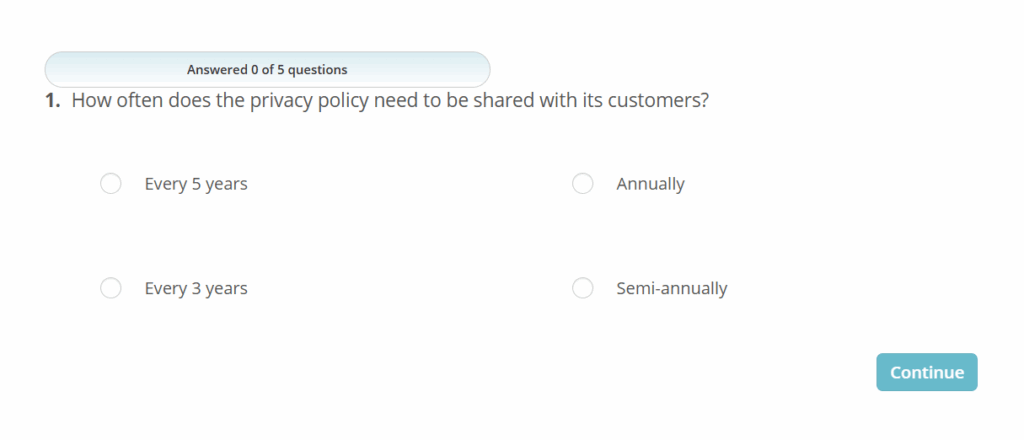
Another perk I didn’t know I needed was the GreenLight Exam. Hitting that passing threshold gave me the “you’ve got this” boost, and I’m obviously not even planning on taking the exam. I can see it helping students boost their confidence or, if you don’t do so great, push the pedal to the metal in the final stretch before the big day. Between the customizable quizzes (I kept flipping the “exclude mastered topics” switch) and the progress dashboard, I always knew exactly where to spend my next study sprint.
“The course is incredibly well-designed. The videos really helped me understand the topics I was reading. I passed and I am so excited. Many thanks.”
Brian Zimmer
Course Features
- 4,000+ exam-style questions with 15 ways to customize practice tests
- 13 hours of on-demand video (19 lessons + 19 section quizzes)
- 516-page textbook in print and e-book formats
- TotalGenius! AI tutor for 24/7 concept breakdowns
- Unlimited full-length simulated finals + topic-focused drills
- GreenLight Guarantee™ money-back promise if you fail after following the study plan
- Built-in study calendar, cheat sheets, and test-tips video
Pros
- Endlessly Customizable Practice: I fine-tuned quizzes by topic, difficulty, question age—you name it—so no time was wasted.
- AI Tutor That Actually Helps: TotalGenius! explained tricky sections in real time, saving me from rabbit-hole Googling.
- Digestible Video Lengths: Sub-40-minute lessons kept me engaged and let me squeeze a full chapter into a commute.
- Actionable Progress Metrics: Color-coded reports showed exactly which subtopics still needed love before exam day.
- Responsive Instructor Support: Whenever I had a specific question, the instructors were quick to provide clear and helpful answers.
Cons
- No Live Classes: If you crave real-time instructor Q&A, you’ll need to supplement elsewhere.
Bottom Line
SIA nails the “study-anywhere” vibe: short videos, deep question bank, laser-focused analytics, and an AI tutor that feels like a patient colleague, not a gimmick. If you’re an independent learner who wants structure without sitting through live lectures, this course is your best shot at a first-try pass, backed up by a refund promise if it doesn’t pan out.
Securities Institute of America
2. Securities Training Corporation (STC): Best for Instructor Support
After cruising through SIA on my own, I jumped into STC to see how much difference real-time coaching makes. The answer? Quite a bit. The 12-hour live-virtual class felt like a mini boot camp—our instructor peppered the session with mnemonics for Regulation T and cold-called us on suitability scenarios, which kept me honest about weak spots I might’ve glossed over alone. Ultimately, STC doesn’t just help you learn the content; I think they take the idea of helping students pass very seriously.
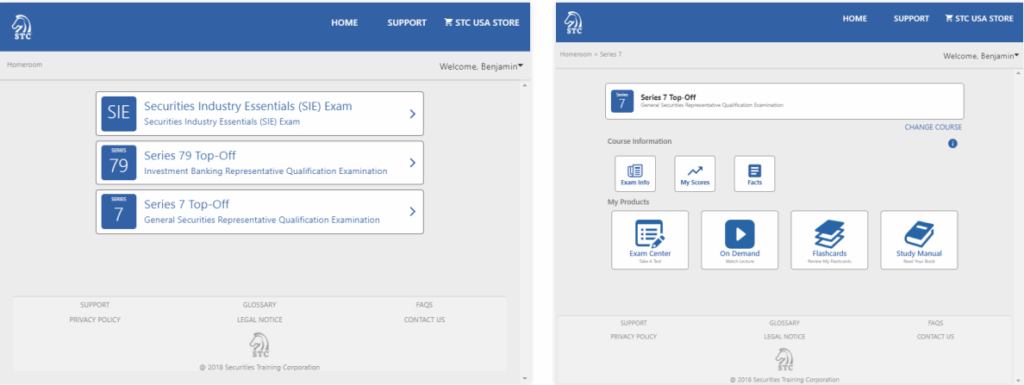
STC’s study rhythm is “lecture → quiz → progress exam,” so material stacks logically instead of piling up. By the time I hit their eighth and final Green Light Exam, I’d basically rehearsed test-day stamina. Further, the Crunch Time Facts sheets were also helpful for a quick refresher on the key concepts that would be on the test.
Here’s what one Reddit user shared:
“The crunch time facts from STC were CLUTCH. Some questions came from that sheet verbatim. I think the final exams and taking them like you’re sitting for the exam helps with endurance and good testing skills like reading the full question and looking out for tricks!”
u/lumpyspacetina
Course Features
- 12 hrs of live virtual instruction (recordings available for replay)
- 8 Progress Exams & 8 Final Exams plus 2 Green Light Exams
- Chapter quizzes are embedded after every lesson
- Customizable digital flashcards you can sort by topic, difficulty, or “need-to-review” status
- Crunch Time summary sheet (high-yield facts at a glance)
- Instructor hotline & email for one-on-one clarifications
- Printed + online study manuals with automatic updates for six months

Pros
- Live Help When You Need It: Quick calls to the instructor hotline saved me from spinning my wheels on tricky questions.
- Structured Study Flow: Progress and Green Light exams create a built-in pacing calendar, great if self-discipline isn’t your superpower.
- Flashcards That Adapt: I could reshuffle cards to hammer just my weakest subtopics the night before the exam.
- Crunch Time Facts = Gold: A set of cheat sheets that, according to reviewers, predicted a few test questions verbatim.
- Pass Guarantee Safety Net: Fail after following the syllabus, and STC picks up the tab for a retake or refund.
Cons
- Finite Practice Pool: Eighteen exams are solid, but there’s no unlimited generator like SIA’s.
- Higher Price Point: STC tends to be on the pricier side, which might be a barrier for some students.
Bottom Line
STC is the Series 65 prep equivalent of having a personal trainer—it costs more, but the real-time coaching and structured milestones keep you accountable. If you learn best by talking through material and need a nudge to stay on pace, the Premier Plus package is worth the splurge. Solo grinders on a tighter budget will probably be happier with SIA’s unlimited practice model.
Securities Training Corporation
3. Achievable: Best for Minimal-Frills, Adaptive Learning
When I logged into Achievable for the first time, the digital textbook caught my attention right away. Typically, textbooks have a recognizable “vibe,” using unnecessarily complicated wording to explain something that’s actually pretty simple if you break it down. Achievable takes a totally different approach, highlighting important passages with bolding and writing in a way that normal people can easily read and understand. The core of their system was the adaptive engine that adapts to your learning progress, focusing on what you need most. This meant less time reviewing what I already knew and more time strengthening my weak spots, making my study sessions incredibly efficient.
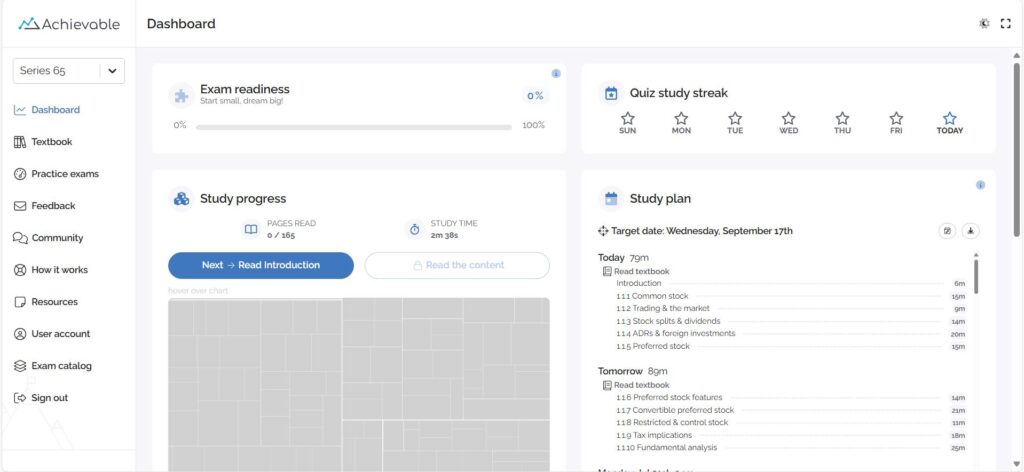
I particularly valued their spaced repetition technology. When studying complex topics, the system would intelligently re-quiz me on concepts I was likely to forget. This was incredibly helpful because it solidified my understanding over time, rather than relying on last-minute cramming. The sleek user interface and integrated study planner also made the entire experience seamless and much more enjoyable than traditional prep courses. It truly felt like a personalized tutor guiding me through the material.
Course Features
- Plain-English digital textbook broken into snack-size chapters
- 1,300+ smart review questions that reshuffle as your retention changes
- 20+ full-length practice exams (unlimited retakes)
- 44 concise explainer videos for tougher concepts
- 12-month access with free trial
- Mobile-friendly design with real-time progress tracking
Pros
- Adaptive Quizzing: The engine automatically doubles down on weak spots, so you’re never guessing what to review next.
- Generous Access Window: A full year lets career-changers or part-timers pace themselves.
- Concise and Engaging Content: I found the digital textbook to be well-written and easy to follow, avoiding the dryness often associated with finance textbooks.
- Excellent Value For Money: Considering the advanced technology and comprehensive content, I felt Achievable offered fantastic value at its price point.
Cons
- No Live Instructor Support: I missed the option for live interaction with an instructor for real-time Q&A sessions.
- Limited Video Content: I found the course relies more on text and practice questions, with less emphasis on extensive video lectures compared to some other providers, like SIA.
Bottom Line
Achievable is the definition of “get in, get out.” Its adaptive engine keeps study sessions laser-focused, and the interface stays out of your way. If you’re self-motivated, allergic to distractions, and happy without live instructor banter, Achievable is an efficient (and affordable) path to Series 65 readiness. If you need hand-holding or a buffet of bonus tools, stick to heavier hitters like STC or SIA.
Achievable
4. Kaplan: Best for Comprehensive Learning

Kaplan feels less like a “course” and more like an entire finishing school for the Series 65. The dashboard hands you a study plan the moment you log in, blocking out weekly tasks so you’re not guessing what comes next. I liked kicking off each unit with the short intro video, plowing through a few textbook pages, and then stress-testing my recall, all without hunting through separate menus.
I particularly appreciated the sheer volume and variety of their practice questions. When I felt confident in a section, I could dive into their QBank and find endless permutations of questions, which truly tested my understanding from every angle. This was incredibly helpful because it prevented me from simply memorizing answers and forced me to apply the underlying concepts, building a deeper and more resilient knowledge base.
The flip side? With only five months of access, there’s a tighter timeline for students with busy schedules. Most courses offer six months, so it isn’t terrible, but it’s still a bit stressful. Plus, while you can pay for extensions, that adds expense to an already pricey prep package. However, with so much else to appreciate, it may be worth enduring the negatives.
Course Features
- License Exam Manual in print or digital formats
- On-demand video library (unit intros & wrap-ups)
- SecuritiesPro QBank for custom quizzes & practice exams
- Performance Tracker with color-coded weak-spot alerts
- Study plan auto-populated to fit your target test date
- Optional instructor-led class (Premium tier)
Pros
- All-In-One Resource Hub: Text, videos, QBank, and analytics live under one roof, so context-switching is minimal.
- Flexible Learning Options: I personally valued the choice between self-paced study, on-demand videos, and live virtual classes, catering to different learning styles.
- Trusted Brand Depth: Decades in the licensing game show in polished explanations and tightly aligned practice items.
- Excellent Study Planner and Analytics: I used their tools daily to track my progress and identify weak areas, which was highly effective.
Cons
- No Live Instructor Access (Base Package): Real-time classes cost extra, which stings at Kaplan’s already-premium price.
- Tight 5-Month Window: Miss a few weeks and you’ll feel the crunch; extension fees add up fast.
- Overwhelming Content Volume: While thorough, I sometimes felt the sheer amount of material could be a bit daunting, requiring discipline to stay focused.
Bottom Line
Kaplan is the “heavy textbook, detailed tracker” option—perfect if you crave structure and want every resource in one place. Just be ready to stick to the five-month timeline and accept that live guidance costs extra. If you can stay disciplined, Kaplan’s layered exams and analytics offer one of the most thorough prep ecosystems out there.
Kaplan
5. ExamFX: Best for Bonus Tools

ExamFX feels like the “Swiss-Army knife” of Series 65 prep: flashcards, spot-check quizzes, video lectures, customizable exams—you name it, it’s tucked into the portal. When I navigated their platform, I immediately noticed their emphasis on immediate feedback and adaptive features. It kept me actively involved with the material through various quizzes and simulations, rather than passively consuming content. This approach felt dynamic and helped me stay focused, which is crucial for a lengthy exam like the Series 65.

I particularly found their “Readiness Exam” to be a fantastic feature. It felt like a true gauge of my preparedness, mimicking the actual exam environment and question style effectively. This was incredibly helpful because it highlighted my remaining weak areas before I even considered scheduling the real test, allowing me to fine-tune my final study efforts. Their use of “PassTools” also provided a useful framework for organizing my study plan and ensuring I hit all the necessary topics.
However, compared with SIA’s or Kaplan’s question banks, some items felt a shade easier—good for confidence, less so for the brutal realism needed for authentic practice.
Course Features
- Interactive learning portal with clean, mobile-friendly UI
- Digital flashcards, SpotCheck quizzes, and Custom Exam Generator
- Readiness Exam + Guarantee Exam tied to the pass guarantee
- On-Demand video library (unit intros & topic refreshers)
- Optional Live Online Classes and new Live Focus Webinars
- Hard-copy or e-book textbook, real-time content updates, report center
Save Up to 20% on ExamFX Securities Review Courses
Pros
- Highly Interactive Platform: I found the interactive elements and constant quizzes kept me engaged and actively learning, rather than passively reading.
- Robust Exam Simulator: I appreciated the realistic simulation environment, which helped me manage my time and nerves effectively during the actual exam.
- Clear and Concise Video Lectures: I found the video instructors to be very effective at breaking down complex topics into understandable segments.
Cons
- Content Depth Is Middling: Practice questions are solid for concept checks but lack the curveballs I saw in SIA and Kaplan banks.
- Support Responsiveness Varies: Phone and chat exist, yet my average reply time hovered around 24 hours.
- Interface Design: While functional, I personally felt the overall aesthetic of the platform could be updated to feel more modern and visually appealing.
Bottom Line
ExamFX is a strong contender for those who learn best by doing and appreciate a highly interactive study experience. I found their Readiness Exam and overall adaptive approach to be particularly effective in building confidence. Just remember that its practice material skews friendlier than some rivals, and live help adds to the bill. If you’re a self-starter who appreciates gadgets and a tidy interface more than bleeding-edge question difficulty, ExamFX delivers a pleasant (if not powerhouse) prep experience.
ExamFX
6. Knopman Marks: Best For Premium Results

Knopman Marks positions itself as a high-touch prep course with a boutique feel, but the structure may not work for everyone. After testing it, I appreciated the attention from instructors and the proactive support—like follow-up emails when scores dropped or help with difficult questions—but the rigid calendar made the course feel less accessible. Everything is built around their live instruction model, which isn’t ideal for those who need true self-paced flexibility or an adaptive approach.
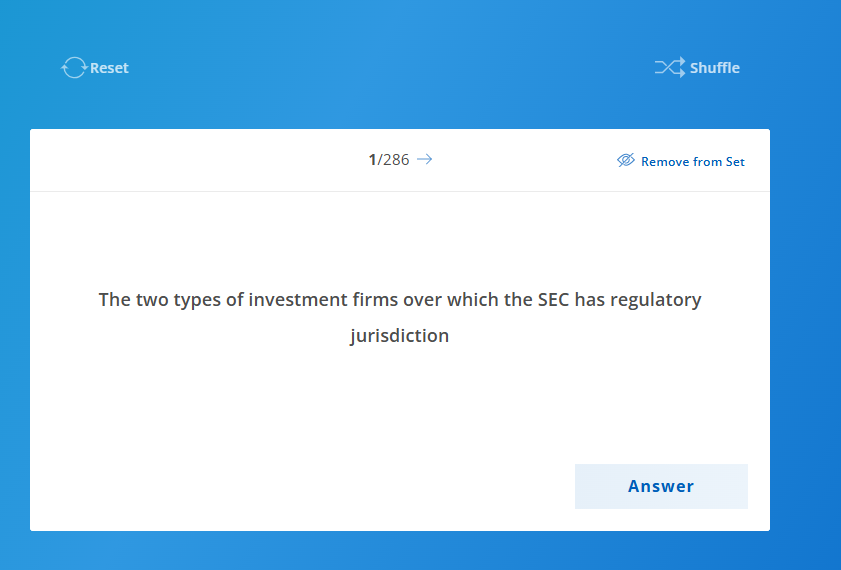
The course materials are polished, and the support is impressive, but the experience relies heavily on following their structure. If you’re trying to study late at night or on weekends outside the class schedule, the program can feel more restrictive than supportive. I also noticed the question bank might be smaller than other providers like Kaplan or SIA, and there’s less emphasis on adaptive tech. In short, this is a course that works well if you match its ideal student profile—but it may not be the best fit for everyone.
Course Features
- Unlimited live review & blended classes (join as many as you like)
- On-demand video lectures curated by senior faculty
- Physical & digital textbook plus spiral-bound workbook
- Customizable practice-question bank with predictive analytics
- Training calendar with automated study-reminder emails
- Private faculty strategy calls for one-on-one guidance
- Performance monitoring & intervention if scores lag
Pros
- Highly Structured Path: Study calendar, benchmark exams, and automated nudges keep procrastination in check.
- Quality-Over-Quantity Content: Materials drill deep into exam-relevant topics without fluff.
- Supportive Alumni Network: Former students routinely jump into forums to share test-day tips.
Cons
- Less Self-Paced Flexibility: While on-demand is available, I found the core experience is geared towards their structured live classes, which might not suit purely self-directed learners.
- Smaller Question Bank (Potentially): Compared to providers like Kaplan or SIA, I felt the sheer volume of practice questions might be less, though the quality is high.
- Less Emphasis on Adaptive Technology: I noticed they rely more on expert-guided learning rather than AI-driven adaptive algorithms.
- Access Period Could Be Limited: Depending on the package, the access periods might not be as long as those of some competitors.
Bottom Line
Knopman Marks offers strong instructor access and a clearly guided structure, but it’s not ideal for independent learners. With limited flexibility, a possibly smaller question bank, and a premium price tag, it’s best for students who want (and need) that high-touch experience, not those looking for on-demand control or budget-friendly prep.
Knopman Marks
7. Pass Perfect: Best For Exhaustive Practice

Pass Perfect definitely leans into the “more is more” philosophy. There’s a large bank of practice questions—easily over 3,000—and their simulated exams are some of the toughest I’ve seen (and to clarify, that’s a good thing). For students who really want to grind through material and drill concepts until they stick, this can be a good fit. That said, the overall experience felt a little dated and heavier than necessary. The adaptive learning tools were functional but didn’t feel as intuitive or responsive as some other platforms I tested.
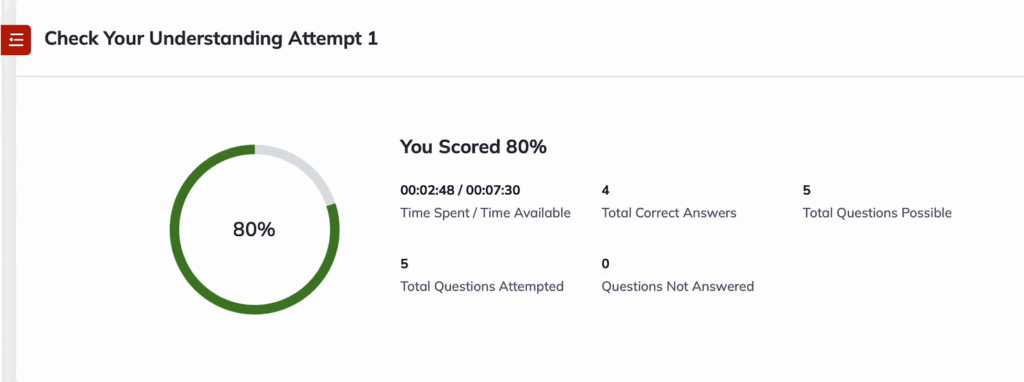
The textbooks are very thorough, but they read more like reference manuals than study guides. And while I appreciated the structure of the curriculum, I found myself working harder to stay focused, toggling between dense readings and quizzes just to keep my momentum up. It’s not a bad course by any means—it just wasn’t as engaging or streamlined as some of the others on this list.
Course Features
- SmartSearch adaptive learning that re-prioritizes weak topics
- Comprehensive online & e-textbook plus detailed study guide
- Thousands of practice questions with endless custom quizzes
- Simulated & final exams that mirror real-test pacing
- Detailed performance analytics for progress tracking
- Dynamic study calendar automatically updates to your target date
Pros
- Massive Question Bank: I was genuinely impressed by the sheer number of practice questions, providing endless opportunities to reinforce learning.
- Effective Simulated Exams: I experienced these as very realistic, preparing me well for the actual exam environment and pacing.
Cons
- Information Overload Risk: The sheer volume can feel crushing without a strict study plan.
- Interface Feels Outdated: I personally found the online platform’s interface to be less modern and visually appealing compared to newer competitors.
- Less Engaging Video Content: The video lectures, while informative, weren’t as dynamic or engaging as some other providers’ offerings.
- Less Focus on Modern Learning Tools: I noticed less emphasis on interactive simulations or gamified elements compared to some newer, tech-forward platforms.
Bottom Line
If you’re the type of learner who wants to cover absolutely everything and doesn’t mind an old-school interface, Pass Perfect has you covered. The practice tools are effective, and the coverage is deep, but the course can feel a little overwhelming and less polished than its peers. It’s a solid choice for detail-oriented learners, but others may appreciate the lighter, more user-friendly approach of providers like Achievable or Kaplan.
Pass Perfect
8. PassMasters: Best for Budget Self-Starters

PassMasters is a no-frills prep course that gets the job done if you’re confident studying on your own. The short video lessons—each paired with a printable PDF and a quiz—are structured well, and I appreciated how the built-in 30-day study plan kept me moving without much guesswork. That said, everything here feels a bit barebones. The video production is basic, there’s no instructor Q&A or live support, and the platform lacks the polish and interactivity I saw in higher-priced options.
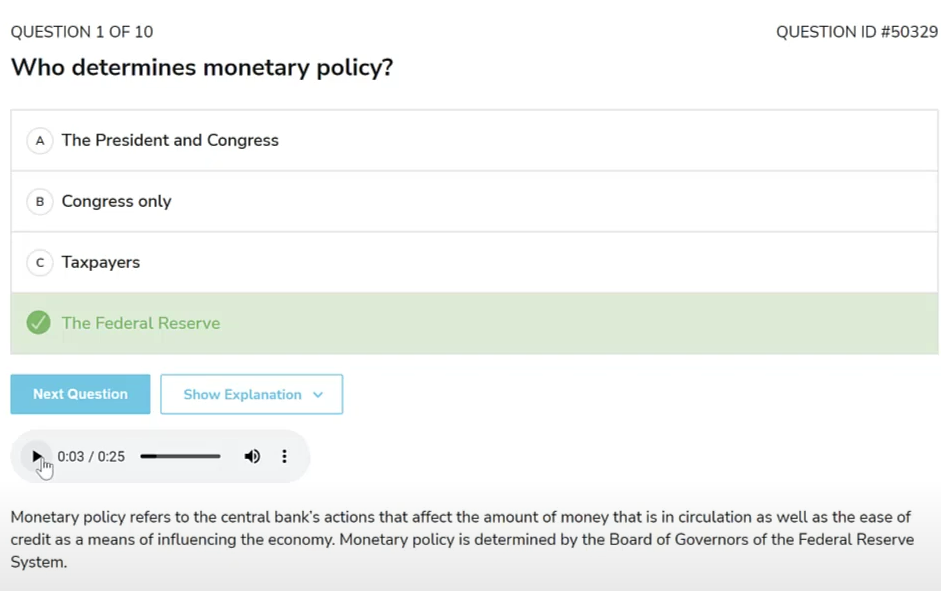
The 2,300+ question bank was helpful, and I liked the ability to retake the final exam with different question mixes. But compared to more robust courses like Kaplan or Achievable, the content didn’t go as deep, and the learning tools felt limited. If you’re the kind of person who thrives on structure, instructor access, or advanced analytics, this one may feel a bit too simple.
Course Features
- 20 hours of on-demand video (max 30 minutes each)
- Printable PDF study manual for every topic
- 2,300+ practice & final-exam questions with detailed audio/text explanations
- Topic quizzes, section review exams, and a weighted final
- Basic study planner that maps a 30-day schedule
- Customizable quizzes by chapter or difficulty
- Mobile-friendly interface (no dedicated app)
Pros
- User-Friendly Interface: I found the platform easy to navigate without a steep learning curve.
- Good for Self-Starters: This course is well-suited for independent learners who don’t need extensive hand-holding.
Cons
- Limited Depth of Content: I sometimes felt the material, while concise, lacked the deeper explanations found in more comprehensive courses.
- Basic Analytics: The progress tracking and performance analytics tools are quite basic compared to more advanced platforms.
- Fewer Supplementary Materials: I missed having additional resources like extensive flashcard sets, glossaries, or extra study aids.
- Smaller Question Bank: While sufficient, the sheer volume of questions wasn’t as extensive as what Kaplan or Pass Perfect offers.
- Less Interactive: I found the learning experience to be less interactive and engaging than platforms that utilize adaptive technology or gamification.
Bottom Line
PassMasters is a great pick for independent learners who just want the essentials at a low price point. It’s organized, clear, and flexible—but the simplicity is both its strength and its limitation. If you want more detailed instruction or high-touch support, it’s probably worth paying a bit more elsewhere.
PassMasters
9. Study.com: Study Guide for Bite-Sized Lessons
Study.com leans hard into micro-learning. The mini-lessons average just a few minutes each, so you can sprint through a concept while waiting for your latte and still feel productive. I found the mix of short-form videos and plain-language text ideal for “one more topic before bed” sessions; nothing drags on long enough to tempt the doom-scroll.
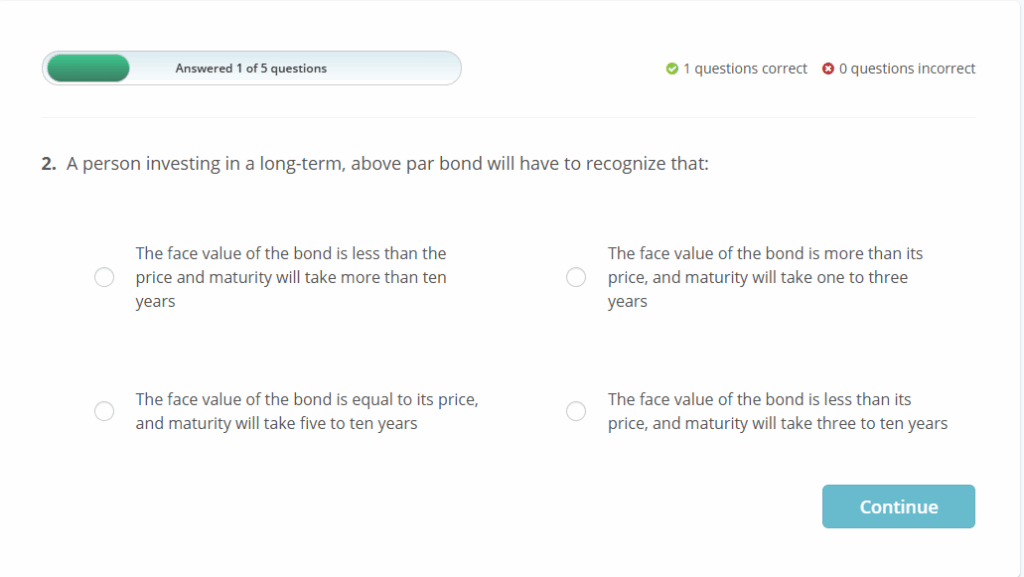
The trade-off for that snackable style is depth. The 13 hours of video skim the surface compared with Kaplan’s encyclopedic library, and the quizzes rarely reach the “make-you-sweat” intensity of Pass Perfect. Still, with 1000+ practice questions, you get enough reps to spot weak areas—and the interface logs every attempt so you can watch your scores inch upward.
Course Features
- 235 lessons delivered in text + 138 concise videos (≈13 total hours)
- 1,190 practice questions and 26 full practice tests
- Self-assessment quizzes after each lesson
- Basic study planner to pace the 25-chapter course
- Mobile-friendly platform; no install required
Pros
- Ultra-Short Modules: Easy to squeeze a lesson into any stray 5-minute window.
Cons
- Surface-Level Depth: Great for first pass, but you may need supplemental resources for gnarly regs.
- No Live Help or Adaptive Engine: What you see is what you get—no instructor hotline or fancy AI nudges.
- Jump-Cut Lesson Flow: Micro-videos hop between ideas so fast that complex concepts can feel fragmented, making it tough to knit everything together.
- Zero Adaptive Personalization: The platform never reshuffles or spotlights weak areas, so you might waste time revisiting topics you already own while shaky ones linger.
- Subscription Creep: The low monthly fee looks friendly, but if it takes you longer to completely prepare, you’ll quietly shell out more than a one-and-done package elsewhere.
Bottom Line
Study.com is the streaming-snack option: inexpensive, endlessly portable, and spoon-fed in tiny chunks. It’s a good starter kit—or refresher—if you learn best in short bursts and aren’t fussed about live coaching or high-octane analytics. Serious deep-divers, however, will want to pair it with a heavier hitter like SIA or STC for maximum exam-day confidence.
Study.com
Other Courses Reviewed
Although the spotlight was on the courses just discussed, there are a handful of additional schools that deserve to be on your radar as well.
How the Courses Were Ranked
My ranking process for these Series 65 prep courses was based on a combination of rigorous testing and an analysis of key factors that I believe are crucial for exam success. Here’s how I broke it down:
- Depth and Accuracy of Study Materials: I assessed how thoroughly each course covered the Series 65 syllabus and the clarity of its explanations. For instance, I found that STC and Kaplan offered incredibly deep dives, leaving no stone unturned, which was great for building a robust foundation.
- Proven Success Rates and Student Outcomes: While hard data is often proprietary, I looked at general reputation, public testimonials, and consistent positive feedback on platforms like Reddit. Knopman Marks and Achievable consistently stood out in this regard, with many students crediting their pass.
- Ease of Navigation, Interface, and Support: This was about how intuitive and pleasant the platform was to use. I personally found Achievable‘s modern, sleek interface incredibly easy on the eyes and a joy to navigate, while some older providers felt a bit clunky.
- Practice Questions & Exams: A huge factor! I spent hours grinding through question banks. Kaplan and Pass Perfect offered immense quantities, while I felt SIA and ExamFX had questions that were particularly well-aligned with the actual exam’s difficulty and style.
- Teaching Style and Clarity of Explanations: This was about how well the instructors conveyed complex information. I particularly appreciated the concise and clear video lectures from SIA and the direct, expert support from Knopman Marks.
- Value for Money: I weighed the cost against the comprehensive features and support offered. Achievable and SIA often felt like excellent value given their effectiveness.
- Self-Paced Vs. Structured Learning Options: I considered how well each course catered to different study preferences. Kaplan truly shone here with its wide array of self-paced and live options.
How to Choose the Best Series 65 Course for You
Choosing the right Series 65 prep course isn’t a one-size-fits-all decision. Your ideal course depends on your individual learning style, existing knowledge, and budget. Here’s a buyer’s guide based on my experience to help you make an informed choice:
Learning Style
Consider how you learn best. Do you thrive in a structured environment with clear deadlines, or do you prefer to set your own pace?
- Structured Learning: If you need discipline and accountability, courses like STC and Knopman Marks offer live virtual classes with fixed schedules and expert instructors to guide you. I personally found the live elements pushed me to stay on track.
- Self-Paced Learning: If you prefer flexibility and independent study, Achievable, SIA, and Kaplan (their self-study options) provide on-demand content you can access anytime, anywhere. I appreciated the freedom these offered to fit study around my busy schedule.
Course Format
Think about how you prefer to consume information – videos, text, or interactive exercises.
- Video-Centric: If you’re a visual or auditory learner, courses with strong video lectures like SIA and ExamFX are excellent choices. I found SIA’s clear, concise videos particularly helpful for grasping tricky concepts quickly.
- Textbook-Driven: For those who prefer reading and detailed explanations, STC, Kaplan, and Pass Perfect offer incredibly comprehensive digital and/or physical textbooks. I often referenced Kaplan’s detailed textbook for in-depth understanding.
- Interactive/Adaptive: If you want a dynamic experience that adapts to your performance, Achievable and ExamFX use smart technology to personalize your study path.
Practice Questions & Exams
Realistic practice questions are non-negotiable for the Series 65. Look for courses with robust question banks and realistic simulations.
- Extensive Question Banks: Kaplan and Pass Perfect boast massive numbers of practice questions, allowing for exhaustive drilling. I felt fully tested by Kaplan’s QBank.
- Realistic Simulations: ExamFX and SIA provide excellent simulated exams that closely mimic the actual test environment and question style, which I found crucial for building exam-day confidence.
Adaptive Learning
This technology can significantly boost your efficiency by focusing on your weak areas.
- Best for Adaptive Learning: Achievable and ExamFX are leaders here. I found Achievable’s algorithm truly personalized my study, saving me valuable time.
Instructor Support
Do you need direct access to experts for clarification?
- Live/Direct Support: Knopman Marks offers unlimited direct instructor support, which I found invaluable for complex questions. STC also provides an instructor hotline.
- Limited/Online Support: Most other courses, like SIA and Kaplan, offer email or forum-based instructor access.
Budget
Prep course prices can vary significantly.
- Budget-Friendly: SIA and PassMasters tend to be more affordable options while still offering core materials.
- Mid-Range: Achievable, ExamFX, and Pass Perfect fall into this category, offering a good balance of features and cost.
- Premium: Knopman Marks and STC are at the higher end, typically justified by comprehensive support or extensive resources.
Course Access Length
Consider how long you need access to the materials.
- Flexible Access: Some courses offer 60-day to 6-month access, while others might provide longer terms. Achievable and Kaplan often have flexible access periods depending on the package. I always check this detail to ensure it aligns with my planned study duration.
Series 65 Course vs. Course Comparison: Dissecting the Best
Here’s how some of the top contenders stack up against each other, based on my firsthand experience:
Securities Institute of America vs. Achievable
I appreciated SIA’s straightforward, impactful video lectures that cut to the chase, making complex topics incredibly clear and understandable. It felt like a highly efficient traditional classroom experience brought online. If your learning style benefits from direct, concise instruction and highly relevant practice questions without a lot of technological frills, SIA is a fantastic choice that delivers results.
On the other hand, Achievable’s adaptive learning and spaced repetition truly revolutionized how I retained information. It wasn’t just about learning; it was about smart, algorithm-driven memorization that optimized every study minute.
If you’re a tech-savvy learner eager to leverage cutting-edge adaptive technology and spaced repetition for maximum efficiency and retention, Achievable’s personalized approach is a game-changer. I personally found Achievable’s modern interface a bit more enjoyable for long study sessions, but SIA’s clarity in content delivery is hard to beat.
SIA vs STC
SIA’s strength lay in its focused, clear video lectures that distilled complex Series 65 topics into understandable chunks. It’s direct and efficient, which I really valued for getting to the core material quickly. I loved their concise, high-impact video instruction and streamlined approach to key concepts.
STC, on the other hand, felt like a more exhaustive academic undertaking. Their textbooks were incredibly detailed, and their approach was incredibly thorough, leaving no stone unturned. If you prefer a more traditional, deeply comprehensive academic dive into the material, with extensive textbooks and a long-standing reputation, STC’s thoroughness will likely appeal more.
Acheivable vs Kaplan
Achievable’s adaptive learning truly blew me away with its efficiency. I loved how it intelligently prioritized my weak areas using spaced repetition, making every minute of study feel incredibly productive. It’s a modern, data-driven approach.
Kaplan, on the other hand, provides an immense, almost overwhelming volume of content and an incredible array of learning options, from live classes to their massive QBank. If you’re forward-thinking and prioritize intelligent, personalized study that maximizes retention through adaptive technology, Achievable is a fantastic choice that I found incredibly effective. But if you’re a learner who needs a vast library of resources, prefers a more traditional approach with various formats (including live classes), and values sheer volume of practice questions above all else, Kaplan’s comprehensive ecosystem is hard to beat.
SIA vs ExamFX
I truly appreciated SIA’s focused video lectures; they cut straight to the core of the Series 65 material with remarkable clarity, which was excellent for foundational understanding. I personally learned best from clear, direct video explanations and value efficiency in content delivery, and SIA, undoubtedly, was the perfect option for me.
ExamFX, however, immediately pulled me in with its dynamic interface and the “Readiness Exam,” which I felt was a very strong indicator of real exam preparedness. So, if you prefer a highly interactive learning environment that keeps you constantly engaged with quizzes, simulations, and adaptive features, ExamFX offers a more hands-on and dynamic experience.
STC vs Pass Perfect
STC impressed me with its long-standing reputation and methodical, in-depth coverage, almost like a college-level course for the Series 65. Their Instructor Hotline was a great resource for clarifying complex regulatory points. If you’re looking for a tried-and-true, extensively detailed, and academically rigorous approach to the Series 65, STC provides a very solid, traditional foundation.
Pass Perfect, on the other hand, felt like a sheer volume powerhouse, particularly with its massive question bank and detailed answer explanations that seemed to cover every possible exam permutation. If your primary study method involves grinding through thousands of questions and learning from very detailed explanations for each, effectively “over-preparing” yourself for any possible question, Pass Perfect excels in that specific domain.
Pass Perfect vs Pass Masters
With Pass Perfect, you can get through question sets well past the 3,000-mark without seeing too much repetition, and the line-by-line answer rationales explain why every distractor was wrong. That depth came with a price in time and mental bandwidth, but on practice-test day, I rarely encountered a concept I hadn’t already dissected inside their platform. If you thrive on exhaustive practice, want to see thousands of questions, and prefer learning through incredibly detailed explanations for every possible scenario, Pass Perfect is the heavyweight champion.
PassMasters took the opposite tack: concise 20- to 30-minute videos, a leaner question bank, and a study plan that never buried me in extra features. It was refreshingly direct—perfect for mornings when I wanted to cover a chapter and move on with my day. I’d pick Pass Perfect when exhaustive practice and granular explanations are non-negotiable, but PassMasters makes more sense if your budget is slimmer and you’re confident in steering your own study schedule.
Knopman Marks vs SIA
Knopman Marks truly impressed me with its personalized approach, exceptional instructors, and unlimited support; it felt like a tailored, white-glove experience designed for serious students who value direct expert guidance. For a premium experience with unparalleled instructor support and a strong emphasis on live, interactive learning, Knopman Marks is a top-tier choice.
SIA, on the other hand, was all about efficiency and clarity. Their video lectures were incredibly concise and effective at cutting through complex topics, making them easy to grasp quickly and directly. It offers a highly efficient, clear, and more budget-friendly approach that focuses on delivering core content through excellent video instruction without a lot of extra frills.
Kaplan vs Pass Perfect
Kaplan offers an incredibly broad ecosystem, with a massive QBank, flexible learning formats (from live to self-paced), and a very comprehensive set of study materials. It felt like a vast library of resources. The user interface tied it all together nicely, and the five-month window nudged me to keep momentum without feeling rushed.
Pass Perfect also boasts an enormous question bank, but its strength, in my experience, was its almost obsessive detail in explanations and the way it seemed to over-prepare you for every single niche of the exam through relentless practice. I burned through simulations that felt harder than the real test, and their explanations read like mini-textbook chapters.
ExamFX vs. Pass Perfect
With ExamFX, I immediately gravitated towards their interactive features and the incredibly useful Readiness Exam. It felt like a very active learning experience, constantly testing my knowledge and adapting to my progress, making studying feel less like a chore. If you prefer an engaging, interactive platform with adaptive features that constantly challenge you and provide a clear readiness indicator, ExamFX is a strong contender. Their mobile app was also a big plus for me.
Pass Perfect, conversely, impressed me with the sheer, almost overwhelming volume of their question bank and the detailed explanations for every answer. It’s a deep dive into practice, often making you feel overprepared, which is a good thing for exam day. If your primary goal is to grind through thousands upon thousands of questions and detailed content explanations, potentially making the actual exam feel easier by comparison, Pass Perfect’s comprehensive approach is unmatched.
Final Verdict
After immersing myself in these Series 65 prep courses, my top recommendations come down to a few standout options, depending on your individual needs. For an exceptional blend of clarity, efficiency, and expert instruction, I truly believe Securities Institute of America offers a fantastic value proposition. The Securities Training Corporation is a good fit for live learners willing to spend more on a more comprehensive course. If you’re a more modern, tech-savvy learner looking for an incredibly efficient and personalized study experience, Achievable‘s adaptive technology and innovative online textbook will help you get there.
For those who demand a comprehensive arsenal of resources and maximum flexibility, Kaplan remains an industry leader, providing everything from extensive question banks to varied learning formats. Finally, if you’re after bonus tools to mix up your activities to stay engaged, ExamFX is a prime pick.
Ultimately, the “best” course is the one that aligns with your unique learning style and priorities. Each of these top contenders brings something valuable to the table to help you confidently conquer the Series 65 exam.
FAQs
Technically, no—but most candidates discover that well-organized study materials, practice banks, and review tools boost both efficiency and confidence. A quality prep course keeps your study plan on track and makes exam day feel far less chaotic.
Plan on logging roughly 80–120 study hours. For many people, that works out to four to eight weeks of steady, scheduled review. Your own timeline will depend on how much free time you have and how familiar you already are with the material.
Mix it up: read the core content, drill practice questions, take quick quizzes for reinforcement, and sit for timed mock exams. Platforms with adaptive tech or detailed performance trackers (think Achievable or STC) can zero in on your weak spots so you’re not burning hours on topics you’ve already mastered.
It can be, especially if you’re new to finance, because it spans investment theory, regulations, ethics, and economic basics. The right prep course breaks those topics into manageable parts and makes the learning curve a lot less steep.
You’ll have to wait 30 days before trying again, and a third miss bumps the waiting period to 180 days. Some providers, like SIA and STC, offer pass guarantees or extended course access so you can retake the test without paying another dime.