Let’s be real—prepping for the Certified Public Accountant (CPA) exam can feel like trying to climb a mountain in flip-flops. It’s tough, it’s long, and the pass rates don’t exactly make it look easy.
But here’s the good news: with the right strategy, you can absolutely beat the odds.
Why am I so sure?
Because I’ve been there, I know what it’s like to stare at a FAR practice test and wonder if this is some kind of cruel joke. But guess what? The pass rates aren’t there to scare you—they’re there to guide you.
Let’s take a look at them together and see how they can work in your favor.
Key Takeaways
- CPA Evolution introduces new focus areas: The updated CPA exam emphasizes tech skills like data analytics and cybersecurity, requiring candidates to adjust their study approach.
- Different sections, different challenges: Some core exam sections are more difficult than others, so knowing which areas require extra preparation can make a big difference.
- Discipline sections offer flexibility: Candidates now have the option to choose a discipline section that aligns with their expertise, which can increase their chances of success.
- Effective preparation is essential: A personalized study plan, along with the right tools like multiple-choice questions and task-based simulations, is key to passing the tougher sections.
- Practice is crucial: Consistent practice not only helps you understand the material but also builds the confidence needed to tackle the CPA exam successfully.
Understanding CPA Pass Rates and Results
In 2024, big changes hit the CPA exam with the introduction of the CPA Evolution initiative. This update brought new sections and challenges, focusing more on tech skills like data analytics and cybersecurity. With this shift, the American Institute of Certified Public Accountants (AICPA) and the National Association of State Boards of Accountancy (NASBA) had to carefully analyze the new exam results before releasing the pass rates.
Here’s a look at how candidates performed in the first quarter of 2024 under the new CPA Evolution model:
Pass Rates for Core Exam Sections
- Regulation (REG): 63.42%
- Auditing and Attestation (AUD): 44.63%
- Financial Accounting and Reporting (FAR): 41.92%
Pass Rates for New Discipline Exam Sections
- Business Analysis and Reporting (BAR): 42.94%
- Information Systems and Controls (ISC): 50.93%
- Tax Compliance and Planning (TCP): 82.36%
Knowing the pass rates can help you determine where to focus your study time. FAR continues to be a section that demands extra preparation, while REG and TCP tend to be more straightforward for many candidates. With the right CPA exam prep and a focus on the tougher sections, you’ll improve your chances of passing and getting that CPA license.
CPA Exam Pass Rates Over Time
CPA exam pass rates provide insight into both the exam’s difficulty and candidates’ preparedness over time. Here’s how pass rates have changed in recent years:
- 2014–2017: Pass rates for AUD hovered in the mid-40s to low-50s, while the REG section saw gradual improvements.
- 2018–2019: These years showed steady numbers, with FAR being especially challenging, with a 46% pass rate in 2018.
- 2020: The pandemic year brought some surprises. The Business Environment and Concepts (BEC) section spiked to a 77% pass rate in Q2, likely because candidates had more time to study.
- 2021–2024: REG improved to 63.42%, FAR remained tough at 41.92%, and AUD had a 44.63% pass rate.
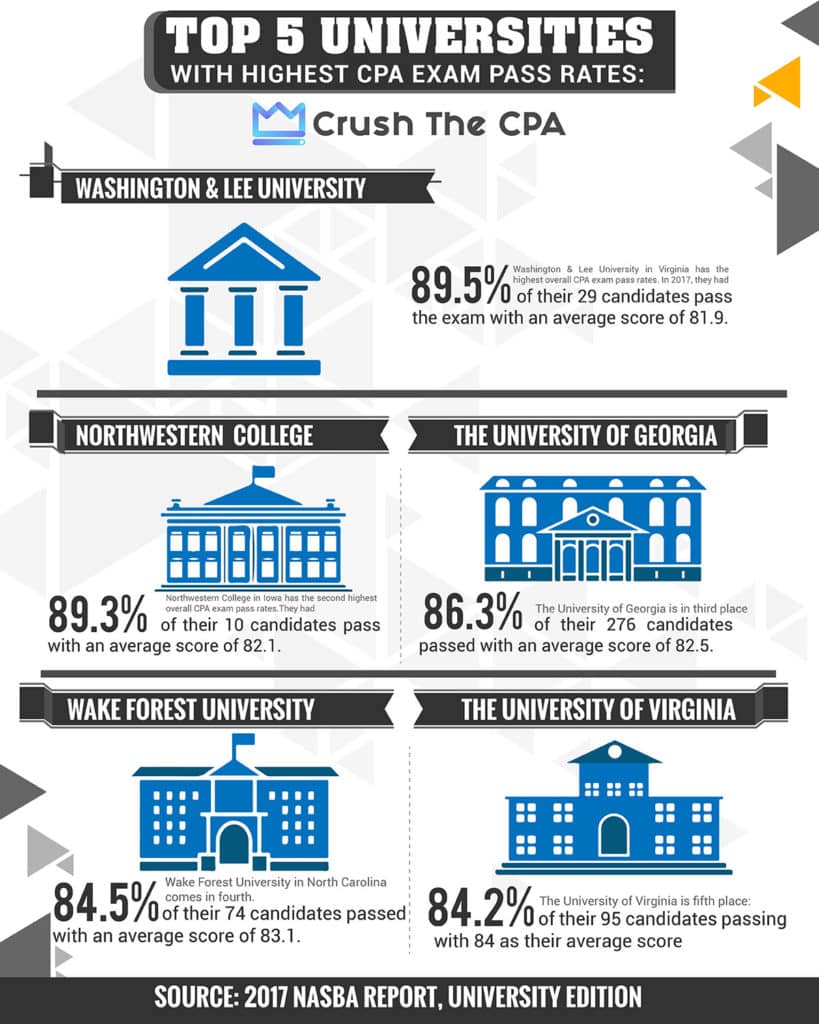
Top Universities with the Highest CPA Pass Rates in Recent Years
If you’re looking to get an accounting degree and want to go to a college with the highest chances of passing, schools like Washington and Lee, Northwestern, Georgia, Wake Forest, and Virginia have historically had the highest CPA exam pass rates.
What Affects CPA Pass Rates?
Several things can impact how well candidates do:
- Exam Difficulty: Some sections, like FAR, cover a lot of complicated material, making them harder to pass.
- Study Materials: I’ve found that a solid CPA exam prep course makes a big difference. Candidates who use comprehensive resources tend to have higher pass rates.
- Outside Factors: Changes in accounting rules or world events, like the pandemic, can also affect how people perform. For example, AUD saw a jump in its pass rate to 65% in 2020, possibly due to shifts in study habits.
Understanding these trends can help you focus your prep on the toughest sections and give yourself the best chance to pass.
How to Beat the Odds and Pass the CPA Exam
Getting a passing CPA exam score isn’t just about studying the material; it’s about having a smart approach. Here’s how you can set yourself up for success:
Create a Personalized Study Plan
Your study plan should fit your unique schedule and learning style. Here’s how to make it work for you:
- Evaluate Your Knowledge: Start by figuring out what you already know and where you need to focus.
- Set Realistic Goals: With CPA Evolution’s focus on application-based questions, set goals that prioritize staying updated on evolving exam patterns and honing your practical skills. This approach will better prepare you for real-world question formats.
- Mix It Up: Use a variety of tools—like flashcards, multiple choice questions (MCQs), and task-based simulations (TBS)—to keep things interesting.
- Take Breaks: It’s important to rest so you don’t burn out. Short breaks can help you stay focused while studying for the CPA exam.
Balance Study, Work, and Life
Finding time to study when you’re also working or handling personal commitments can be tough, but it’s doable:
- Talk to Your Employer and Family: Let them know your CPA exam goals. They can offer support when you need it most.
- Study on the Go: Use free moments, like during lunch or commutes, to squeeze in some study time.
- Set Boundaries: Create “no interruption” study zones to avoid distractions.
- Get Support: Join a study group or ask friends for help to stay motivated.
Understand, Don’t Memorize
Each section of the CPA exam tests your ability to apply concepts, not just remember facts. Here’s how to make sure you’re really learning:
- Deep Learning vs. Surface Learning: Don’t just memorize; connect new ideas to what you already know and practice applying them in different scenarios.
- Focus on Concepts: The CPA exam uses task-based simulations to check if you can apply your knowledge. Make sure you understand the concepts deeply so you can handle these questions.
Study Tips for Better Retention
- Explain It: Try summarizing what you’ve learned in your own words or teaching it to someone else.
- Practice Often: Keep testing yourself with different types of problems to reinforce what you know.
- Use Spaced Repetition: Review material at spaced-out intervals to help lock it into memory long-term.
By following these strategies, you can tackle the CPA exam with more confidence and improve your chances of success.
The Power of Practice
When it comes to prepping for the CPA exam, practice really does make perfect. Working through practice questions and simulations helps you get comfortable with the exam format and builds the skills you need to succeed.
Why Practice Questions and Simulations Matter
- Understand the Exam: By practicing, you’ll get a feel for the types of questions you’ll face on the actual exam, like MCQs and TBS.
- Test Your Knowledge: These practice tools challenge your understanding of concepts from different CPA exam sections, helping you see what you know and what needs more work.
- Boost Your Confidence: The more you practice CPA exam questions, the more confident you’ll feel when you sit for the real thing.
Tips for Using Practice Tests
- Simulate Exam Conditions: Try taking practice exams under timed conditions to mimic the real CPA exam and manage your time better on exam day.
- Review Answers: Whether you got the question right or wrong, always review the explanations to fully understand the correct answer.
- Adjust Your Study Plan: Use the results from your practice tests to focus on the areas where you’re struggling. This can help you raise your CPA exam score.
Find Your Weak Spots
Looking at your practice test results can show you patterns. Are you consistently missing AUD questions? Or is FAR giving you trouble? By identifying where you’re weak, you can tweak your CPA exam prep to tackle those tough spots head-on.
Managing Your Time on the CPA Exam
Handling your time well on the CPA exam is key to finishing all the questions. With MCQs and TBS, you’ve got to be strategic about how you split your time across each section.
How to Plan Your Time for Each Section
- Know the Exam Structure: Each CPA exam section has a different number of MCQs and simulations. Make sure you know how many questions are in each section so you can pace yourself properly.
- Set Small Goals: Instead of tackling the exam all at once, break it into smaller parts. Set goals to finish sections within certain time limits to stay on track.
Tips for Staying on Time During the Exam
- Start with the Easy Ones: Answer questions you feel confident about first. This way, you secure points early and leave the harder questions for later.
- Keep an Eye on the Clock: Check the time occasionally to make sure you’re pacing yourself, but don’t let it stress you out.
- Practice Makes Perfect: Use practice exams to get a feel for how long to spend on each question or simulation. This will help you manage your time better on exam day.
By practicing these simple time management techniques, you can improve your chances of finishing each CPA exam section without feeling rushed.
Conclusion
In the end, prepping for the CPA exam really can feel like climbing a mountain—but with the right strategy, you can absolutely beat the odds. The pass rates, while daunting, are there to guide you on where to focus your efforts. Sections like FAR might demand more preparation, but knowing that ahead of time puts you in control.
With the introduction of CPA Evolution and its new challenges, focusing on tech skills, data analytics, and understanding how the exam sections are structured will help you navigate the changes. Keep practicing, use smart study strategies, and remember—you’re more prepared than you think!
FAQs
CPA exam pass rates give you a clear idea of how challenging the exam sections are. Knowing these rates can help you focus your study time on tougher sections, increasing your chances of success.
The CPA exam passing score is typically set at 75 on a scale of 0–99. Achieving this score or higher means you’ve met the requirements to pass that section of the exam.
CPA exam pass rates differ significantly across sections. While Regulation (REG) generally shows a higher pass rate, this doesn’t mean it’s easier for all candidates. REG includes challenging tax and business law content, so pass rates should be seen as an indicator of performance trends rather than an assurance of section difficulty.
To improve your CPA exam pass rate, focus on a structured study plan, use practice exams to target weak areas, and make sure you’re familiar with the types of questions on each section of the CPA exam.
To pass the CPA exam, it’s important to understand the exam structure, study consistently, and review key concepts in areas with lower CPA exam pass rates.