So, you’re either in law school, about to start, or maybe just bar-curious—and the million-dollar question hits: How hard is the bar exam, really?
The short answer? It’s hard. But not impossible. After all, in 2024 alone, nearly 43,000 candidates passed.
The bar exam, officially called the Uniform Bar Examination, is the last hurdle for law school graduates to pass so they can, you know, practice law. But just like a Legend of Zelda boss, it comes with a strategy, patterns you can learnret, and yes, plenty of frustration. If you’re looking for a real-world take on what makes it tough (and what makes it doable), keep reading.
Key Takeaways
- Prep Beats Perfection: You don’t need to know everything—you just need a solid plan and the discipline to stick with it.
- The Mental Game Matters: The bar exam isn’t just a knowledge test—it’s a stress test. Managing your mindset is half the challenge.
- Time Management Is Key: From the MBE to essays, pacing is everything, and makes the bar exam difficult. Practicing under timed conditions can make or break your score.
- Life Gets in the Way—Plan for It: Whether you’re working, parenting, or just dealing with life, tailor your study plan around your reality.
- Passing Is a Career Unlock: The struggle is real, but so is the reward. Passing opens the door to practicing law and everything that comes with it.
Why Is the Bar Exam Difficult?
There are a few reasons this thing has a reputation for chewing people up and spitting them out.
It’s a Ton of Material
Seriously, a ton. You’re expected to know everything from criminal law to business associations to family law, and even federal civil procedure. And that’s just scratching the surface. Hopefully, you’ll have covered a good chunk of fundamental legal principles in your American Bar Association-approved law school, but if you forgot, it’s time for a serious refresher.
The exam covers:
- The Multistate Bar Exam (MBE) has 200 multiple-choice questions.
- The Multistate Essay Examination (MEE) with essays on topics like constitutional law, real property, and more.
- The Multistate Performance Test (MPT), where you do real-lawyer tasks.
- And the Multistate Professional Responsibility Exam (MPRE) for ethics is usually taken before or after the main event.
It’s not just about memorizing rules. You have to apply them to tricky fact patterns, under time pressure, with no lifelines.
Time Crunch Is Real
The bar exam spans two days of intense testing, especially if you’re in a Uniform Bar Exam (UBE) state (that’s 41 jurisdictions out of 56). Day one is usually the MEE and MPT. Day two? A six-hour multiple-choice gauntlet known as the MBE.
Most questions aren’t just “what’s the law?” They’re more like, “Here’s a weird situation—what’s the best legal move?”
And you’ve got limited time. No Googling. No textbooks. Just your brain, a pencil, and a clock.
It’s a Mental Marathon
This isn’t like cramming for a final. You prep for months. It’s a grind. You’re reviewing dozens of subjects, doing dozens of practice exams, and writing essays with aching hands and tired eyes.
Honestly, staying mentally sharp is half the battle. The other half is staying sane.
How Many People Actually Pass?
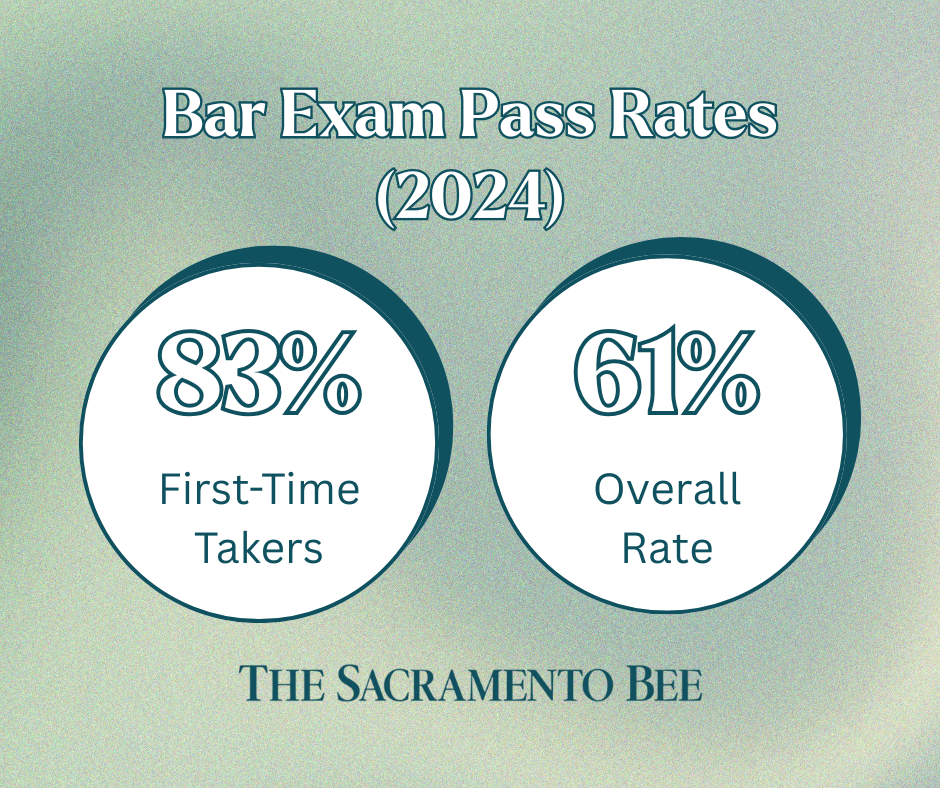
Here’s some good news: most people do pass, especially on their first try.
In 2024, the first-time pass rate was around 83%, while the overall pass rate (including repeat takers) was 61%. So yes, it’s hard—but not some impossible mission.
One big factor? Whether you’re a first-timer or a retaker. Bar examiners have found that repeat takers, especially those sitting in February, tend to struggle more than July test-takers, partly because July has more recent grads still in study mode.
Who Struggles the Most?
Let’s be honest—everyone finds something tough. But there are patterns:
- Repeaters: The bar exam is especially rough if you’ve already failed once. Not because you’re doomed, but because it’s harder to bounce back mentally and fix the gaps. Plus, the costs and fees to retake the bar.
- Working while studying: If you’ve got a job or family responsibilities during bar prep, the time squeeze is brutal.
- Long break from law school: If it’s been a few years since graduation, getting back into study mode can be a shock.
That said, you’re not out of luck. People in every one of these categories pass all the time. The key is adapting your prep to your life, not the other way around.
How Do You Make It Easier?
You don’t need to be the smartest person in the room. You need to be the one who shows up every day.
Here’s what helps:
- Start Early: Bar prep usually kicks off 8–10 weeks before the exam, but reviewing tough topics (hello, civil procedure) ahead of time can take the edge off.
- Practice Smarter: Focus on practice essay questions, timed MBE sets, and full-length multistate performance tests. The more you mimic exam conditions, the less shocking it’ll feel.
- Follow a Plan: Use a trusted bar prep course or create a detailed study schedule. Stick to it, but don’t burn out.
- Take Breaks: Seriously. Your brain can’t absorb all this without rest. Get outside, talk to humans, sleep.
And don’t forget the MPRE. It’s a separate two-hour test, but passing it is required in nearly every state. It’s less intense than the main bar exam, but still worth prepping for.
Is It Worth the Stress?
Yes—if you want to be a lawyer.
It’s hard. It’s expensive. And yeah, it might make you question everything for a hot minute. But passing the bar examination is your ticket to doing the work: advising clients, making arguments, and building a legal career.
Once you pass, you never have to take it again (unless you move states without a uniform bar exam or UBE score you can transfer). And that feeling of seeing your name on the pass list? Pure gold.
Final Thoughts
So, is the bar exam hard? Absolutely. It’s one of the most demanding tests out there. But it’s not unbeatable.
You don’t have to be perfect. You just have to prepare, stay consistent, and keep going—even when it gets tough. Plenty of people just like you pass every year. You can too.
FAQs
Many consider it one of the hardest due to the volume of material, high stakes, and time pressure. But it’s not impossible—just intense.
In 2024, the first-time pass rate was about 83%, while the overall rate (including repeaters) was around 60%. Solid, dedicated prep can translate to a better score on the actual bar exam.
Yes. The LSAT tests logic and reading, but the bar exam covers dozens of legal topics and requires far more memorization, application, and endurance.
Usually not. First-time takers generally perform better. But plenty of retakers pass by identifying what didn’t work and adjusting their study strategy, making the difficult bar exam easier.
It depends on the state. Most UBE jurisdictions require a bar score between 260 and 280 out of 400 to pass. Check your state’s exact requirements.