Getting ready for the FE exam? Here’s what you need to know.
The Fundamentals of Engineering exam is a huge step toward becoming a licensed professional engineer. Most pass rates fall between 60% and 72%, especially for first-time takers within a year of graduation. It’s tough, but with the right strategy, you can pass.
After reviewing real prep strategies and talking with recent grads, one thing stands out: a focused study plan matters more than the number of resources you use.
This guide breaks down what actually works from practice exams to study calendars and reference handbook tactics.
Key Takeaways
- FE Exam Topics: The FE exam covers subject areas like math, engineering economics, and problem-solving.
- Diagnostic Report: Start with a diagnostic to identify weak points early in your FE exam preparation.
- Full-Length Practice Exams: Simulating exam-day conditions builds confidence and improves test-taking endurance.
- Study Calendar: A clear schedule helps you prepare effectively and stick to your FE exam prep goals.
- NCEES Reference Handbook: Using this handbook regularly trains you to work with the actual exam resource.
Get a Head Start With a Diagnostic
Your first step is to figure out where you stand. Take a short diagnostic test or a set of practice problems across different FE exam topics. This will give you a baseline score and show you which knowledge areas need the most work.
Most candidates waste time reviewing material they already know. A diagnostic report helps you focus on weak points so you can spend practice hours where they matter most.
FE Exam Topics: The Basics
The FE exam is computer-based and given at an NCEES testing center. It includes 110 questions over 5 hours and 20 minutes, plus a scheduled break.
Exam topics vary by discipline. For the FE Civil exam, you’ll see subject areas such as:
- Mathematics and probability
- Engineering economics
- Statics and dynamics
- Fluid mechanics and hydraulics
- Geotechnical, structural, and transportation
💡Pro Tip: You’ll have access to the electronic version of the NCEES Reference Handbook during the actual exam. Practicing with it beforehand is one of the best ways to prepare effectively and save time on exam day.
Track Your Weak Spots Daily
Every engineering student has strengths and weaknesses. Some people fly through math but struggle with fluid mechanics, while others need more time on engineering economics.
Keep a daily log of the questions you miss. Review detailed solutions, note why your answer was wrong, and practice solving engineering problems in that area until you feel confident. Repetition is what turns weak points into reliable skills.
Already know your weak spots? Let’s talk about how to tackle them with strategic practice.
Create a Study Calendar You’ll Stick To
Most students find that consistency is more important than cramming. Build a study calendar that maps out practice hours each week.
Break it down like this:
- Week 1: diagnostic report and fundamentals review
- Weeks 2–5: focus on subject areas with the most weight in the exam
- Weeks 6–8: practice tests and timed quizzes
- Final stretch: full-length practice exams and reference handbook drills
Having a schedule makes exam prep feel less overwhelming and keeps you on track until your exam date.
Simulate Test Day Conditions
Practicing in real exam conditions makes a huge difference. Use full-length practice exams to train your endurance. Sit down for a complete session, follow the allotted time, and only take the scheduled break.
This helps build muscle memory for pacing and teaches you how to manage exam day stress. When you walk into the testing center, it won’t feel like the first time you’ve sat for that kind of challenge.
Build Speed With Timed Quizzes
The FE exam doesn’t just test knowledge; it tests how fast you can apply it. Use timed quizzes to sharpen your ability to solve challenging questions quickly.
The Pareto principle applies here: 80 percent of your success comes from mastering 20 percent of high-frequency exam topics. If you can move through those quickly, you’ll have more time for harder problems.
Consider an Exam Prep Course
If you want structure or don’t know how much time you should devote to different subject areas, FE exam prep courses and online courses can help. These programs usually include practice exams, detailed solutions, and study materials tailored to the NCEES exam specifications.
They’re not required, but aspiring engineers who want extra accountability or guided review often find prep courses worthwhile.
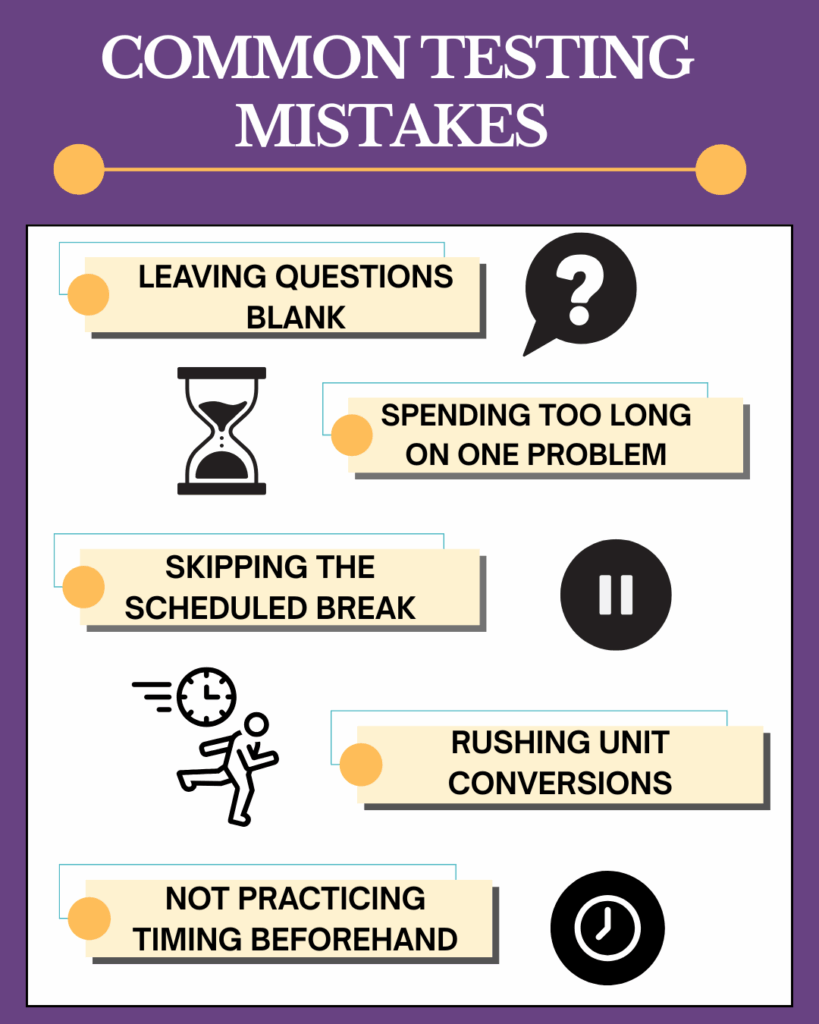
5 Common Mistakes Students Make
- Leaving Questions Blank: Every question is scored the same, so always guess if you’re unsure. There’s no penalty for wrong answers.
- Spending Too Long on One Problem: Getting stuck on a tough one eats into time. Flag it, move on, and circle back later.
- Skipping the Scheduled Break: It’s tempting to power through, but most candidates lose focus without taking it. Use the break to reset.
- Rushing Unit Conversions: A simple unit mistake can cost you points. Always double-check your units.
- Not Practicing Timing Beforehand: The actual exam feels fast. If you’ve never taken a full-length practice exam, pacing becomes harder.
FE Civil: Real-Candidate Tips That Actually Help
A recent passer (12 months post-graduation) shared a focused two-month plan that worked—and their advice lines up with what many others report.
What they did:
- Picked a date 2.5 months out to create urgency and stayed in a “pass it once” mindset.
- Used PrepFE (≈400 Qs), Mark Mattson topic videos + worksheets (learn first, use videos to check), and the NCEES practice exam twice (weeks out, then day before)—with the published errata.
- Practiced untimed mixed sets at 70–80% using the FE Reference Handbook open to build lookup fluency.
Field-tested tips (their words, distilled):
- Units win points: “Even if you don’t know the method, dimensional analysis can get you to (or near) the answer.”
- Statics is everywhere: “Expect ~20%+ to involve statics—moments, components, FBDs show up across sections.”
- Think like an engineer: “Conceptual questions often yield to real-world reasoning. Stay logical; take the best defensible choice.”
- Live in the Handbook & your calculator: “Know where formulas live—don’t rely only on Ctrl+F.” and “Use an approved calc (e.g., TI-36X Pro): equation solver, matrices, DMS save time.”
- Master the “must-knows”: This includes moment of inertia/centroids, ramps/friction blocks, matrices, basic stats (mean/median/mode), ethics, hydrology (rational method/graphs), RC flexural capacity, horizontal/vertical curves, manometers/Bernoulli, and head loss.
- Pace like a pro: “Roughly 3 min per question. Always guess before flagging in case time runs out.” Use quick math: questions left × 3 ≈ minutes needed; compare to time remaining and adjust.
- Check, then trust: “If your result isn’t within ~1% of a choice, recheck. Don’t settle for ‘close enough’ unless you’re intentionally guessing.”
The vibe that carried them:
Persistence > perfection, consistent practice with the actual tools (Handbook + approved calculator), and a final two-week ramp of targeted review and full/mixed sets.
Final Verdict
Passing the FE exam isn’t just about how much material you cover—it’s about how you prepare. Most candidates who succeed start early, stick to a realistic study calendar, and use practice exams to sharpen speed and confidence.
Think of the exam as training for the PE exam later on. Build good habits now, and you’ll be ready for every step in the licensing process. Stay consistent, use the reference materials you’ll have on test day, and trust your preparation.
Put in the work, and you’ll pass the FE exam with confidence.
FAQs
Most candidates prepare for 2–3 months with about 10–15 practice hours per week.
No, only the electronic version of the NCEES Reference Handbook is provided.
You can retake it after receiving an email notification from NCEES. Just adjust your prep plan and focus on weak points.
The FE exam covers broader fundamentals, while the PE exam goes deeper into specialization. Both require thorough preparation.
Yes, tutoring can definitely help, especially if you’re struggling with certain topics or need a structured approach. A good tutor can break down complex concepts, keep you accountable, and tailor your study plan to your needs.