Salmon return to Auburn Ravine after Hemphill Dam Improvement Project completed
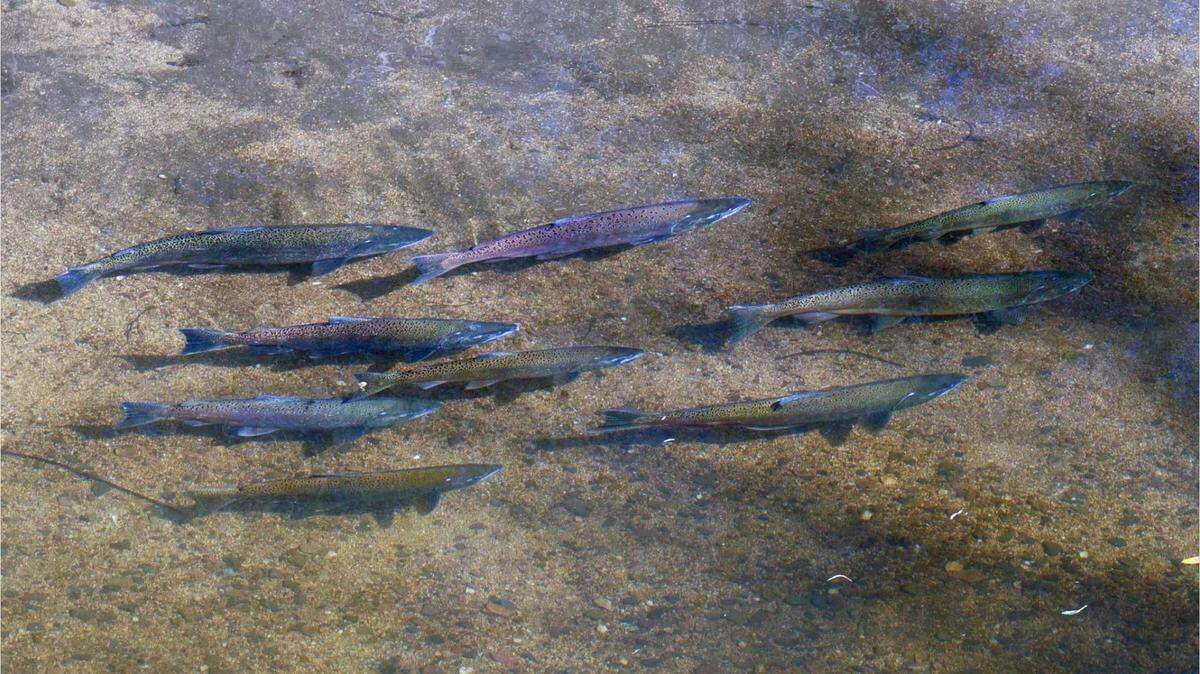
Salmon are returning to stretches of Auburn Ravine they had not reached in more than 80 years.
New survey data released by Friends of Auburn Ravine and ECORP show salmon, steelhead and Pacific lamprey upstream of the former Hemphill Diversion Dam in Placer County, signaling an early success for a major habitat restoration project completed in 2022.
The breakthrough came after local organizations partnered with the Nevada Irrigation District to remove the aging concrete dam and replace it with a fish-friendly structure designed to reopen miles of historic spawning habitat.
Built in the 1930s, the Hemphill Diversion Dam diverted water from Auburn Ravine, a 34-mile stream that begins in the foothills near Auburn and flows west through Newcastle, Ophir, and Lincoln before joining the Sacramento River near Verona.
The water was put into a canal system serving farmers, ranchers and other local users across the region.
But while the structure became a key piece of water infrastructure, it also blocked fish migration for decades, preventing most salmon from passing the dam’s 8-foot concrete wall.
James Haufler, president of Friends of Auburn Ravine, said that with the old structure only 10% of the fish could get upstream.
“Now, we get 90 percent passage rather than 90 percent blockage,” he said.
Gregg McKenzie, executive director of the Placer County Conservation Program, said the habitat restoration project benefits multiple species.
“The dam was the most significant barrier to salmon and steelhead in Placer County,” he said. “This habitat restoration project was identified early on as a priority for us because of its potential to benefit multiple species and improve instream flows.”
The replacement of the Hemphill Diversion Dam with a fish-friendly structure supported the Placer County Conservation Program’s goals of conserving more than 47,000 acres of wildlife habitat, including rivers and streams, in western Placer County to balance urban growth.
The Nevada Irrigation District, which owned the dam, worked with the City of Lincoln, the Placer County Conservation Program, ECORP, Friends of Auburn Ravine, Save Auburn Ravine Salmon and Steelhead, the California Department of Fish and Wildlife, NOAA Fisheries and other organizations to develop a plan for the habitat restoration project.
The dam was removed and replaced with a fish-friendly structure that allows fish to swim upstream while still delivering water to farms, ranches and other users. The new design maintains water access while improving habitat connectivity in the stream.
Because the project involved work in and around the waterway, permits were required from the California Department of Fish and Wildlife and the U.S. Fish and Wildlife Service. Using the Placer County Conservation Program’s streamlined environmental review process, the project secured all necessary permits in months rather than years.
“The Placer County Conservation Program provides a consolidated, simplified and accelerated process for securing environmental permits,” said Haufler. “Without the program, the project might not have been completed until 2023.”
Construction wrapped up in fall 2022. Crews removed the dam and installed a roughened rock ramp, a fish-friendly diversion structure designed to blend into the natural landscape.
The rock ramp works like a speed bump in the stream, slightly raising the water level so it can still flow into delivery canals while keeping the incline gradual enough for fish to pass upstream. The structure includes gravel, boulders and other materials that mimic a natural streambed.
Fish now have access to an additional 6 miles of prime spawning habitat in Auburn Ravine, a boost for California salmon and steelhead populations that have declined in recent years due to drought, fish passage barriers, early snowmelt and warming stream temperatures.
“Good partnerships and regional cooperation between government agencies and local stakeholders resulted in a project that’s good for fish, future water deliveries and our community,” said McKenzie.
Since 2016, Friends of Auburn Ravine has monitored salmon and other migratory fish in the waterway using video cameras and volunteer-led visual surveys. Following the removal of the Hemphill Diversion Dam, the group expanded its surveys upstream of the new roughened rock ramp.
During a Nov. 22, 2025, survey, volunteers counted 42 live salmon and four redds, or egg nests, in stretches of Auburn Ravine that had previously been inaccessible to migrating fish.
“Some of the fish we saw this year could be the offspring of the first fish to make it beyond Hemphill in late 2022,” Haufler said.
The survey findings build on environmental DNA, or eDNA, testing conducted by ECORP in 2023 and 2024 for a report prepared for the Nevada Irrigation District.
Researchers collected water samples from four locations along Auburn Ravine, including sites upstream of the new diversion structure, and analyzed them for traces of salmon and Pacific lamprey DNA.
Testing in 2024 detected Chinook salmon DNA at two of the four sampling locations and Pacific lamprey DNA at three locations, providing additional evidence that migratory fish are using newly accessible habitat in the ravine.
The Hemphill Diversion Structure removal was the first in a series of habitat restoration projects planned under the Placer County Conservation Program.
“Overall, this habitat restoration project and those that come after, will improve the quality of life for the people living in western Placer County,” said McKenzie. “By conserving and restoring unique habitats, the Placer County Conservation Program helps protect our clean air and water, wildlife and open spaces for generations to come.”
This story was originally published May 26, 2026 at 4:13 PM.