Petition drive calls for Davis to commemorate, improve nation’s first bike lane
Davis, long known as the bicycle capital of the nation, is home to its first bike lane — and some residents want the city to do more to honor it.
A group of neighbors along Eighth Street have launched an online petition asking the city to commemorate the nearly 60-year-old bike lane and upgrade it with physical protection.
“We’re a plucky group of neighbors along Eighth Street advocating for safer streets through our neighborhood association,” said Catherine Brinkley, an urban planning scholar at UC Davis.
Brinkley and her neighbors have circulated the petition online and knocked on doors in their neighborhood. The experience has also brought their community closer together. “There’s a beautiful sense of agency and collective power,” she said.
The authors of the petition plan to submit it to the city in May, which is designated as National Bike Month.
“This commemoration will honor Davis’s legacy by increasing our physically-protected bicycle infrastructure, re-affirm our identity as a bicycle-friendly community identity, and support ongoing efforts to promote safe, sustainable, and healthy modes of transportation on our local streets,” the petition states.
The Eighth Street bike lane was approved by the Davis City Council in June 1967 after months of planning and years of advocacy as bicycling surged in the university town. UC Davis had closed much of its campus to car traffic the year before, prompting more residents and students to travel by bike.
City officials at the time spent months studying how bicycles and cars could safely share Davis streets. A February 1967 Davis Enterprise article described a pilot bicycle path plan that proposed lanes along several major routes, including West Eighth Street, as well as Third Street, J Street and Sycamore Lane. The study found one of the biggest dangers for cyclists was cars pulling in and out of curbside parking spaces and crossing bicycle traffic.
At the same time, Davis lawmakers pushed for state legislation to clarify that cities had the authority to establish bicycle lanes. Senate Bill 1299 allowed cities to create exclusive bicycle lanes through local ordinances. Shortly after Davis installed its first bike lane, then-Gov. Ronald Reagan signed the bill into law, paving the way for similar infrastructure statewide.
“The simple striping along Eighth Street marked a transformative moment in American street design — which has since led to even greater improvements in Davis and beyond, including grade-separated bike and pedestrian-only paths and greenbelt paths that are fully sheltered from cars,” the petition states.
Davis was already gaining a reputation as a cycling hub. A 1967 Enterprise article described the city as the “bicycle capital of the United States,” with police estimating about 15,000 bicycles in use at the time.
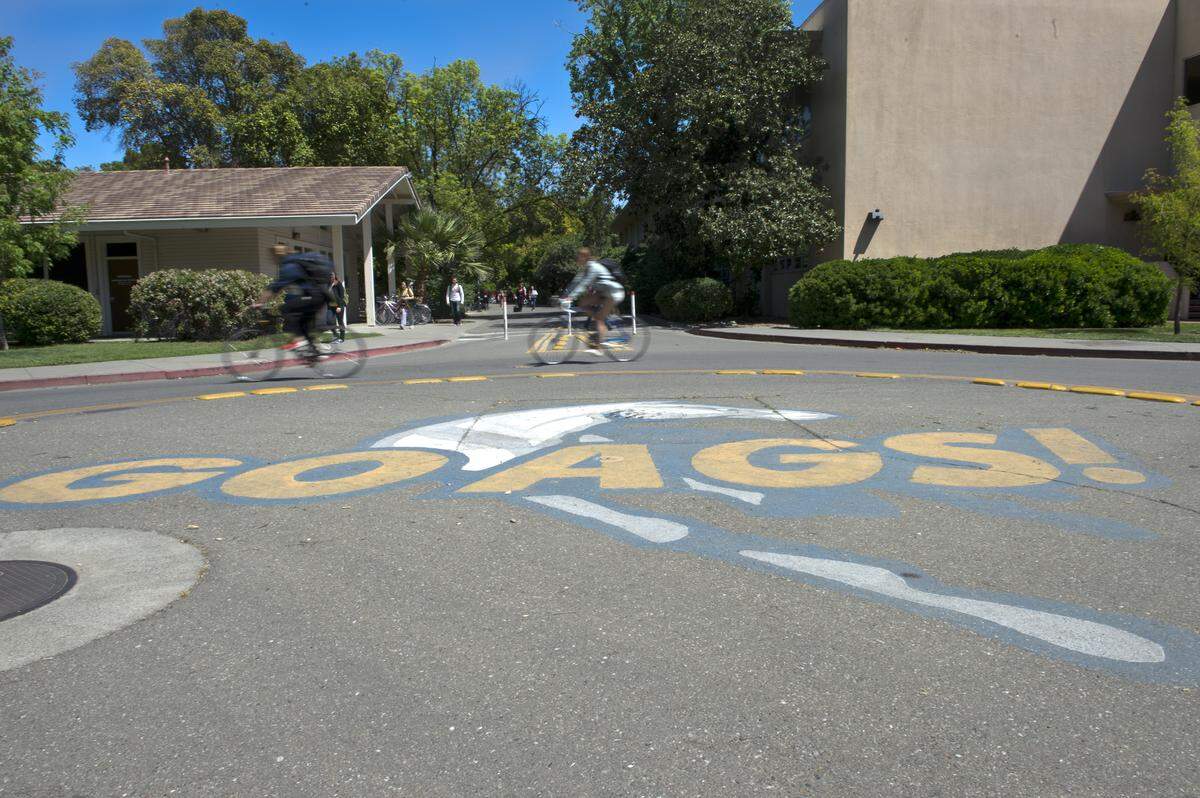
Today the city’s network has grown to more than 100 miles of bike paths and includes 25 bicycle-only bridges and tunnels, according to the Urban Bicycle Institute. The institute estimates that more than 20% of trips in Davis — now home to about 67,000 residents, roughly triple its population in the 1960s — are made by bicycle, far higher than the roughly 2% typical in most North American cities.
The petition asks the city to install signs along the bike lane that recognize its history and celebrate Davis’ legacy as a pioneer in bicycle infrastructure ahead of the 60th anniversary of the bike lane in May 2027.
In addition to recognizing the history of the bike lane, petition supporters want the city to upgrade the bike lane by adding physical barriers to separate bicyclists from cars.
“Too often when I ride that Eighth Street corridor with my kids, I am buzzed by drivers not giving us space, or we have to enter the vehicle lane to go around drivers who park in the bike lane,” Mark Huising, who helped draft the petition, said in an email. “Some cyclists are comfortable with, this, but it is inherently unsafe and prevents many more people from a wide range of ages and abilities from using our bicycle network.”
Huising, who serves on the city’s transportation commission, said the requested upgrades would bring the bike lane up to modern standards. “Cars are heavier, faster and the outcomes of potential conflicts with cars are terrible for cyclists,” he said. “The solution is to design this conflict away by physically protected bike lanes.”
The city has not yet received the signed petition, spokesperson Barbara Archer said. “Once we receive it with signatures, we can better respond, and we look forward to working with the community.” The city also highlights its history as home to the country’s first bike lane on its website, she said.
Brinkley and her neighbors say they celebrate that history but believe Davis must do more to maintain its legacy as a sustainable transportation pioneer.
“Davis has had good infrastructure,” Brinkley said. “But we’ve rested on our laurels for a while.”