
Sacramento author shines a bright spotlight on caregivers’ struggles
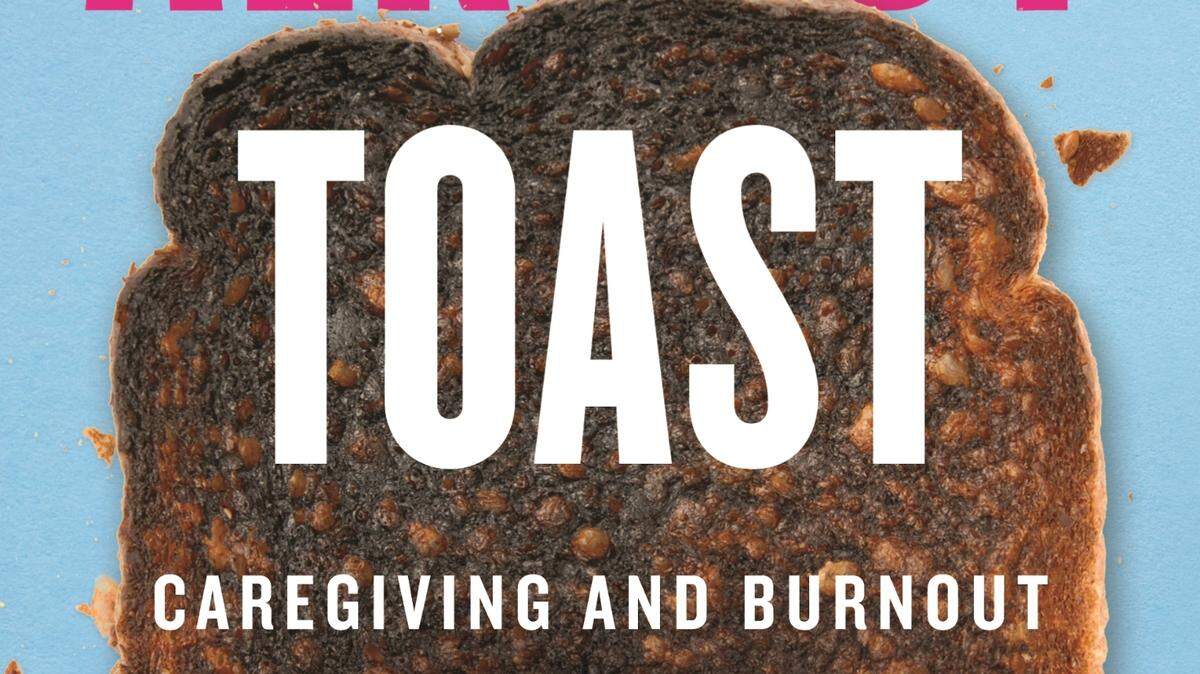
As a writer, Kate Washington was well-prepared to author a new book about burnout in family caregivers. Washington, The Sacramento Bee’s food critic, was less prepared to live out the story that inspired that book.
Washington’s husband, Brad Buchanan, was diagnosed with a rare T-cell lymphoma and had a stem cell transplant. He developed graft vs. host disease and temporarily lost most of his sight. He could not see, walk, shower, use the toilet or dress himself when he was sent home from the hospital into her care. In her book, “Already Toast: Caregiving and Burnout in America,” Washington offers an open and honest account of her experience as the caregiver for her husband and the toll it took on her.
She always knew how to write. She went to graduate school with the goal of going into academics. She met her husband there in a PhD program for English literature. As she neared her dissertation, she realized she was not interested in pursuing teaching.
“I loved the research, but I also loved writing and working with students on their writing, which I realized could be done one on one in the form of editing,” she said.
Washington started out editing and transitioned into writing for magazines in the Bay Area. Her husband got a job in the English Department at California State University, Sacramento, and she eventually left the Bay Area to freelance write in Sacramento in 2004.
“I guess I was in the gig economy before people called it a ‘gig economy,’” she said.
Unexpected death and diagnosis
In the summer of 2010, Washington’s mother died unexpectedly. In the fall of 2014, she sent the youngest of two children off to kindergarten, while still grieving the loss of her mother. Freelancing work-from-home parents will identify with the feeling of having “made it,” and the hope that the influx of time would allow for a real boost to creative opportunities. That was when her husband noticed the lumps on his jaw under his beard. It took six months to get his rare form of lymphoma diagnosed.
By February 2015, doctors were still unsure how to best treat it. On a gorgeous May evening, Brad called her into the bathroom.
“He was coughing up massive, shocking amounts of blood,” Washington said.
They left the kids with neighbors and headed for UC Davis Medical Center in Sacramento. Doctors discovered a tumor growing on a blood vessel in his lung that had been missed by earlier testing due to how low in the lung it was.
“Up until that point, I hadn’t been thinking of myself as a caregiver,” she said.
The hospitalization that followed was what threw Washington into the deep end. She suddenly found herself coordinating care for her husband, spending a lot of time at the hospital and waiting for updates from doctors so she could make sure she had all of the critical information.
Living close to her mother for years Washington said, “I had always thought I might help care for my mom as she got older, but I thought it would be a long and gradual process. Instead she died suddenly, and then I thought this was not a part of the trajectory.”
Caring for her husband so quickly and at such a young age was a shocking transition. Washington said the only way to figure it out is learning as you go, making mistakes and recovering from those mistakes.
She writes in her book about how fortunate she felt to have financial security to get some extra care help. Brad’s parents also came from Canada to help any way they could. She felt grateful for her education, which allowed her to communicate more easily with doctors.
“Take away any one of those factors and it ramps up the difficulty immensely,” she said.
It was a lot of change all at once. Not just in coordinating care, but learning to do things she had never considered.
“One of the things that took me by surprise over the course of the year was the degree to which I was expected to jump into medical tasks that really require a certain skill level,” she said.
One of those tasks was, after a short training session, administering antibiotics through her husband’s IV once he was home from the hospital. Fortunately, Washington is not squeamish.
“A reason I wrote this book is that putting this amount onto family caregivers ultimately does a disservice to their vulnerable loved one. If you can’t give good care, it’s not right for the people who need the care,” Washington said.
Strained relationships
Relationships can become strained as the caregiver and patient learn to navigate new roles. Before being his caregiver, Brad was Kate’s primary support, but she couldn’t go to him and say how hard it was to care for him. The new situation had a profound impact on their relationship.
A 2020 AARP survey found that more than 50 million Americans act as unpaid caregivers for adult family or friends. This year of responding to a pandemic has also highlighted the essential role of family caregivers. As Baby Boomers age, the issue will continue to grow and rest unevenly on women.
After detailing her own experience, Washington questions the absence of state and federal support for those who find themselves caring for a loved one.
“The short-term and long-term economic effects on the caregiver are really staggering,” she said.
The family was lucky to be in a situation where Kate was able to take time from freelancing and working because of Brad’s benefits as a professor at Sacramento State. She is very aware that is not the case for most people.
From the time they knew Brad would require a stem cell transplant, which takes a minimum of a month of hospitalization, they knew things would get intense. Brad’s brother was able to donate the marrow cells that would give him a new immune system. Other than that, it seems nothing was simple. Washington remembers hearing doctors say, “I’d be very surprised if …” and then the unlikely scenario was exactly what would happen. Even so, after experiencing so many complications, Brad recently hit the five-year mark without the original cancer reappearing.
Overstretched caregivers
A part of caregiving is keeping family and friends informed. They started a blog that they planned to post on, but as Brad got more and more sick, Washington completely took it over. Between that blog and the writing seminar she was taking at the time, she wrote more and more about their situation.
Eventually, she realized there were a lot of books on the practicality of caregiving and inspirational sources, but not much was written to support the caregivers themselves.
“I wanted to write something that would help people that were struggling with being in that situation. I wanted them to feel less alone in the struggle,” Washington said. She especially felt a struggle in wanting to care for her husband and also being worn out by it.
Washington has also written opinion pieces based on her experience, and has been blown away by the response.
“I feel like it’s touching a nerve. Especially now, after a year of pandemic we see how undervalued care of all kinds is across society,” she said. “Anyone caring for someone else is overstretched right now.”
Read all about it
Kate Washington’s book “Already Toast: Caregiving and Burnout in America” will be released March 16. A book launch virtual event will be hosted by Capital Books on Saturday, March 20, at 6 pm. To register for the event and to order the book, go to capitalbooksonk.com.
This story was originally published March 15, 2021 at 10:21 AM.