
Not just cruising: What you don’t know about Sacramento’s lowrider culture
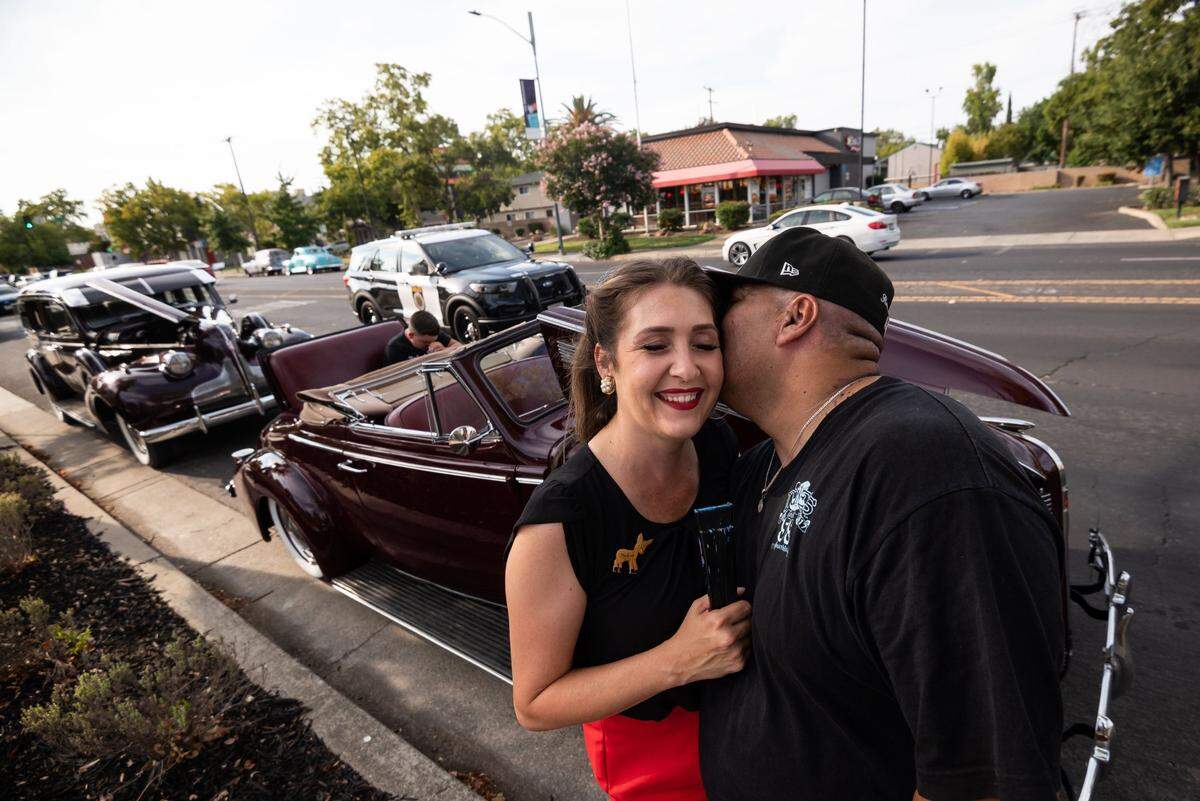
On a hot summer evening, Carlos Rodriguez, 41, cruised Sacramento’s Broadway Boulevard in his burgundy 1937 Buick Special with his two children. His wife, ShaVolla, 43, followed behind him, driving her dream car: a plum-colored 1939 Buick Touring, a limited edition so rare that only about 15 remain in the world.
The Rodriguez family loves their classic cars. They bought a house in 2008, fulfilling one life goal. Since then, they have devoted their energy to another. One is a passion for joining hundreds of others in this summertime drive along Broadway, past ethnic restaurants, stores and the Tower Theatre.
They buy old cars, restore them to their once-mint condition, customize them and join others in a rolling show of six-fours, ’90s beats and Chicano culture. On this night, all is well. But Carlos Rodriguez and his family remember visiting Old Sacramento in 2019. He was driving his Buick and, he said, the police pulled him over on K Street for playing oldies music too loudly. Rodriguez refuted the allegation, and he said the police let him go.
The festivities sometimes do collide with cops, and stereotypes of lowrider culture overtake reality.
Lowriders are an iconic California merger of car culture and Latino expression combining style, design and community activity on wheels. They are often unfairly viewed, participants say, as having ties to gang life and crime. But they are not looking to cause trouble, Rodriguez said, and they have invested time and money into a hobby they love.
“I definitely feel like we get stereotyped (by) the police,” Rodriguez said. “They don’t understand that we have these cars that are worth a lot of money, and we do not want any problems anywhere we go.”
Sacramento is home to dozens of car clubs committed to keeping California’s lowrider culture alive. Many lowrider enthusiasts say pillars of the culture such as family, community and work ethic are often overlooked.
Lowrider history
Anthony Nocella II, an assistant professor of criminology at Salt Lake Community College, teaches a lowrider studies course. He said lowrider culture is rooted in family and Catholicism, originating among Latinos during the 1950s-1960s in the Southwest U.S.
“It’s about fixing something up that’s old and appreciating the old,” he said. ”I think that’s very much anti-colonial, anti-consumer, anti-capitalist.”
Nocella said the image of the Virgin Mary often is depicted on classic cars. He added that the popularity of lowrider culture has even spread to countries like Japan and New Zealand.
The culture is currently celebrated at an exhibit, which runs through Sept. 27, of model replicas and memorabilia at the Mission Cultural Center for Latino Arts in San Francisco. It is sponsored by the San Francisco Lowrider Council, celebrating its 40th anniversary.
And it is being reassessed in National City in Southern California, where a 1992 law banning cruising is being challenged by the United Lowrider Coalition. The members are fighting that common perception that lowriders are part of a world of gang violence instead of one that embraces art and culture.
In Sacramento, Facebook groups such as Sacramento Lowriders announce events (Thursday’s Capitol Mall cruise for Mexican Independence Day), and Instagram’s saclowriders group does the same (Halloween’s “Trunk or Treat”).
Sacramento City Councilman Eric Guerra said that unconscious bias prevents some community members from appreciating lowrider culture as an art form.
“It’s, unfortunately, an American perception that’s been perpetuated over the years about Latinos,” he said. “(Lowriding) is an expression of culture, but also an expression of, like, community and family and the importance of what it means to have a strong community.”
While car show and cruising events are common occurrences in Sacramento today, the city has not always embraced the culture.
In 1988, the Sacramento City Council issued an ordinance that made cruising illegal within the city, according to the paper “The Criminalization of Chicano Male Youth & their Community Agency” by Robert Unzueta II of the University of Utah.
The restriction, which was the first of many, according to Unzueta, shook the Sacramento lowrider community.
“Lowriding for these youth was a saving grace that allowed them to utilize their skills in creating community artwork, develop community organizing skills, and develop life lessons that could not be taught within the walls of compulsory schooling,” he wrote.
As a council member who grew up working on lowriders with his brother, Guerra said, he continues to hear complaints from lowrider owners who experience harassment from police.
“The unfortunate stereotype is one that we need to work on,” he said.
ShaVolla Rodriguez is tired of it.
“We’re not out here peeling out and doing doughnuts and being crazy,” she said. “That’s not us. That’s not our community.”
In a statement, Officer Karl Chan, a spokesman for the Sacramento Police Department told The Bee, “The Sacramento Police Department has not had any recent significant incidents stemming from the car meetups that involve the lowrider community. There are times that the department has provided traffic control due to the large amount of people and vehicles at these meetups.”
Charity work
During the pandemic, many car clubs in Sacramento partnered with nonprofit organizations to participate in COVID-19 vaccine drives and to raise money for local causes.
Rachel Rios, executive director of the Sacramento nonprofit Mi Familia Counseling Center, said she partnered with two car clubs last year to raise awareness in the community about the census count.
“The lowrider community is amazing,” Rios said. “When we were doing the census, they came out with their beautiful cars and we drove up and down the streets giving people paletas and saying, ‘Don’t forget to take your census.’”
ShaVolla Rodriguez sees that type of community-oriented work as breaking the stereotype.
Through her car club, she said, she’s helped organize toy drives and Easter egg hunts and delivered water to neighborhoods that don’t have suitable drinking water.
“There’s been so many things we’ve done for the community,” she said. “It totally outweighs the stereotypes that people have of us.”
Activism is also an aspect of the community.
Last summer, Esmeralda Peña, who is a member of the Family First Car Club, said she participated in a lowrider caravan event at the California Capitol in support of Proposition 16, a ballot initiative that sought to repeal California’s 1994 affirmative action ban.’
Broadway cruise
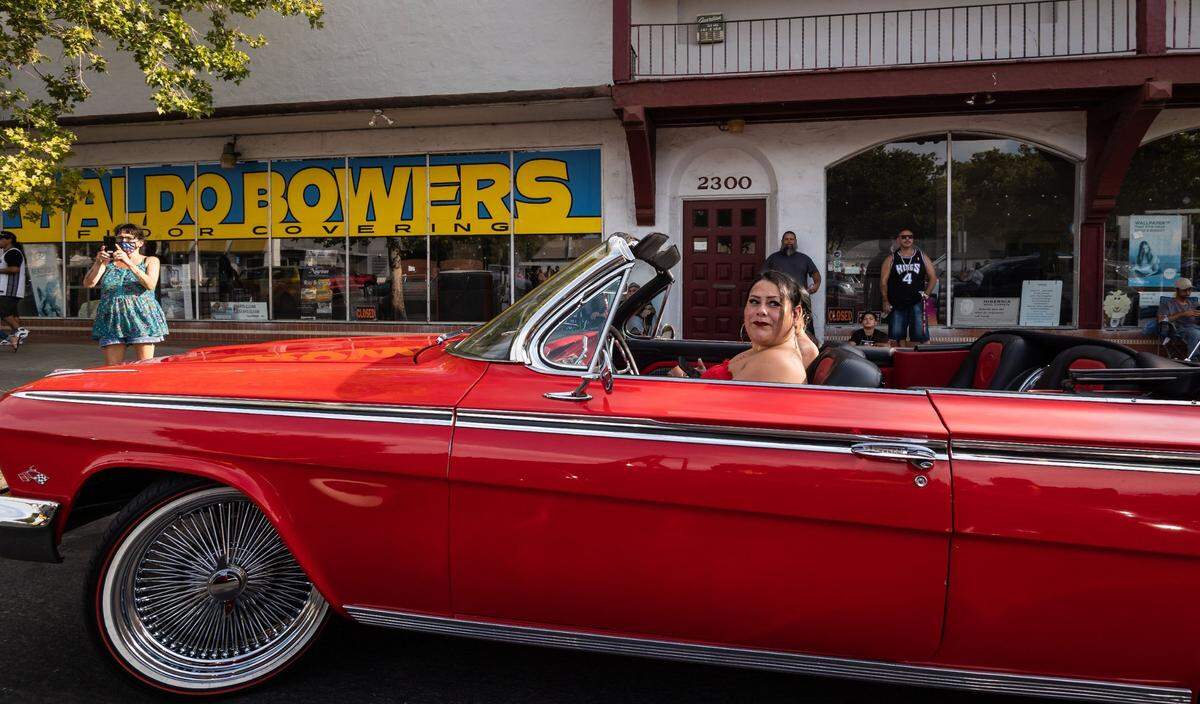
On a recent Saturday night, Broadway was adorned with hundreds of classic cars, Mexican flags and lawn chairs. Some cars blasted 1990s gangster rap, while others played oldies pop music.
Sacramentan Jose “Joe” Carmona, 43, showed up to the car caravan in his blue 1952 Chevy Styleline Deluxe, one Mexican and one American flag pinned to the trunk.
He said he learned about lowrider culture from his uncle, who used to install hydraulics in Sacramento during the 1970s as the hobby was gaining notoriety among Latino youths.
Lincoln resident Ivan Rubio, 32, accompanied his father. His favorite aspect of the culture is how it allows him to be creative and build a car that represents his personality. He currently owns two classic cars, a 1954 Buick Super and a 1969 Chevy Impala.
“It’s like a blank canvas. That’s really the beautiful thing about it,” said Rubio, who is a member of the Lincoln-based car club Callejeros. “It’s ... rolling 3-D art.
“We grew up with it,” he said. “We embrace it. We’re proud of it.”
Family caravans
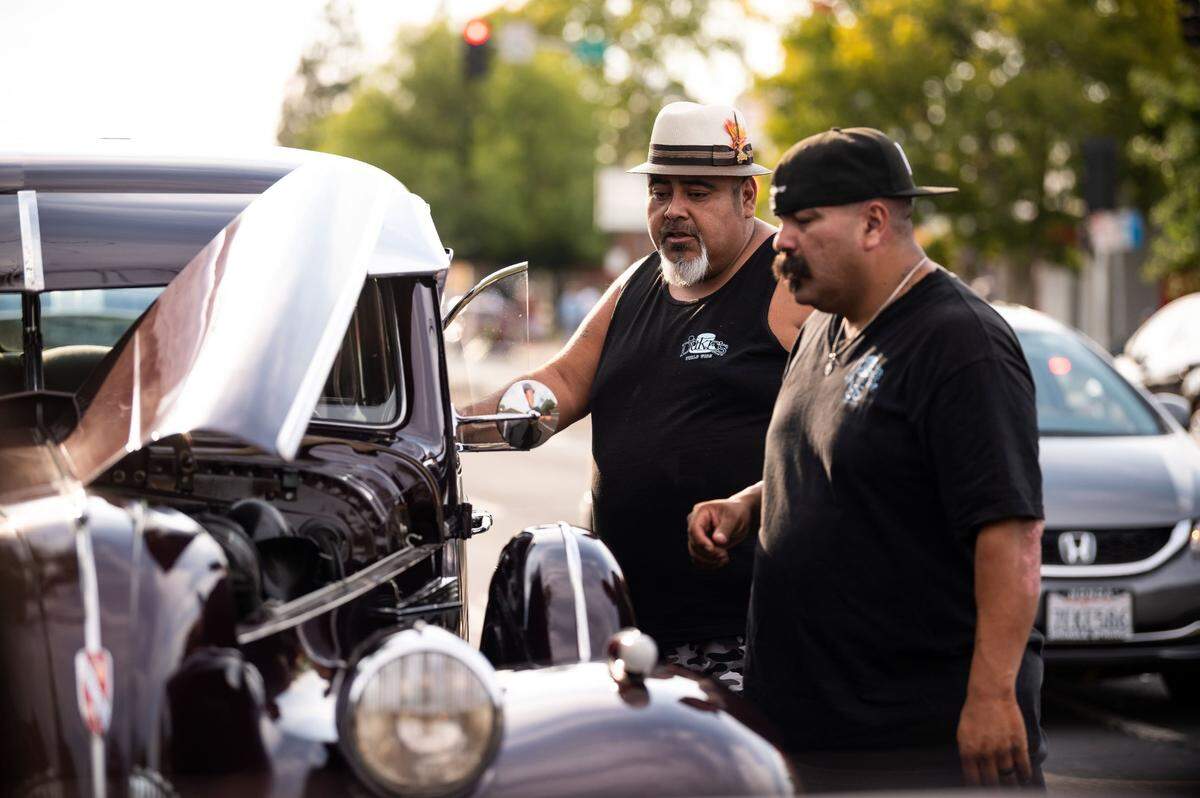
Carlos Rodriguez said the lowrider community in Sacramento attracts people from all walks of life, from sheriffs to ex-gang members.
Carlos Espinoza, 64, a San Francisco native and former gang member, belongs to the car club Good Intentions. He said he spent many years in and out of jail for drug- and gang-related activity. After his release about three decades ago, Espinoza reformed his life and now is a minister and drug counselor.
“My lowriding days go back to the ’70s and ’80s,” he said.
Since then, he said, the culture has become more family friendly. “It’s really not about the cars,” he said. “It’s about the families.”
Today, the Rodriguezes own four classic cars in their family of six. The most recent addition to their collection was a 1964 Chevy Impala for their 16-year-old son.
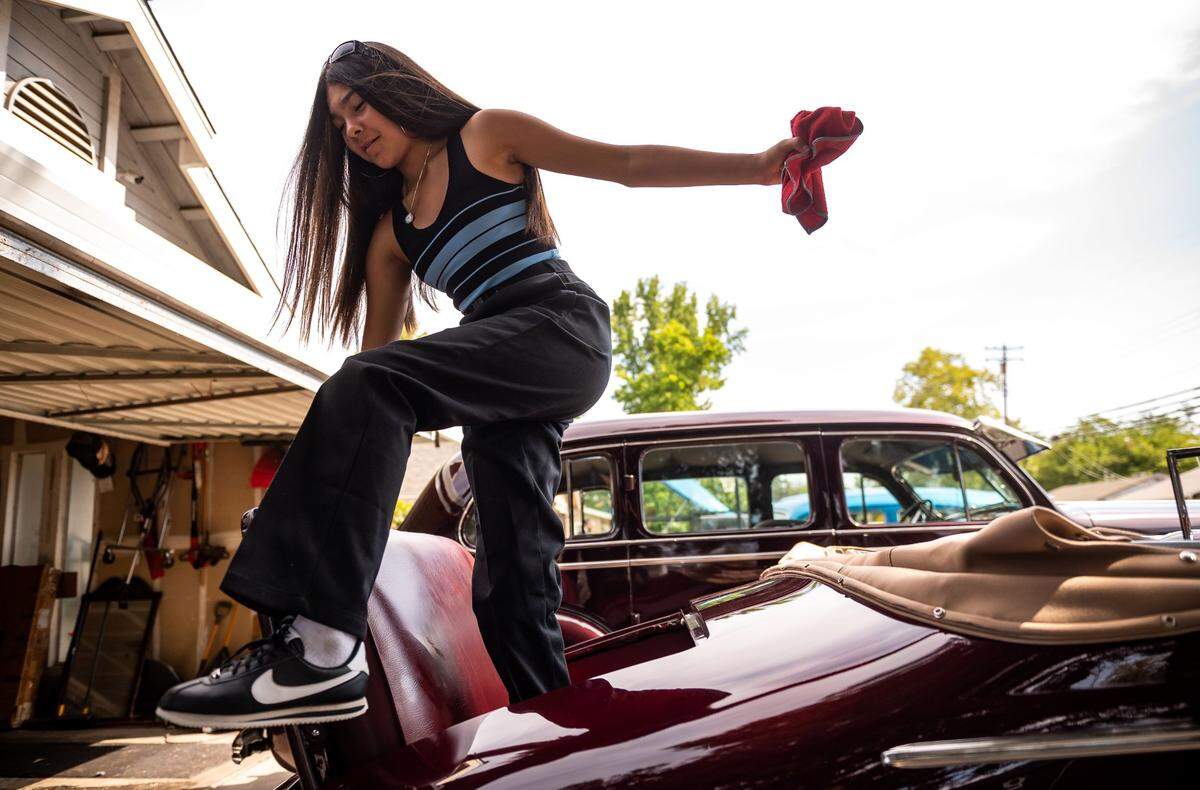
On weeknights and weekends, Carlos Rodriguez said, he and his son work together to restore the vehicle. His other children, ages 9 and 12, are already thinking about the cars they want to buy when they get older, he said.
He hopes it’s a tradition that lasts in the family.
“It’s not going to be around forever,” he said. “It’s becoming more and more rare.”
This story was originally published September 17, 2021 at 5:00 AM.