
California Repercussions: A group of ‘band kids’ who never put down their instruments
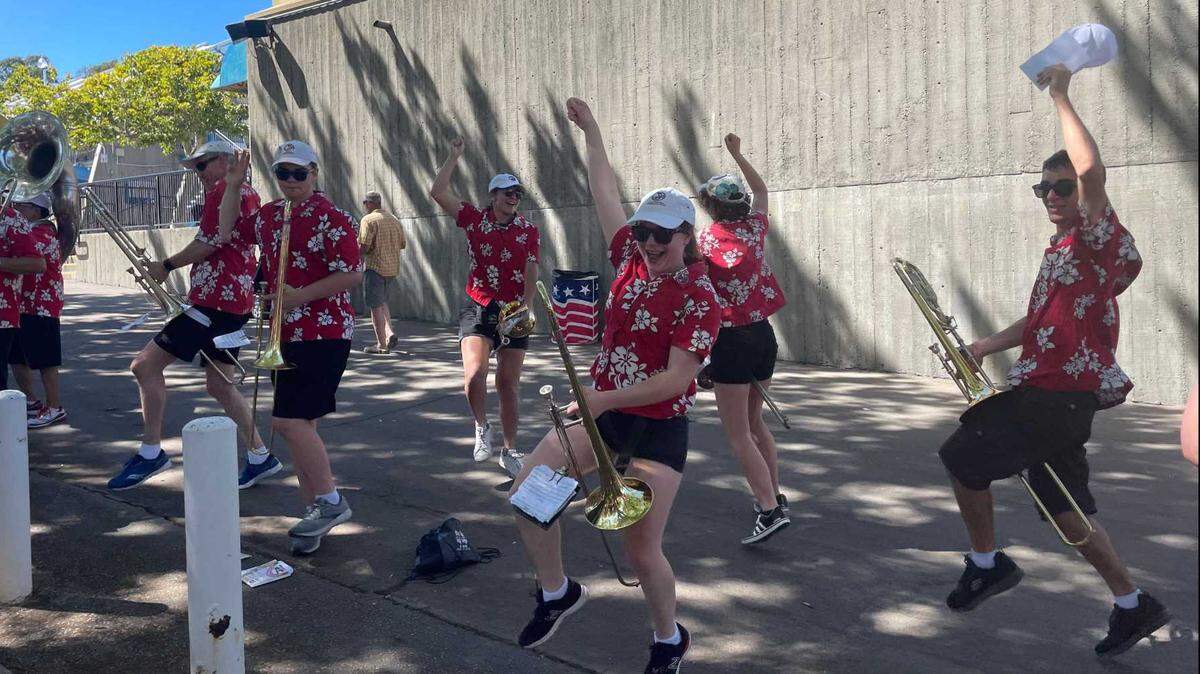
Don Kowall has been playing his baritone saxophone with the California Repercussions since the 80s. Now, his recently graduated niece, Margot Dieu, gets to play her piccolo alongside him.
“It’s been a part of my entire life, and I wasn’t ready to give it up after college,” said Dieu, 26. “Why give up something you love?”
The California Repercussions, also known as the “Reapers,” is a street band mainly made up of former “band kids” from various university marching bands in California, including UC Davis, UC Berkeley and Stanford University. The band serves as a Neverland for college musicians who want to keep playing after graduation.
The band performed Saturday at the California State Fair, marking their 21st time at the fair and their second time performing since the pandemic. After the band’s first set, the audience shouted for an encore. They complied and finished their set with the swing song “Sing, Sing, Sing” by Louis Prima.
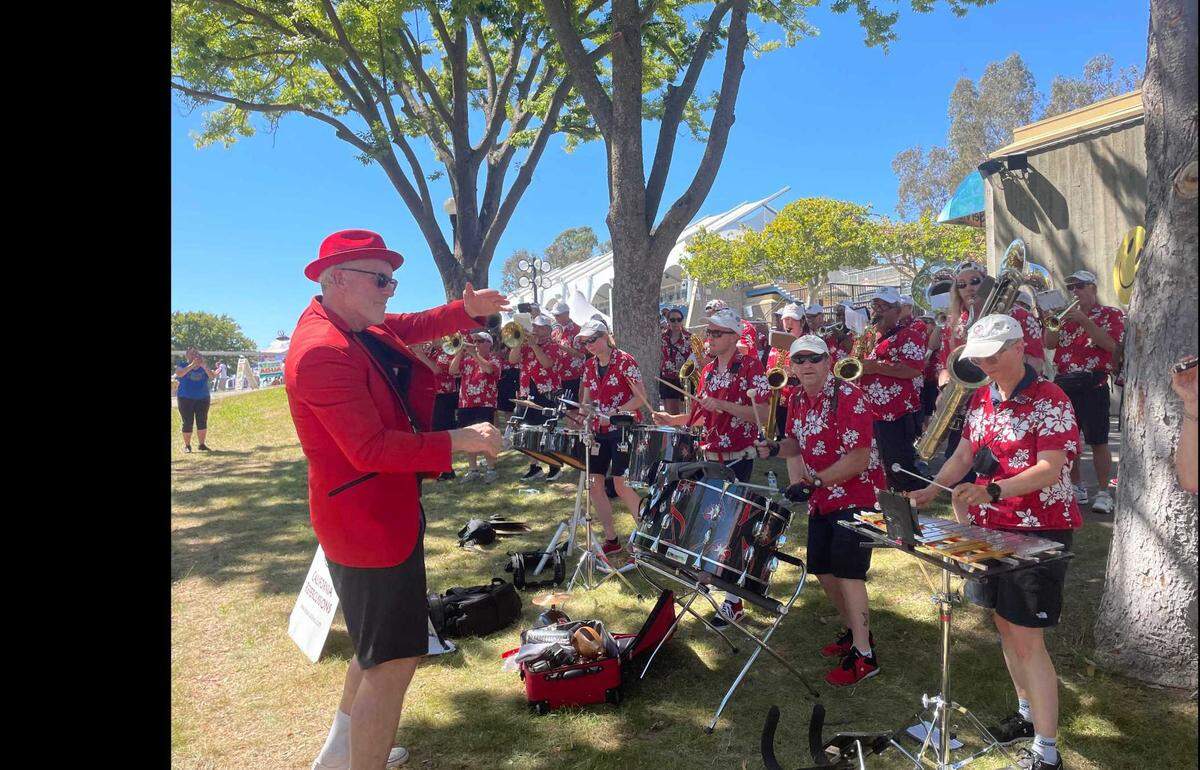
Although some members are professional musicians by trade, most of them turn to the band as an opportunity to jam out every now and then and relive their college band experiences.
“We have a very strong bond of kinship and friendship with each other,” Kowall, 59, said.
The players sport red and black, oftentimes wearing Hawaiian shirts and white caps, with a repertoire ranging from Glen Miller to Metallica. Many of their songs are accompanied by horn movements, such as swinging clarinets from side to side or riding trombones like horses.
While the band mainly gigs in Northern California, they have also traveled around the world, from Australia to the former Soviet Union, and plans to perform in Greece next year.
They typically perform once or twice a month and rehearse every month, relying mainly on the self-discipline of its members to fine tune the music. The conductor, Doug McHaney, has been directing the band since its conception and flies in from Redding for the monthly rehearsals and gigs.
“It’s been a really fun gig for us. We’re really happy to be back here,” McHaney said of the Cal Expo performance.
How the California Repercussions formed
In 1982, the Cal Aggie Band-uh!, UC Davis’s former marching band, was asked to perform two gigs in one day. It was proposed that the band split up.
“If we’re going to do it, there’s going to be repercussions,” a member cautioned.
The name stuck, and the new band was formed. They ended up playing their first gig at a charity football game up in Reno.
A good portion of the music they play comes from the college band’s collection. The Reapers also continue to arrange and add about 10 to 15 new songs each year. They carry a library of about 250 songs total.
One of Kowall’s favorites to play is an arrangement of “The Story In Your Eyes” by The Moody Blues.
The band has grown from a roster of 24 in the 80s to about 100 members today and fields a group of about 50 to 75 per gig. Despite its large size, several of the songs feature a section of the band or a soloist.
A new generation of ‘band kids’
The members generally range from ages 21 to 70, with some of the younger musicians playing alongside their parents.
The biggest change Kowall has noticed is the involvement of the new generation. He said many of them play better than their parents.
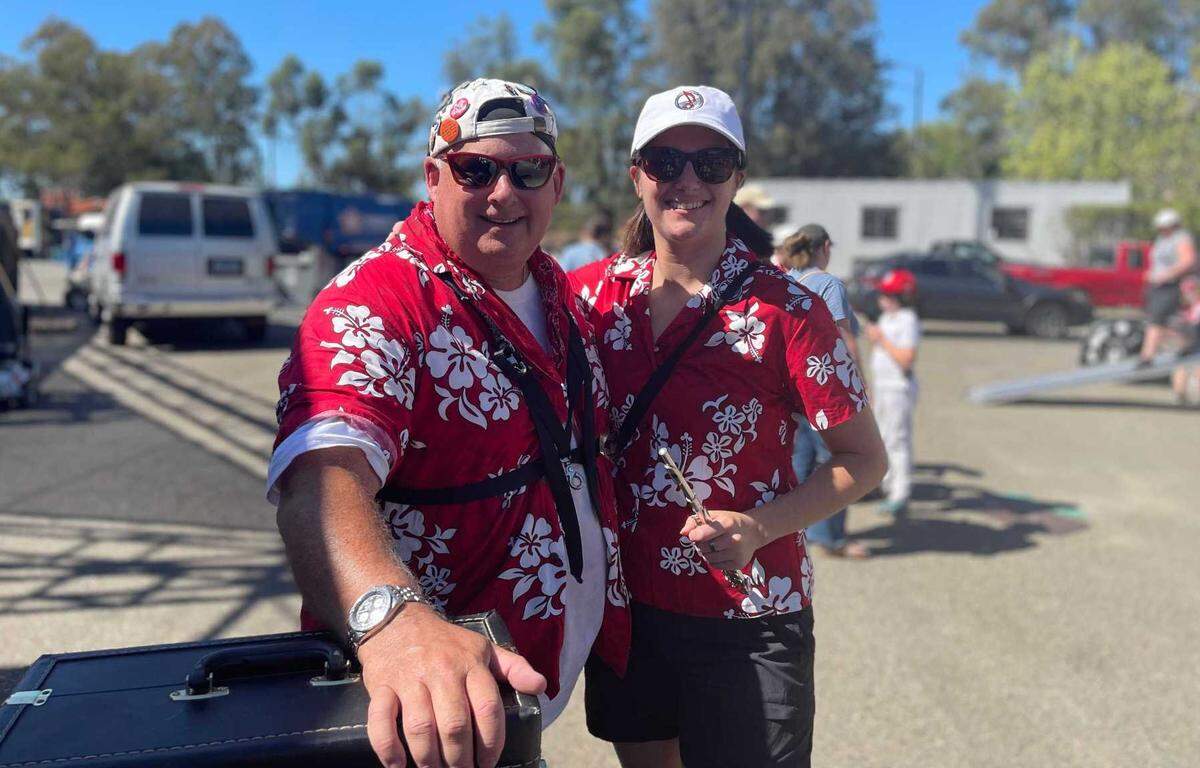
Adam Strauss, 24, began playing trombone with the Reapers when he was a senior in high school. His dad was a member of the band and a UC Davis alumnus.
“I spent all these years growing up with the music and with the people, so starting to play with them was only the natural next step,” he said.
Rachel Crane, 25, whose been playing alongside her dad since she was a kid said the new generation calls themselves “The Reproductions.”
The band took a hiatus during the pandemic but have started up again this year. Their first and most recent gig in two years was at the Fourth of July Parade in Piedmont.
“It’s the desire to just keep playing and spending time with each other that keeps the band going so strong,” Strauss added.
This story was originally published July 17, 2022 at 5:00 AM.