Another Lost Film by ‘Cinemagician’ Georges Méliès Discovered After 128 Years Missing
More than a century after it was thought lost, a missing film by Georges Méliès — one of cinema’s earliest and most influential pioneers — has resurfaced, offering a rare glimpse into the origins of visual storytelling and special effects.
The rediscovered film, Gugusse and the Automaton, dates to around 1897 and runs just 45 seconds.
But its significance far outweighs its length. In fact, it features what is now considered the earliest depiction of a robotic character ever captured on screen — more than 20 years before the word “robot” was even coined.
Who Is Georges Méliès?
Méliès, often referred to as the “cinemagician,” was born in Paris in 1861 and began his career as a stage illusionist.
His transition into filmmaking came after witnessing early motion picture demonstrations by Auguste Lumière and Louis Lumière in 1895.
Where others saw moving images as a novelty, Méliès saw possibility.
He quickly became one of the first filmmakers to experiment with narrative storytelling, special effects and visual trickery — techniques that would later define modern cinema.
Over the course of his career, he produced more than 500 films, blending theatrical performance with groundbreaking camera techniques.
Many of those works, however, did not survive.
Due to widespread unauthorized copying, material decay and the destruction of film stock during World War I — when silver and celluloid were extracted from original negatives — a significant portion of Méliès’ catalog was lost to history.
A Film Thought to Be Gone for Good
Up until last year, Gugusse and the Automaton was among those lost works.
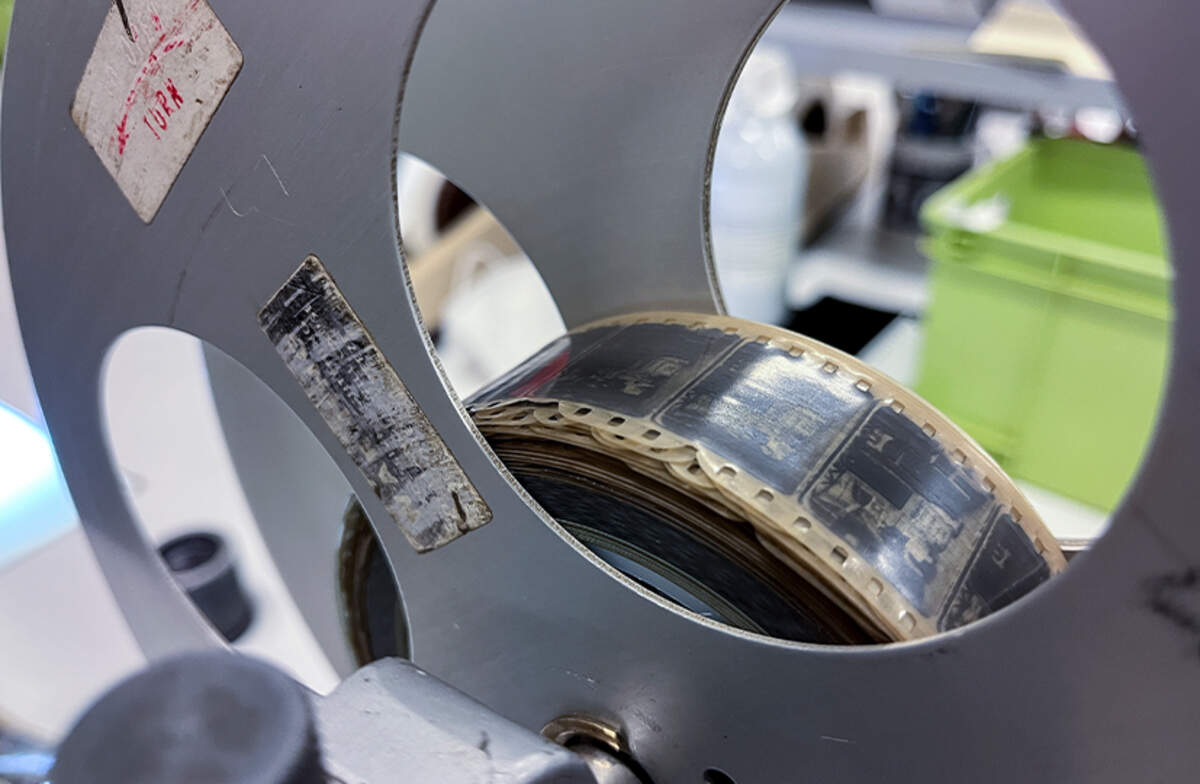
The film resurfaced after a collection of deteriorating nitrate reels was submitted to the Library of Congress by a Michigan man who inherited them from his great-grandfather.
Archivists examining the reels identified the footage as a Méliès production within 24 hours. Before this discovery, no screenable versions of the film were known to exist anywhere.
The short film captures a performance typical of Méliès’ style: a magician — played by Méliès himself — interacts with a mechanical, human-like figure known as Pierrot Automate.
That figure is what makes the discovery particularly historic.
It represents the earliest known instance of a robotic character in cinema, predating both the formal concept of robots in science fiction and the terminology itself.
The footage offers insight into how early filmmakers imagined artificial life long before it became a cultural staple.
More broadly, the find adds to the limited surviving body of Méliès’ work, helping historians better understand the evolution of cinematic techniques at the turn of the 20th century.
Where Did Georges Méliès’ Film Come From?
The recovered version is not an original print but a reproduction several generations removed — a common reality for surviving films from the era.
Even so, its existence is considered remarkable given the widespread loss of early cinema materials.
The reels originally belonged to a traveling projectionist who exhibited films across Pennsylvania in the early 1900s. Passed down through generations, they eventually ended up in a family trunk, where they remained untouched for decades.
Archivists spent more than a week restoring and digitizing the fragile footage. The film is now available to stream in 4K resolution, making it accessible to modern audiences for the first time in over a century.
For film historians, the rediscovery is more than a curiosity — it is a rare recovery of a missing piece from one of cinema’s foundational figures.
More than 128 years after its creation, a brief, nearly forgotten film has once again placed Méliès’ imagination on screen — a reminder of how much of early cinema still remains to be found.
This article was created by content specialists using various tools, including AI.