
Beauty and history come together with ‘Pueblo Dynasties’ exhibition at Crocker
“Pueblo Dynasties: Master Potters from Matriarchs to Contemporaries,” a spectacular exhibition of more than 200 vessels by American Indians of the Southwest, takes us on a fantastic journey that begins with revered innovators Nampeyo and Maria Montoya Martinez to new works that combine traditional motifs with imagery reflective of today’s edgy street art.
“Pueblo Dynasties,” which runs through Jan. 5, will astound you with sheer beauty and inventiveness. It is loosely divided into sections corresponding to families from areas in Arizona and New Mexico, among them the Cerno Family from Acoma, the Martinez Family from San Ildefonso, the Nampeyo Family from Hopi-Tewa territories, and the Tafoya family from Santa Clara.
Works by Acoma Pueblo potters, in a light-filled gallery across from the third-floor elevators, include the first vessel acquired by the Crocker to expand its American Indian ceramic holdings. “Pictorial Train Olla,” by Joseph Cerno and his daughter Barbara Cerno, a gift from Loren G. Lipson, was an ideal selection for the Crocker considering that the museum’s founder, E.B. Crocker, was instrumental in building the Transcontinental Railroad.
The exhibit features many spectacular pots, from traditional “seed jars” with tiny holes to keep out mice to eye-popping vessels with extraordinarily complex detail by Dorothy Torivio and Rebecca Lucario.
In the main gallery, a pair of rough functional pots from a distant past gives you an idea of pottery made over the 2,000 years by Southwestern Indians for cooking and storage. Despite their simplicity and signs of wear, they have great spirit and magic.
As you move through the show, you find works by Nampeyo and her descendants, including an earthenware bowl with a mission design attributed to the matriarch. She learned pottery-making from her Hopi grandmother and Tewa mother. After seeing prehistoric pieces excavated by an anthropologist in 1895, Nampeyo began to adapt old designs to her pots and teach others her techniques, starting a revival of ancient methods and motifs that continue to this day. Among the exciting works by her descendants is a large, elaborate vessel decorated with depictions of pottery sherds by Dextra Nampeyo.
Famous San Ildefonso potter Maria Martinez, who broke with tradition by signing her pieces beginning in 1923, is represented by an early polychrome piece in earth tones. But she most famous for her elegant black-on-black pottery that has been much imitated and expanded upon over the years. One of the most beautiful variations is a gorgeous black-on-black seed jar with an incised image of a spider and inset turquoise and coral stones by Maria’s great-granddaughter Barbara Gonzalez.
Deeply carved pottery is an earmark of works by the Tafoya Family of Santa Clara Pueblo, northwest of Santa Fe. Sara Fina Tafoya (ca. 1863-1949) started a family line that now includes dozens of descendants, many of whom are among the most respected of today’s makers. Her talents were handed down by three of her children, including Christina Naranjo. Her deep red vessel with a carved avanyu, the guardian of water, dates from the 1950s. Christina’s daughter Mary Cain and granddaughter Linda Cain followed in her footsteps. Her great-granddaughter Tammy Garcia expands the tradition with “Northwest Native Bear,” a boldly carved jar with an unusual Pacific Northwest Indian bear design.
Other descendants who depart from tradition include Jody Naranjo, whose “Large Square Jar with 194 Figures” (in the form of stylized “pueblo girls”) is a strong contemporary piece. Roseanne Swentzel departs from pottery with a raw, emotive female figure. Its title, “Looking for Root Rot,” made while the artist was in Hawaii, evokes a fear of losing her identity in a place far from home.
Also at the Crocker, look for “When I Remember I See Red: American Indian Art and Activism in California,” a show that spans the last 50 years. The show includes works from pioneers, such as the legendary Frank Day, to artist, activist and poet Frank LaPena, who spearheaded the project and co-curated the show.
“When I Remember...” opens to the public on Sunday, from 11 a.m. to 3 p.m. The Crocker hosts a free all-day community festival with live art demonstrations, dancing, music, fun activities for children, and an artisan market. Unfortunately, the show wasn’t open when I visited the museum last week, but a beautifully illustrated and informative catalog tells me it is an exhibition not to be missed.
The museum has scheduled events, from films, lectures and an evening of poetry honoring LaPena, throughout the run of the show. Call the museum or check crockerart.org for details.
If you go
Pueblo Dynasties: Master Potters from Matriarchs to Contemporaries
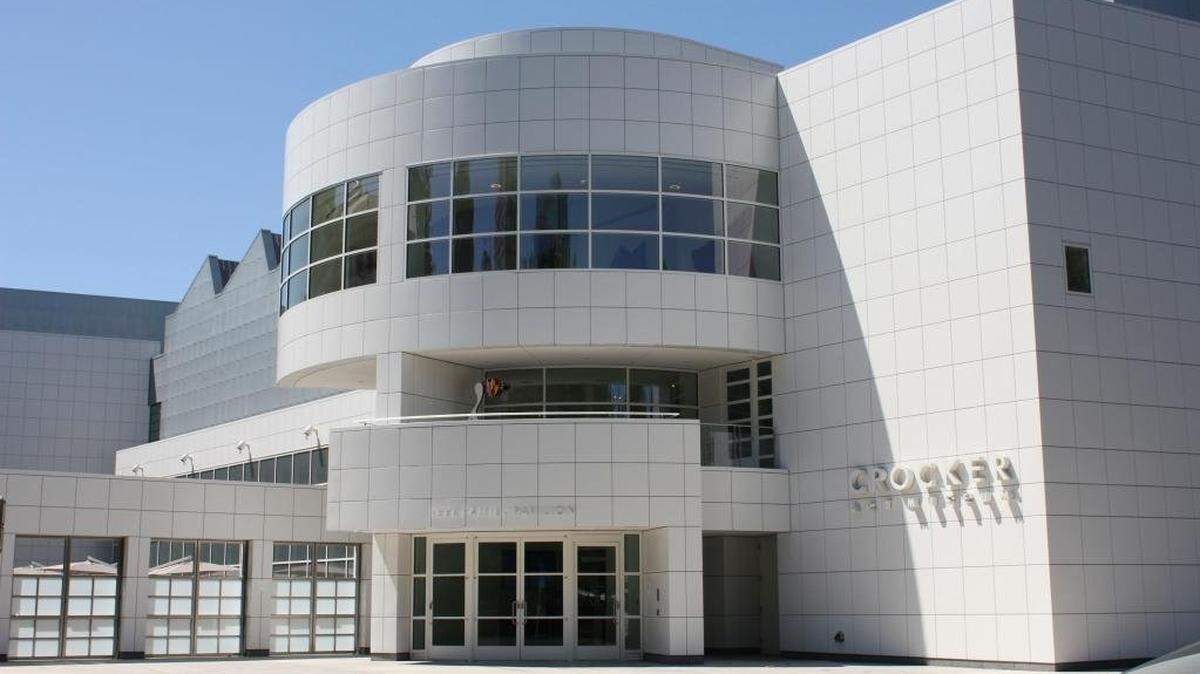
Where: Crocker Art Museum, 216 O St.
When: Through Jan. 5
Information: 916-808-7000, crockerart.org