
A year of color: A guide to the best art shows in Sacramento and the Bay Area in 2020
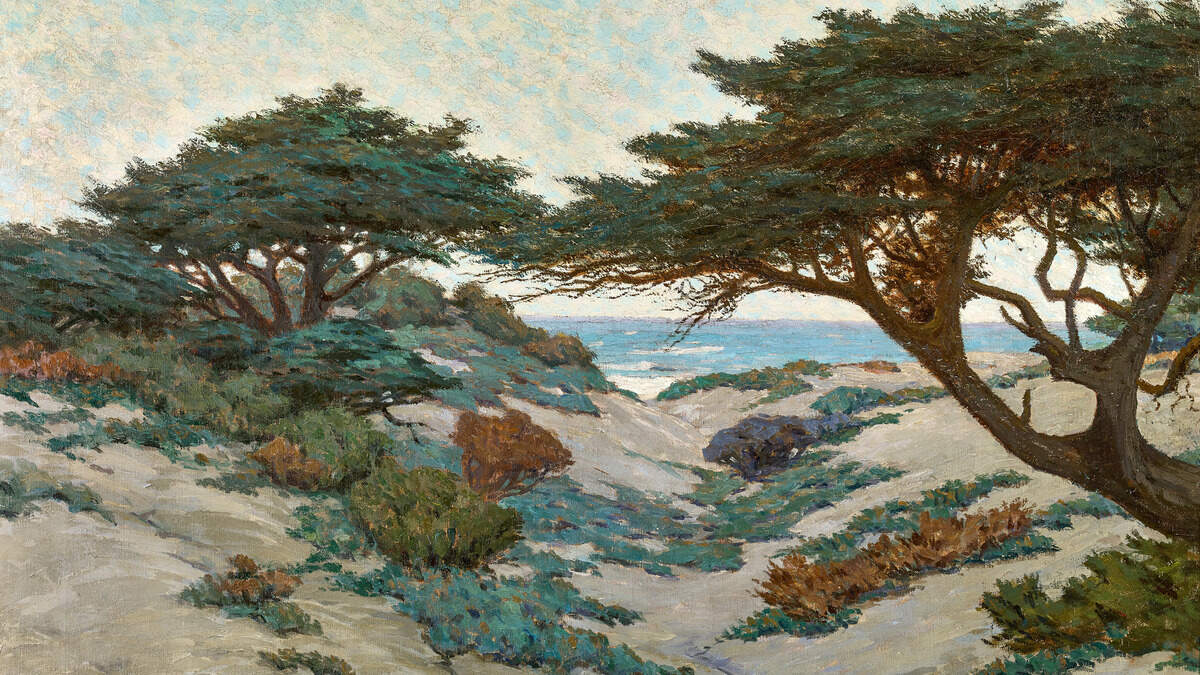
Major exhibitions devoted to an early California Impressionist, an enigmatic, medium-shifting Davis artist, the pioneering founder of Bay Area Figurative Art, a pair of feminist icons, and journeys to the ancient Roman city of Pompeii and the Himalayan realm of Tibetan mysticism top the list of upcoming museum shows to see here and in the Bay Area.
Crocker Art Museum
216 O Street, Sacramento
Contact: (916) 808-7000, crockerart.org
Show: “Granville Redmond: The Eloquent Palette”
Dates: January 26 through May 17
Silent film star Charlie Chaplin’s friend and favorite artist Granville Redmond (1871-1935) is considered one of early California’s premiere painters. Ranging from contemplative Tonalist works to colorful Impressionist scenes, his paintings depict both northern and southern California’s vibrant landscapes from quieter times. Including 75 oil paintings and 10 works in other media, organized by Crocker Chief Curator and Associate Director Scott Shields, this exhibition is the largest ever assembled and the first in more than 30 years devoted to Redmond’s work.
Show: “Wayne Thiebaud 100”
Dates: October 11, 2020 through January 3, 2021
You won’t want to miss this celebration of the internationally renowned Sacramento-based painter’s 100th birthday at the place that gave him his first museum show in 1951.
Jan Shrem and Maria Manetti Shrem Museum of Art
U.C. Davis, 254 Old Davis Road, Davis
Contact: (530) 753-8500, manettishremmuseum.ucdavis.edu
Show: “Stephen Kaltenbach: The Beginning and the End”
Dates: January 26 through May 10
Works by an enigmatic artist who graduated from UC Davis with a master’s degree in 1967 and moved to New York, where he established a reputation in the emerging international field of conceptual art. On the brink of major career success in 1970, he abruptly withdrew to California’s Central Valley and, to all appearances, abandoned conceptual art for more traditional paintings and sculpture. 50 years after his “dropout,” this exhibition explore’s Kaltenbach’s engagement with time as a principle theme of his work moving from conceptual works, such as a bronze time capsule to be opened after his death, to the monumental photorealist painting “Portrait of My Father.”
San Francisco Museum of Modern Art
151 Third Street, San Francisco,
Contact: (415) 357-4000, sfmoma.org
Show: “David Park: A Retrospective”
Dates: April 11 through September 7
At the age of 38, David Park (1911-1960) abandoned a carload of his Abstract Expressionist paintings at the city dump and started painting pictures of people — musicians rehearsing, boys on bikes — and objects such as a comb and brush, a studio sink. It was a radical departure that led to the development of Bay Area Figurative Art. Organized by SFMOMA, this exhibition of 127 paintings and works on paper is the first major museum show devoted to Park’s work in three decades and the first to cover the whole of his career, from early pre-Abstract Expressionist work from the 1930s to his final works on paper from 1960. It’s core is a large selection of Bay Area Figurative canvases that brought him fame and reveal his deep connection to human experience.
Asian Art Museum
200 Larkin Street, San Francisco,
Contact: (415) 581-3500, asianart.org
Show: “Awaken: A Tibetan Buddhist Journey Toward Enlightenment”
Dates: January 17 through May 3
The press release for this intriguing exhibition Invites you to “Wake Up. Open Your Eyes, Clear Your Head ... and embark on a journey that will leave you changed forever.” Sculpture, paintings, textiles and book art done between 800 A.D. and 2016 A.D. from two of the country’s most significant museum collections of Himalayan Art, will guide you on your path from the ordinary world to enlightenment or awakening through the act of meditative seeing.
de Young Museum
Golden Gate Park, 50 Hagiwara Tea Garden Drive, San Francisco
Contact: (415) 750-3600, famsf.org
Show: “Frida Kahlo: Appearances Can Be Deceiving”
Dates: March 21 through July 29
Featuring rare items discovered at her lifelong home, “La Casa Azul” (now Museo Frida Kahlo) in Mexico City, including photographs, vibrant Tehuana costumes, and personal prosthetic devices, alongside painting and drawings in her iconic style, this exhibition examines how politics, gender, disability, and national identity influenced Kahlo’s diverse and highly personal modes of creativity.
Show: “Judy Chicago: A Retrospective”
Dates: May 9 through October 25
Pioneering feminist artist Judy Chicago (nee Cohen) is celebrated in this major exhibition that spans her early work done under the sway of the California Light and Space Movement to her current wrenching investigations of death and environmental devastation. Including about 150 works and related archival material, the show charts the course of this groundbreaking artist’s development and coincides with the 40th anniversary of the first showing of her signature work “The Dinner Party” and the 100th anniversary of women’s right to vote in the United States.
Legion of Honor Museum
Lincoln Park, 100 34th Avenue, San Francisco
Contact: (415) 750-3600, famsf.org
Show: “Last Supper in Pompeii: From the Table to the Grave”
Dates: April 18 through August 30
The fiery eruption of Mount Vesuvius in 79 A.D. buried the sybaritic city of Pompeii in hot ash, killing thousands in the midst of their daily activities. An amazing translucent resin cast on view in this show reveals the bones, skull, teeth and gold jewelry of a woman known as “Lady of Oplontis.” Organized by the Ashmolean Museum, University of Oxford, the exhibition includes magnificent Roman sculpture, mosaics and frescoes, as well as cups, utensils and silver dining services for banquets that show us how ancient Pompeiians (like today’s foodies) loved to eat and drink. One highlight that emerges is that Romans really did like to snack on stuffed dormice.