
Decades after leaving New York art scene, a UC Davis grad reveals his secret work
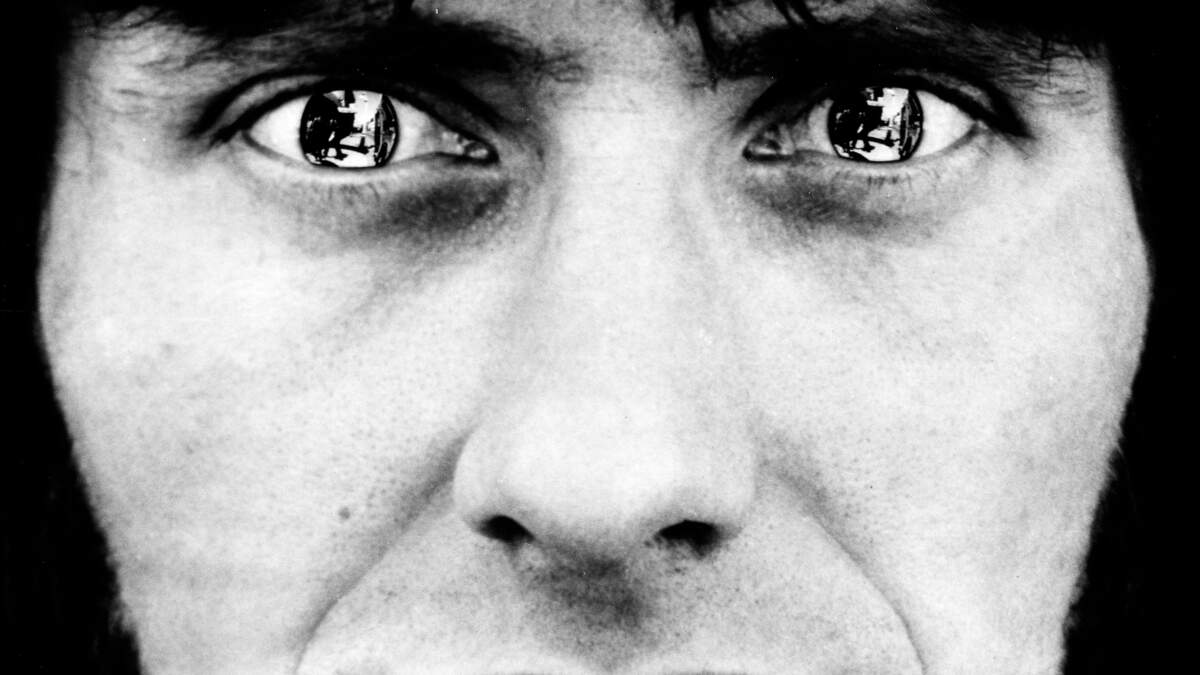
In the late 1960s, fresh out of graduate school at UC Davis, Stephen Kaltenbach went to New York City to explore Minimalism. After three years, he wound up on the brink of major career success in the emerging field of Conceptual art.
With important exhibitions such as “Nine at Leo Castelli” in 1968, where his works were shown alongside ones by Joseph Beuys, Eva Hesse, and Richard Serra, and a solo show at the Whitney, he was one of Conceptualism’s pioneers. In 1970, making an abrupt about face, he left New York and returned to California’s Central Valley, where he adopted the persona of a “regional artist” and taught at Sacramento State until he retired in 2005. Seemingly abandoning his Conceptual practice, he turned his hand to making impressive, large-scale works in traditional media.
Among the best-known are his mind-bogglingly detailed monumental painting, “Portrait of My Father,” 1972-1979, and “Time to Cast Away Stones,” 1998, a 68-foot long sculpture of broken and intermingled figures based on classical Greek sculpture, Buddhist imagery, and portrait heads of internationally known artists, such as his early teacher Robert Arneson. Titled “Time to Cast Away Stones,” it’s a stream-of-consciousness survey of his artistic influences that runs along the front of the Sacramento Convention Center.
Unbeknownst to most during the 50 years since he left New York, Kaltenbach has continued to produce Conceptual work in secret and, according to introductory wall text in his major exhibition, “The Beginning and the End” at UC Davis’ Manetti Shrem Museum of Art, his seeming departure from that mode was part of a calculated, decades-long “life drama.”
Like his early pieces, his work since 1970 has focused on a set of persistent concerns that he described in an interview at the museum as “a protocol of opposites.”
Among these, he said, were “good painting” and “bad painting,” the focus of works done by a fake alter ego, “Es Que,” who tried to get a show of his “couch paintings” put up at Lord and Taylor’s furniture department gallery, only to be rejected by the curator who advised him to come back after he had worked for a year.
In his next role, he donned a suit, wig, and mustache to pose as Clyde Dillon, a conservative abstractionist who worked with exquisite materials, but his plans were interrupted by a profound psychedelic experience that led him to explore themes of time and its passage, mortality and Immortality, fame and anonymity, appearance and disappearance.
For an artist whose work is rooted in deep philosophical concerns and inner life dramas, Kaltenbach, who is nearly 80 years old, is surprisingly funny. He has been described in prestigious art magazines as “an enigmatic prankster” and “the mellow Other to Conceptual art’s frequently stern diagrammatics.” In person, he is quick, witty, charmingly droll and remarkably open about his work, both its strengths and shortcomings.
Much of his work, he said, begins with “bad ideas ... things that maybe shouldn’t be done.” But, he added, “It isn’t bad to do bad work,” and his so-called “bad work” is awfully good. Sometimes his “bad work” backfires though. To his chagrin, one of his text works — “Expose Yourself (instructions for Tokyo Biennale)” — that was meant to suggest the essential act of making art and not what some perverts do, was hung in the bathroom at New York’s MoMA instead of out in the open and translated into many languages, as it was in Tokyo.
With the exception of an important missing work, a room interior with a mirror that erases your image, this is a fascinating show. At the outset, you encounter a small but intense manipulated photo-collage self portrait. It’s simultaneously beautiful and menacing, a fallen angel or a damned saint. Next to it is a small metal time capsule holding unknown contents inscribed with the words “OPEN AFTER MY DEATH.”
It sets the tone for the rest of the show, which moves from early ceramic works like “Wedge,” 1965, a small, elegant, undulate form with slits that allow you to see gold leaf hidden inside, a treasure you can’t touch, to a series of meditations that address themes that lie at the heart of his work, among them a doomsday clock ticking off the number of moments left until he has lived as long as his mother and a pastel drawing of a worn away floor plaque that bears the words, “Everything is Finally Anonymous.”
Like much of his work, these pieces while moving and scary are also imbued with a sense of antic, offbeat humor. “Caput,” an intricate 3D print of a memento mori skull surrounded by repeated phrases — ”Last Act, Last Word, Last Thought” — in red ink needs to be seen through 3D glasses and faces a trio of large casket shaped steel containers that echo the phrases in heavy metal.
A rather pretty watercolor of a mausoleum is aptly titled “Vessel“ while “Coffin Cam,” whose title calls up popular websites like Panda Cam, is a conscientious graphite drawing of Mantegna’s famous painting of the dead Christ seen from a perspective that makes his feet huge and his head far away.
Along the way are a number of humorous yet poignant time capsules that are to be opened on the occasion of his retrospectives at New York’s Museum of Modern Art, Paris’ Pompidou Center and L.A.‘s Museum of Contemporary Art. There are also ones addressed to his fellow UC Davis graduate Bruce Nauman and a humorously cheeky one to art critic Barbara Rose.
Some of his works are anonymous ads he placed in Artforum Magazine ordering people to perform enigmatic and sometimes suspicious actions, for example “Start a Rumor” “Tell a Lie” “Perpetrate a Hoax.” Ironically, it was this “anonymous” project that catapulted him to international fame in 1969-70. Other anonymous works take the form of sidewalk plaques like the richly connotative “ART WORKS;” wall art so subtle as to be invisible to many viewers; blueprints of unworkable “room plans” and an elegant maple wood model of the impossible to see and difficult for all but the nearly anorexic to traverse that comprised his show at the Whitney; and graffiti in the form of a rubber stamp depicting lips that were applied to soft-core subway ads for Hanes nylons featuring a woman in a too-revealing miniskirt.
In addition to conceptual works and related ephemera, the show also includes “Portrait of My Father,” on loan from the Crocker Art Museum, along with a clear, lucite model of the Islamic arabesque that overlays the portrait giving it an ethereal psychedelic effect, and “International Harvester,” a massive painting of a huge truck looming out of the dark with lights that suggest Christian iconography.
At the end of our interview, referring to his long hiatus as a “regional artist,” Kaltenbach mischievously added “It’s not a bad thing to be unsuccessful.” After all, as he once said in an interview, he was in it for “the long game.”
If you go
Stephen Kaltenbach: The Beginning and the End
Where: Manetti Shrem Museum of Art, UC Davis, 254 Old Davis Road.
When: Through May 10. Noon to 6 p.m. Tuesday, Wednesday, Friday; Noon to 9 p.m. Thursday; Saturday and Sunday, 11 a.m. to 5 p.m.; Monday closed.
Cost: Admission is free.
Contact: (530) 752-8500, manettishremmuseum.ucdavis.edu
This story was originally published January 28, 2020 at 11:45 AM.