
Sacramento art scene mourns the loss of ‘vibrant and unique’ Judith Weintraub
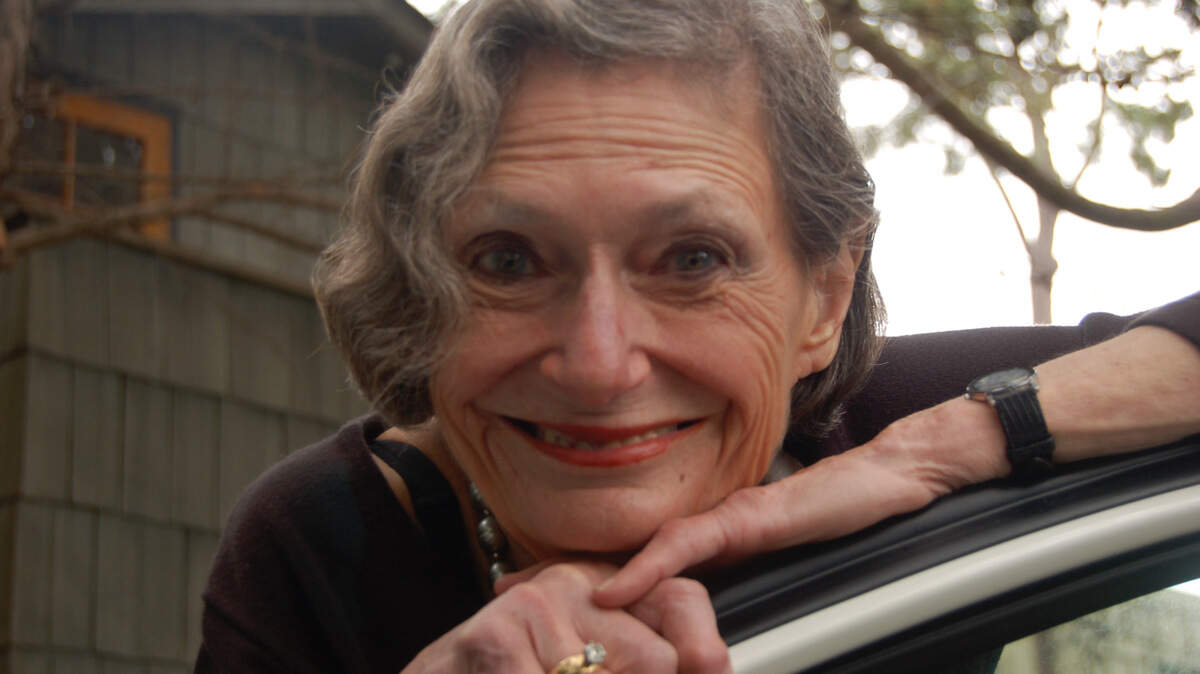
Many people have seen a famous image of Judith Weintraub without knowing who they were looking at.
In Wayne Thiebaud’s oil on canvas painting “Five Seated Figures, 1965” Weintraub is the woman sitting impassively on the left of the tableaux with her legs crossed. The stillness is very different from the dynamic woman who made a decisive, lasting mark on Sacramento arts and culture. As a gallery owner and arts patron, Weintraub was an influential champion of modern art and young artists yet to make their marks
Weintraub died of congestive heart failure on Nov. 7 at her home in Carmel-by- the-Sea. She was 85.
Weintraub was a dedicated advocate for contemporary art and artists through several galleries she owned and operated including the Judith Weintraub Gallery, The City Gallery and the Weintraub Thomas Gallery. In 1986, along with gallery owner Michael Himovitz, she founded the popular monthly Second Saturday art walk in midtown Sacramento, which has evolved into a legacy city social event.
“Judith Weintraub was a vibrant and unique enthusiast for the Sacramento art community, and she made significant contributions to the Crocker Art Museum,” Wayne Thiebaud wrote in an email. “It was my distinct pleasure to use her as a model in one of my paintings.”
Weintraub served on multiple community and nonprofit boards, including the California Arts Commission, the Capital City Ballet, the Crocker Art Museum Association (she was a founding member), the Sacramento Ballet, and the Sacramento Symphony. She also served on the boards of the University of California Berkeley Art Museum and Pacific Film Archive.
Judith Ann Molnar was born in 1935 in Chicago, the only child of Margo and Andor Molnar. She studied literature at Northwestern University, earning a bachelor’s degree in English in 1956 ,beginning a lifelong commitment to learning and education. After graduating she wrote book reviews at the fledgling Chicago-based magazine Playboy.
Soon after leaving Northwestern, Judith visited friends in San Francisco and met Malcolm Weintraub, a lawyer from Sacramento.
“She was not only gorgeous but smart, witty, outgoing, considerate, and stylish. I was completely bowled over,” Malcolm said. They began a friendship which soon became an engagement as Judith moved to Sacramento a few weeks later. “It was nothing short of a whirlwind and I remember it all with delight,” Malcolm said. “We were inseparable from that moment on. Each of our lives became the life of the other and we couldn’t live without each other.”
They were married in 1957. Their son Anthony Weintraub called the union “a 63-year courtship notable for its ardor and dedication.” The Weintraub’s made their home in Sacramento raising six children, while Judith also nurtured a developing arts community.
She was a founding member of Sacramento Metropolitan Arts Commission and instrumental in implementing Sacramento’s first Art In Public Spaces commission, the “Indo Arch” by Gerald Walburg at 4th and K streets in 1980. The work generated a certain amount of controversy and critical backlash, but Weintraub was a particularly staunch supporter of the work.
Art consultant Susan Willoughby, who was also on the commission, said, “It was great to have someone on that initial arts commission who understood we were talking about creating great works of art for the city.”
Weintraub was so bullish on Walburg that she commissioned him to design and build a fireplace and hearth for her South Sacramento home. Willoughby remembered, “It was really frustrating because artists can sometimes take a long time, but she was very patient insisting that it be done and it be done right.” Walburg has become an internationally acclaimed and respected sculptor since then.
Phil Isenberg, who was mayor of Sacramento from 1975 to 1982, said “She was smart, feisty and fun. Hard to beat that combination.”
Weintraub was an early advocate of Pop Art. Her galleries featured prints by artists such as Andy Warhol and Roy Lichtenstein. Judith and Malcolm were serious art collectors throughout their life together. In 2019, they were awarded the Arts Council of Monterey County’s Champion of the Arts Award for service to the community. Judith said “collecting visual art is a commitment, a way of life, life itself.”
Sacramento gallery owner Katie Thomas started working with Weintraub as an intern and eventually became a partner with their Weintraub Thomas gallery in the mid 90s.
“She was a major influence, introducing me to accomplished artists and collectors,” Thomas said. “It was her mentorship and support that propelled my career and I am eternally grateful. She was Sacramento art royalty.”
Judith and Malcolm were also intimately involved with the original legendary “Slant Step,” an art world in-joke begun at the UC Davis art department by artists William Wiley and Bruce Nauman. The joke centered on a small footstool made of linoleum and wood found in a Mill Valley junk shop. The innocuous object attained cult-like status, spawning numerous quotations in other works, tribute shows and scholarly books. “Liberated” from a show in San Francisco by the sculptor Richard Serra, it disappeared for years. While at a dinner party in Philadelphia, Judith was seated next to Serra, who discovered she was from Sacramento and asked if she knew Nauman. When she said she did, Serra went out to his car and came back with the Slant Step, which he asked her to return to its “creator.” Judith and Malcolm carried it back to Sacramento and Nauman.
Judith supported visual and performing arts throughout her life, contributing to institutions in Monterey, San Francisco and New York. She and Malcolm adopted a bench located in front of Central Park’s Delacorte Theater.
Daughter Rachel Weintraub said, “My parents built a life together that stood out for its deep love and shared values. They were actively engaged in their world, generous, and pioneering when it came to their belief in children and art as a way of life.”
Judith’s family would say that her greatest legacy was her children, with whom she kept especially close ties. She loved celebrating their special occasions and entertaining, especially during the holidays. In her home she kept an evolving collage of family photos taped to her kitchen cabinets covering the doors inside and out.
Son Anthony said, “Aside from her wedding ring, my mom wore one other piece of jewelry for as long as I remember, and that was her ‘LOVE’ ring, which is based on the famous word sculpture designed by artist Robert Indiana. There’s really nothing that describes her better — she projected love onto everyone around her.”
In addition to her beloved husband, Malcolm, Judith is survived by her children – Rachel Weintraub (Allston James); Sarah LaCasse; Andrew Weintraub (Shalini Ayyagari); Anthony Weintraub (Caroline Baron); Nicholas Weintraub; and Ariel Weintraub; as well as her six loving grandsons, Julian and Gabriel LaCasse, and Noah, Asher, Emmanuel and Amir Weintraub.
In memory
In lieu of flowers, the Weintraub family asks that donations be made in Judith’s honor to OLLI@CSUMB, a dynamic learning community for adults age 50 and older (https://olli.csumb.edu/donate/), or to the Oakland Museum of California (https://museumca.org/annual-fund).
This story was originally published December 14, 2020 at 7:28 AM.