
‘It was gone.’ Why do Sacramento murals disappear and what rights do artists have?
Ross Rojek first noticed that the Wide Open Walls mural across the street from his downtown store was painted over in June.
Wide Open Walls, previously known as the Sacramento Mural Festival, is an annual event that brings together local, national and international artists to paint the Sacramento region with street art. The festival completed its 200th mural this year.
California Family Fitness, a former sponsor of Wide Open Walls and the location of the painted-over mural, had been boarded up for almost two years amid pandemic and protests. Rojek, who owns the Capital Books store on K Street, had hired local graffiti artists to decorate the boards for Christmas.
Cal Family Fitness reopened in June and the graffiti artists’ work and the Wide Open Walls mural by Charmaine Olivia had been painted over in the same blue color.
“All of a sudden it was gone,” Rojek said. “And it was really obvious they painted over it.”
A couple of Wide Open Wall murals have been covered up in Sacramento over the years, either due to issues with graffiti or new landlords. Although laws protect artists and their work, most artists accept the ephemeral nature of public art and choose to move on to their next piece.
“They’re unique to our city,” Rojek said of Sacramento’s murals. He added that from a business owner’s perspective, they were great in attracting more tourists to the area.
Olivia’s mural, which was painted in 2019, had been covered up due to graffiti, according to California Family Fitness.
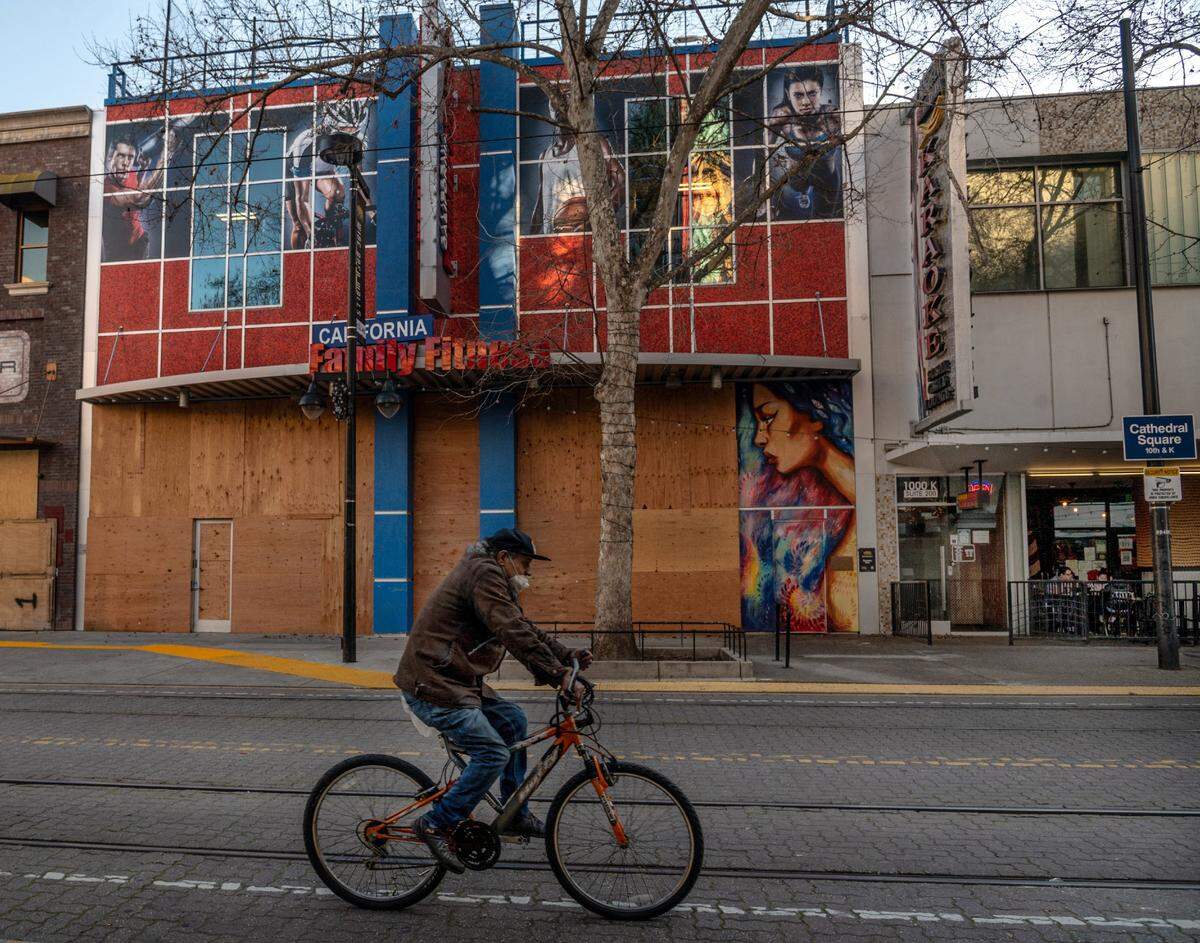
The club had been preparing to reopen and had hired a contractor to paint the exterior of the building to cover the graffiti. The contractor told them that a section of Olivia’s mural had been tagged and mistakenly painted over the mural.
Although the club’s focus at the moment is on reopening and welcoming back members, a spokesperson said they would love to have Olivia come back and paint a new mural. Olivia did not respond to requests for comment.
Artist’s rights: Federal law protects work
Buildings owners are required to notify artists at least 90 days before removing their artwork, according to the federal Visual Artists Rights Act. It protects an artist’s “moral rights” by guaranteeing authorship of the piece as well as the right to prevent mutilation, alteration or to recover damages.
Artists retain these rights throughout their lifetime, even after the original work has been sold and is no longer in their possession. The 90-day notice also give artists the opportunity to document their work before it gets removed.
In 2018, a judge ruled that a New York developer had violated a group of artists’ rights under the federal law when he whitewashed and painted over their art on 5Pointz, a building complex in Queens, without warning. He was ordered to pay $6.7 million to the artists as compensation.
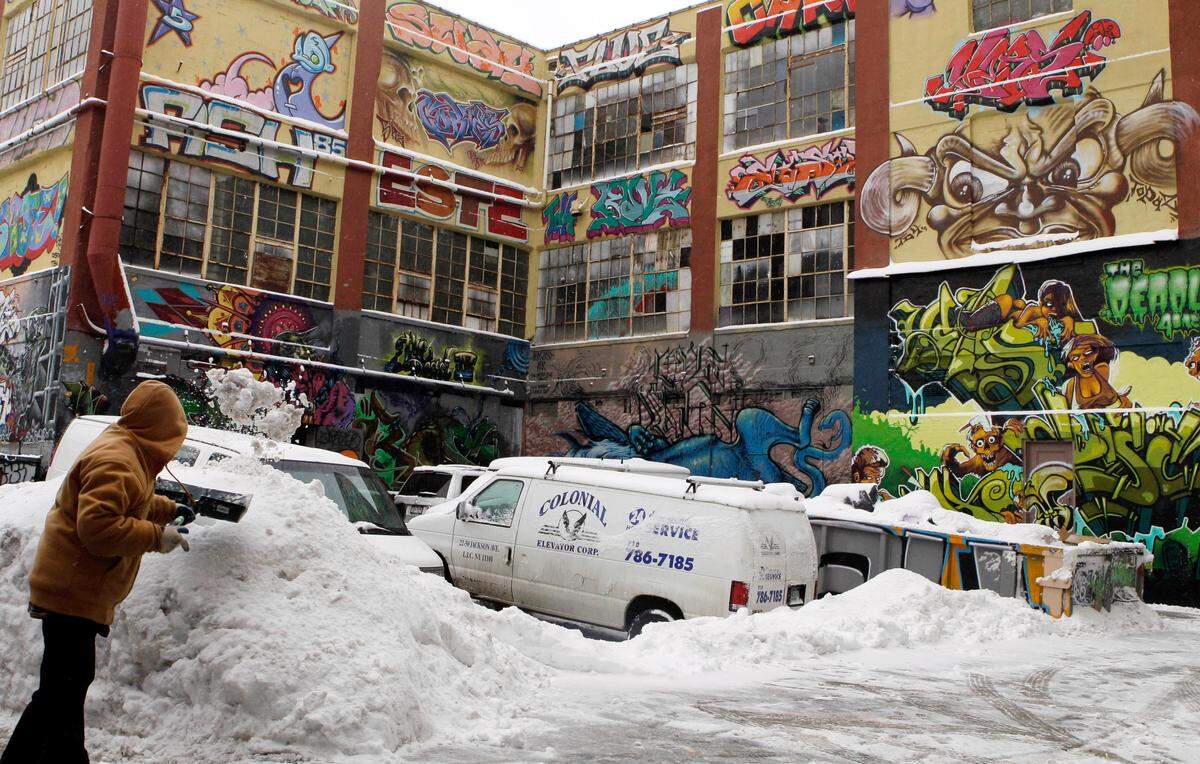
The case was a victory for street artists in protecting their work.
“It rarely goes to trial,” said M. J. Bogatin, a lawyer who practices in intellectual property in Oakland. He added that most artists don’t know about their rights and usually don’t seek legal remedy.
Mural artists make peace
Most of the time, artists are just grateful to have their work featured, even for just a short period of time.
Stephanie Taylor, a longtime artist based in Sacramento, had painted a mural on the Bread Store on J Street during the Gulf War. The mural depicted a baker passing bread out a window to Taylor’s then 8-year-old son, Greg, shown riding a bicycle.
After the building changed owners and was bought by a cannabis company, the fading mural was set to be replaced. The company reached out to Wide Open Walls, and they held a news conference with Taylor to communicate to the public that nothing’s permanent.
Taylor’s son was upset about it being painted over, but the two of them helped buff out the wall so that the next artist could paint a new mural.
Wide Open Walls found Taylor a new wall to paint, and she did a mural of ballet dancers on the Capital Athletic Club on 8th Street as a tribute to the Sacramento Ballet.
For murals that have been vandalized Taylor wishes artists would be given an opportunity to fix them before having them completely covered. Nevertheless, she approaches her public art knowing that it might not be here one day.
“It’s organic,” Taylor said. “The building’s not permanent.”
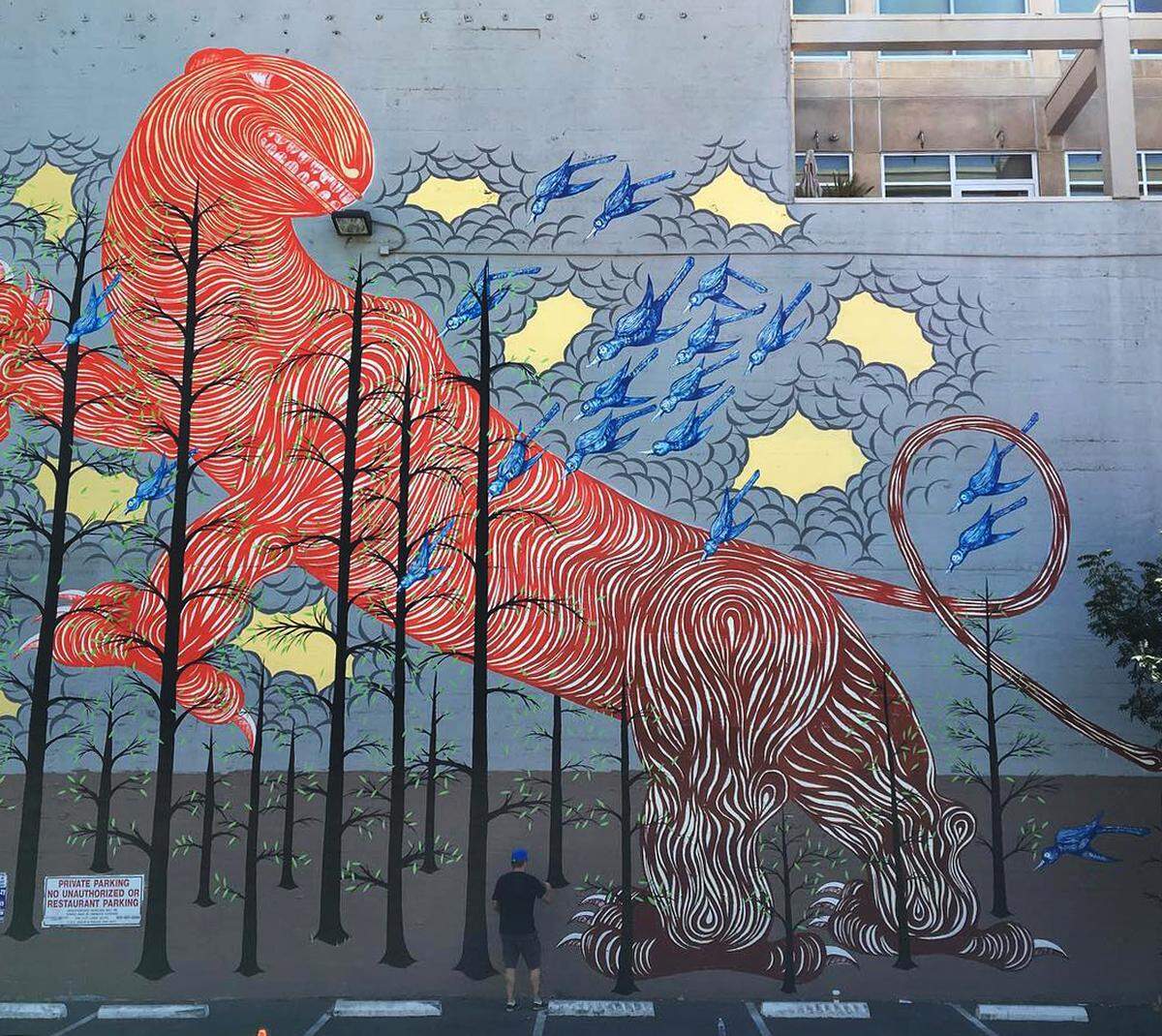
“The Birds and the Beast” mural by Los Angeles-based artist Andrew Schoultz on J Street’s Elliot Building had also been covered up. The large mural depicted two beasts hunting in a forest and symbolized the power of nature.
The piece was painted over after having multiple issues with graffiti, according to Sarah Barkawi, vice president of marketing for Fulcrum Property. She said that it was not done in an effort to change the art and that there are no current plans for a future mural.
“The general thing with public art is that it’s temporary,” Schoultz said. “Sometimes murals last 20 years, sometimes they last a year.”
He saw photos of his vandalized mural and said the graffiti didn’t look too bad. Although he was never offered and opportunity to fix it, he probably wouldn’t have gone because of the pandemic.
“I was happy to have the experience painting the mural in Sacramento, and I was happy to have the time that it ran and people enjoyed it,” he said. “It just kind of is what it is.”
Wide Open Walls works to preserve murals
Since its inception in 2016, only a handful of Wide Open Walls murals have been covered up, according to David Sobon, the festival’s founder and producer.
Nonetheless, Sobon began adding protective coats on the murals three years ago. The coats allow the murals to be salvageable if addressed soon enough after being tagged.
Big murals by international artists have priority because local artists more readily can fix theirs.
Although graffiti coating is costly, Sobon now applies it to every mural painted. He said that most of the murals don’t get tagged because the art is generally respected by graffiti artists and the public.
Wide Open Walls contracts with the building owners to keep the murals up for a minimum of three to four years, Sobon said. Still, murals sometimes end up staying longer or shorter than expected.
“Nothing’s permanent,” Sobon said. “It’s just part of the whole street culture and the mural culture.”
This story was originally published August 12, 2022 at 5:00 AM.