
Book of Dreams: Red Cross blood drives help local girl with tumor - and millions more
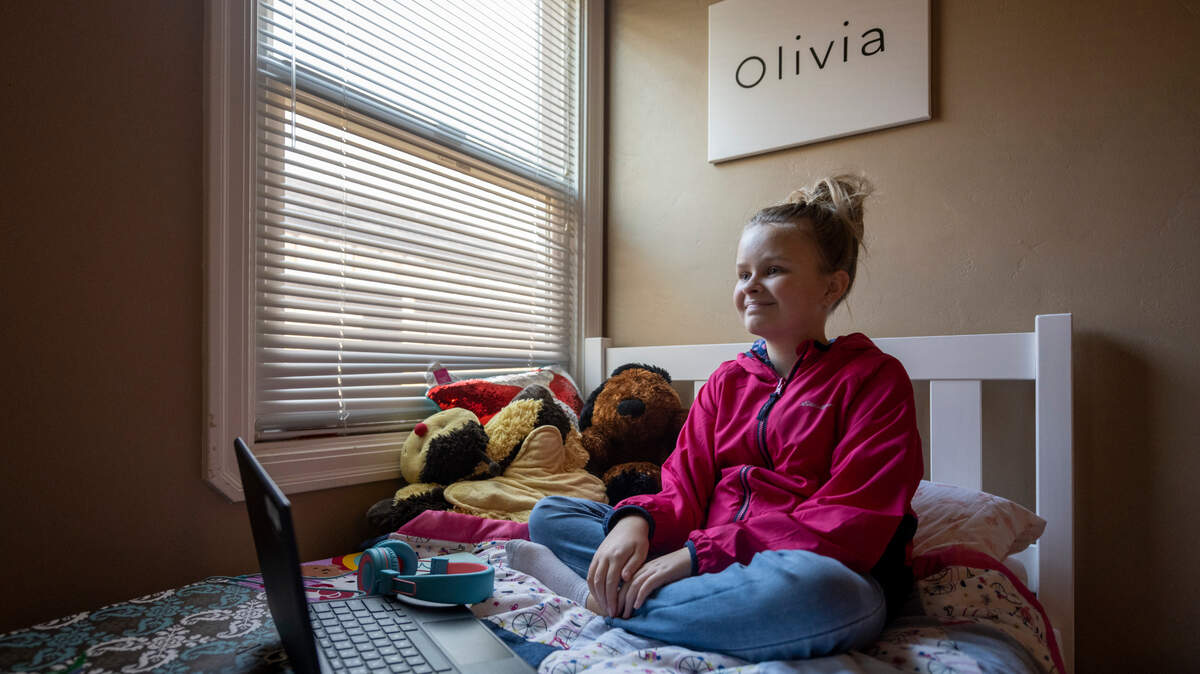
It started with a headache. Olivia Brown, then 9 years old, was at the Sunsplash water park in Roseville with her mother, Katie Brown.
“She’d never had a headache,” Katie said. “And then all of a sudden, she had a headache.”
It lasted for days and ended with vomiting. And it kept coming back. Katie knew something was wrong. And it was.
In the center of Olivia’s brain was a tumor the size of a walnut. It wasn’t cancerous, but it also wasn’t operable. Olivia needed chemotherapy.
And she couldn’t get through that without blood transfusions because chemo lowers blood counts.
Among those stepping in to help was the American Red Cross, which provided regular transfusions for Olivia, who is now 11 and doing well. She’s among the millions who receive blood products nationally each year from the organization.
“We need blood all the time,” said Gary Strong, the chief executive officer of California’s Gold Country Region. “The supply of it really ebbs and flows.”
A single blood drive costs about $3,900 and that amount covers everything from the phlebotomists to the hand sanitizers. It even factors in the cost of snacks of juices for woozy blood donors.
The organization is asking Book of Dreams readers for $3,900 to hold a blood drive next year in the Gold Country, one of the 30 or so held annually in that region and one of thousands held nationally to collect blood for people like Olivia and many others.
The Red Cross doesn’t have fixed donation buildings in Sacramento, so all the equipment for blood drives gets transported from its facilities in Stockton or Modesto. After blood is collected, it has to be shipped back to a processing facility where it can be tested and cleaned.
Donated blood is separated into red blood cells, plasma and platelets, potentially saving the lives of three different patients.
“What a wonderful gift,” said Miki Teixeira, a frequent Red Cross blood donor. “It costs nothing to give blood.”
Teixeira also belongs to the Tiffany Circle, a community of women philanthropists. Tiffany Circle members donate time, energy and resources to the Red Cross, including a minimum donation of $10,000 per year.
“I’m just so pleased that we have Red Cross here in Sacramento,” Teixeira said. “I just wish more people knew about it, because it’s valuable.”
The holidays are always a tough time to collect blood but this year is particularly difficult. Blood drives are traditionally hosted by churches, businesses and schools.
“With them going virtual, that results in a shortage,” Strong said.
Blood drives are now conducted by appointment only. Donors are checked for fever when they arrive. Collection beds are spaced apart and sanitized after each donation. And everyone wears masks.
Donated blood is used for patients with cancer, sickle cell disease and chronic illnesses. It’s needed for trauma victims and burn victims. It has to be available for surgeries in case of blood loss. And recently, there’s a new need: COVID-19 convalescent plasma.
The Red Cross tests all donated blood for antibodies to COVID-19. When blood is positive for antibodies, coming from someone who has recovered from COVID-19, the plasma can be transfused into patients still fighting the virus. While that doesn’t guarantee recovery, it offers another bit of aid for those who are sick.
Olivia Brown, the girl with the brain tumor, is not atypical, needing transfusions to continue treatment when chemo wipes out her blood counts.
“Her white blood cells, red blood cells, hemoglobin and platelets need to be at certain levels,” her mother, Katie, explained. “She dropped pretty quickly at first and was struggling to recover.”
“The first few weeks, she was really weak and tired,” said Katie. “She would throw up here and there.” She’s lost about half of her hair, and she’s lost a lot of weight.
They can’t wait too long between chemo cycles, Katie said, because it can trigger the tumor to start growing again.
“The blood transfusion is kind of like getting chemo,” Olivia said. “I just sit there the whole time watching something.”
Treatment was a little scary at first, but not anymore. “I guess it’s just getting used to doing all the things you need to do...Taking the big pills and going to chemo,” Olivia said.
And there’s even a few perks on chemo days. On most days, electronics at home aren’t allowed until after dinner. But Fridays are chemo days, and those are different.
“I normally bring my Kindle or phone,” she said. “Sometimes I could feel tired, but that’s pretty much it.”
Olivia’s headaches are gone, thanks to a shunt that drains her cerebrospinal fluid, relieving the pressure on her brain. Without the constant pain, Olivia can focus on normal stuff.
She does distance learning and misses her friends. She’s interested in fossils and animals, and she’d really like a dog.
As far as the tumor, it won’t ever go away. “She will live with it for the rest of her life,” Katie said. “They won’t remove it ever because of its location in her brain.”
The goal is to shrink it. Once it gets small enough, the chemo can stop and the monitoring can begin.
This story was originally published December 20, 2020 at 5:00 AM.