Famous Landmarks in Italy Draw Visitors With Centuries of Art, History and Culture
From ancient amphitheaters to Renaissance galleries, the famous landmarks in Italy offer deeply authentic cultural and religious experiences for travelers who appreciate slowing down. These seven sites — scattered across Rome, Pisa, Florence, Venice and Naples — showcase world-class art and architecture spanning centuries. Whether you’re drawn to ancient history or Renaissance masterworks, each site rewards those who take their time.
The Colosseum, Rome
The Colosseum is an ancient amphitheater built in the first century CE, requested by the emperors of the Flavian dynasty. It hosted gladiatorial combat, animal hunts and other public spectacles. It’s said to have seated around 50,000 spectators. For travelers who want to connect with ancient history, few structures leave as strong an impression.
The Vatican and St. Peter’s Basilica, Rome
The Vatican is the headquarters of the Roman Catholic Church and home to the Pope. At its heart is St. Peter’s Basilica, the largest church in the world, filled with paintings, statues and architectural details. The Vatican is also home to Michelangelo’s painted ceiling in the Sistine Chapel, a work that rewards careful, unhurried viewing.
The Trevi Fountain, Rome
The Trevi Fountain is the largest Baroque fountain in Rome and the terminal point of the Virgo aqueduct — the only ancient aqueduct in continuous use to this day. Tradition says tossing a coin guarantees you’ll return to Rome. Tossing two is said to bring love, and three is said to ensure marriage. Be sure to stand with your back to the fountain and throw the coins with your right hand over your left shoulder.
The Leaning Tower of Pisa
The Leaning Tower of Pisa is the freestanding bell tower of Pisa’s cathedral, and its unintended tilt has made it one of the world’s most recognizable structures. The lean comes from the settling of the building’s foundation. Between 1990 and 2001, the tower was closed while engineers worked on decreasing the lean by about 17 inches to keep it from collapsing. The work is believed to have stabilized it for at least the next 200 years.
The Uffizi Gallery, Florence
The Uffizi Gallery in Florence houses one of the most notable collections of Western art in the world. It’s home to iconic pieces such as Botticelli’s Birth of Venus, along with works by Leonardo da Vinci, Michelangelo, Raphael and more. For anyone who values craftsmanship and artistic tradition, this gallery rewards a slow, attentive visit.
The Grand Canal and Rialto Bridge, Venice
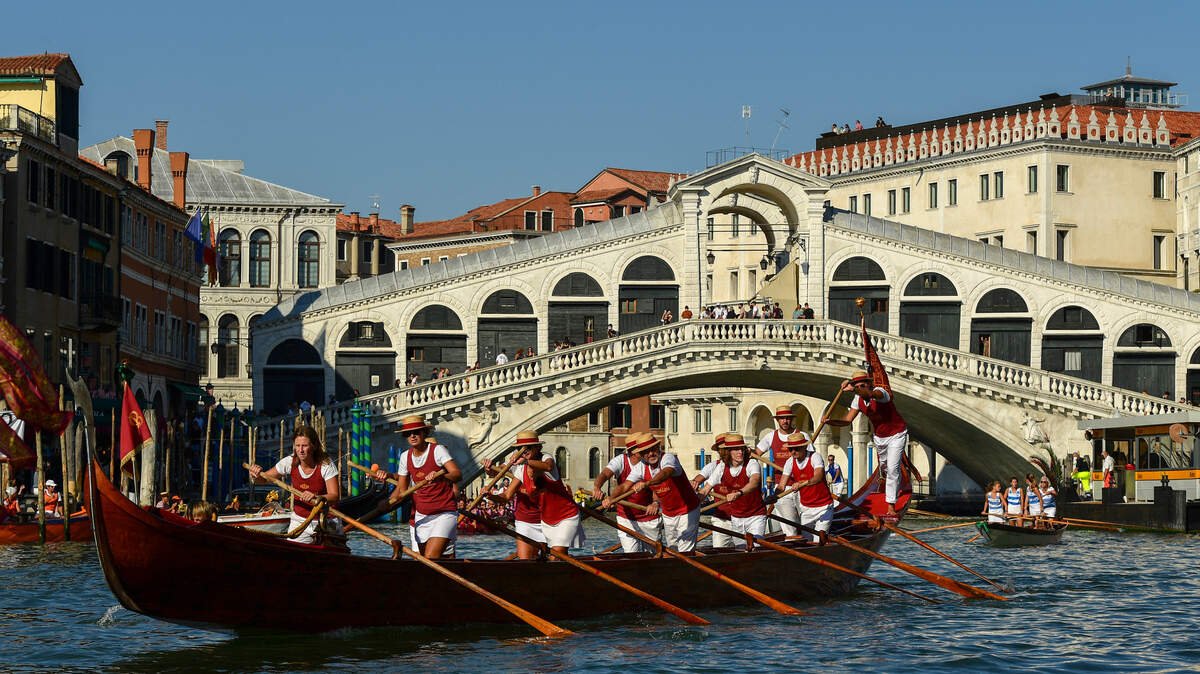
Venice’s Grand Canal is the city’s main waterway, stretching just over 2 miles long and 100 to 225 feet wide. It’s best experienced by gondola. The canal is lined on either side by palaces, churches, hotels and other public buildings, with four bridges crossing it. The most famous is the 16th-century Rialto Bridge, which sits roughly at the halfway point and is considered a remarkable architectural and engineering achievement of the Renaissance period.
Pompeii, Near Naples
Pompeii is a preserved ancient Roman city frozen in time by the eruption of Mount Vesuvius in A.D. 79. Everything in the city became buried beneath a blanket of ash and pumice. In the 1700s, what was preserved at the site finally began to be unearthed.
It’s believed that between 10,000 and 20,000 inhabitants lived in the city at the time of the eruption. Today Pompeii is an open-air museum where you can learn about life in the ancient city and see the ancient theaters, temples, baths, houses, shops and more that have been uncovered. Few places offer this kind of immersive connection to how people lived in the ancient world.
This article was created by content specialists using various tools, including AI.