
State Fair cannabis exhibit draws big crowds. Vendors hope consumption might come next
The California State Fair’s first cannabis competition and exhibit drew big crowds in the opening week, with people learning about the award-winning flowers, listening to experts in the industry and meeting vendors from across the state.
One thing notably missing from the exhibit: the cannabis.
Event organizers and participating vendors have at once praised the new exhibit as a step toward normalizing cannabis, and criticized it for sterilizing the experience, removing cannabis consumption from all aspects of the event — including the competition judging.
The ambivalence speaks to a tension present throughout California’s cannabis industry. Five years have passed since California voters legalized recreational cannabis use, prompting enthusiasm from growers and residents about the product’s normalization. Yet the cannabis industry remains heavily regulated by the state, with growers and vendors having to jump through numerous legal hoops to sell their products.
In California, cannabis may be viewed as an agricultural staple, but it is treated highly differently from any other product on the market.
The State Fair’s cannabis-free inaugural cannabis competition crystallizes this phenomenon. But competition organizers are quick to point out that the exhibit has the potential to change, especially as the industry does.
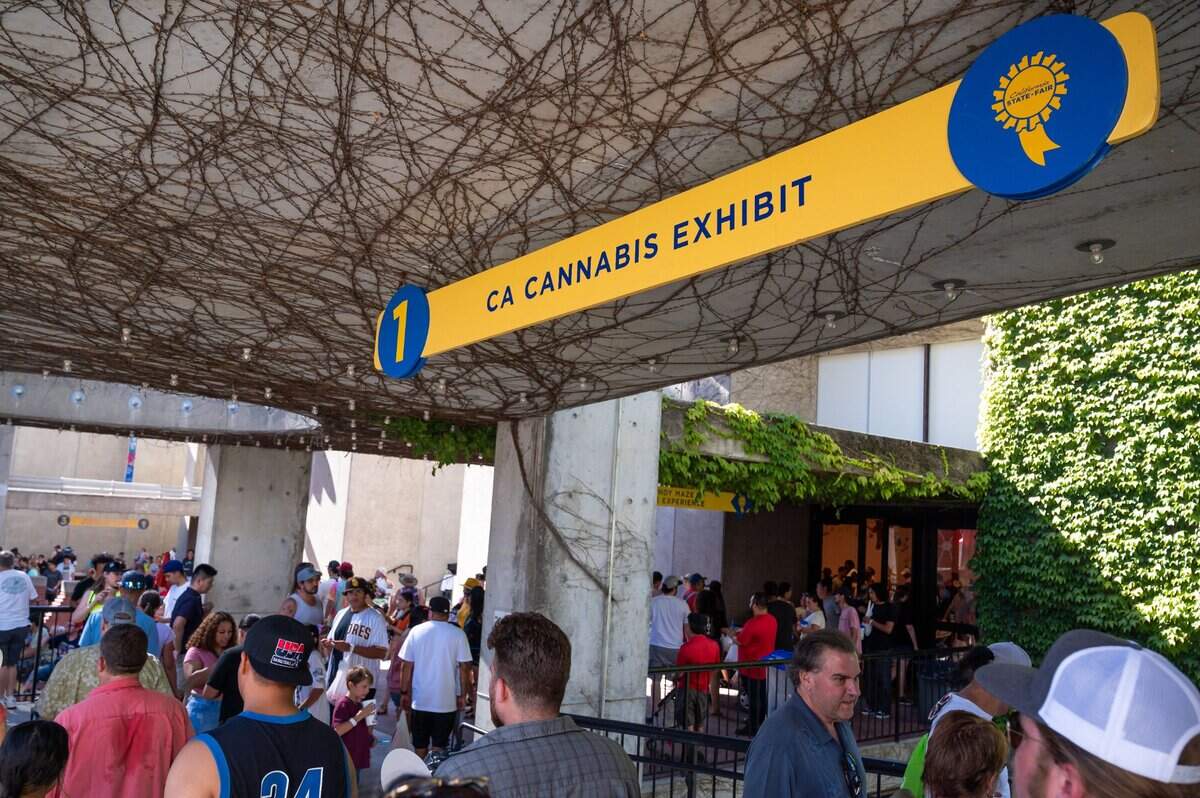
“There’s so much potential and so much room to grow,” said Caitlyn Tamony, the director of marketing at Cultivar Brands, the marketing agency in charge of the fair exhibit. “This is just year one, let’s get a strong baseline; it’s like proof of concept.”
While vendors hope the event evolves in the future, they appreciate the novelty of cannabis’s presence at the State Fair. The Sacramento Bee spoke to five vendors who are set up at the exhibit, all of whom called the first iteration a success.
“For the cannabis industry, (the fair exhibit) is ‘Hey, look, now we’re including you in the agricultural business of California,’” said John Ditto, the inventory manager at cannabis delivery service Cannagram. “So we think this is a really big deal in normalizing cannabis. The more people can see how normal these things are, the better”
‘A lot of curiosity’: Crowds seem receptive
Danny Kress, a dispensary manager at A Therapeutic Alternative, which runs a booth in the exhibit, said he has been pleasantly surprised by how receptive crowds have been. The Sacramento-based dispensary has operated since 2009, and specifically focuses on the medical and wellness uses for cannabis.
“It has been very well-received, with basically no negative response,” Kress said of his booth at the exhibit.
Tamony similarly said that since the exhibit opened its doors Friday, he has observed “a lot of good energy.” She said she has overheard people sharing new things they have learned from the more museum-like portion of the exhibit, and that the programming seems to be giving first-timers a “baseline education” about cannabis.
Leslie Dulaney, a Del Paso Heights resident wandered into the exhibit on Tuesday. She said she appreciated the educational component of the exhibit and hopes to return in the coming years.

“There’s so many applications for cannabis; it is not at all just hippies anymore,” she said. “It is for everyone.”
At his booth, Ditto said, he has seen “a lot of curiosity” among older folks, who are used to cannabis being more taboo.
David Desroches, the sales director at Lehua, found consumers similarly curious about the THC-free cannabis-infused drinks sold at his at the exhibit, said that people seemed similarly curious about consuming cannabis drinks. Over the opening weekend, he said, many asked if THC products were available, and some wished to try them for the first time.
He estimated that around 30% of those who visited Lehua’s booth at the exhibit were completely new to cannabis.
“People have been very receptive to the option of consuming a cannabis product,” Desroches said. “This is the first year so we want to do this right, we want to put our best foot forward. ... I think (THC consumption) could happen if we do this right this year.”
The cannabis competition — objective, or too scientific?
All those entering the cannabis exhibit must be 21 or older. Once visitors pass through an ID check at the exhibit door, they snake their way through large displays about the science of cannabis and the various terpenes, or chemical compounds, that are
in the plants. Only then can they view the competition’s various winners and interact with vendors.
Science is the name of the game at the fair’s cannabis competition. While many cannabis competitions, such as the Los Angeles-based Emerald Cup, rely on judges who smoke the product to determine a winner, the State Fair bases its awards solely on lab testing. The cannabis with the highest concentration of each terpene wins an award.
The scientific approach has caused mixed reactions among growers and vendors. Melissa Crews of Mendocino Family Farm, said she appreciated the way the lab approach allowed for objective judging. Other competitions, such as the Emerald Cup, she said, often award the same farms each year.
Tamony said competitions without that testing component are often thought of as “a bit of a popularity contest.”
Mendocino Family Farm won the gold medal at the State Fair for having the highest concentration of THCa, the chemical compound that becomes THC when heated. The farm did not place in the Emerald Cup.
“The body is so complex; everyone’s going to react differently,” Crews said. “So I really like the scientific aspect of it, like actually measuring the amount of terpenes and what we know about each terpene.”
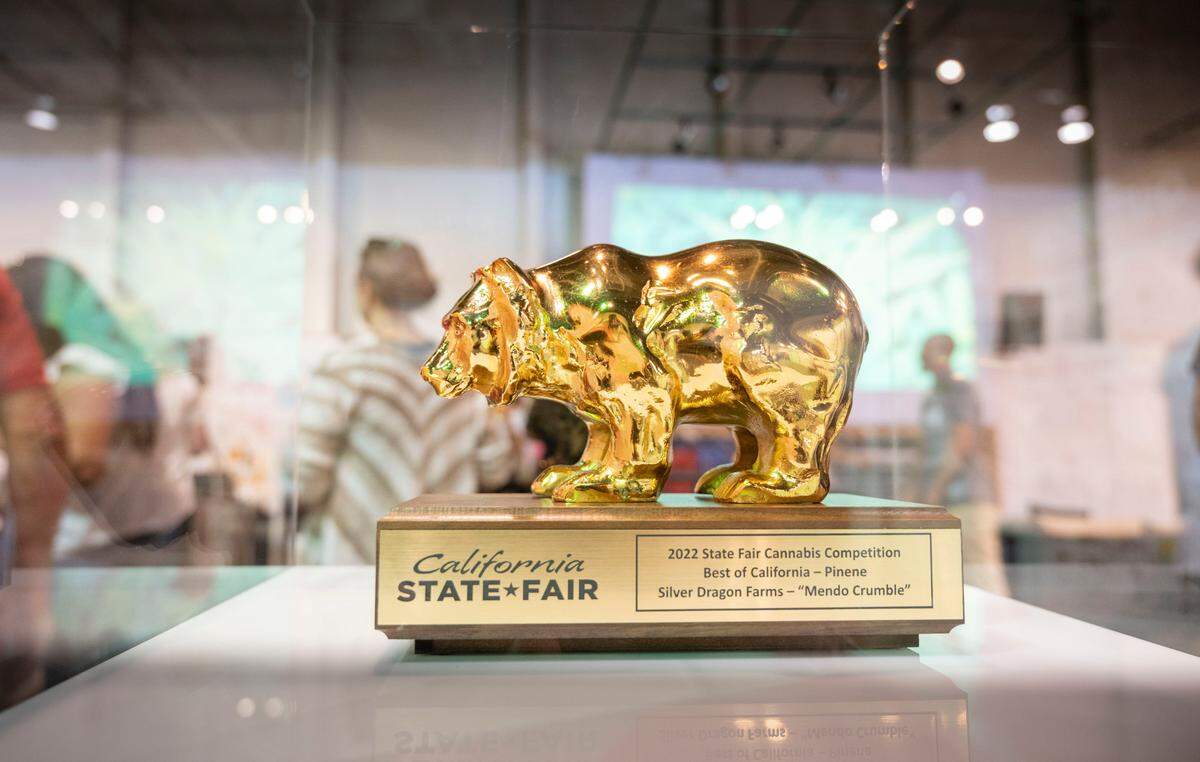
But others, like Ditto, thought the lab-based approach removed an important human aspect from the competition.
Ngaio Bealum, a Sacramento-based actor and comedian who co-hosts the Netflix series “Cooking On High,” said he was “shocked” when he learned the state would not use judges in the competition.
Bealum has judged at the Emerald Cup and cannabis competitions around the world. He likened cannabis to products like cigars, wine or beer, which are always consumed when being judged.
“The state has got to stop treating cannabis like it is uranium or weapons-grade plutonium,” Bealum said by phone from a cannabis competition in Germany. “It’s cannabis. It is meant to be tasted and smoked.”
“Machines don’t have taste buds,” he added.
Still, he said, he does view the State Fair competition as a “great first step” when it comes to normalizing cannabis consumption — he just hopes organizers will change the judging methods.
Tamony said that organizers are open to potentially having human judges in the future, but would want to have an empirical, methodical approach if they were to do so. Organizers would likely still incorporate lab testing, she said.
Looking toward the future
In addition to potentially incorporating human judging, Tamony said that she expects the exhibit to evolve to one day allow for consumption on-site. For now, organizers are juggling complying with strict state regulations that limit who may sell cannabis, as well as ensuring the exhibit remains appropriate for a family-centric event like the State Fair.
So long as the exhibit remains free of cannabis consumption, some are pushing for age restrictions to be lifted. Cultivar Brands CEO James Leitz told The Bee that the exhibit remained open only to adults 21 and older this year so as to make the exhibit approval as smooth as possible, but that he hopes it will change in the future.
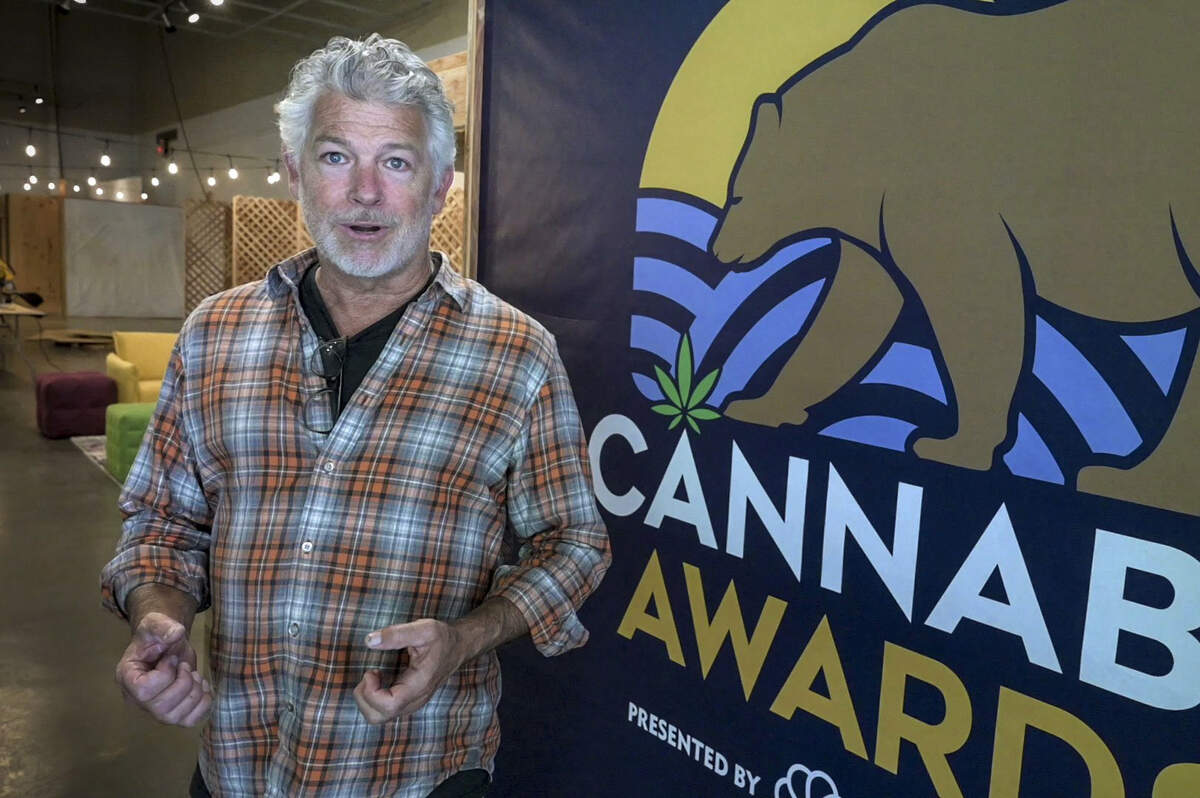
“It is our first year at the fair, a state agency sanctioned event,” Leitz said. “And we felt that 21+ keeps it on a level playing field with the other legal consumption events, like beer gardens. … If it continues to be educational like this, no consumption, then I can see that changing.”
Kress said getting people to visit the educational exhibits with their kids would be “very cool,” an opportunity, to learn more about the agricultural side. Dulaney, who visited the exhibit, agreed.
“The agricultural side of things, and recognizing its history, is something we are just so proud of,” Kress said.
Kress added that he thinks it might be possible for the future competition to separate out an exhibit, which could be for all ages, and a consumption lounge, which limit attendance to those legal allowed to use the drug.
But Desroches said that even if the exhibit does not evolve to allow consumption, the educational component is still “very important.”
“I’ve been in the industry for years,” Desroches said. “So seeing this education piece is something that helps us kind of break the stigma.”
This story was originally published July 29, 2022 at 5:00 AM.
CORRECTION: This story was updated to clarify comments by Caitlyn Tamony about competitions that don’t include a scientific component.