
Cooking with cannabis: How marijuana food edibles in Sacramento went to the next level
All About Wellness’ snack selection resembles a convenience store’s, in most ways.
There’s buffalo jerky and sriracha crackers, fudge bars and mints, hard candies and pretzel bites. A peanut butter candy bar claims to use single-origin Ecuadorian chocolate. Fruit chews are everywhere, with all kinds of flavors such as sour watermelon, sparkling pear, key lime.
Proof that this is not, in fact, a typical convenience store comes in the ID check at the door, the security guards wearing bulletproof vests and the tiny marijuana leaf icon on each snack’s package. This isn’t a gas station, but they’ll sell you an eighth of “gas.”
All About Wellness is a midtown Sacramento dispensary that’s embraced the new world of edibles, including all of the aforementioned products. Since California legalized the recreational sale and use of cannabis in 2017, marijuana-infused food has become significantly more creative, accessible and (occasionally) high-end.
“If you can imagine it, you can infuse it,” All About Wellness manager/buyer Chandler Hale said.
As Sacramento’s unofficial celebrity stoner, Ngaio Bealum has written, published, hosted TV programs and delivered jokes about cannabis for the last 15 years. That resume includes a starring role as the “weed expert” on the one-season Netflix show “Cooking on High,” where competitors raced against the clock to make the best THC-infused dishes possible.
With recreational marijuana legal in 18 states and medical in 37, the world of edibles has changed rapidly, on local dispensary shelves and on the silver screen, Bealum said.
“The thing that’s changed, I think, is the sophistication of the recipes,” Bealum said. “It’s not just cookies or cupcakes or marshmallow treats — it’s barbecue sauce, it’s Alfredo sauce. Anything you can put butter or oil in, they’re going to put some cannabis in it. And it’s fantastic.”
Gone are the days of your college buddy’s pot brownies or cannabis-chip cookies. Midtown Sacramento dispensary Green Solutions lists cherry cola gummies, ranch-flavored crackers and “Smokin’ Green” hot sauce — ahem, pot sauce — among its edible offerings.
You’ll find dulce de leche truffle bars, guava syrups, dark chocolate mocha malt balls and sour belts at Zen Garden in south Natomas. Metro Cannabis Co. in south Sacramento sells weed lollipops, jello shots , strawberry cheesecake bars and cotton candy tinctures, though shrimp chips no longer appear to be on the menu.
And the drinks! Major beer brands such as Pabst, Lagunitas and Anheuser Busch-InBev have come out with flavored seltzers that are alcohol-free but include THC, which Brightfield Group research agency says will account for $1 billion in U.S. sales by 2025. Sacramento-area dispensaries regularly sell juice, mocktail mixers, root beer, bottled teas and lemonade to customers seeking liquid highs.
This cornucopia of kush has become increasingly sophisticated as more states and territories have legalized marijuana, and shows no signs of slowing down. Edible sales grew by 20.4% last year in California, Washington, Nevada, Michigan, Oregon and Colorado last year, outpacing marijuana sales as a whole, according to data analytics firm Headset.

MULTI-COURSE MARIJUANA MUNCHIES
“If you can cook, you can cook with cannabis. It’s not that hard to do,” Bealum said from a marijuana lounge in Barcelona, where he had just popped a 15-milligram gummy.
Cannabis is made up of more than 100 cannabinoids including tetrahydrocannabinol (THC), cannabidiol (CBD) and cannabinol (CBN). The first produces marijuana’s psychoactive “high,” while the latter two can be medically beneficial but aren’t mind-altering.
All three of those cannabinoids are fat-soluble, meaning they melt into oil and butter when heated. The cannabis flavor can be retained, which some people prefer to taste a particular strain, or masked by using distillates or concentrates such as rosin or hash oil.
“Before (legalization), it was mainly butter that people used with edibles,” Hale said. “The new thing right before legalization was infusing edibles with distillates so (they) wouldn’t taste like cannabis. And that was a huge new thing, because people were tired of eating a brownie and it tasting like a brick of weed.”
That flexibility opens doors for cooks to incorporate marijuana into dishes.
When Tighe Mullins cooked at City College of San Francisco’s culinary school and Mission District destination restaurant Foreign Cinema, he used his medical card to buy weed and ship it to friends back in Florida. Some would call that the black market; it’s the “traditional market” to those in the industry, Mullins said.
After running a food truck in North Carolina and cooking at a Miami steakhouse, Mullins moved back to California during the pandemic to help a friend get Oakland fried chicken pop-up Fowl & Fare off the ground. Instagram followers, who knew he liked to smoke, eventually reached out with a request: make what you’re making, but make it all edibles.
Mullins hosted four “canna-dinners” in the Bay Area last year, all five to 10 courses and invite-only. From casual fried chicken sandwiches to chicken legs stuffed with mushroom risotto, all contained hash-infused oils, creams or butter.
“People get really sedated by the end of the meal, and they usually do last a while. I think I did a nine-course meal that lasted three hours,” Mullins said. “Usually it is pretty heavy users, so people are smoking the whole time, eating, laughing.”
Mullins moved to Davis earlier this year to become the general manager for local cannabis delivery service BudCars. Food was once his main hustle with weed as a side gig; now it’s the other way around.
He’s hoping to get similar canna-dinners going around the area, but hasn’t had much luck finding willing venue owners. His Bay Area clients typically rented two AirBnbs, one for him to prep in and the other for guests to enjoy throughout the day and host the final cooking portion.
Jennifer Millsap has picked Mullins’ brain as she tries to launch dinners of her own. A former cook at The Kitchen, Localis and The Shady Lady Saloon in Sacramento as well as Hog Island Oyster Co. in Larkspur, Millsap and business partner Tara Martinez are now in the process of buying a “well-known local catering company,” she said.
Millsap tried hosting her first canna-dinner in February but had to cancel due to a non-COVID illness. All attendees at the private event would’ve been at least 21, signed a liability waiver and paid for a club membership, not the meal itself, because Millsap isn’t licensed to sell weed.
The five-course dinner would have included soup, seafood, pasta, an entree and dessert. Similar meals are relatively uncommon in more major cities such as San Francisco, Los Angeles and New York, yet remain more underground in Sacramento, Millsap said. She’s tentatively hoping to do throw one on April 20 for people in the cannabis industry.
“It seems to me that people can sometimes be a little more hesitant here,” Millsap said. “All over the country, people are hosting these somewhat underground cannabis dinners. I just think it’s interesting and something of a missing niche in Sacramento that’s not happening.”
EASIER AND SAFER EDIBLES
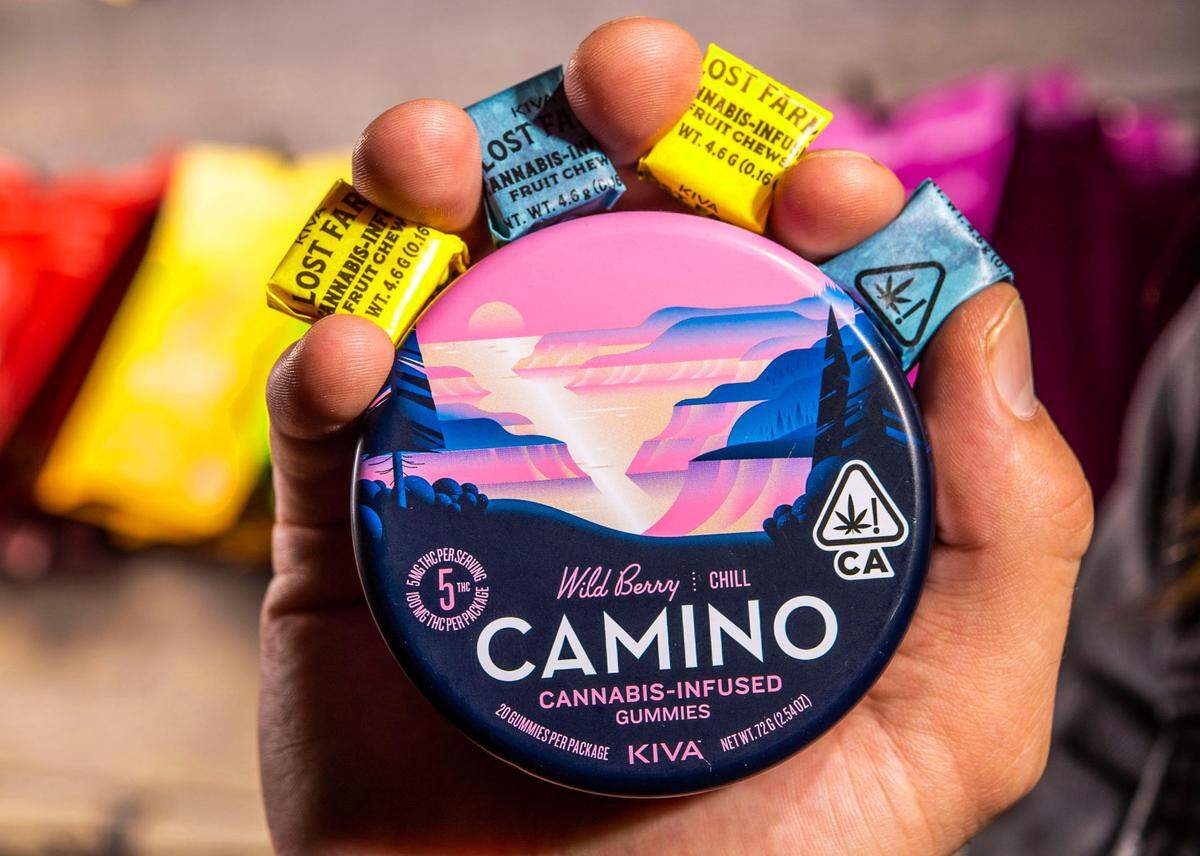
Edibles were once something of a wild frontier, an all-or-nothing home project that produced wildly varying highs. Even when Hale began working for All About Wellness in 2014, he said, most packaged brownies or cookies contained 100 milligrams of THC, about 10 to 20 times more than an infrequent user might want. How was one supposed to know the appropriate-sized chunk to break off?
Nowadays, highly regulated production facilities churn out identical bite-sized pieces, each of them with a clearly labeled amount of THC, CBD and CBN. In addition to being one of the most discreet and cost-effective ways to consume, edibles are now among the most structured, allowing people to dose marijuana the way they might with gummy vitamins.
“Everyone I know has accidentally had their day changed by eating too much back in the day when s--- didn’t have labels,” Bealum said. “It’s great now when you go to the clubs or dispensaries and they tell you exactly how many milligrams are in something. You are no longer getting caught by surprise.”
Seniors, for example, tend to go for low-THC edibles with higher levels of CBD and CBN, Hale said. They also gravitate toward edibles over smoking weed because the latter can produce carcinogens and irritate the throat.
Millsap had long smoked but rarely dabbled in edibles before she was diagnosed with an aggressive form of breast cancer in 2013. Over the yearlong healing process that included chemotherapy, surgery and radiation treatment, edibles became a way to numb the pain and sleep, she said.
Fancy canna-dinners aren’t just a way to make money and get customers high, then. They’re also about expanding horizons and showing people what culinary delights can be made with marijuana.
“I just think it’s a great opportunity to destigmatize the plant and introduce this plant, this medicine to people that could be beneficial in a number of ways,” Millsap said. “There’s this stigma to this plant in all forms, but in fine dining, we’re being able to use the plant in a way that’s pleasing to the eye.”
Mullins’ mother, too, suffered from cancer, a rare soft-tissue attacker called leiomyosarcoma that caused her death in August after four years of illness.
Prior to that diagnosis, she drank maybe a glass of wine and hated that Mullins and his siblings used marijuana, he said. Yet she was open to the edibles a friend brought, and they ended up being a salve amid the painful disease.
“She found that if she took 25 (THC) milligrams’ worth of gummies, that exact amount, she could fall asleep comfortably and feel good and not feel, you know, hella stoned,” Mullins said. “It’s a whole new market for people to manage their pain with no opiates. It’s not hurting your lungs, and its not doing any damage to your body unless you’re counting the sugar from sweets.”
For the canna-curious, Bealum’s advice is simple: go slow, start low. Start with an edible containing three to five milligrams of THC and find your comfort zone. If you feel too high, have some coffee or something with CBD, put on some music and try to relax.
And most importantly, give yourself about an hour to start feeling the effects before going back for seconds.
“You can always eat more weed. You can’t eat less,” Bealum said. “You can’t un-eat a brownie. I mean you can, I guess, but it’s gross.”
This story was originally published March 25, 2022 at 5:00 AM.