
Holiday foods around the Sacramento region: sashimi, tamales and Canadian meat pies
Hands flew around a central table in Yolanda’s Tamales Factory’s south Sacramento kitchen on Monday morning.
The restaurant was closed to customers, but there was owner Andres Yanez, slathering masa harina inside corn husks.
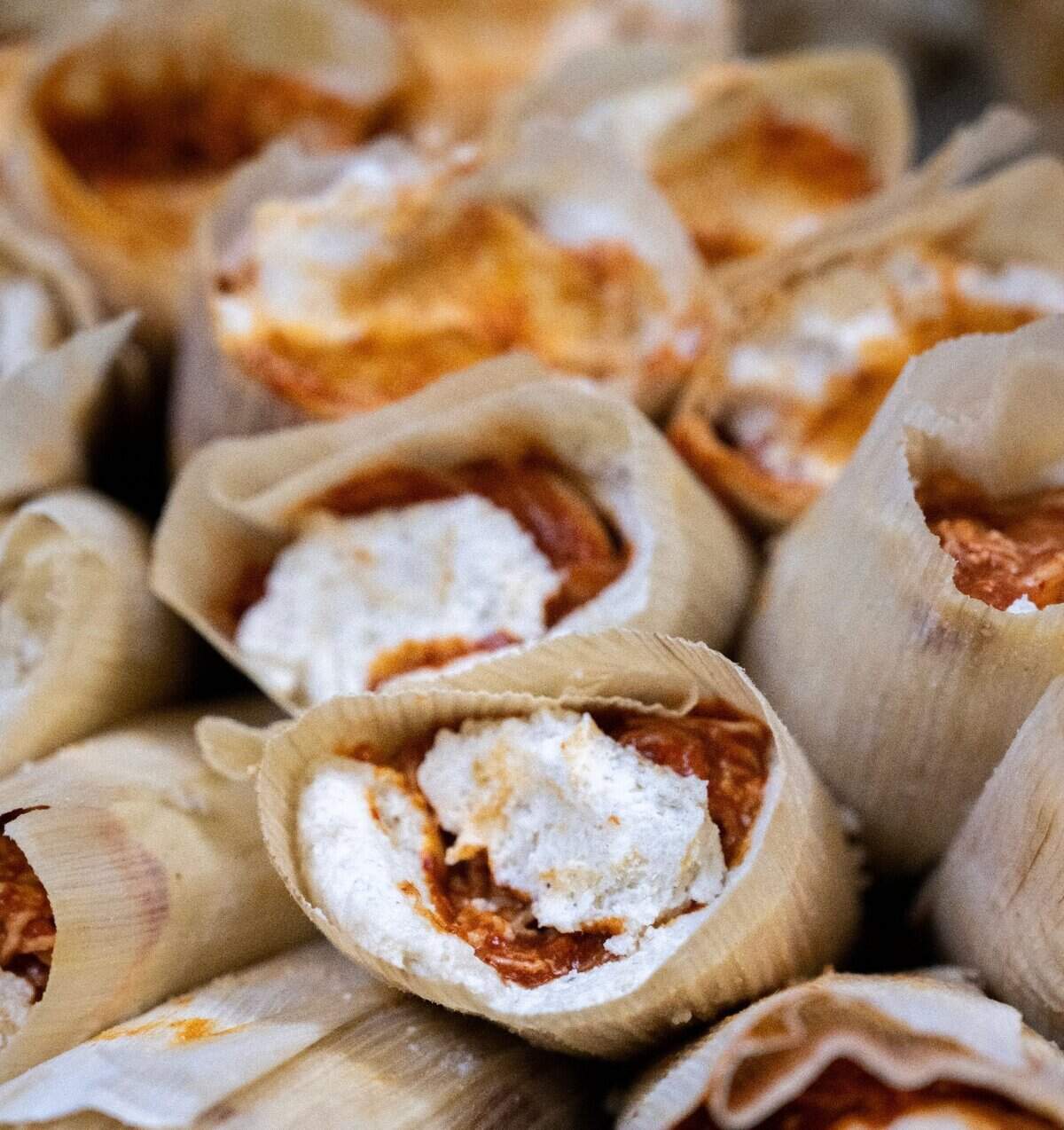
He stacked them next to an employee who added hearty pinches of shredded chicken in a tomato-chili sauce to each one. Then it was another worker’s turn to seal off each tamal, readying them to steam for an hour or so.
Along with a fourth employee, this small crew will make approximately 16,000 tamales this Christmas season, roughly doubling their 2021 output.
“It doesn’t take much to make a tamal. But when you’re making 1,000 tamales, it’ll take quite a bit of time,” said Yanez, 32.

About the Writer
Benjy Egel, a Sacramento native, covers local restaurants and bars for The Bee.
The holidays may conjure images of ham and fruitcake for some, but different cultures have their own culinary traditions. In a region as diverse as Sacramento, that can mean tamales, Canadian meat pies or sashimi.
The Sacramento Bee recently asked readers to share their Christmas feast traditions. Here are some of the meals your neighbors will be digging into this weekend.
Tamales bring ‘families together’
Yanez’s mother Yolanda Vega immigrated from the Mexican state of Michoacán first to Los Angeles, then to Sacramento, and set about selling tamales from a cart in 1988. Yanez grew up on the assembly line: he, his siblings and his cousins were all expected to pitch in on wrapping or stuffing tamales from the time they were 10 years old.
Yanez became an official employee in 2009, and later took over Yolanda’s Tamales Factory with his wife, Sandra. The business’ namesake still stops by to check on things semi-frequently, watching as Yanez rapidly expanded its reach to a truck, a trailer and a brick-and-mortar restaurant at 6885 Luther Drive.
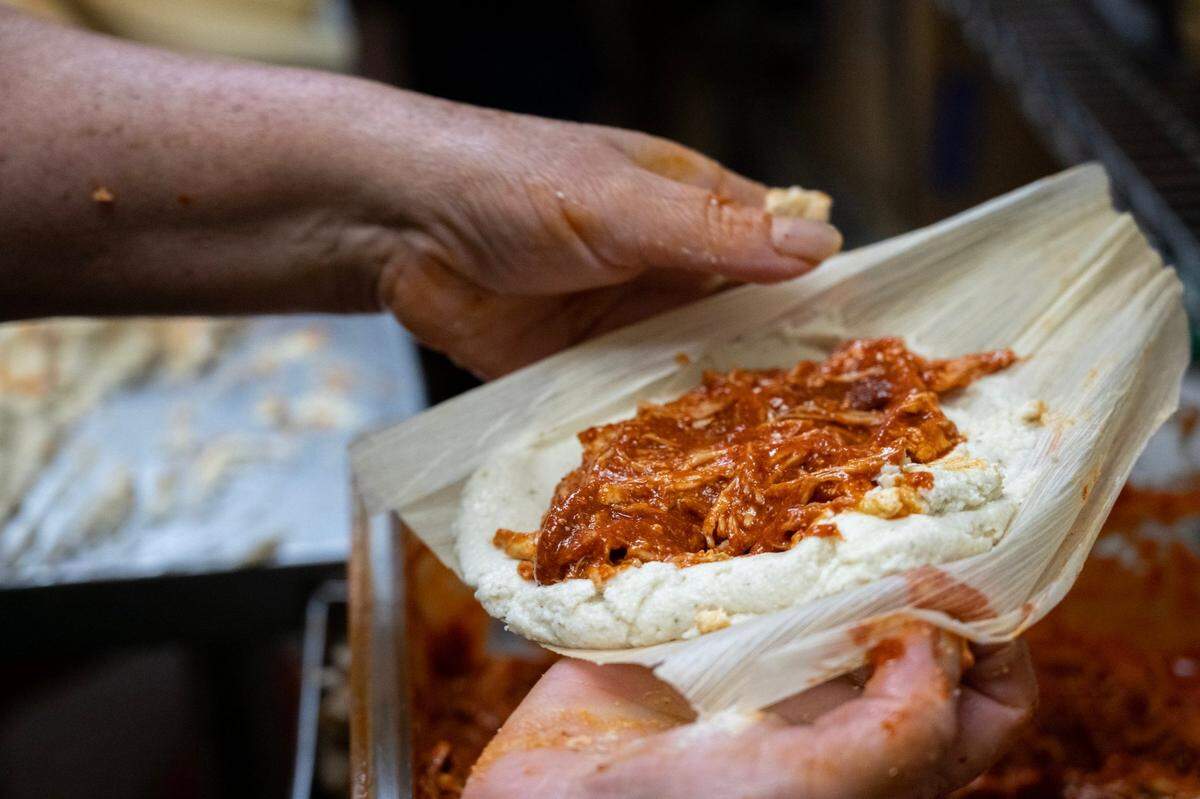
Mesoamerican civilizations such as the Aztecs and Mayans ate tamales and incorporated them in rituals. As Spain colonized Mexico, it’s believed that communal preparations called tamaladas started making offerings to, say, the Virgin of Guadalupe instead of Xochipilli, the god of dance and music.
“It’s a really big family thing on Christmas,” Yanez said. “It brings families together. People love doing family things. Moms are like ‘let’s do something together, let’s make some tamales.”
Yolanda’s will be open on Christmas for people to pick up pre-ordered tamales along with tacos, mariscos and burritos. For some Mexican American families, though, the joy is in making tamales together, so Yolanda’s sells assemble-it-yourself home packs as well.
EYES ON THE PIES
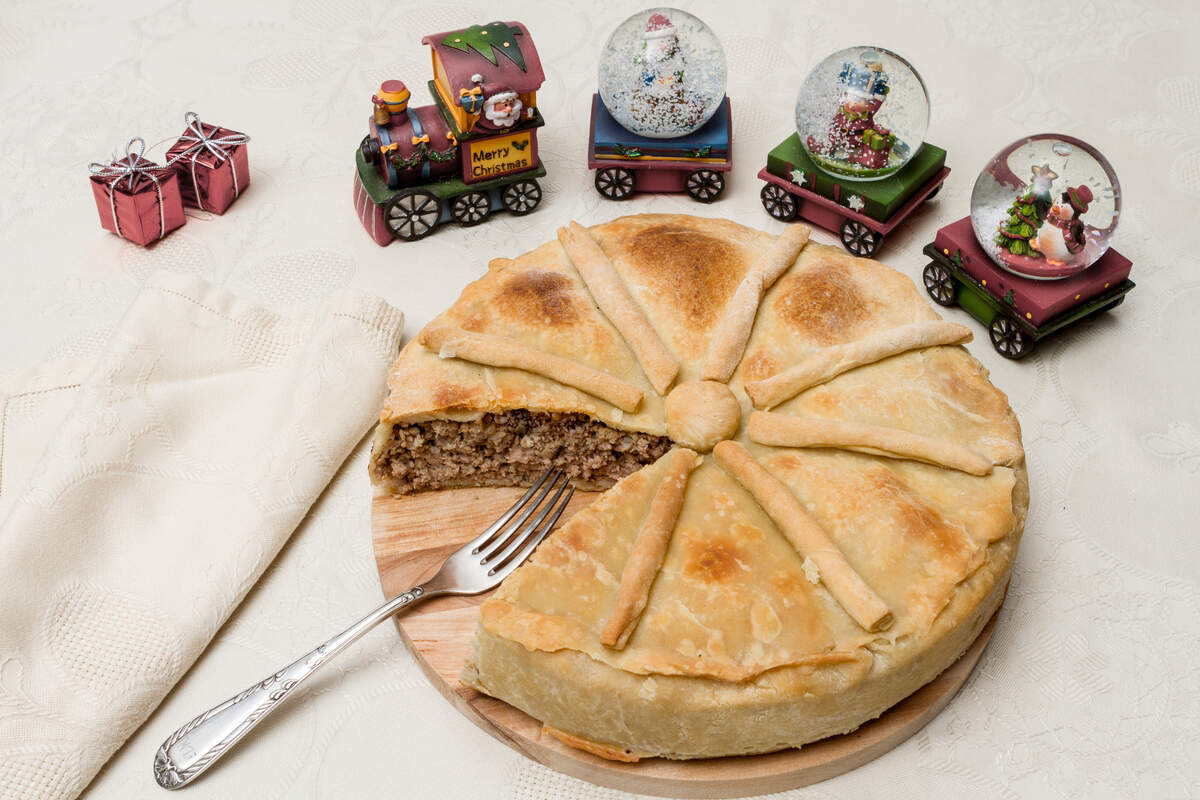
One reader, Jeanne-Marie Carr from the town of Anderson near Redding, said she took inspiration from the United States’ Francophone neighbor to the north. Carr’s family cooks tourtière, a Quebecois meat pie that varies by the chef.
Canadians, particularly those in Quebec, have historically made tourtière as part of a celebration called réveillon following Christmas Eve’s midnight mass.
Tourtière might be filled with ground pork shoulder in Montreal, or gamier meats in the country. It’s often stuffed with salmon along the Newfoundland coast. Allspice, cinnamon, cloves, and nutmeg are pretty ubiquitous seasonings, though some cooks add sage or ginger as well.
The meat is combined with mashed potatoes, then slid into a pie crust and baked. Served with a slightly acidic or fruit sauce to cut through the meat, potatoes and crust, it’s “one of Canada’s better contributions to the culinary world,” the Canadian Embassy’s then-executive chef told NPR in 2011.
A JAPANESE FEAST ON NEW YEAR’S DAY
Japanese American families around Sacramento uphold a holiday tradition as well — on New Year’s Day. The holiday is known as Oshōgatsu, while Osechi-ryōri refers to its accompanying feast.
A traditional Oshōgatsu involves walking from house to house, nibbling on sashimi or chicken teriyaki or inari from a central table at each one. There are usually sake toasts and shouts of “kanpai!” While all family members are typically expected to join, guests are welcome to the open houses as well.
Much of the food has a deeper cultural meaning that what hits the tongue. Lotus roots, for example, are served because their holes represent looking forward or back in time at the start of the new year.
Sushi is served in odd numbers, typically three or five pieces to avoid four (a Japanese omen of death). A mochi soup called ozoni is supposed to bring strength for the year to come, while two-layer mochi cakes called kagami are topped with an unpeeled tangerine for prosperity.
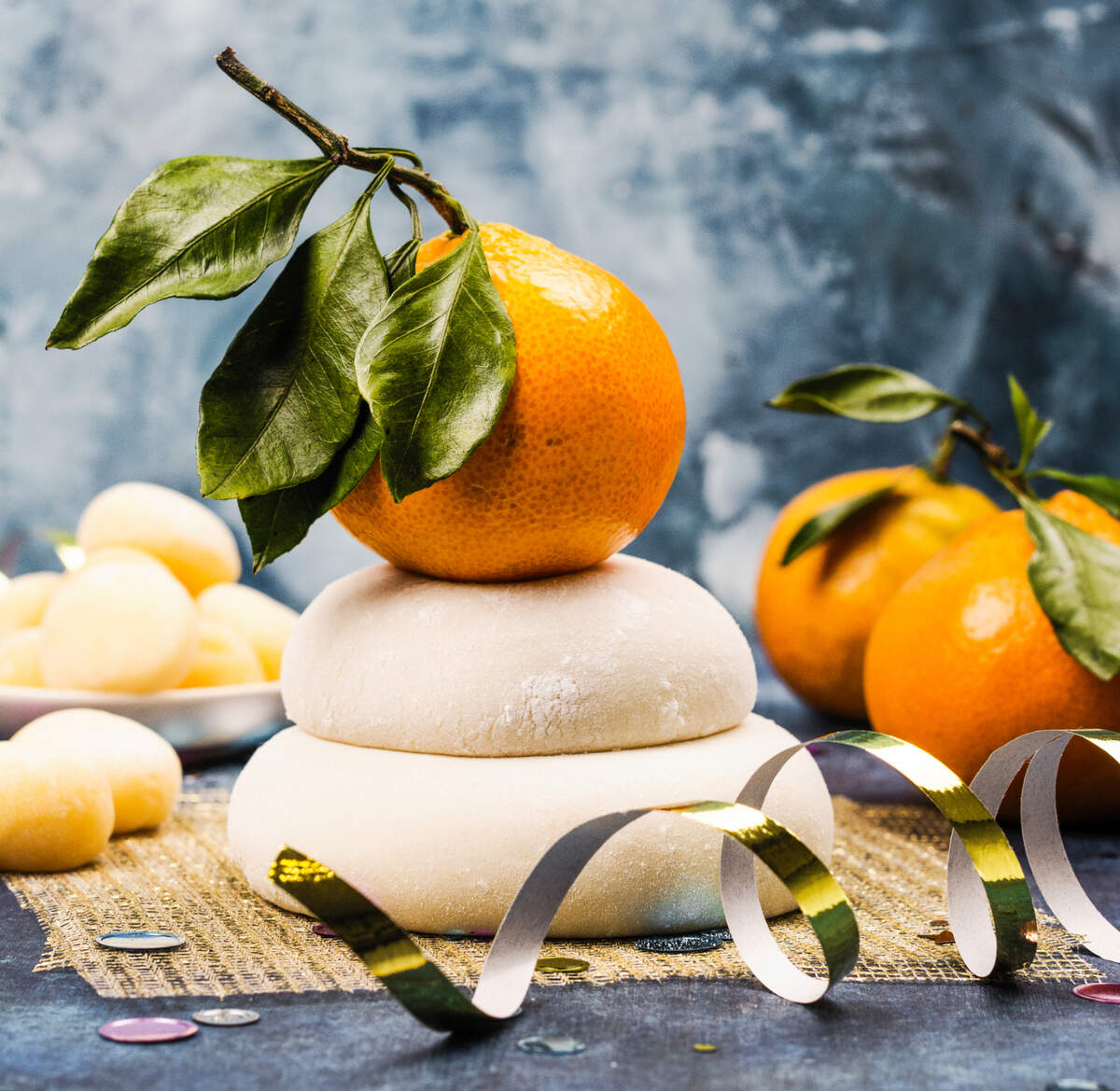
A host or elder typically needs to explain some of the significance, particularly as non-Japanese partners and mixed-race children join families. That’s typically Elk Grove resident Robin Ishikata’s job, though after 30 years of hosting, she’s paused Osechi-ryōri for the last three years due to the pandemic.
“It’s a melting pot, the next generation that’s coming up. Somehow I’m trying to explain to them their Japanese roots,” said Ishikata, 62.
“It’s respecting the elders and remembering those that have passed on. And we’ve got new ones that are only a year or two old, and I want to show them what Japanese New Year’s is because they’re the next generation.”
Japanese Americans even found ways to have Osechi-ryōri in World War II internment camps, when good food was hard to come by. It’s typically quite an extravagant spread: Ishikata’s grown children spend days helping her prep when they come home for the holidays.
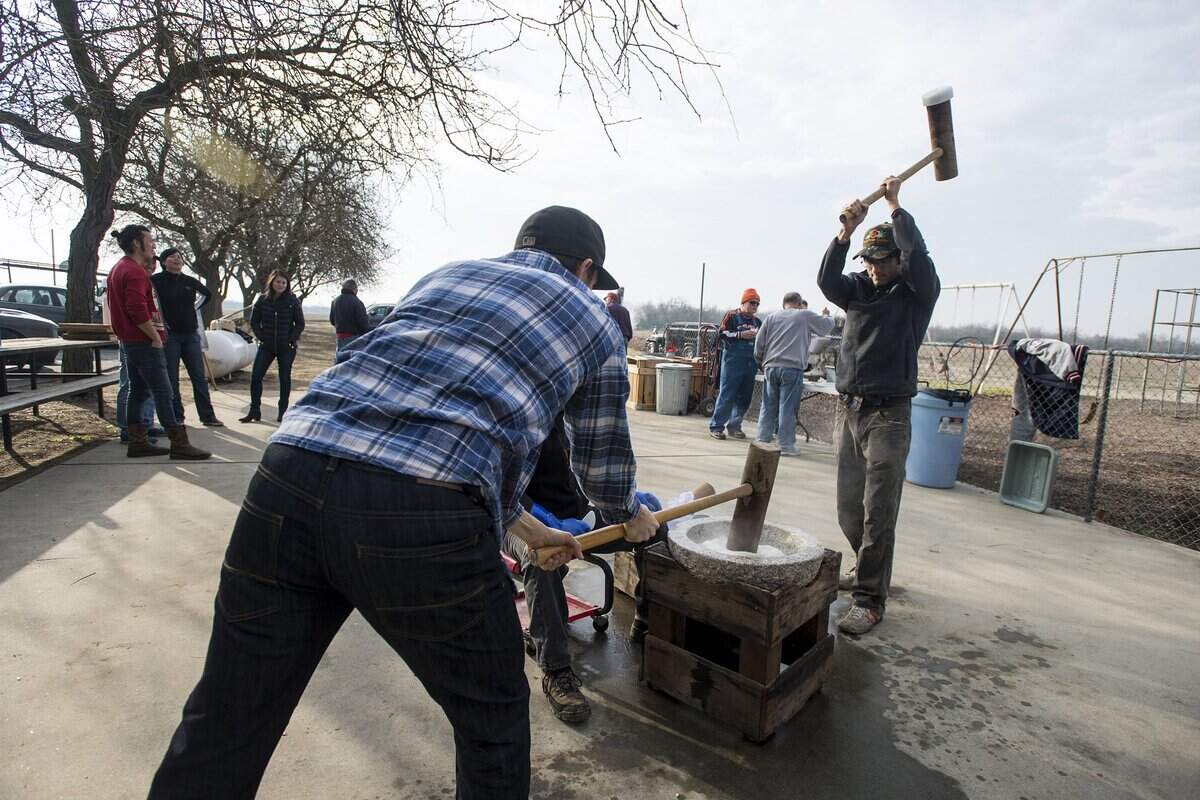
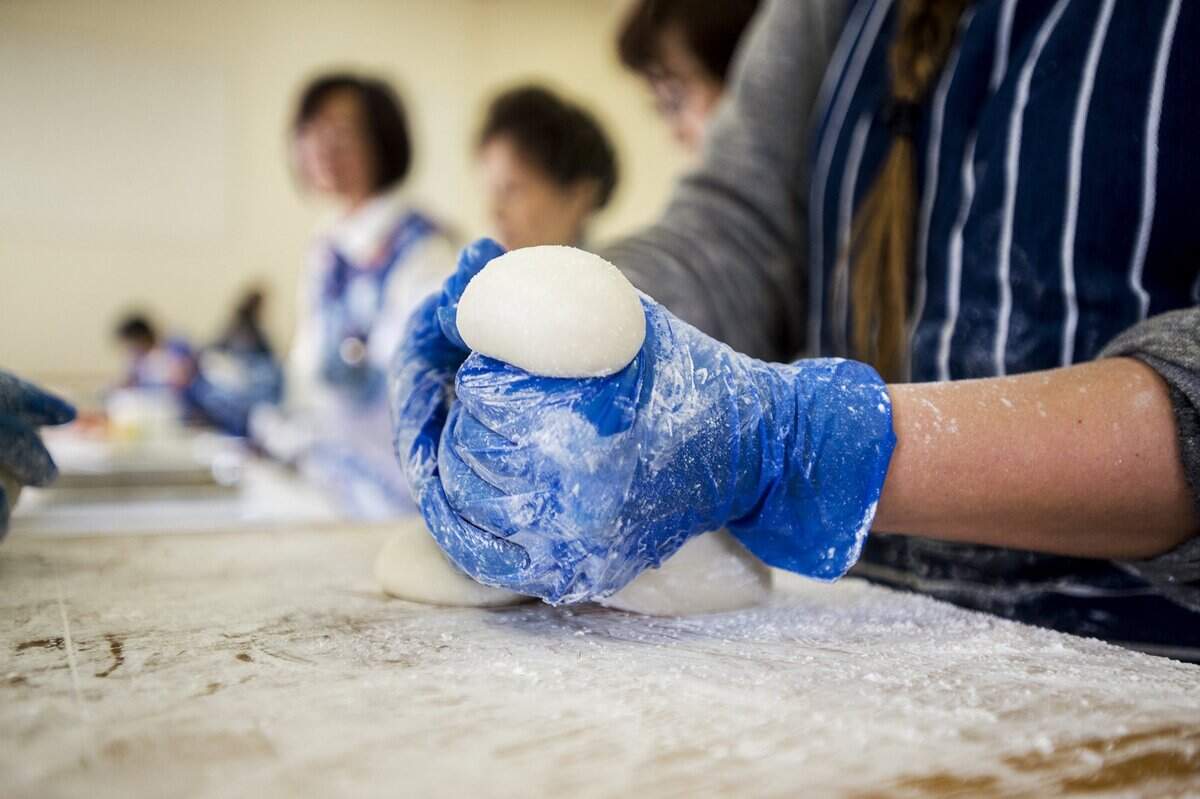
Some millennials and members of Gen Z want to simply pick up store-made food, Ishikata said. To her, though, cooking from scratch (as much as possible) is part of the tradition.
She’ll buy the necessary ingredients from Oto’s Marketplace in Land Park, then put her heart into whatever she’s making, upholding traditions that stuck with her from a young age.
“It didn’t matter if you partied hard on New Year’s Eve,” Ishikata said. “On Thanksgiving you’re thankful and eating turkey, Christmas is about gifts and giving things. But New Year’s, it was a time to celebrate. You’re normally celebrating health and wellness and peace. The dishes represent that.”