
Thanks to a Granite Bay fossil, we know our tall cup of joe dates back to when dinosaurs were grande
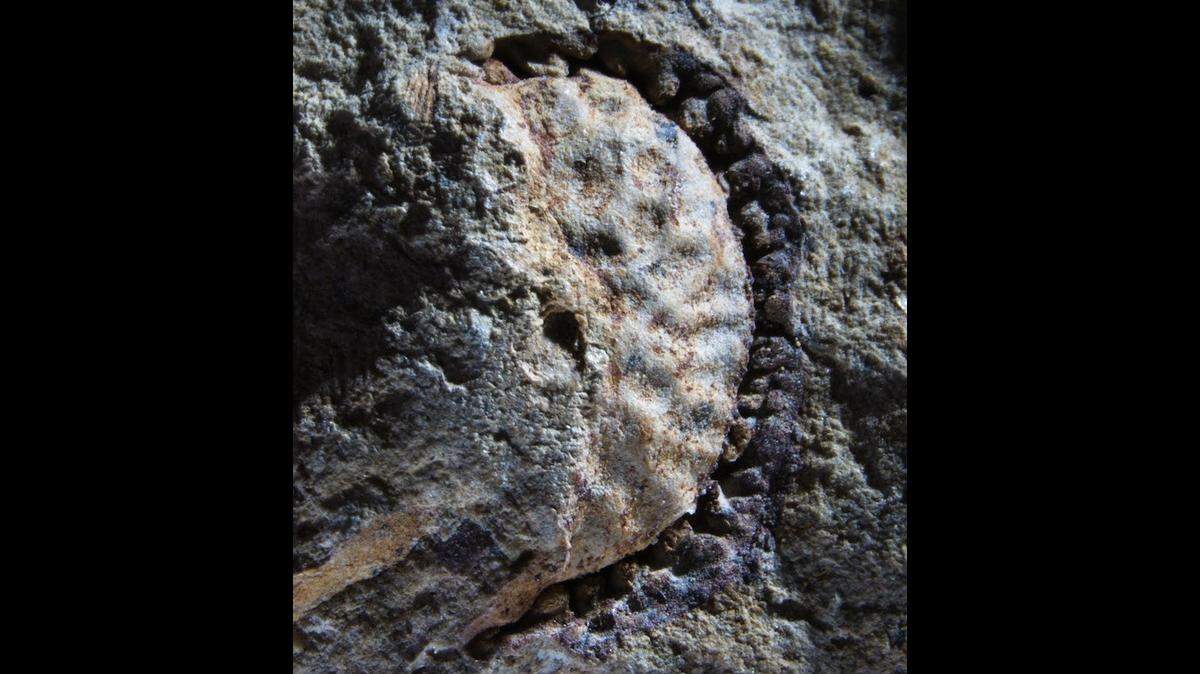
New evidence shows that coffee, potatoes, tomatoes and mint’s ancestral plants have their roots in the Cretaceous Period. And that conclusion is largely thanks to a fossilized fruit discovered in the dirt below peoples’ Granite Bay homes.
Brian Atkinson, an assistant professor of ecology and evolutionary biology at the University of Kansas and the KU Biodiversity Institute’s curator of paleobotany, recently published a study in the peer-reviewed scientific journal Nature Plants arguing as much.
The backstory goes: in the 1990s, construction workers unearthed a fossilized fruit while building housing in Granite Bay. Sierra College geology professor Dick Hilton and Rocklin paleontology enthusiast Patrick Antuzzi preserved the fossil in the college’s Natural History Museum, where it sat until Atkinson came looking.
The fruit belonged to an evolutionary branch called lamiids, which have about 40,000 species under them. Lamiid species include woody vines, as was found preserved in Granite Bay, as well as olives, chili peppers and many other foods we eat today.
Atkinson realized the flowered vine was from the Cretaceous Period, when triceratopses and tyrannosauruses walked the earth. He named the plant Palaeophytocrene chicoensis because it was found in geologic deposits from the Chico Formation that formed about 80 million years ago.
“Lamiids had been missing a really solid fossil record during the Cretaceous Period, so there was kind of an uncertainty as to how this group evolved. This is a really solid piece of evidence that they evolved this early, 80 million years ago,” Atkinson said.
What does all this mean? Your morning cup of joe, the mint that garnishes your cocktail, your French fries as well as your ketchup — all have roots in the Cretaceous Period, and managed to survive the natural disaster that wiped out larger living beings.
Atkinson’s discovery also indicated that Granite Bay was once a more jungle-like setting, because the closest relatives to vines such as Palaeophytocrene chicoensis are in more tropical zones today. Atkinson’s research team has found similar plants on the West Coast, he said, and expects to uncover more evidence around these parts.
“It’s pretty wild, and I think there’s going to be a lot more fascinating findings in the near future,” Atkinson said.
To see the famous fossil, visit the Sierra College Natural History Museum at 5100 Sierra College Blvd. in Rocklin.
What I’m Eating
If you’re a fan of abbeys and their ales, like me, you need to visit The Monk’s Cellar in downtown Roseville. Owner/beermaster Andy Klein has captured Belgian pub charm in his 8-year-old restaurant and bar, where daily rituals include brewing beer and baking soft pretzels.
Klein’s monastic-inspired beers can be bought as four-packs in cans or slugged down at the brick-walled restaurant, where decor consists of grain sacks, old whiskey barrels and views of brewing appliances. I downed the powerful Schellhous Stout ($8.50 for a 12-ounce pour, 10% ABV), named for one of Roseville’s founders, in hopes it would stave off some of the February chill.
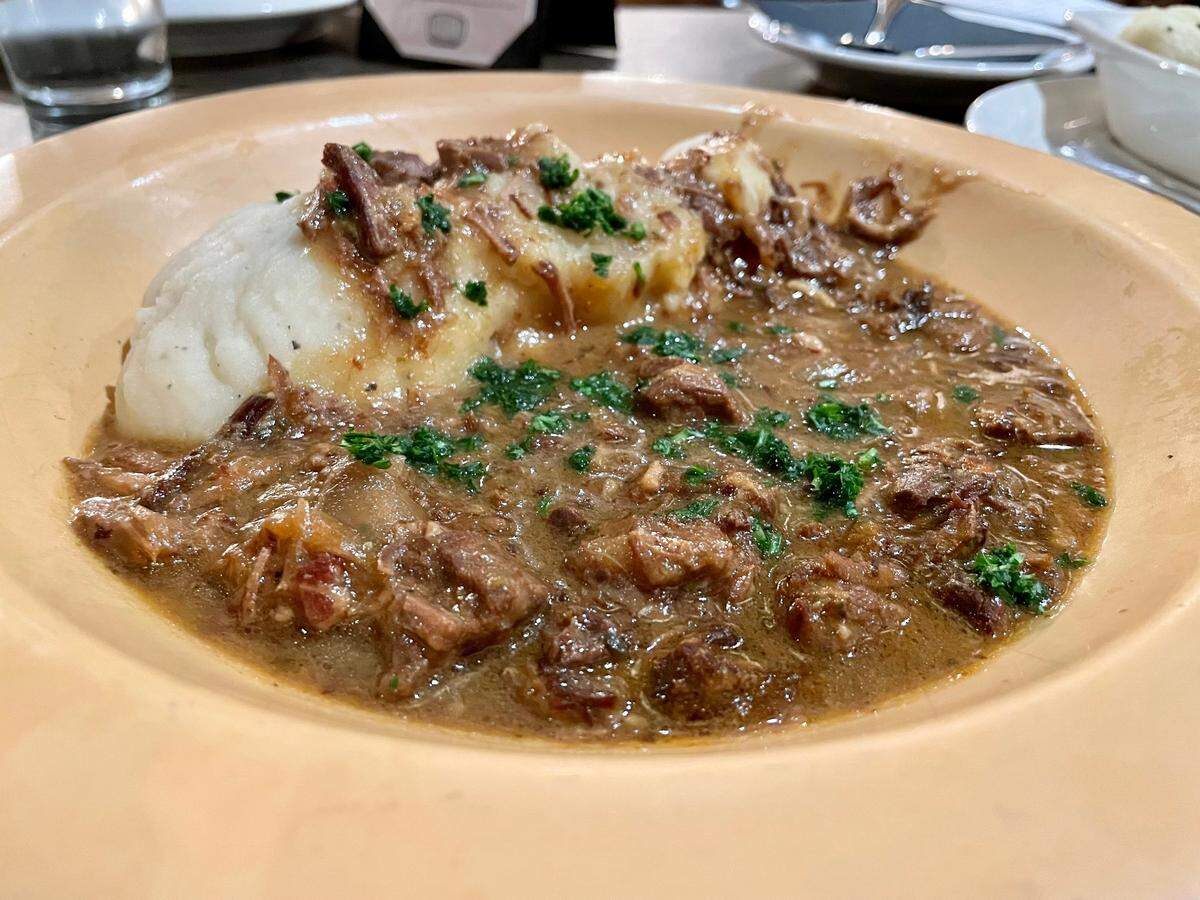
It helped some, as did carbonnade flamande ($18), a thick Flemish stew made with beef chunks, bacon, sherry vinegar and The Monk’s Cellar’s abbey ale. Lumpy mashed potatoes gave the stew some body and also made it similar to the cottage pie ($18), though the latter included ground beef.
The Monk’s burger ($16) was relatively lean, its liquefied Gruyere oozing out from the beneath the buttery brioche buns. I’m not sure if Lowbrau inspired the accompanying duck fat fries tossed in parsley, but it’s worth noting that The Monk’s Cellar serves sausages from the midtown Sacramento meatery as well.
Info
Address: 240 Vernon St., Roseville.
Hours: 11:30 a.m.-9 p.m. Tuesday-Thursday, 11:30 a.m.-10 p.m. Friday and Saturday, 10 a.m.-3 p.m. Sunday, closed Monday.
Phone Number: (916) 786-6665
Website: https://monkscellar.com/
Drinks: Full bar, including beers brewed in-house and an extensive whiskey list.
Animal-free options: It’s meat-centric, but there are salads, veggie boards and vegan burgers that use Beyond Meat patties.
Noise level: Conversations ricochet off cellar walls, creating a fairly loud environment when busy.
Openings & Closings
- A new rooftop brunch spot is coming to the Hardin on 7th and K streets this summer. Morning After, as Nick Cordano’s restaurant and bar is known, will be able to seat 72 people on its second level and 126 on a rooftop patio overlooking Golden 1 Center.
- Midtown Sushi, best known for its wealth of vegan rolls, has shut down at 2801 P St. in midtown Sacramento. Its place will be taken by Hidden Dumpling House, a Chinese restaurant that first opened in Elk Grove last April, owner Danni Kan told me in an email.
- Two long-closed favorites reopened this week with some changes: Madar Afghan Food & Bakery in Arden Arcade, and La Huaca in Roseville. The former has trimmed its fusion-friendly menu to focus on naanwiches and chicken with waffle fries, while the Peruvian restaurant in Placer County has a new home at 1850 Douglas Blvd., Suite 600.
This story was originally published February 10, 2023 at 5:00 AM.