
Crispy pork belly, lumpia and halo-halo have customers lining up on Broadway
AI-generated summary reviewed by our newsroom.
- Spoon and Fork brings Filipino comfort food to Curtis Park with house-made dishes.
- Silog plates, lechon kawali and halo-halo anchor a menu rooted in family recipes.
- Owners Joanne and Ray Suavillo blend family recipes with regional influences.
One couple found a gap in Sacramento’s food scene and filled it with lechon, halo-halo and flavors from their home kitchen.
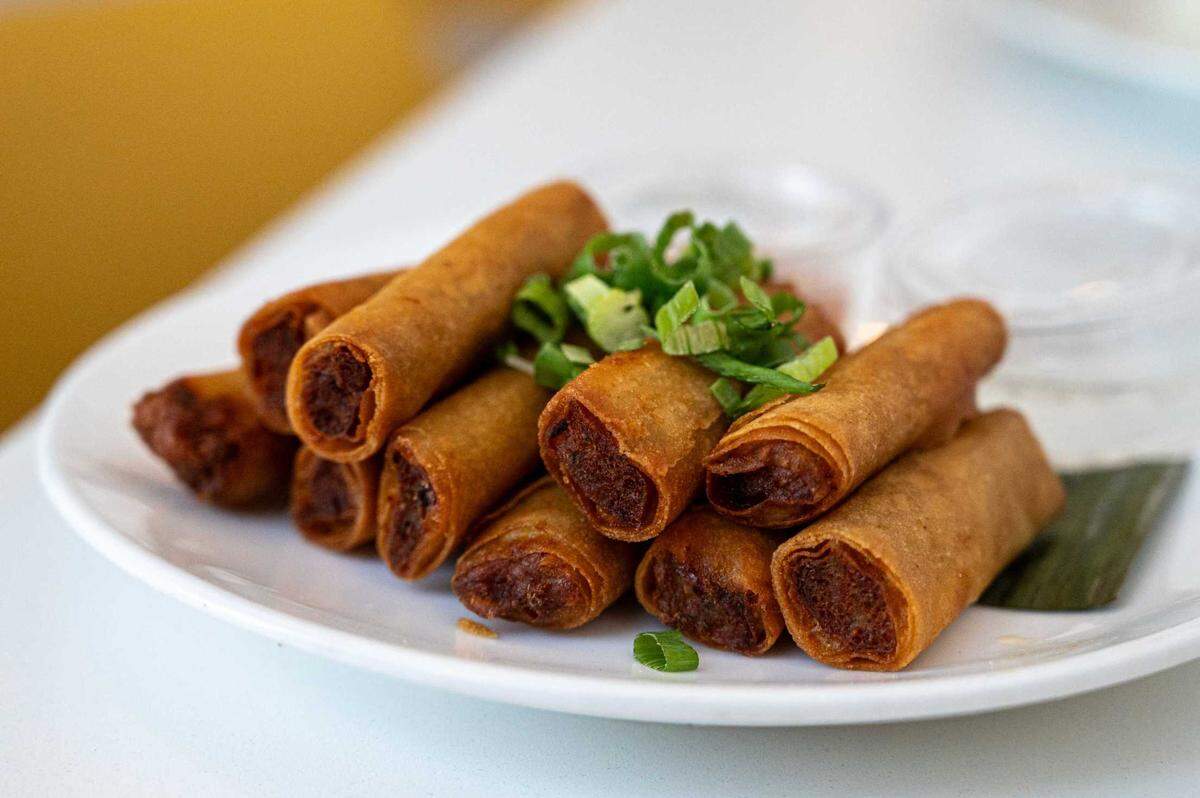
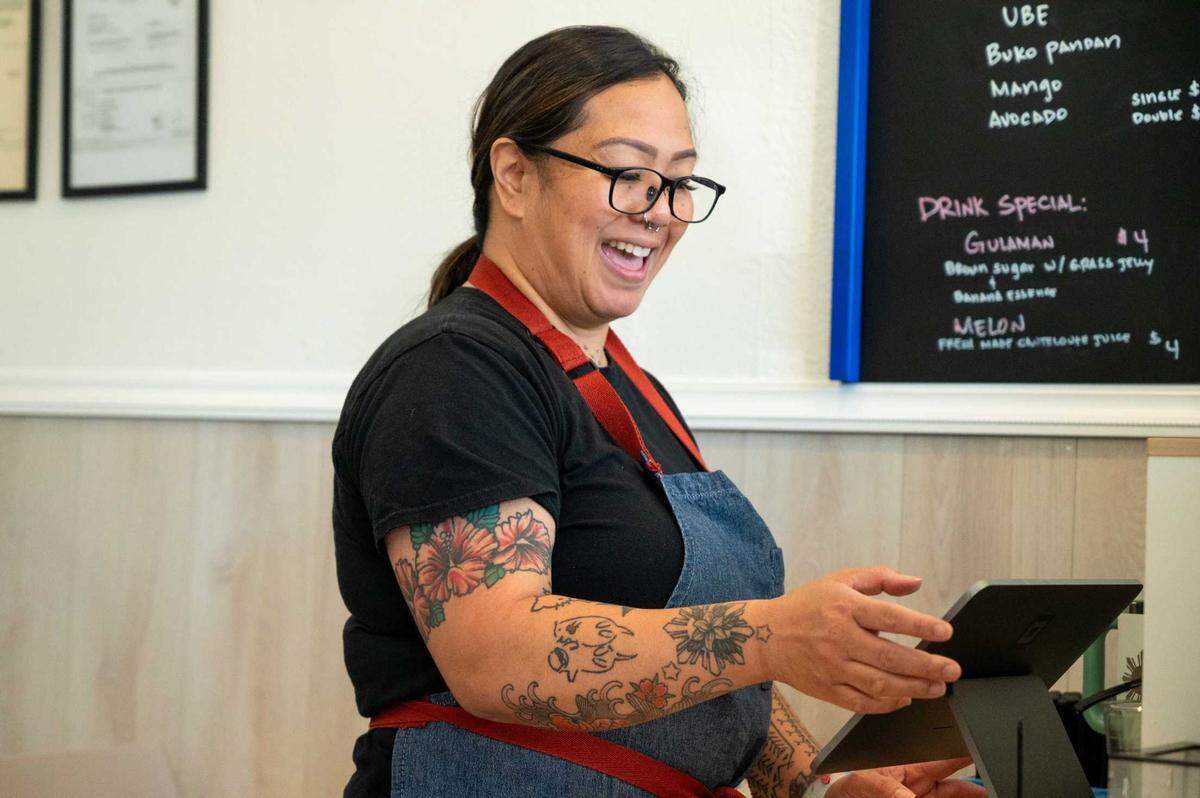
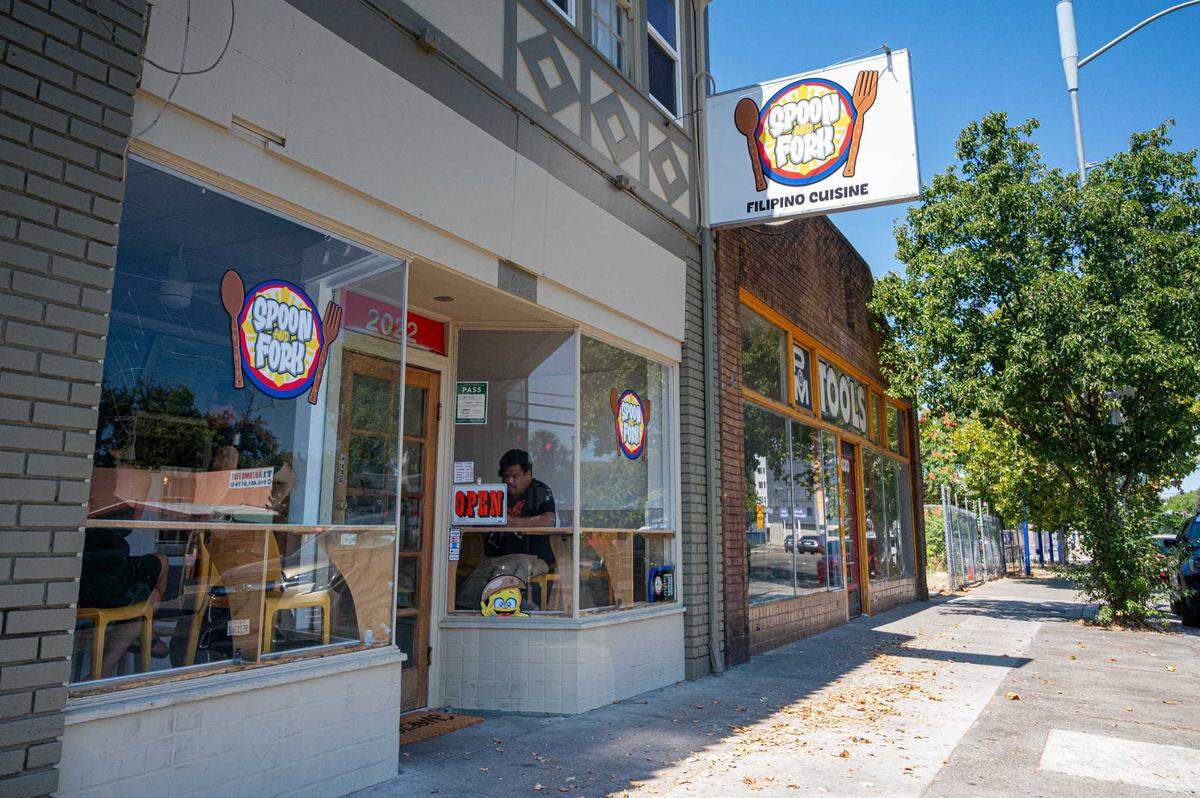
Longtime operators of the Lumpia Truck, Joanne and Ray Suavillo, soft-opened their first brick-and-mortar Filipino Restaurant, Spoon and Fork, on the Broadway corridor. Since May, the Suavillos have served up traditional Filipino dishes like tapsilog and lechon kawali, and new inventions like the sinigang-flavored chicken wing, at 2022 Broadway.
“There’s not enough Filipino representation for us,” Joanne Suavillo said. “We’re happy to be part of that representation, at least here for Sacramento.”
For the past 13 years, the Suavillos have owned the Lumpia Truck, originally launched as Wandering Boba. The restaurant’s menu draws inspiration from the meals they grew up eating, as well as recipes Joanne Suavillo developed while raising their family.
“It’s pretty much the menu in our house,” Ray Suavillo said.
Filipino home cooking
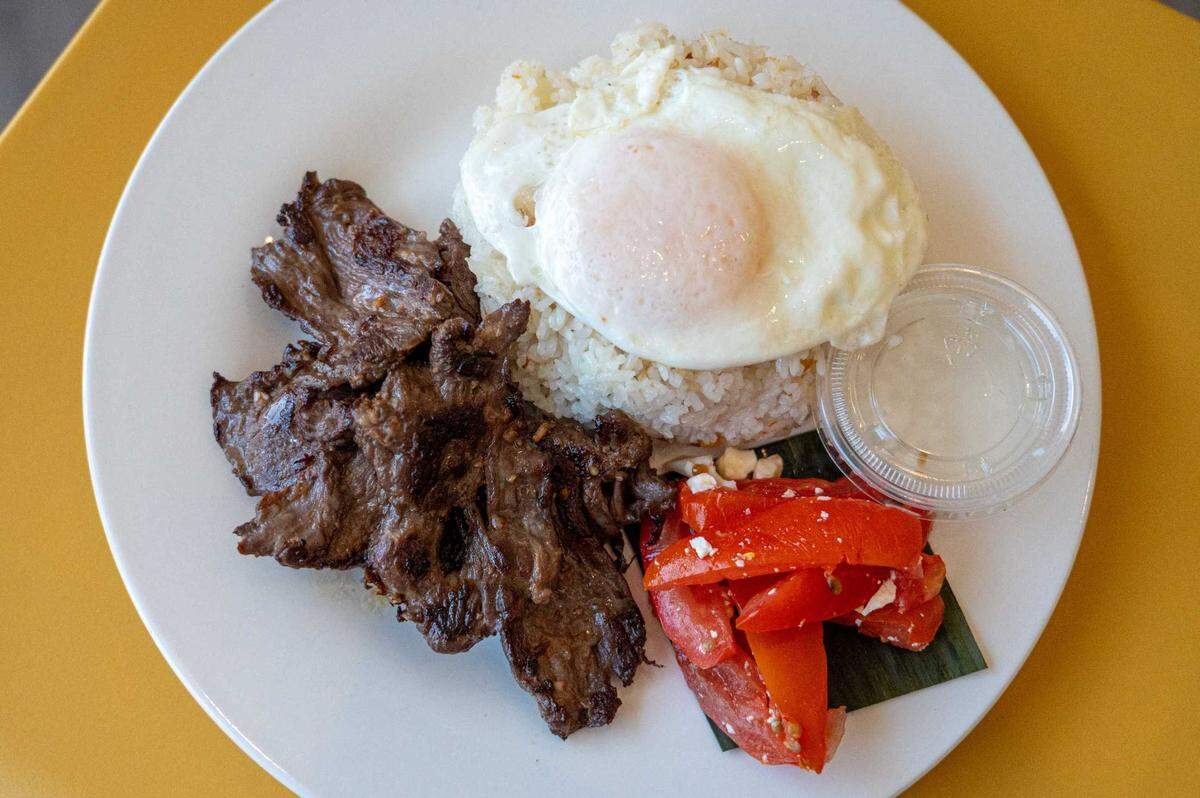
At the heart of Spoon and Fork’s menu are silog plates, a classic Filipino breakfast dish consisting of sinangag, garlic-fried rice, and itlog, or egg, paired with various proteins. The tapsilog ($15) features tapa, marinated sliced beef, served with tomatoes and vinegar. Other silog combinations include tocino, a sweet and savory red pork, Spam and longanisa, Filipino sausage.
“Silogs, for us, are always a comforting food,” Joanne Suavillo said. “You can’t go wrong with egg, rice and meat.”
The lechon kawali ($16), a deep-fried marinated pork belly dish, is served with rice and atchara, pickled carrots and bell peppers that offer a bright, acidic contrast.
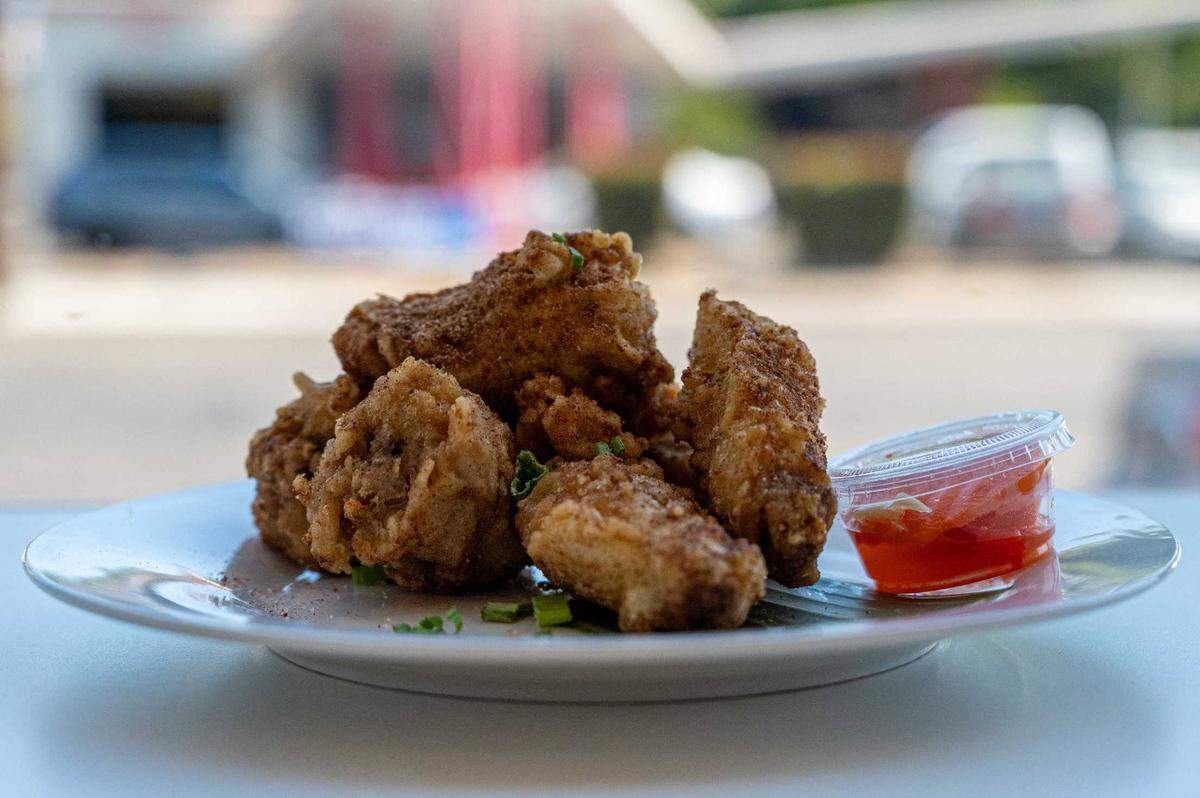
Something you wouldn’t find in other Filipino restaurants are the sinigang chicken wings ($13), which deliver the tangy, tamarind flavor of sinigang, a sour soup, in a crispy, shareable appetizer. The wings are seasoned with a house-made spice blend featuring tamarind, onions and tomatoes.
“I wanted to keep the main menu, which is the silogs, our rice plates and lumpia, as traditional as possible with my own flair to it,” Joanne Suavillo said. “But I put wings because it’s a recognizable food item for those who aren’t familiar, coming into a new food culture.”
Joanne Suavillo said that, though some customers think the wings are made with a store-bought sinigang mix, a pantry staple in many Filipino homes, she typically crafts her recipes from scratch.
Grilled peppery pork tossed with onions, jalapenos, chicharon and calamansi juice makes the sisig rice plate ($16). Topped with a runny egg yolk, the dish is spicy, citrusy and filling.
Joanne Suavillo said while traditional sisig is made with the head, snout and ears of the pig, Spoon and Fork’s version uses marinated pork chop instead.
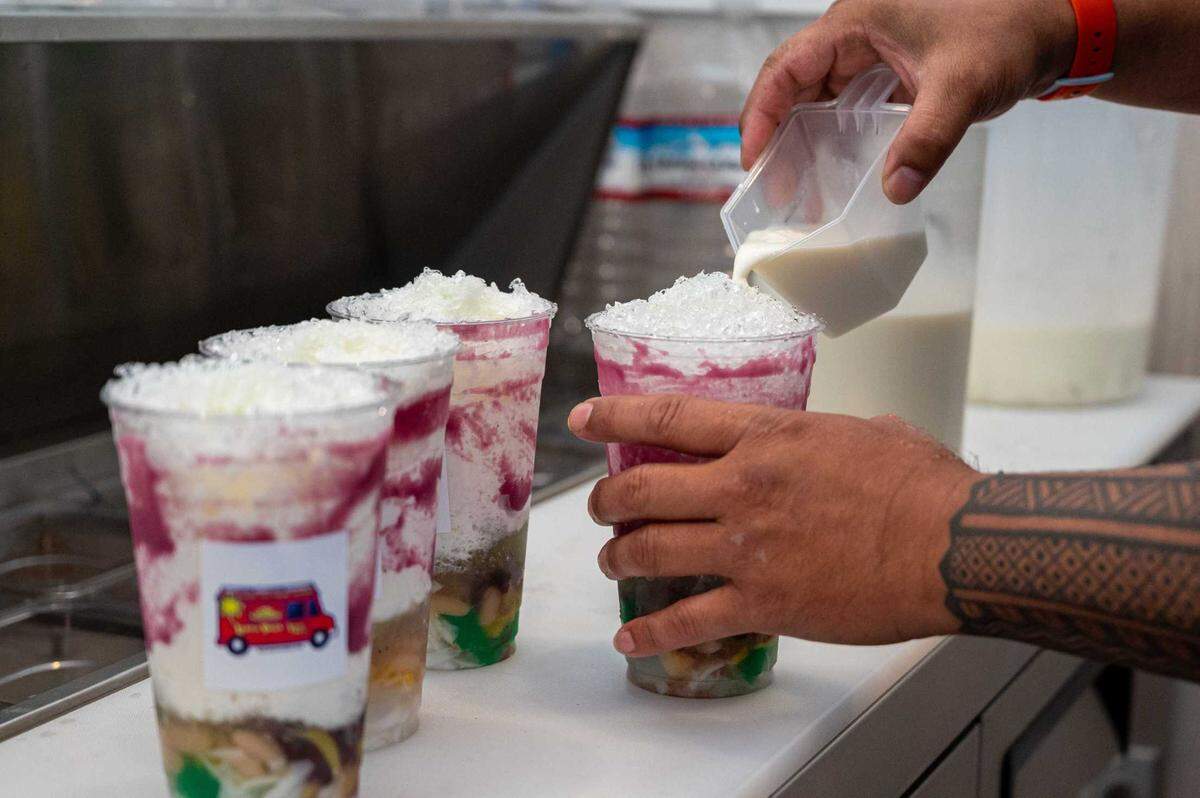
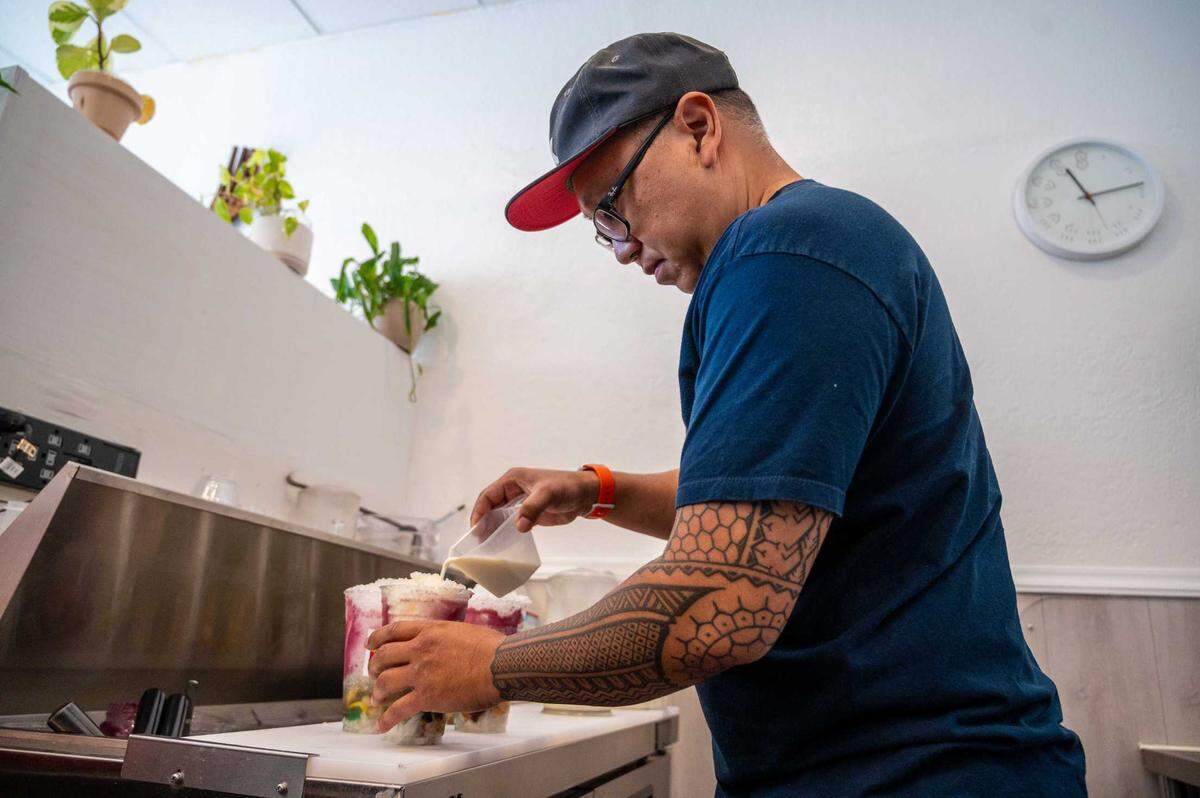
For dessert, customers can try halo-halo ($9), a shaved ice dessert layered with jellies, fruit, beans and Magnolia ice cream. Ray Suavillo said he blames his heavy-handed scoops on his time working at a Häagen-Dazs shop.
“We’re using Magnolia ice cream. I think it makes it more like home,” Ray Suavillo said. “The flavor and texture help bring that original taste back.”

Philippines to Sacramento
Joanne Suavillo grew up in a catering family, learning to make lumpia from scratch by age 10.
She said she remembers wrapping rolls and hand-chopping carrots, onions and garlic — a method her father insisted on over using food processors..
“Our menu resembles both our sides of the family, half my dad and half his grandma,” Joanne Suavillo said.
Joanne’s parents immigrated to the United States in the late 1970s, when she was just a year old. Ray moved to the U.S. at age 4, returning to the Philippines briefly to attend high school.
The couple moved to Elk Grove from San Francisco in 2001 to raise their family, where Joanne continued her family’s tradition by selling lumpia and Filipino desserts locally.
Ray Suavillo said the number of Filipino restaurants is disproportionate to the population of Filipinos in the capital region.
“You would think with so many Filipino people in the region that there would be more options, more restaurants, but there just isn’t,” Ray Suavillo said.
Joanne Suavillo said Broadway and the surrounding area house a diverse variety of restaurants, and the only culture missing was Filipino food.
“We’re grateful for all the support that we’ve been receiving so far from our immediate neighborhoods around us, but also beyond,” Joanne Suavillo said.
Customers often line up outside Spoon and Fork 15 minutes before it opens. Although indoor seating is limited, the restaurant sees steady takeout traffic and guests are given pagers to help minimize crowding inside.
“If it’s halo-halo that is making you want to come in, or the wings,”Joanne Suavillo said. “Now your palate has tasted at least the beginning of what Filipino food is like, and then you’ll venture out and try more.”
Mounted on the wall is a large wooden spoon and fork, a common decoration in Filipino homes, symbolizing hospitality and togetherness. The restaurant’s name is also a nod to the Philippines being one of the few Asian countries where meals are eaten with a spoon and fork rather than chopsticks.
Spoon and Fork is open daily from 11 a.m. to 3 p.m.
This story was originally published July 20, 2025 at 10:49 AM.