This artisan bakery makes whole-grain bread and pastries at the end of the world
It’s a long way to Oregon House, an unincorporated community about a half hour east of Marysville in the hinterlands of Yuba County. It’s even longer to Artisan Lavinia.
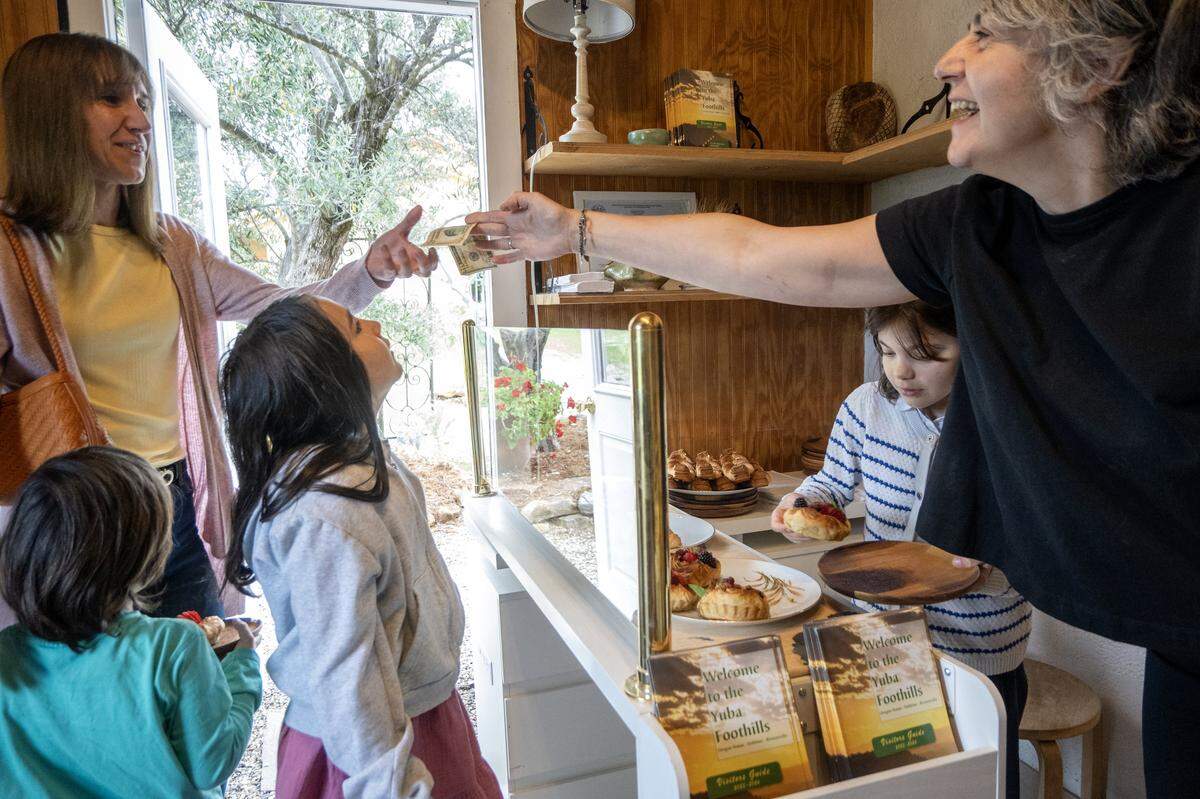
And yet, this tiny bakery manages to draw a crowd every Saturday morning. When you see the baked goods, you’ll understand why.
Owner Dorian Matei launched the bakery in 2015. A soft-spoken native of Romania, he was disappointed by the difficulty finding high-quality, nutritious bread. He was first inspired by a chapter on breadmaking in Michael Pollen’s book “Cooked.” And then he met Dave Miller, who runs Miller’s Bake House, similarly nestled in a remote foothill town, Yankee Hill, near Chico.
“He’s a mentor for me. I went to see him, and so he introduced me to not only organic grains, not only whole wheat, but milling your own grains and wood-fired baking. So that created an environment that was truly inspiring for me,” Matei said.
Matei began seeking out local grains, always keeping an eye on sustainability.
“My main source is Pleasant Grove Farms, which is basically 20 minutes from Sacramento. It’s a very beautiful third generation farm that aligns very well with our vision,” he said.
Pleasant Grove’s grains are organic and small-scale. They are very conscious of the environment, creating their own fertilizers and rotating crops to keep from depleting soil nutrients.
“I have done a lot of experimentation with them, what I came to understand with time is that, I would say, the main factor in nutrition and flavor of the bread is not so much the variety of wheat, but how that wheat was grown,” Matei said. He also sources from Adams Grains in Yuba City.
“They’re not farmers. It’s more of a green broker. It gives me access to certain varieties of wheat that Pleasant Grove cannot grow,” he said.
Matei mills the grains by hand; he recently acquired a new mill thanks to a grant he received from the U.S. Department of Agriculture. All his breads and pastries are made with the whole-grain flour he mills and baked in a wood-fired oven he built.
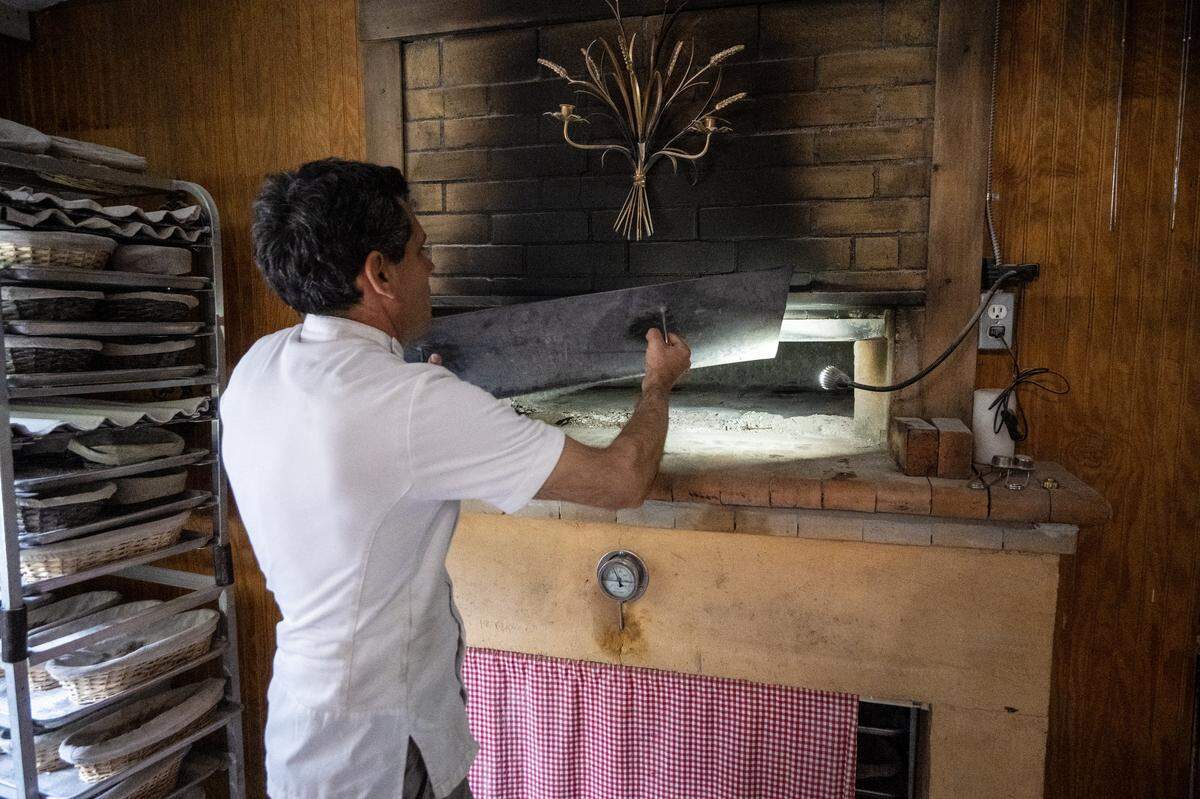
The oven is a metal chamber encased in a brick structure. Each night he fills the oven with wood and lights it; early the next morning he sweeps out the ashes. The residual heat lasts through the day. Not only are all the bread and pastries baked in the oven, but it’s also where they cook the family meals.
Being whole-grain, Matei’s bread is both refined and rustic. Despite the heft of the flour, he manages to get good oven spring, when the bread puffs up significantly during the first half of the bake time. Because the bran is intact, the bread has a noticeable but not unpleasant mild grit.
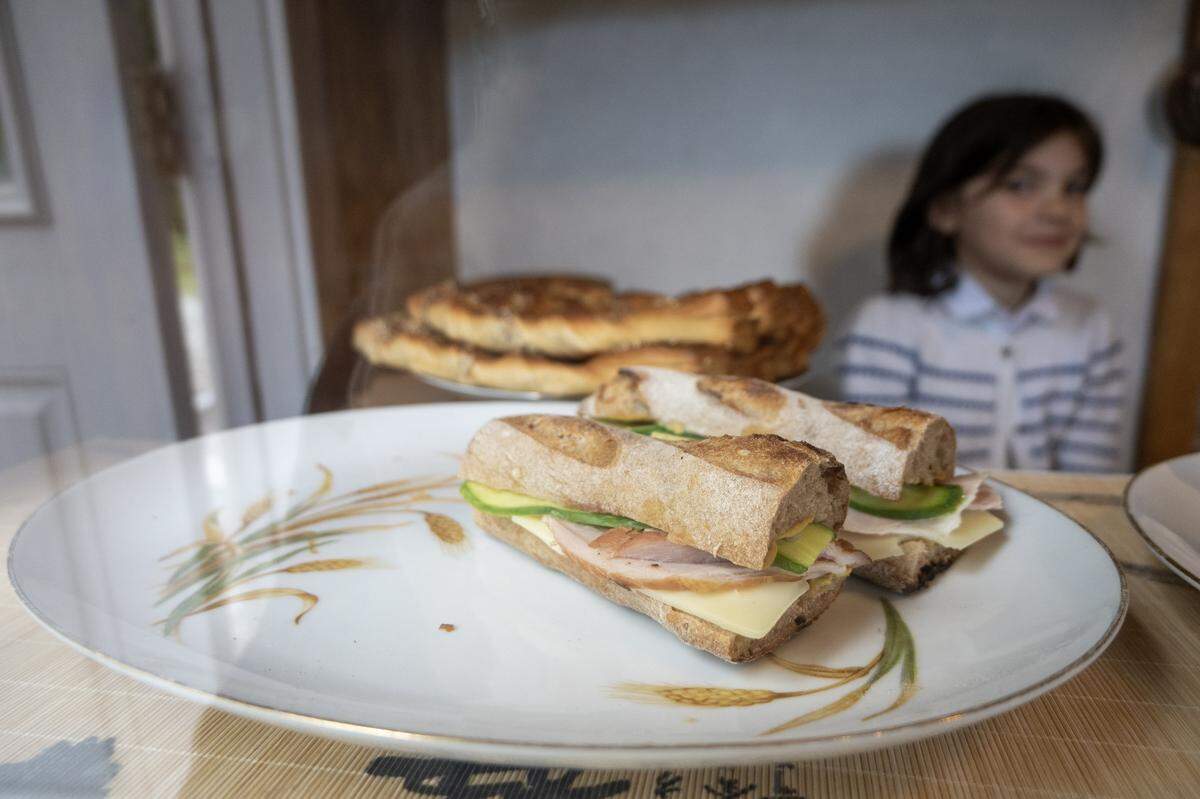
Bread was his initial obsession, but he did eventually get into pastries as well. His interest was piqued after a conversation he had on a plane while returning from a trip to Italy.
“I sat next to an interesting gentleman. He was a kind of advisor to the European Union on culture and traditions. We chatted, and he asked me, ‘What do you do?’ I said, I bake bread. And he said, ‘So you mean only bread, like no pastries?’ No. He was so surprised that it made me think of it and thought, well, why don’t I try it?” Matei said.
“So I went into this phase of experimentation that lasted maybe six months to a year, and eventually came out with the idea that I do like making all sorts of pastries and lamination and French baking techniques. And so we added this line of pastry to our offering, which was very well received. So it’s not only local grains anymore. Now we’re talking about local fruits and vegetables. And to me, that’s very meaningful,” he said.
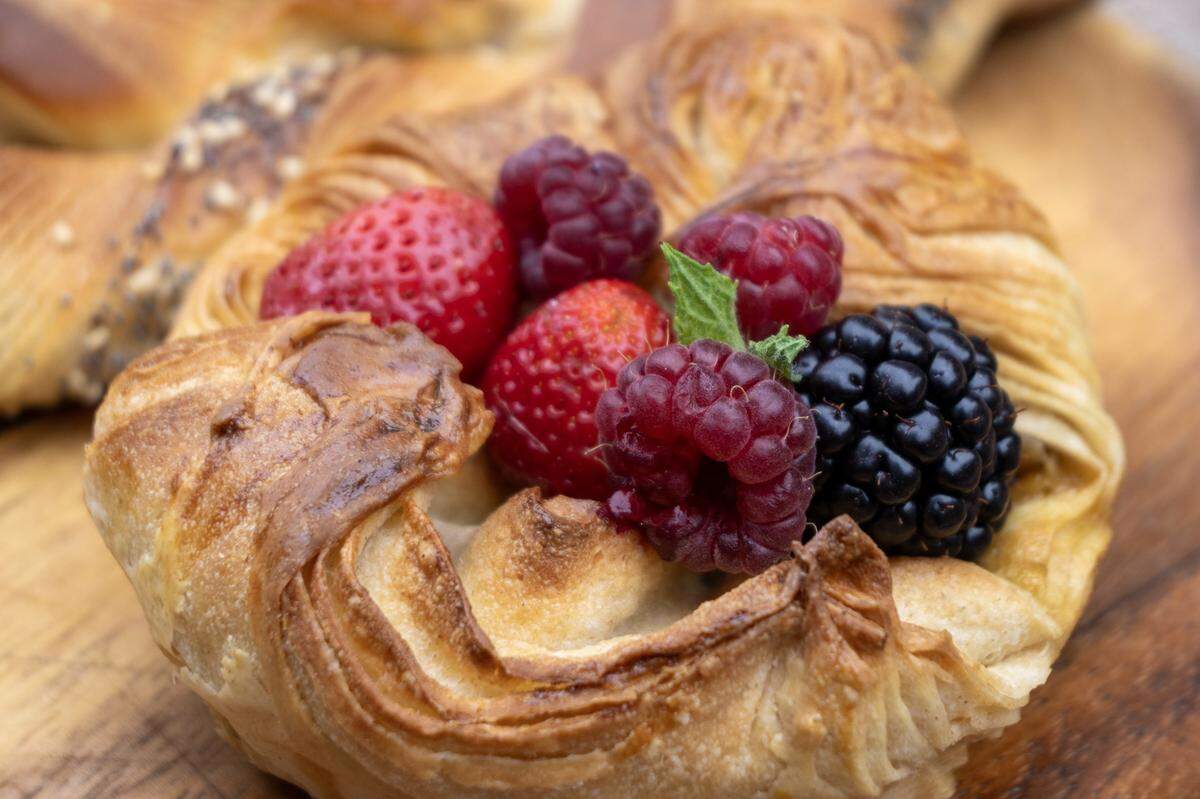
Matei’s lamination demonstrates a level of skill that usually takes years to achieve, with exquisite, delicate layers of dough burnished brown by the oven. He sources fruits for his pastries from small, local farms in the foothills.
“What I’ve come to realize is that the foothills have a very special terroir. In the valley, you can get a lot of volume of crops, because there’s more soil, there’s more water. In the foothills, its conditions are harsher. You have a lot less topsoil. Winters are colder, nights are colder, and so on. But somehow, this stress makes the fruits and vegetables more flavorful and more tasty,” he said.
Matei and his wife Carmina do grow some things themselves, just a few specialty crops. Some are specifically for use in Carmina’s apothecary products, which they also sell. For example, they grow bergamot, a citrus fruit that is not eaten, but the zest is used for its aromatic qualities. You may recognize it best in Earl Grey tea.
Despite its remoteness, Artisan Lavinia has a strong and loyal following. Some are locals. Oregon House is most famous for being home to Fellowship of Friends, a spiritual community that seeks the divine through appreciation of the finer things such as cuisine and the arts. However, Lavinia’s reputation has spread far and wide.
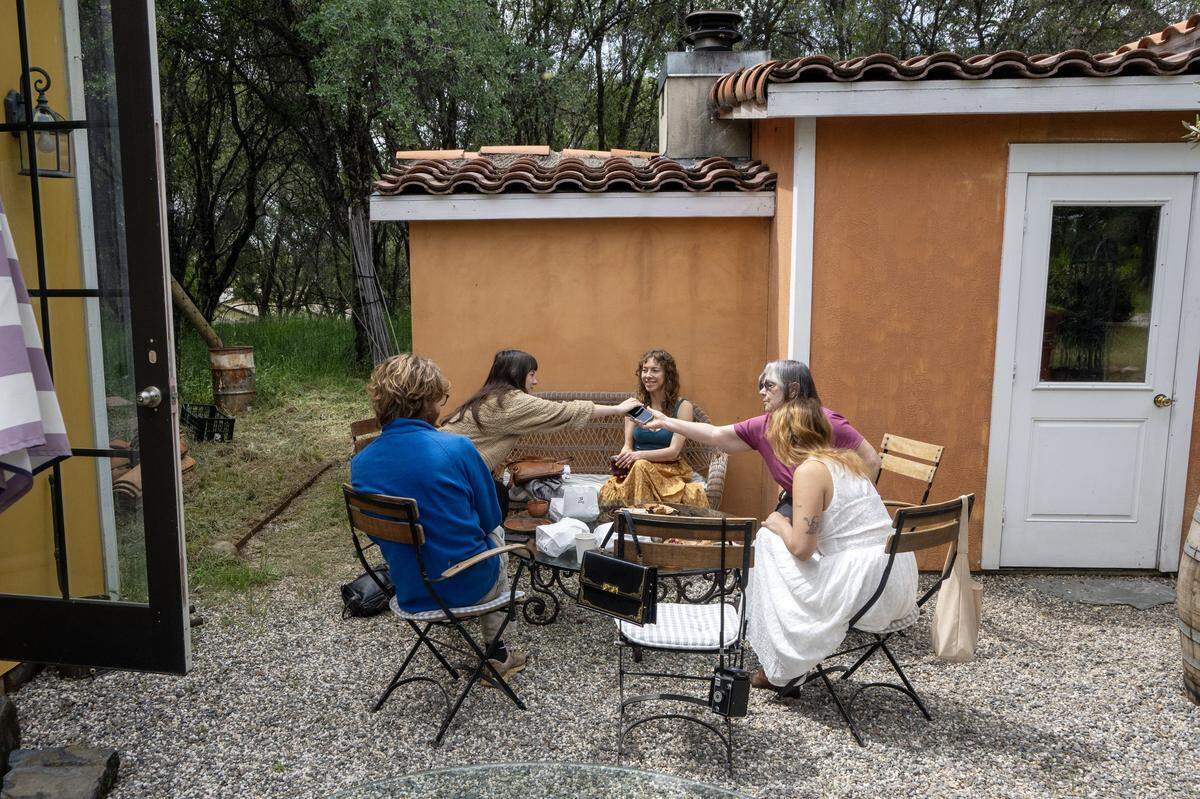
“I have people drive from Reno, from Sacramento, from the Bay Area, from Lodi. For me, it’s very touching. And I really cannot believe that somebody would drive for three hours just to come to a bakery. But I understand it’s more than just a piece of bread. Basically, people come and sit down, and it’s a very kind of tranquil environment,” he said.
This story was originally published May 13, 2026 at 6:00 AM.