
California private prison ban struck down in court. What’s next for immigration facilities?
This story is part of the Central Valley News Collaborative — a bilingual, community journalism project funded by the Central Valley Community Foundation and with technology and training support from Microsoft Corp. The collaboration includes The Fresno Bee, Valley Public Radio, Vida en el Valle, Radio Bilingüe and the Institute for Media & Public Trust at Fresno State.
The Ninth Circuit Court of Appeals in a split decision on Tuesday curtailed a California law that would have banned private detention centers in the state, ruling that the legislation should not go into effect because it impedes on the federal government’s ability to enforce immigration policy.
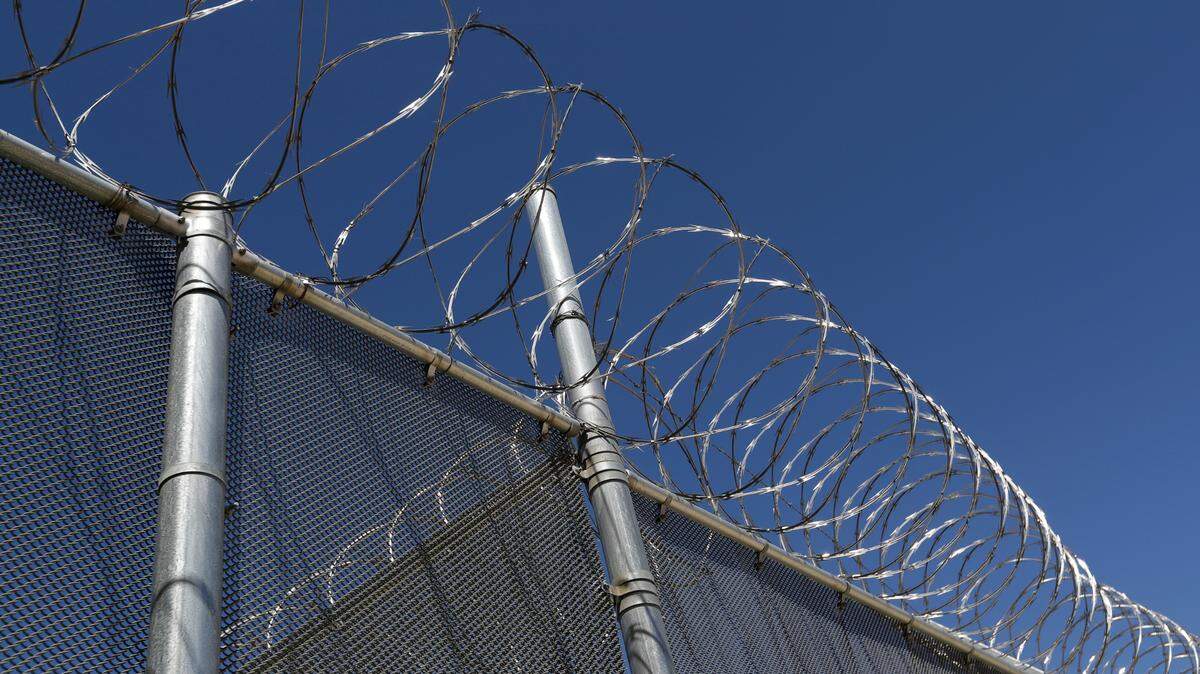
Prior to the federal appeals court’s decision, private immigration detention centers in the state — including at least two in Kern County that are owned and operated by The GEO Group — would have had to close when the prison companies’ contracts expired. The ruling means U.S. Immigration and Customs Enforcement can continue using for-profit detention centers in California to hold immigrants until they are released or deported.
The court’s ruling is the latest chapter in a two-year saga over AB 32, which would have phased out the use of private prisons and immigration detention facilities by 2028. A U.S. District Court judge largely upheld the law in October 2020, a year after the bill was signed into law. But in the decision issued Tuesday, two judges on the appeals panel appointed by President Donald Trump — Judge Kenneth K. Lee and Judge Bridget Bade — reversed the district court’s opinion and directed it to block the law.
The state overstepped its jurisdiction by “doing more than just exercising its traditional police powers,” wrote Lee in the majority opinion.
“California has not historically regulated the conditions of detainees in federal custody, and in particular those housed in immigration detention centers,” Lee wrote. “In short, AB 32 did not regulate a field which the states had traditionally occupied.”
The sole dissenter, Judge Mary Murguia, argued that the law mentioned “nothing about immigration” nor the federal government. She said it was within California’s powers to regulate the health and safety of immigrants held in detention facilities.
“There was no justification for treating AB 32 as a regulation of immigration rather than one of health and safety,” wrote Murgia, who was appointed by President Barack Obama.
California vows to fight court’s decision on private prison ban
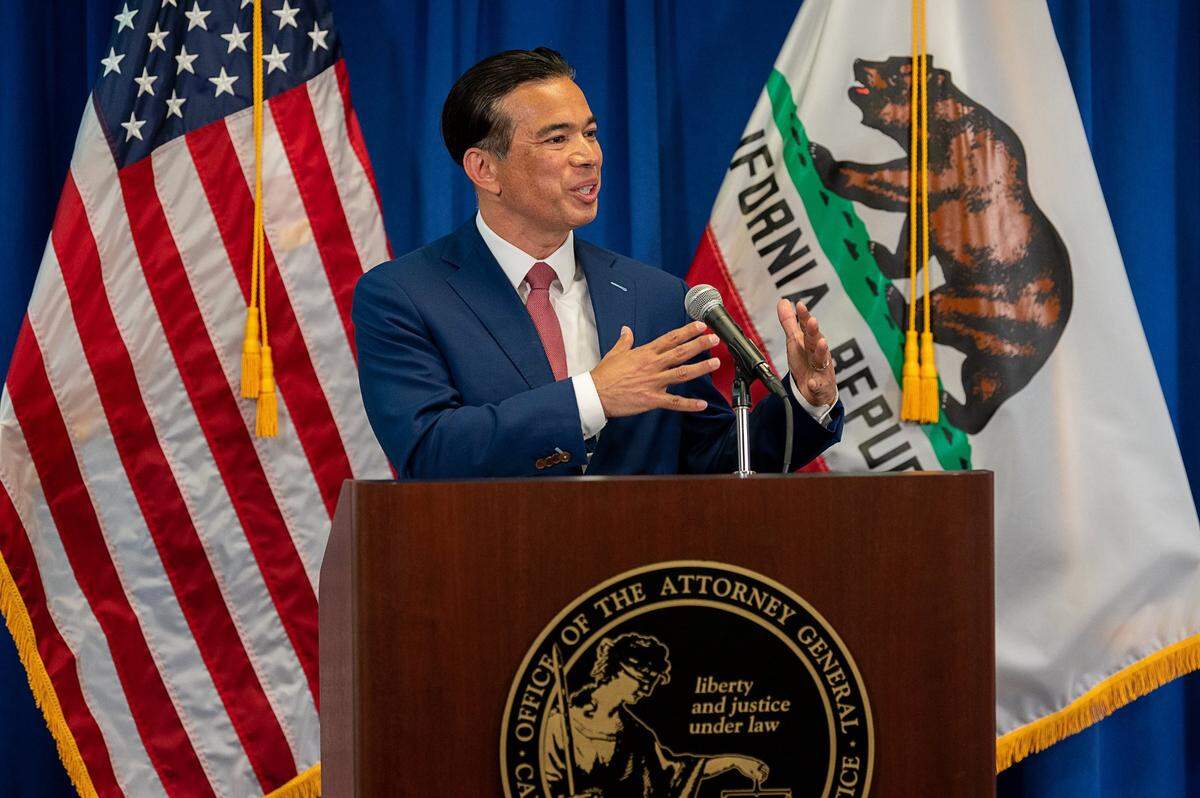
Attorney General Rob Bonta authored the first-of-its-kind measure when he was a state legislator representing Alameda, Oakland and San Leandro, in response to reports that the private companies running the detention centers subjected immigrants to substandard conditions, abusive treatment and inadequate medical care.
Gov. Gavin Newsom signed the legislation in 2019.
Following Tuesday’s ruling, Bonta issued a statement asserting that the state was “committed to protecting the health and safety of all people” and would “fight” the decision.
“Prisons and detention centers shouldn’t be places of profit,” he said. “We will continue the fight to ensure the dignities and rights of everyone in California are protected. While the road ahead may feel a little longer today, our work continues and we will keep pushing forward.”
Jordan Wells, a staff attorney at the ACLU of Southern California who argued in support of the law before the Ninth Circuit in June, said he supported the state’s position.
“We do not agree with the majority opinion and will continue to support California’s position, should the state seek further review,” Wells said in a statement to The Bee. “We do not agree with the majority opinion and will continue to support California’s position, should the state seek further review. Congress has not authorized ICE to contract with prison companies for the detention of immigrants.
Immigrant advocates call court’s decision ‘disappointing’
The ruling comes as the number of immigrants in ICE detention has increased under the Biden Administration, concerning advocates who said in a statement issued Tuesday that the “systematically abusive centers” will continue to “put lives at risk.”
“In this painful moment, we demand that the Biden administration and Congress take immediate action to repair the harm wrought today,” said the Dignity not Detention Coalition, a group of several detention reform advocate organizations. “The long record of medical neglect and systemic abuses plaguing detention — and the anti-Blackness and racism deeply embedded in the system — must not be swept under the rug.”
Hamid Yazdan Panah, the advocacy director for Immigrant Defense Advocates, pushed back against many of the claims in the majority opinion, calling the ruling “disappointing” for including a “stunning distortion of facts.”
“While today’s decision is disappointing, the legal battle over the constitutionality of AB 32 is far from over, with appeals or rehearing requests a possibility,” Yazdan Panah said in a statement. “The fight continues.”

Less than a month before the law was set to go into effect, ICE in December of 2019 renewed contracts with The GEO Group and other private prison companies to keep the detention centers open. The GEO Group and the Trump Administration filed lawsuits shortly afterwards.
The suits, which were combined, carried over into the Biden Administration. At a hearing in June, attorneys representing the federal government and the Florida-based company urged the appeals court to strike down the measure, which they called “extreme.”
The GEO Group had not yet responded to The Bee’s requests for comment.
The state could now decide to appeal the decision to a larger panel of judges on the Ninth Circuit or take the case to the U.S. Supreme Court.
This story was originally published October 5, 2021 at 4:20 PM with the headline "California private prison ban struck down in court. What’s next for immigration facilities?."