
This Sacramento park has delighted visitors for 120 years, from alligators to parachute jumps
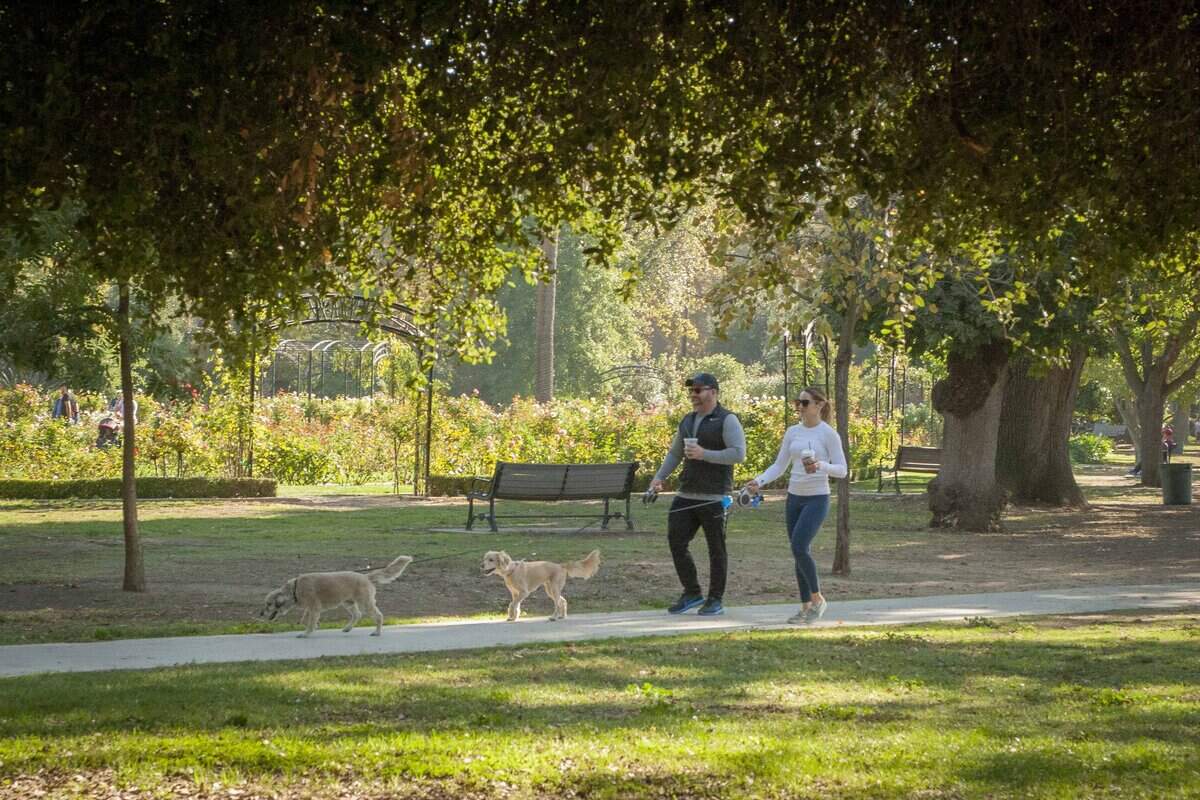
On any given day, you’ll likely find a scattering of people at East Sacramento’s McKinley Park: runners trailing along the dirt paths, children playing soccer on the green fields and families laying down picnic blankets under the trees.
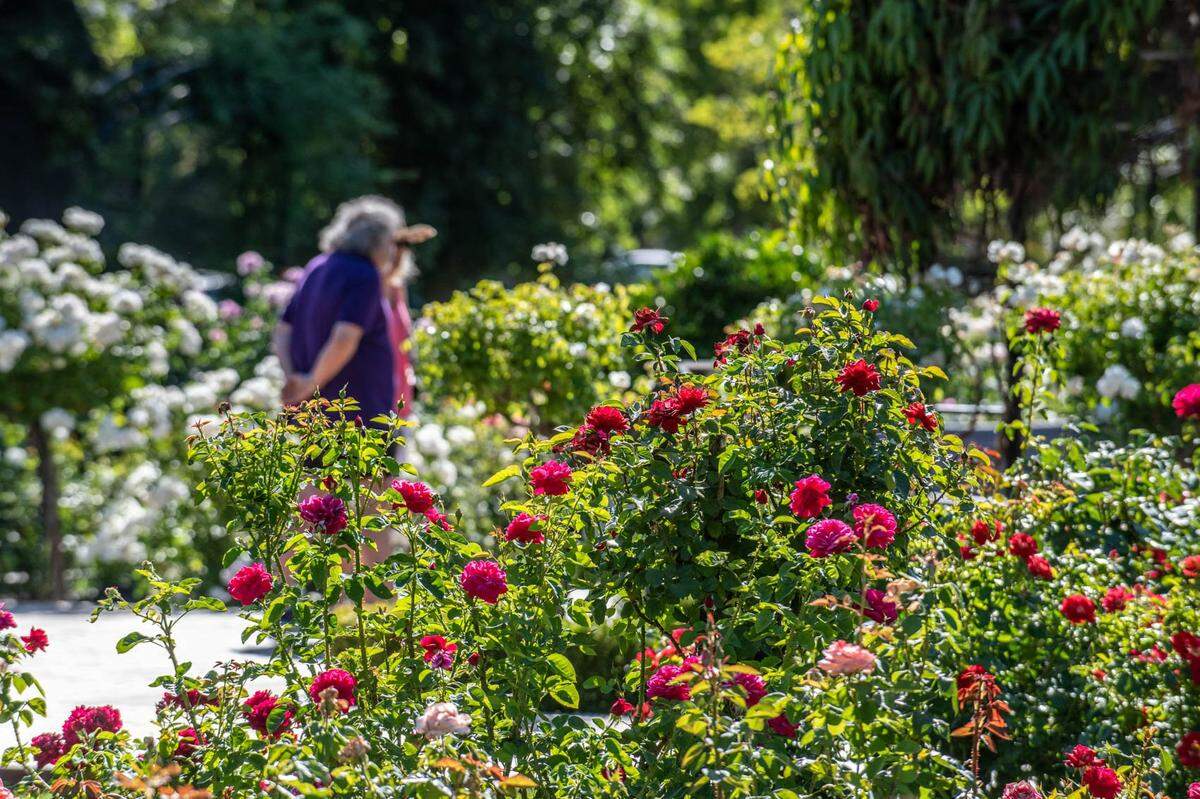
You might also see people’s heads bobbing up and down in the rose bushes, seeking the perfect bloom for a photo, or a family of ducks wading the turquoise ponds.
The nearly 32-acre park at McKinley Boulevard and G Street has served the capital city for more than 150 years — more than 120 under its current name, McKinley Park.
Sacramento area resident Rodney Davis grew up near McKinley Park. There, he played Little League baseball, participated in Cub Scout picnics and learned how to swim and play tennis, he told The Sacramento Bee.
Davis asked Bee Curious, a community-driven series where reporters answer readers’ questions: “What is the history of McKinley Park?”
How did East Sacramento park get its start?
Before it became known for its colorful shrubs, towering trees and trimmed grass, McKinley Park was a swampy rural area, according to the city of Sacramento’s park marker.
A stream, called Burns Slough, ran through the area until 1868, when a flood-control levee was constructed — cutting off the waterway’s connection to the American River. Burns Slough became a lake.
By July 1871, the City Street Railway Company had created East Park, a 30-acre park intended to boost ridership of horse-drawn streetcars in the area.
In a Nov. 4, 1871, edition of The Bee, the park announced a grand opening celebration that included a grand concert and ball.
“Gentlemen 50 (cents); Ladies FREE,” the advertisement read.
East Park had a Summer House featuring a bowling alley, stage and balconies with a view of the region’s agricultural land, the Sierra Nevada and coastal ranges, according to the city.
“The new park gained a reputation as an entertainment destination,” the city park marker said, offering festivals with food vendors, musical performances and dances.
During its peak, East Park was the place for picnics, events, rifle shooting, races, toboggan rides, hot air balloons and even parachute jumps.
Not all jumps were entirely successful, as seen on Aug. 24, 1896, when an aeronaut nearly died by drowning. The man had landed in a nearby lake after cutting his parachute, The Bee reported at the time.
“He was finally rescued from his perilous situation and carted back to the park, where, after undergoing heroic treatment, the water was ‘rolled’ out of him and he was ready for another ascent,” The Bee wrote.
When did McKinley Park get its modern name?
East Park lost its traction in the community by 1901.
“The park was no longer profitable to the trolley company,” the city marker said. “Over the years, as maintenance fell behind and the grounds and buildings became rundown, East Park became less popular.”
In 1902, a women’s organization called the Tuesday Club rallied for the city of Sacramento to purchase East Park for $12,500.
The Tuesday Club was a social group that focused on local civic and community interests, according to the Online Archive of California.
“Mrs. Carrie Miller was the driving force for the city to purchase McKinley Park,” the city said. “She negotiated the price, raised funds and solicited volunteer labor for park improvement.”
East Park was renamed McKinley Park to honor U.S. President William McKinley, who was assassinated in 1901.
Memorial Park was also a contender for the name, The Bee reported in 1902.
Should women be in charge of the park?
On Oct. 7, 1902, The Bee reported on a City Board of Trustees meeting addressing who should be in charge of the park.
The board’s president, future Sacramento Mayor Albert Elkus, suggested that the Park Commission include three women from the Tuesday Club since they had proposed to “improve, beautify and maintain the park without any expense to the city.”
“(The women) expected to get donations from wealthy people abroad, who made their financial start in life in Sacramento,” The Bee reported.
Elkus said he should also serve on the board, along with the city’s mayor, George H. Clark.
However, board member Marshall R. Beard insisted on having five women from the Tuesday Club lead the commission.
“He did not think it a good idea to add the mayor or the president of the board,” The Bee reported. “The women proposed taking care of the park, and they should not be hampered by the men who know nothing about park work, don’t know a cowslip from a daffodil.”
Although the board ruled that five women would lead the Park Commission, it changed its decision less than a month later.
The board voted to have “three women and two men” serve on the commission, The Bee reported on Oct. 28, 1902, with terms of office lasting two years.
At the meeting, board member James H. Devine suggested requiring that the women be under 28 years old to be on the commission.
Beard rejected the notion as “unnecessary,” stating that “there was not a woman in the city who would claim to be over that, and if they do not know their age, who does?”
Devine also wanted to include a clause that the female commissioners would only “hold office during good behavior.”
“This was ruled out of order,” The Bee reported.
Sacramento park was once home to alligators, monkeys
Miller, the Tuesday Club member, led efforts to renovate parts of McKinley Park.
“She oversaw the development of a children’s playground, athletic grounds, including a baseball and football field, and a running track where the rose garden is now located,” the city marker said.
McKinley Park had picnic grounds, a flower garden, areas for lawn tennis and a deer park, as well as a Zoological Garden that housed rabbits, exotic birds, monkeys, raccoons and alligators.
“In September 1915, the city purchased 24 alligators and two crocodiles for $156,” the Center for Sacramento History said on its social media page about McKinley Park. “Back then, a 10-inch baby alligator sold for $1, while an 8-footer was $7.”
By 1927, the animals at the park had been relocated to the Sacramento Zoo in Land Park.
How has McKinley Park changed over the years?
In 1928, McKinley Park’s running track was replaced with one of the city’s largest rose gardens, now featuring almost 1,200 rose bushes.
The deer park was turned into a baseball and soccer field.
Other amenities built throughout this period included a swimming pool, the Clunie Community Center, a children’s playground, a library and picnic areas, the Cultural Landscape Foundation said on its website.
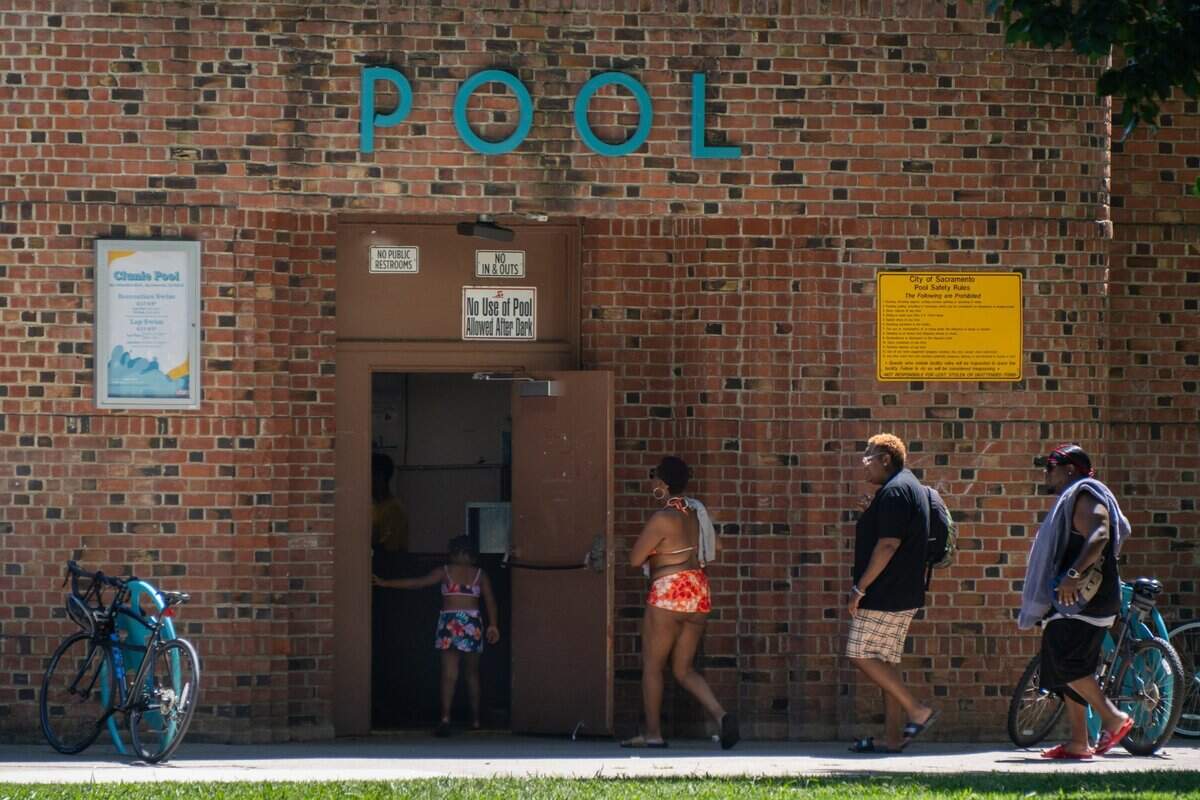
Most recently, the park underwent renovations in 2021.
According to Stantec, an engineering and architecture company, the $25 million project included a new underground water vault to collect storm water and reduce flooding.
Jogging paths and lighting were enhanced, and new restrooms, picnic areas, barbecue pits and benches were created.
The project also included a new multi-use field and shade areas.
Additionally, the city planted more than 60 drought-resistant trees.
They join a family of diverse trees at McKinley Park, from Sacramento native trees, such as gray pine and valley oak, to evergreen trees, including the golden mimosa and coast redwood.
The park’s “naturalistic design of meadows, informal tree plantings, and curving pathways” was typical of spaces created as part of the urban parks movement of the 19th century, the Historic American Landscapes Survey said, calling it a “significant cultural landscape.”
The movement aimed to address issues of modern cities by providing spaces for fresh air and bringing people together.
Davis, who now lives in Carmichael, said he still stops by McKinley Park — although his visits are more infrequent.
“Occasionally, I arrange to meet a childhood friend in the Rose Garden and we have lunch,” he said.
Davis called McKinley Park a “community treasure.”
This story was originally published June 29, 2024 at 5:00 AM.