
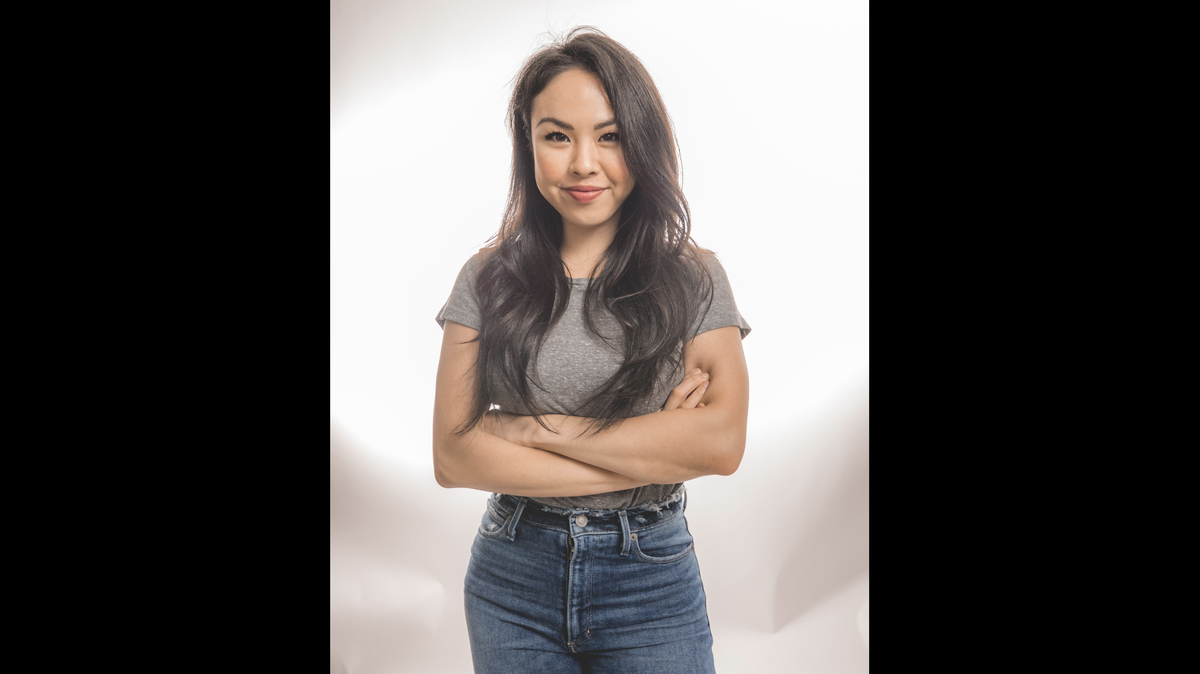
Meet Stephanie Su, entrepreneur of her own bag brand ‘Persu’
This is an ongoing series featuring Asian businesswomen in Sacramento or in broader California region.
The number of Asian businesswomen is on the rise nationwide.
A report by the Asian Pacific Islander American Chamber of Commerce and Entrepreneurship shows AAPI women-owned business grew by between 76 percent to 108 percent in 2017. As of 2016, about one-quarter of women-owned employer firms were minority-owned, and among them, more than half were Asian owned, according to a 2018 statement published by the Census Bureau.
For our first feature, we have interviewed Stephanie Su, a solo female entrepreneur who founded Persu Collection, her own line of backpacks and bags. Born in Sacramento and raised by Taiwanese parents, Su, 31, recently reached her goal of raising $12,000 within 7 1/2 hours for her second Kickstarter campaign for launching two new bags, one named after her grandmother.
Q: Tell us a little bit about your background.
A: I grew up in a typical Taiwanese immigrant household in Sacramento. I used to love creative writing and drawing as a kid and would hang out at the arts and crafts DIY section in bookstores. My mom supported me to take art classes when I was younger but did not want me to pursue that as a career.
I went to UCLA for college to do a pre-law degree on political science, but it was not something I wanted. So I went down to marketing and advertising in an entertainment company in L.A. after graduation.
Q: How did you come up your business idea?
A: I started enrolling in fitness classes after my first corporate job, and I needed to have a gym bag to go to class, then to work. But a lot of bags out there that are semi-stylish target yogis instead of people who do workouts. It was hard to find highly functional backpacks for women as most bags out there are more masculine-looking, rectangular in shape, made with rough nylon and buckles. I like using smooth premium nylon.
Q: Tell us a bit about how you navigate your career-switching journey.
A: I have no design background and didn’t know how to use softwares like Photoshop or Illustrator, so I used the basics like PowerPoint and the Microsoft Word suite tools to map out my design concept. Because my father works with manufacturing back in Asia, he helped my project by coordinating with his connections. We got my first prototype in 2013 while I was still working in a corporate in L.A.
I tested it for around a year to reach perfection. I talked to more people to learn what they want most for a gym bag and then refined the details, like making straps longer for users to wear under their shoulders and to have removable and washable interiors so that the bags don’t smell.
Then it dawned on me that I might as well sell this prototype. The quote from the factory is $30,000. Without enough capital to launch my business, I researched and picked Kickstarter, an all-or-nothing fundraising platform that fitted my business model. If you don’t have the money before the goal you’ll get nothing and none of the backers get charged. It was the best way to sell pre-order bags.
I loaned $1,000 from my parents to produce a video for the Kickstarter campaign. For creating my own graphics, I researched and took a bunch of online video workshops from L.A. General Assembly to learn the basic foundations of using design and video production softwares during the weekends.
Q: Were your parents supportive of you to focus on your brand and essentially switch careers to one that seemed less stable?
A: Luckily I was able to raise $90,000 for my first campaign in 2015 (with almost 700 people pledging to help bring the project to life). I quit my job and worked for Louis Vuitton as a part-time employee to make sure I can pay the bills while sparing some time to coordinate and mail the bags to my customers.
My dad helped me with the sourcing as he wanted to let me try it out as a creative project. I don’t think my parents fully understand the concept of Kickstarter. But they were supportive after seeing many people chipped in to purchase the bags. My mom even took a day off to help me incorporate my company.
Q: Do you have a mentor or a person whom inspired you to pursue this path?
A: I was self-driven. It was an idea that I wanted to bring to life. However, one of my favorite things is NPR’s “How I Built This” podcast that features hour-long interviews with successful entrepreneurs (like Jeremy Stoppelman, founder of the business review app Yelp). It is very interesting to hear how they built their companies, reminding me that they also had experienced hardships and there was no overnight success for anyone. That was how I keep myself motivated.
Q: What are the challenges and opportunities you faced as an entrepreneur?
A: The journey working isolated is such a roller coaster ride. I never tried to go after investors and started my grind in Silicon Valley not sure what that world would be like.
To steer my direction, I joined Grid 110 (an eight-week program that welcomes first-time entrepreneurs and new founders to build idea-stage and prototype-stage ventures) in my second year of embarking on entrepreneurship. We would do weekly check-ins with mentors working in the space, which gave us the opportunity to ask questions and polish our ideas.
Trying to start your own business while working on a part-time job is also really hard. It stretches my mental bandwidth - I was mentally and physically exhausted when I went home. There was a lot of guilt because I felt I had to do well in my part-time job and learn about their business so I left my project untouched for a while. You could only take calls for your side hustle during business hours of your other job so it really paused. I would usually work in the nights and during the weekends at cafes to catch up with works for Persu.
The positive part of being a female entrepreneur is meeting other female entrepreneurs. I went to a few female entrepreneur events and looked for a close-knit group of people who can relate to each other, brainstorm, collaborate and share resources. I now host a group of businesswomen once a month where we talk about our projects and give feedback to each other. They are very supportive and also relate to my journey.
Q: Do you have any advice for upcoming entrepreneurs?
A: To not be afraid to ask for help. I was scared to ask in the past five years and struggled to do everything myself, but in reality I was doing things that I wasn’t good at just trying to save money.
Three ladies came into my life before the second Kickstarter campaign as contracted help, and each has her own specialty. They offered help and were able to express their creativity and do things I am not great at which saved me a lot of mental energy. It had been amazing to work with them and a game changer and good for my own mentality. I felt so much more supported with a team going along the journey with me, who changed the way I felt to work in this business. I wish I had done this a lot earlier.
Click on Su’s Kickstarter campaign if you want to learn more about her designs and support her. Next week, we are going to feature Fiona Duong, owner of Happy Garden Seafood Restaurant on Stockton Boulevard in Sacramento.
If you have a Asian businesswoman in mind you hope to read about, please email tyu@sacbee.com.
This story was originally published November 18, 2019 at 4:00 AM.