
California requires ‘humane’ space for farm animals. Now, pork industry is suing
How much elbow room does a pig need?
California voters, by approving a ballot initiative last fall aimed at treating farm animals more humanely, decreed that pregnant sows should have at least 24 square feet of space to themselves. The initiative bans the sale of pork in California produced under conditions that violate that standard — regardless of where the pigs come from.
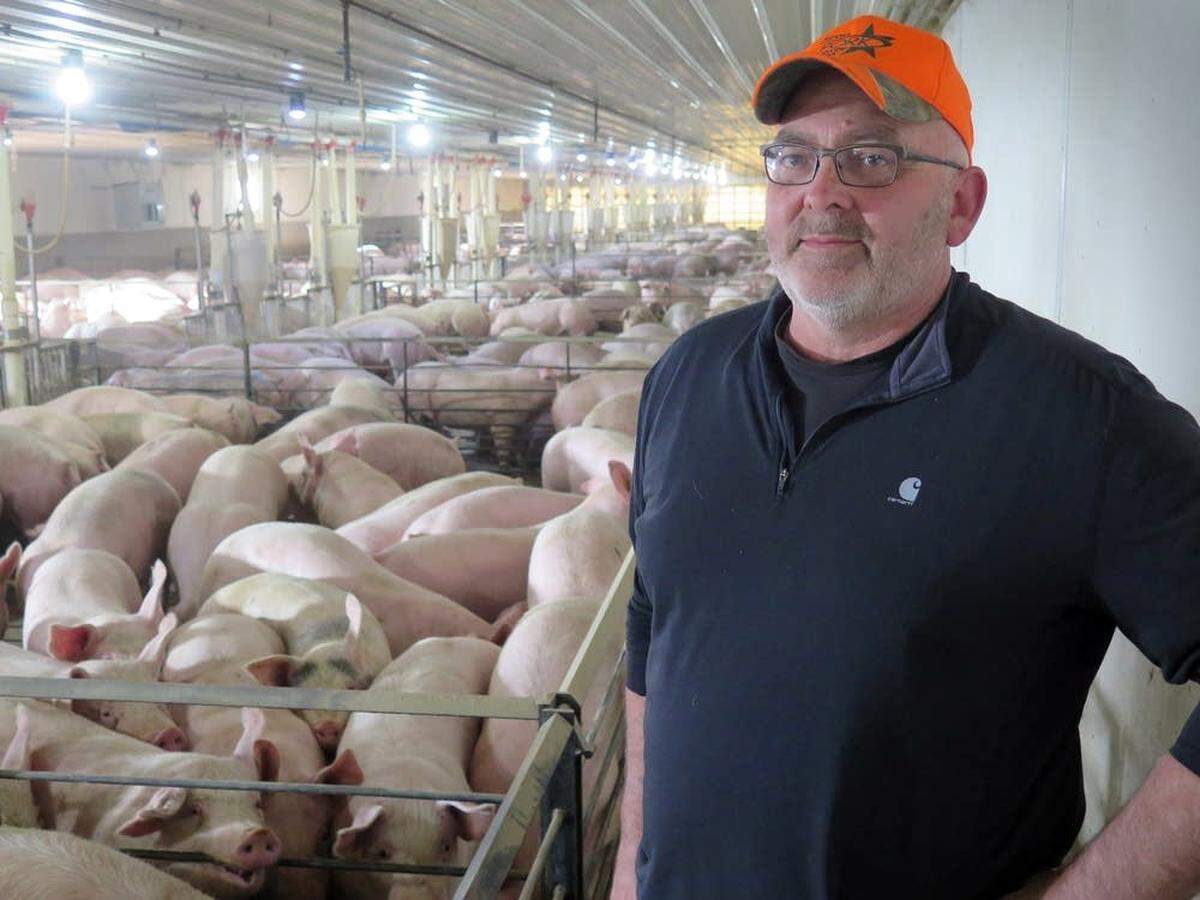
Midwest farmers like Randy Spronk, who’s been raising pigs in southwest Minnesota since the 1980s, say they know how to care for their animals, thank you. They argue that California’s minimum-space requirements are unfair and could actually harm the pigs.
“Who made this decision? In my mind, it was people who are not associated with the industry ... and don’t understand what the animal needs,” Spronk said in a phone interview from his farm in Edgerton, Minn. “That should be left, in my mind, to the caretaker such as myself.”
The debate over housing conditions for farm animals is at the heart of a lawsuit over California’s rules. The National Pork Producers Council has joined the American Farm Bureau in suing California to overturn Proposition 12, the 2018 ballot initiative that sets space requirements for pregnant sows, veal calves and egg-laying hens. The rules for pigs are scheduled to take effect in January 2022.
Spronk, a former president of the pork producers’ organization, is one of a dozen farmers who’ve lent their names to the lawsuit, which was filed in early December in U.S. District Court in San Diego.
Their argument: California’s rules are misguided and, more importantly, violate the commerce clause of the U.S. Constitution. The clause gives Congress the authority over regulating interstate commerce — and generally restricts states’ abilities to do the same.
“Proposition 12 has thrown a giant wrench into the workings of the interstate market in pork,” the hog farmers’ lawsuit says. “Its requirements are inconsistent with industry practices and standards, generations of producer experience, scientific research and the standards set by other states.”
Almost every farmer would have to spend millions of dollars to comply, “which will ultimately increase costs for American consumers, making it more difficult for families on a budget to afford this important source of protein,” the suit says. California’s rules cover whole cuts of pork, ham and bacon, but not “combination food products” such as pizza toppings.
To which the animal-rights crowd says: Hogwash.
Proposition 12’s rules for pigs, veal calves and hens amount to “a very minimal humane standard,” said Jonathan Lovvorn, chief counsel at the Humane Society of the United States, the force behind Proposition 12. “It’s literally the least we can do for these animals that we use for food.”
Instead of suing, Lovvorn said farmers should heed consumer demands for better treatment of farm animals.
Officials with the California Department of Food and Agriculture wouldn’t comment on the case. But the state has defended earlier efforts to mandate minimum-space requirements for farm animals on the grounds of protecting public health. In a case before the U.S. Supreme Court last year involving legislation on living conditions for chickens, they wrote that egg-laying hens “subjected to stress are more likely to have higher levels of pathogens in their intestines.”
Pig farming in California
Pig farming isn’t a big industry in California. It barely registers compared to big agricultural industries like grapes or almonds. Total revenue for California’s hog farmers in 2017: a measly $25 million.
But the state’s hog farmers are rooting for their brethren from out of state.
In approving Proposition 12, California was “dictating to other states how to raise their animals,” said Aaron Prinz, secretary-treasurer of the California Pork Producers Association.
Prinz, manager of the swine center at UC Davis, said Californians should consider what would happen if the situation were reversed. For instance, almond production became controversial in California during the drought because the crop consumes so much water. What if a Midwestern state refused to buy California almonds, Prinz said, “because you irrigate, or something like that?”
Nationwide, hog production is a $20 billion business nationwide and employs 60,000 farmers. The National Pork Producers Council says fewer than 1 percent of those farmers have confinement facilities that meet Proposition 12’s standards, putting those farmers at risk of being locked out of a state that accounts for 15 percent of pork consumption.
In their lawsuit, the hog farmers say 16 to 18 square feet of space is just fine. Anything more could actually be harmful. “Too much space, such as 24 square feet per sow, could cause sows to defecate or urinate in the wrong spot, which is unsanitary and harms sow health,” Spronk, the Minnesota farmer, wrote in a declaration accompanying the lawsuit.
Another issue: Spronk and Prinz said it’s crucial to keep pregnant sows separated from other pigs; otherwise, they could get injured or have their feed or medicine stolen. Building individual stalls that measure 24 square feet isn’t practical for the vast majority of farmers without spending millions to expand their barns, they said. Proposition 12 would allow farmers to move their pregnant sows into smaller pens for only a five-day window just before their due date.
Spronk is among the nation’s most prominent farmers. He’s met with President Donald Trump about international trade issues, and he’s not shy about weighing in on what he thinks is behind Proposition 12.
“It’s crazy animal activists trying to create a vegan society,” he said in an interview.
Chickens, eggs and the Constitution
Californians and their elected officials have been passing laws governing the treatment of farm animals for years. In 1998 voters approved an initiative banning the slaughter and sale of horsemeat for human consumption. A decade later they passed Proposition 2, which prohibited California farmers from housing breeding pigs, veal calves and egg-laying hens “in cages or crates that do not allow them to turn around freely, lie down, stand up and fully extend their limbs.”
Farm groups say California’s attempts to regulate animal agriculture have hurt consumers. A Purdue University study of the poultry industry said egg prices rose 22 percent in California between December 2014 — the month before Proposition 2 took effect — and September 2016, nearly two years after its implementation.
Nonetheless, the state has continued to strengthen the rules. Before Proposition 2 took effect, then-Gov. Arnold Schwarzenegger signed AB 1437, which banned the importation of eggs not produced to Proposition 2’s standards.
Midwesterners and Southerners challenged AB 1437 in court. The attorneys general of Iowa, Nebraska, Missouri, Oklahoma, Alabama and Kentucky sued California, saying it violated the commerce clause — the same argument the pork producers are making now over Proposition 12.
But a federal judge in Sacramento dismissed the earlier suit on the grounds that officials from those states didn’t have the right to bring the case on behalf of their citizens. Those state officials failed to show “the threat of prosecution of their egg farmers is imminent,” U.S. District Judge Kimberly Mueller ruled. The six states took the case to the Supreme Court last year but the court refused to hear their pleas.
Now, with Proposition 12, California voters have set specific rules that go beyond the goals outlined in the earlier ballot initiative — breeding pigs get 24 square feet, veal calves get 43 square feet, hens get a square foot. It passed with 61 percent of the vote.
The pork producers’ lawsuit is the second attempt to overturn Proposition 12 in three months. The North American Meat Institute, which includes processors like Tyson Foods and major grocery chains, filed suit in October, challenging the rules on pork and veal production. A federal judge last month denied the meat industry’s demand for a preliminary injunction that would have blocked implementation of the California rules. The industry is appealing.