
App founder’s Davis-based business looks to pair customers with California wineries
This is an ongoing series featuring AAPI businesswomen in Sacramento or in the broader California region.
The number of Asian business women is on the rise nationwide.
A report by the Asian Pacific Islander American Chamber of Commerce and Entrepreneurship shows AAPI women-owned business grew by between 76 percent to 108 percent in 2017. As of 2016, about one-quarter of women-owned employer firms were minority-owned, and among them, more than half were Asian-owned, according to a 2018 statement published by the Census Bureau.
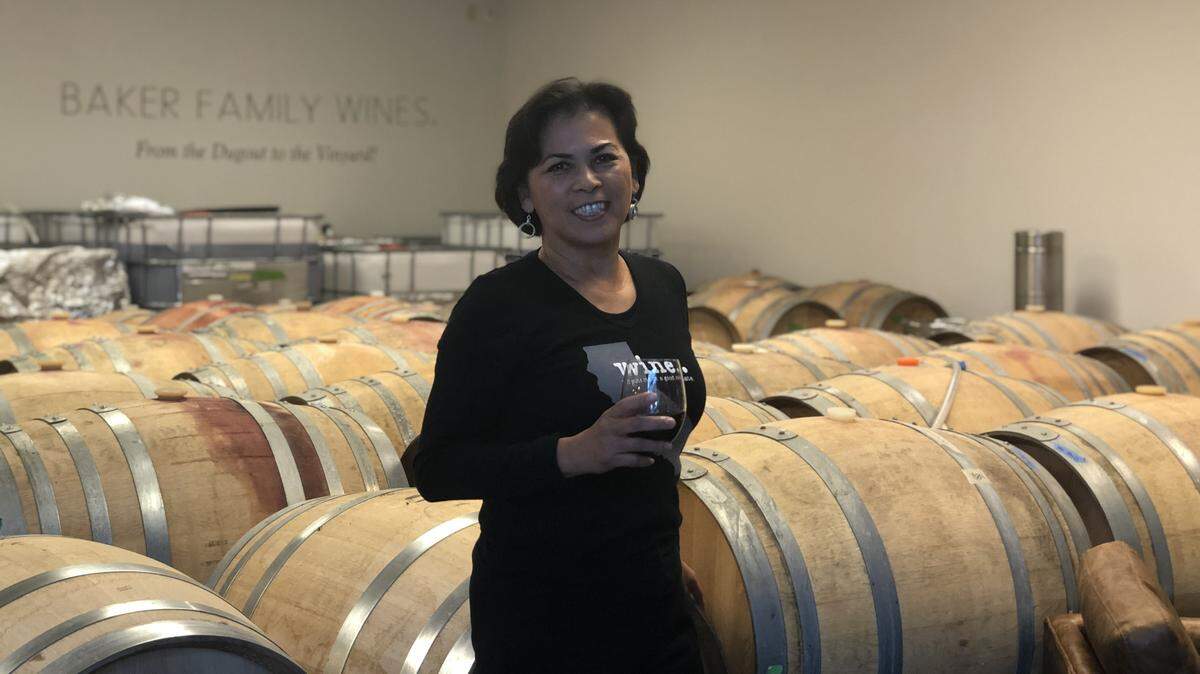
This week, we spoke with Christy Serrato, CEO and founder of Pair Anything, a Davis-based customer engagement platform for next-generation wine consumers which is digitally transforming the $70 billion wine industry. Serrato’s venture started operating since May, with customer presence in Amador, Clarksburg and Santa Barbara.
Q: Tell us a little bit about your background.
A: I am originally from the Bay Area. I went to school at (University of California) Davis, graduated in 1988 with an economics major. I moved to banking based in San Francisco and later moved to the software and technology industry. 20 years ago, my parents moved to the Sacramento region over to Elk Grove. They loved it – it is less hectic and I always have had fun memories here.
Two years ago, I became my parents’ primary caretaker. I wanted to be with them, especially with the the health issues they face. I uprooted myself, quit my job, sold my house and moved home for a year to get a sense of what my parents needed.
I didn’t know what I could do. Then I reconnected with the Sacramento Entrepreneurship Academy, where I was a founding fellow in 1986, and am now a program director. It was a blessing. There is a cohort of 20 students whom I’m leading at the academy. I have to identify speakers and presenters and establish partnerships with institutions such as Sacramento State University, so we can have classes there. I work with board members to find sponsors for students to present ideas to and raise funds.
Q: How did you come up with your business idea?
A: My students challenged me to come up with one, and so I did: an idea of how to help people pair meals with wine. Also, I learned that wineries have a burning problem to connect with young consumers.
When you come to a winery, you interact with winemakers, but you don’t have that continued connection after you leave. The winery is a $7 billion dollar industry in U.S. and half of the wineries are based in California. The majority are small family wineries. Sixty-seven percent of revenue comes from selling directly at the tasting room and wine club membership. We found a disconnect between the younger wine consumers who don’t belong to any clubs and don’t want to commit long-term. They also cannot afford $100 to $200 wine purchase per month for the wine club. But with our 24/7 mobile app, it allows them to be connected to wineries anytime. It is a real-time connection to winemakers who could provide personalized recommendations for food pairing and capture your taste preferences through fun questions.
This creates your wine personality. Young foodies can experiment with wine, learn what they like and they’ll have an expert to them to answer questions on food pairing and wine education feature, in different regions on wine, to cultivate connections with the winery. We want to have wine consumers support local wineries. We are trying to create experiences and personal connections. When younger consumers develop a more sophisticated taste, they will buy more and support handcrafted wine produced by local wineries.
I built a prototype and entered UC Davis’ Big Bang! Business Competition, which is open to the public. I talked to 75 wineries which knew UC Davis and they gave me a warm reception. While consumers don’t necessarily pay for apps, wineries are willing to gain technology tools to help their businesses. We won the competition for the food and agriculture innovation award, which included a cash prize of $10,000 in May. Winning allowed me exposure in the industry. It allowed me to be part of a community.
On the consumer side, we provide the ability to connect them to their favorite winery and ask questions on what food to pair with wine.
With the prototype we built, we were surprised that the customers were willing to sign up in five days. Things were happening really fast. If you bring a high-tech tool to a low-tech industry, you’ll have a compelling way to help the industry. We want to transform the wine industry digitally.
Our team is mainly female and very diverse. When you look at talent and shared culture, most of my team members are younger and learning in a startup environment. They have equity in the company and I am mentoring the team members to help them to gain the skills and experiences (in a startup). It is a multi-layered collaboration. I would not have been able to start on my own.
I am proud to start it (my business) in Sacramento and not the Bay Area. If I had this idea in the Bay Area it would be hard for me to talk to people to leverage the UC Davis connection, and I would be pressured to raise money rapidly even before my idea was validated. The culture of tech ventures in the Bay Area is to go really fast, and sometimes people throw money at an immature idea.
Sacramento is an intriguing town. There is a vibrant startup atmosphere though the scene is not as developed as in San Francisco. I hope my company can lead it (in Sacramento) by example. People are more collaborative and helpful in nature, which is key for someone who is starting out. You need people who can be resources for you. I was a blank slate 2 years ago and used all resources available to me.
I am so grateful for the opportunity in the past couple years.
Q: What are the challenges and opportunities you faced as an entrepreneur?
A: One common challenge for women is raising money for their business ideas. There is no easy answer to that. Only 2 percent of the venture capital money used to go to female entrepreneurs, though there are now more initiatives trying to help women founders.
My kind of profile does not usually attract the majority of the funding in the Bay Area. Here I think everyone has a fair chance. I kinda forget I am Asian sometimes. Everyone is different and you are always going to come from a different perspective. Being an Asian female makes me stand out more. Many haven’t seen a Filipina woman in a startup. People are going to be intrigued by you, and want to hear what you say and see what you can offer.
Before starting my business, I never asked for anything from someone. I will try to solve a problem for my customer, or create the opportunity for them to solve the problem that they are willing to pay for. Here (in startups) the focus is on helping them with solutions I created. So now, if that is my model and recipe, how can I tailor that to raise money as an Asian woman, in a town with not too much venture capital?
So instead, we’d pitch this: “We create opportunities for angel investors to join us on a journey to transform a $7 billion dollar industry. Let us show you how we do it.”
The fact that we already have customers makes our lives easier, and we paint a map on what we envision it to look like. I hope someone accredited would want to invest and support those early in their journey who want to be successful like them. I am confident that we would be successful in raising money and we are creating opportunities for investors who want to be game-changers on industry for transformation.
I grew up in a traditional household. My parents are respectful, quiet and reserved. I was very shy. I was left handed when I was young and the nun at my school forced me to switch to right hand and I stopped talking for a year. But I listened and observed, which allowed me to get a keen perception of people. I got a sense of how to connect with people when I was working in the banking industry in the Bay Area. It could be because I am a woman or because I am Asian, but people would ask me, “What are you?”
Initially I was offended. But when I tried to understand, the people who asked were curious, so I took it as an opportunity to be a conversation starter. You shouldn’t be offended. I learned that I have to speak more – and when I do speak, I have something meaningful to say. You want to make sure you provide something of value, to be able to establish your ground. I held my ground to my manager and peers with points that were well thought out and articulated. And people respect that. Be respectful to your listeners.
There are definitely pockets of (Asian) communities in Sacramento, but when you open a magazine and look at the people in leadership, we could use some more representation. There is definitely room for people like us to be more visible. I embraced that and made a point to use my platform to be that representation.
My students are very diverse and it is empowering. Why can’t an Asian woman be a founder of a software company in Sacramento? That is what I am building with my team. I like how one member runs a pilates studio. Another graduated from Stanford and UC Davis. We bring different perspectives. We unite with a passion to transform the industry.
Q: Do you have a mentor or a person who inspired you to pursue this path?
A: There’s always a constant figure, besides parents. Jim Corbett, founder of the Sacramento Entrepreneurship Academy, saw something in me as a junior in college. He believed in my capacity to be a leader. When someone has a belief in you that you don’t see, especially a person whom you admire, it makes you want to realize that and his belief raised me up. That model of the academy is to replicate yourself and be an example for others, to take your best quality and instill it into others. I was able to consult with Corbett throughout my career. He is my mentor and hopefully a lead investor in my venture. He funded many successful ventures coming from the academy. His success multiplies to us.
Q: Do you have any advice for upcoming entrepreneurs?
A: Don’t pass up any opportunity – it may become the game changer of your life.
Q: What is next for Pair Anything?
A: I hope we can double our size in Sacramento eventually as we grow and be a good example for other startup teams to be effective and rewarding to team members.
If you have a AAPI businesswoman in mind you hope to read about, please email tyu@sacbee.com.
This story was originally published January 14, 2020 at 5:00 AM.