
Sacramento’s offices are empty. Will the struggling neighborhoods around them survive?
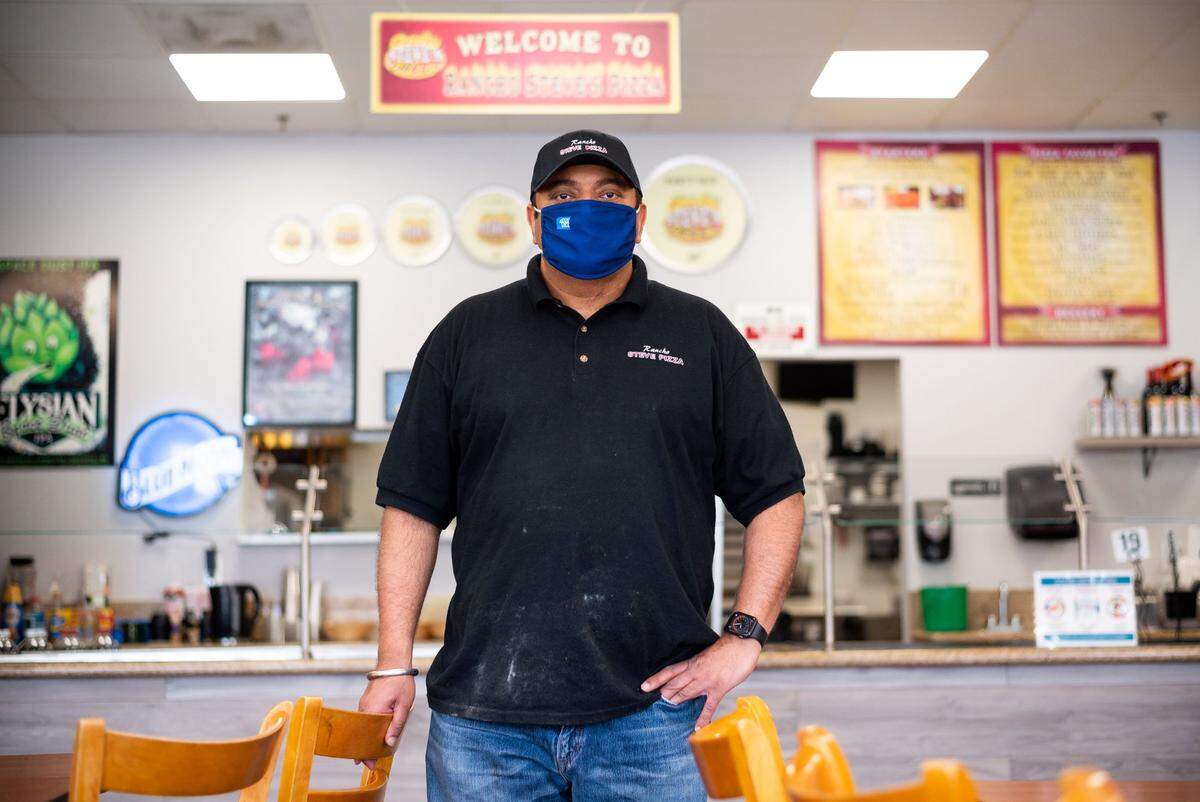
Rancho Steve’s Pizza sits in a nearly perfect location to snare a big lunchtime crowd: a Rancho Cordova shopping center that’s within walking distance of a cluster of office buildings that dominate the Highway 50 corridor east of Sacramento.
But these days, office buildings have sat almost completely empty since the COVID-19 pandemic began, draining the neighborhood’s restaurants of their most loyal customers. Rancho Steve’s lunchtime business has plummeted to about $250 a day, down from $1,200 in better times.
“It’s a huge deal,” said the pizzeria’s owner, Harry Khangura. “If they don’t come back we won’t be able to sustain our business.”
From Rancho Cordova to south Natomas to downtown Sacramento, the coronavirus pandemic has turned the region’s office districts into ghost towns. Even as shutdown orders ease and parts of the economy gradually reopen, the cubicle and conference room world of Sacramento remains eerily quiet.
State government is keeping most of its workers home for the foreseeable future, and many private-sector employers are doing the same. It could be months before most teleworkers return to their desks, with grim consequences for scores of small businesses.
“If you’ve got a cafe that’s geared to serving the lunch crowd, or you’re set up in any kind of supplier relationship with those office communities — it could be cleaning or maintenance, not just a cafe — the trend is not a good one for you,” said Jeff Michael, an economist at the University of the Pacific. About 17,000 restaurant jobs have vanished in the metro area in the past year, or 6% of the total.
What’s more, it’s unlikely that conditions will ever go back completely to the way they were before the pandemic. Teleworking is expected to continue, in some fashion, long after it’s considered safe to gossip around the water cooler again.
Gov. Gavin Newsom has directed state agencies to draw up policies that would allow many of their employees to permanently telework at least part of the time. Many private-sector employers say they’re exploring a permanent telework strategy as well.
“While we are still evaluating paths to safely return to the office, for some roles, telecommuting will be an option post-pandemic,” said Jace Duval, spokesman for VSP Global, the insurance and optical conglomerate whose 2,200 employees in Rancho Cordova are nearly all working from home.
It turns out some people like working from home, and corporations are trying to accommodate that. “Our employees value the flexibility it provides,” Duval said.
The likelihood that some percentage of white-collar workers will continue teleworking, at least part-time, has potentially profound implications for the commercial real estate market and the economy as a whole.
David Brandenburger, managing director of the Sacramento office of commercial real estate firm Newmark, estimates that office vacancy rates will grow from about 10.5% to 15% in the next three years. While that would be considerably lower than the 20% or more rates seen during the crash of a decade ago, it could still put a chill on the economy.
Before the pandemic, “we were not a work-from-home company,” said spokesman Rick Heron of Western Health Advantage, an HMO with headquarters in south Natomas’ office district. In the future, “there will be some work-from-home opportunities.”

Normally the headquarters houses 220 workers; these days the population is closer to 30. Heron said Western Health expects to bring everyone back by sometime in the fourth quarter of the year — but there will likely be some cubicles empty even after the pandemic runs its course.
Western Health “is not going to go back to 2019 attitudes,” he said.
The thought of workers staying home is weighing heavily on business people like Trevor Shults, owner of Crawdads on the River, a restaurant that’s a three-minute drive from Western Health’s office.
Shults closed Crawdads in December when Newsom ordered restaurants to close their doors except for takeout and delivery. As the restrictions ease and the economy thaws out, he plans to reopen Crawdads in early April — but is leery about the continued impacts of teleworking.
It’s pretty simple, he said: “Without the offices being open, we’ll have less business.”
Sacramento’s empty state buildings
To reduce the spread of COVID-19, Newsom’s administration last year told state agencies to keep around 75% of their employees at home. A year later, state government, employer of roughly 94,000 workers in greater Sacramento, is in no rush to reoccupy its offices.
The state Treasurer’s Office normally employs 455 workers in a building on Capitol Mall. The state Controller’s Office typically has 550 workers on Capitol Mall. These days the offices are a lot emptier — neither agency provided details — and the workers remain subject to Newsom’s order.
“The State Controller’s Office will continue to operate under the emergency telework policy until further notice; we can’t yet put an end date on that,” spokeswoman Jen Hanson said in an emailed statement.
Teleworking is also affecting a state building that hasn’t opened yet.
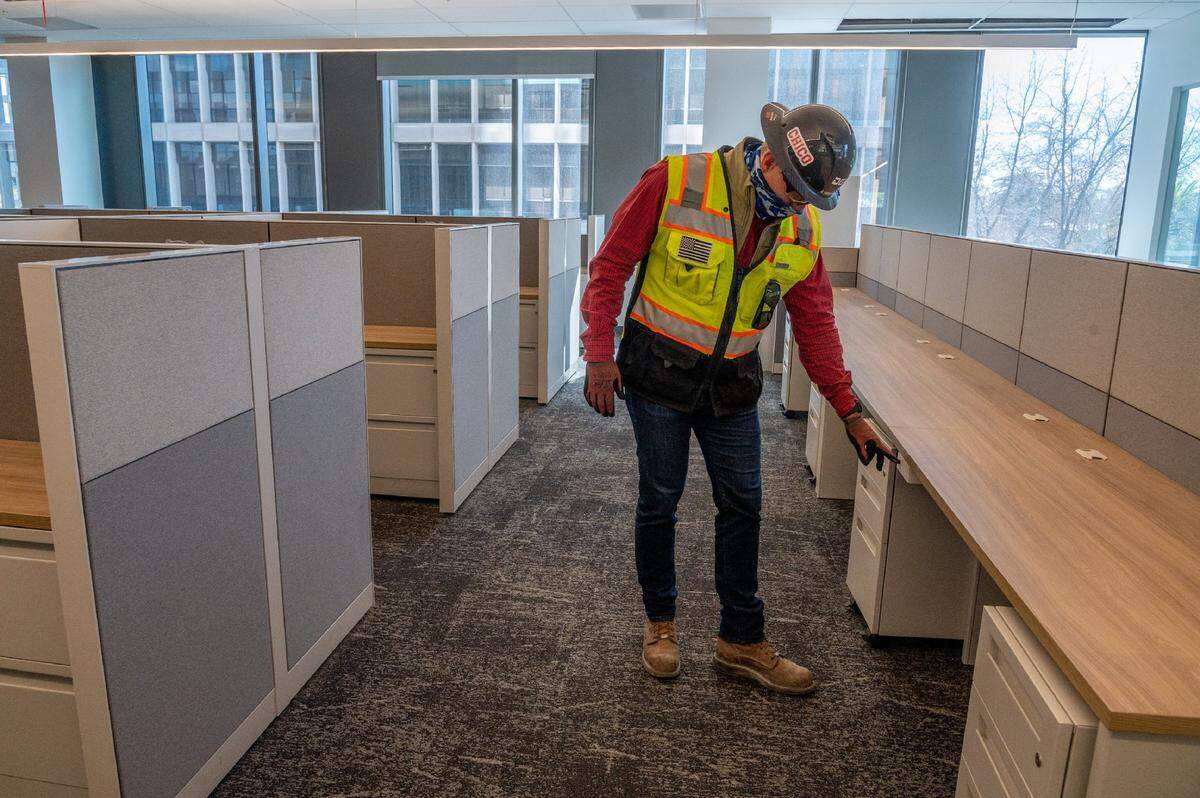
The newest addition to downtown Sacramento’s skyline is a $520 million, 21-story glass tower that, when it opens this summer, will provide enough office space to house thousands of state workers. But when those workers will start to fill their cubicles at the California Natural Resources Agency’s new P Street headquarters is another matter.
Lisa Lien-Mager, spokeswoman for the agency, said Natural Resources will wait for direction from the Department of Human Resources before it begins populating the headquarters.
More telling, perhaps, is the fact that the new building will serve as a laboratory of sorts for the state’s foray into permanent, post-pandemic teleworking.
Originally designed for about 3,200 workers, the building has been organized to allow employees to share space so workers can rotate between staying home and coming into the office. Criticized a year ago for not having a telework strategy in place, the state is now embracing the concept.
“Over the past year of remote work, it’s allowed us to move light years ahead in our understanding of how work can happen,” Lien-Mager said. “This can be home to upwards of 4,400 employees now.”
That means an additional 1,200 state workers will leave their current digs and relocate to the P Street tower, setting off a round of musical chairs among downtown buildings.
The Department of Conservation and its 400 employees will leave their rented space in the “Darth Vader building” on K Street. Nearly 700 employees from the California Energy Commission will relocate from the commission’s current headquarters, a state-owned building a block south.
The bottom line is, the state will be using less space. That’s no accident. Newsom’s budget proposal says the Department of General Services is evaluating ways to “reduce the state’s overall footprint.” In November, Newsom ordered every department to reduce spending by 5% and told them to explore telework as one avenue to reach that target. Departments had to submit their cost-savings plans by Feb. 1 and the Department of Finance is expected to finalize them by the end of March.
Trading lunch for dinner: Sacramento’s survival guide
They used to be the go-to places for lunch for state employees, lobbyists and other denizens of the downtown scene. But the pandemic has prompted the closure of a number of well-known restaurants: Ambrosia Cafe’s two locations near the Capitol. Ma Jong’s Asian Diner. The beloved sandwich shop known as Bud’s Buffet, gone after 33 years. And a few more.
So what’s the short-term future for downtown?
Michael Ault of the Downtown Sacramento Partnership, an association of property owners, said workers are starting to filter back onto Capitol Mall already. From what he’s hearing from downtown businesses and landlords, offices could reach 70% occupancy by summer — a figure that could grow even higher after Labor Day if kids are back in school.
Yet Ault, who never went home to work, believes the private sector will move more quickly in repopulating downtown.
“The state will probably be slower in bringing people back,” Ault said.
Randy Paragary, the dean of Sacramento restaurateurs, is betting on a solid comeback. And soon.
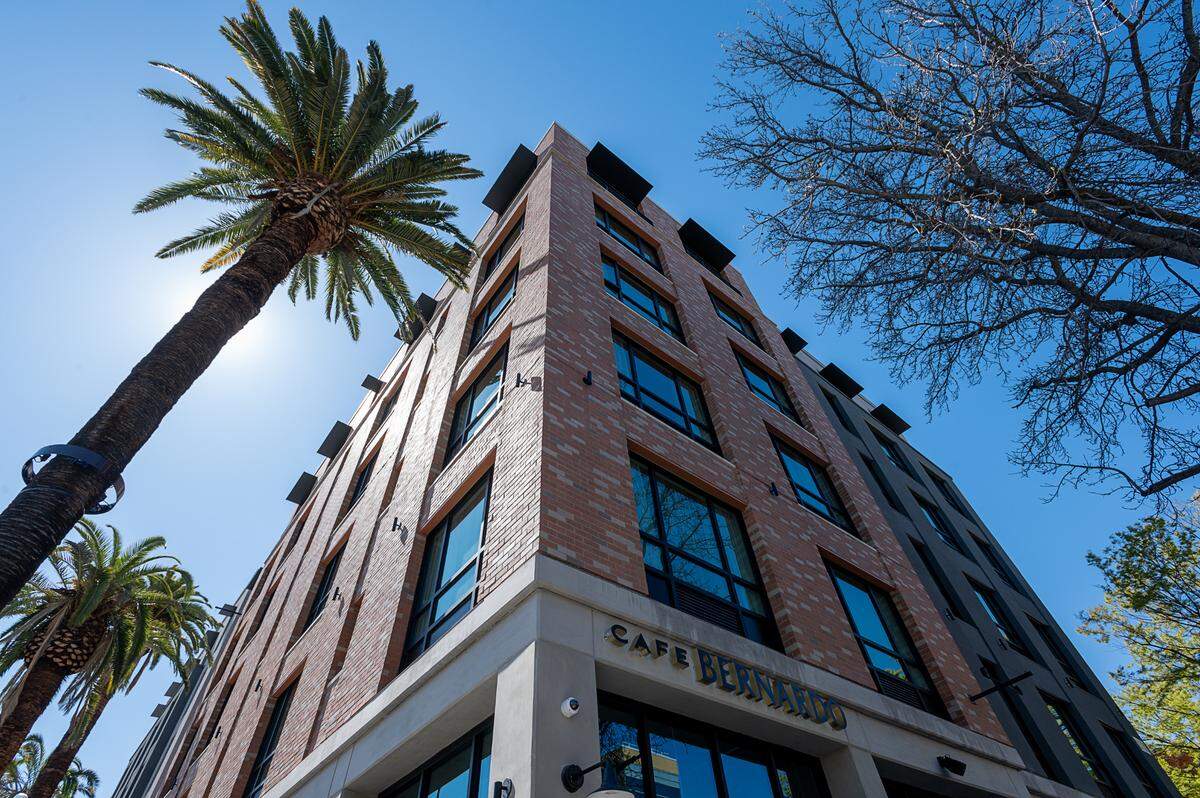
Paragary knows all too well the damage that’s been done. Cafe Bernardo, at 15th and R streets, is suffering from the loss of the state-worker lunch crowd, he said. Two of his midtown restaurants, Paragary’s and Centro Cocina Mexicana, have temporarily closed — even for takeout.
But he said another of his restaurants, the Cafe Bernardo on Capitol Avenue, is doing a brisk business on weekends. And he’s convinced that the pandemic will bring long-lasting change to people’s restaurant dining habits, in part for the better.
Even if office workers aren’t flocking to the central city during the day, people who’ve been stuck at home all day are “bored to death and are going to want to get the heck out of the house and go to dinner and socialize in the evening,” he said.
He’s expecting a boom in restaurant dining once Sacramento County is moved into the state’s red tier and indoor dining becomes legal again. The state Department of Public Health said Sacramento will probably achieve red-tier status Tuesday.
“Dinner business is going to explode, that is my hope,” Paragary said. “I’ll trade lunches for dinners anytime. People spend a lot more at dinner.” He said Paragary’s and Centro Cocina will re-open soon.
Sacramento’s midtown area has escaped some of the harm done by office closures in other parts of the region. That’s because, with so many people living in midtown, teleworking keeps them in walking distance of many restaurants and — when they’re allowed to reopen — bars and clubs.
Midtown has its share of office buildings, too, but they’re smaller than the downtown or Natomas office complexes, and their tenants crave the midtown district’s creative vibe. That will likely translate into a quicker return to normal, said Emily Baime Michaels of the Midtown Association.
“Smaller firms are more eager to get back,” she said.
Michaels added that the state government isn’t the only magnet capable of drawing people to the central city. Even if offices stay empty, the resumption of events at Golden 1 Center, the renovated community center theater and other venues will help revive the restaurant scene.
“That is a real jump-start to the hospitality industry,” she said. “That is going to be important.”
This story was originally published March 15, 2021 at 5:00 AM.