
Sacramento’s ‘biggest economic initiative’ — $1 billion Aggie Square project — breaks ground
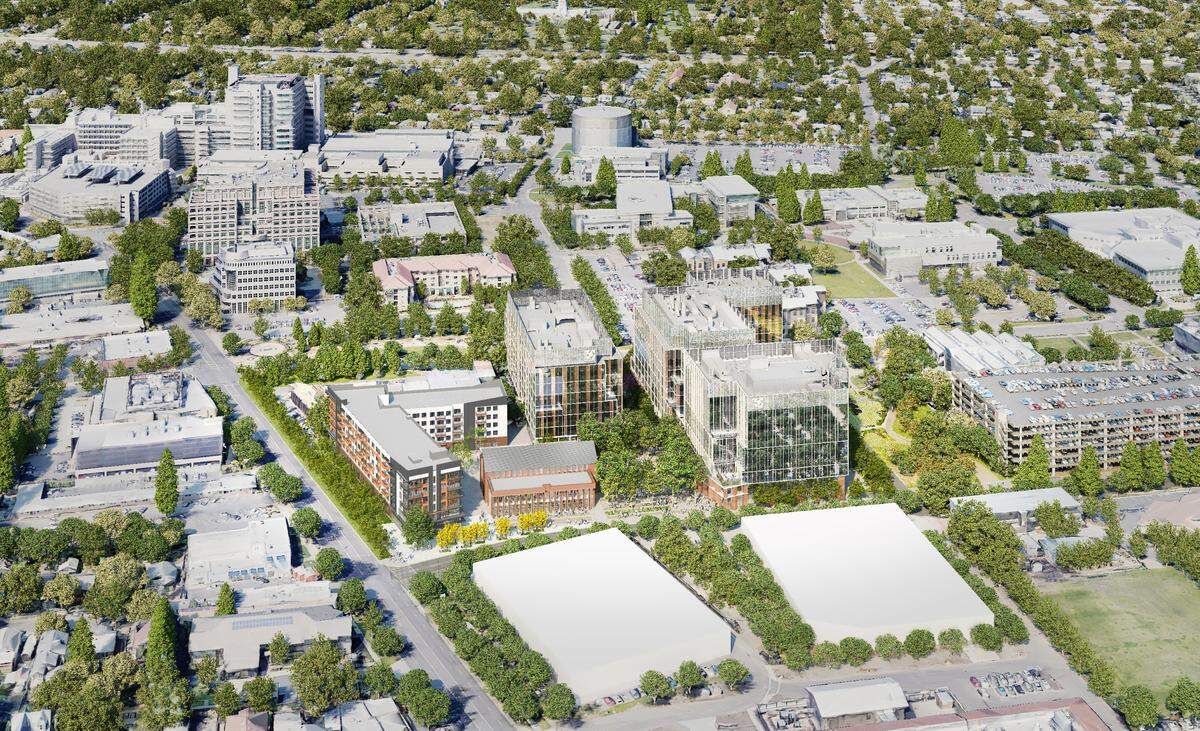
Community leaders and University of California, Davis, officials broke ground Wednesday on a new $1 billion, 8-acre life sciences campus that could help reshape Sacramento’s reputation as a government town to an innovation hub.
Project proponents have touted its new jobs and the power of a new economic engine in Sacramento. That said, most of the tenants for the $1.1 billion project at Second Street and Stockton Boulevard at the UC Davis Medical School campus aren’t lined up.
Meanwhile, one of the two tenants that have been named, The Alice Waters Institute for Edible Education at the University of California, Davis. will have to develop its own funding stream. Financing for the 50,000-square-foot cooking school and food demonstration center by celebrity chief Alice Waters is not included in the $1 billion package.
UC Davis Chancellor Gary May said said fundraising will began in the next six months for the center. Waters was one of the original proponents of using local ingredients in cooking, opening her famed Chez Panisse restaurant in Berkeley in 1971.
But Waters said up to $50 million will be necessary for the construction of the facility, a goal she said she is committed to but also could be challenging.
May said in an interview with The Sacramento Bee on Friday that officials are negotiating with at least 12 different companies for space in the project.
“I can’t say much more about those because they’re in various stages of development,” he said, “and some of the information is a bit sensitive.”
May said he is confident that the university’s reputation as a top research school in areas such as food and agriculture will help attract life science companies — much like what Stanford and UC Berkeley did for Silicon Valley.
He will also have a partner: Wexford Science and Technology, a company that partners with academic institutions to build technology and research parks. The company has built other successful parks across the U.S. and has arranged $700,000 in funding from a real estate investment trust.
Sacramento is competing with other cities with their own technology park plans, all who are aiming to attract thousands of high-paying jobs to their community. While there may not be jobs for all, May said this region will prevail.
“Other cities want to do this,” May said, “but they have to have the right university partner and the right niche that will attract the companies.”

Sacramento Mayor Darrell Steinberg is a believer in the project’s future efforts on the city.
“I view Aggie Square as the single biggest economic initiative for the city in decades,” he told The Bee in an interview last week, repeating his views at the more than 60-minute long ceremonial ground-breaking ceremony on Wednesday.
He was not the only politician touting the project. Everyone from Congresswoman Doris Matsui to Assemblymen Kevin McCarty and state Sen. Richard Pan and county supervisors got their chance to speak.
Construction is scheduled to start in April for the larger parts of the project, but building the Alice Waters Institute won’t start until financing is secured, even with its Phase I status.
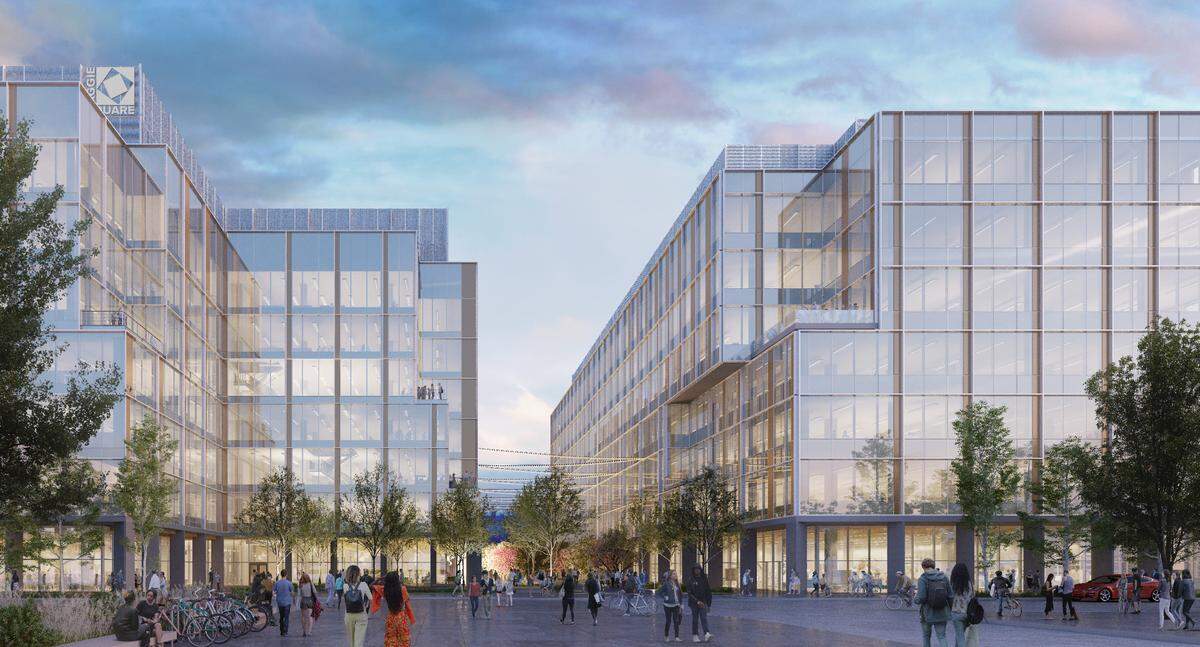
The 8-acre Phase I — officials expect it to be completed at the end of 2024 — will comprise of two main buildings, a 313,000 square foot, nine-story life science/engineering building and a 253,000-square-foot, eight-story lifelong learning building.
The second UC building will contain classrooms and purported opportunities for collaboration with educational instruction by UC Davis faculty and labs and companies in the buildings. UC Davis will control 60% of the facilities in that building.
The remaining buildings initially will provide housing for UC medical school and research students. A parking garage will be the final structure in the phase.
The second announced tenant is Cytiva, a biopharma brand that was owned by General Electric and sold to Danaher Corp.’s life sciences division in 2020. The Washington, D.C.-based company is expected to work on stem cell manufacturing at Aggie Square.
The city of Sacramento is a third partner in the project, doling out nearly $70 million in tax breaks, filling funding gaps in the project and helping the developer with roadway, stormwater and sewer improvement.
The project has already survived roadblocks. It was originally opposed by housing and job advocates concerned that Aggie Square would increase gentrification in the adjoining Oak Park neighborhood.
Several lawsuits were dropped after the city agreed to provide tens of millions of dollars in new affordable housing and a $5 million fund to help tenants who are displaced. In addition, Rexford agreed to job guarantees it said would ensure a wide range of jobs at the new companies, including 20% for those who don’t have a college degree.
Aggie Square will help not just downtown but the entire Sacramento metro area, said Barry Broome, president and CEO of the Greater Sacramento Economic Council.
“It’s our best shot to relieve the low-wage economy,” he said. “Thirty-five percent of household incomes make below $55,000 a year.”
While government will always play a major force in Sacramento, Broome said, the city needs to diversify its economy and offer better paying jobs.
“It will be a game-changer,” he said.
This story was originally published February 16, 2022 at 9:37 AM.