
UC Davis received a $50 million donation. Here’s why environmentalists are suspicious
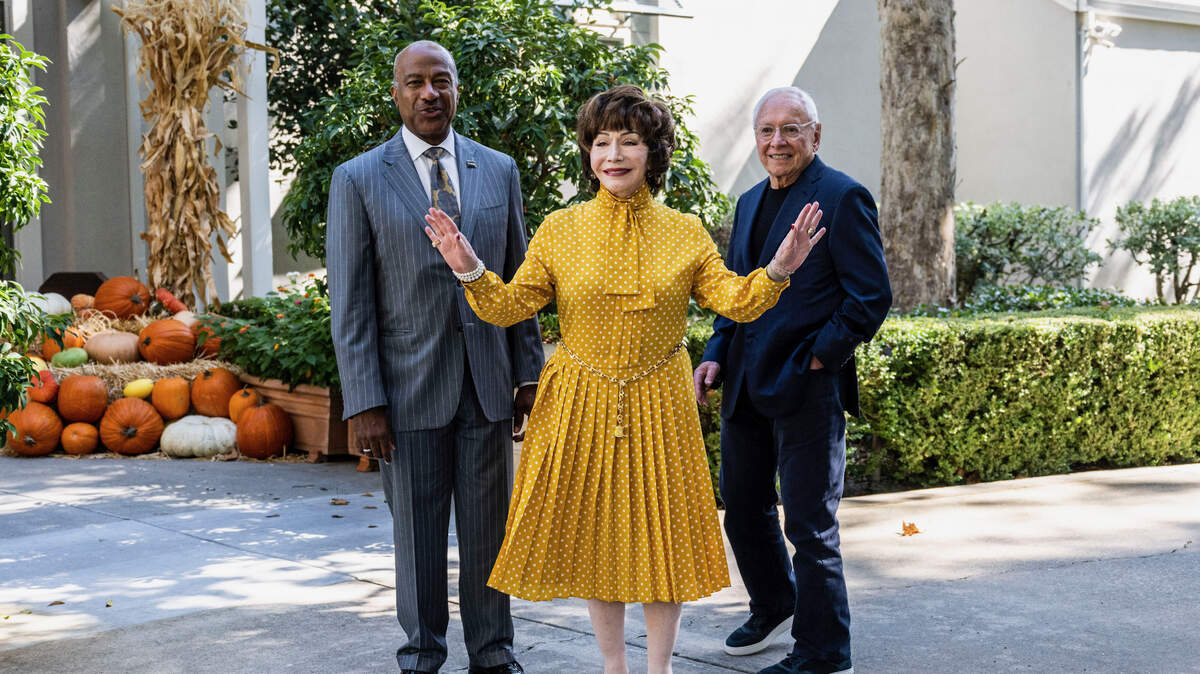
Stewart and Lynda Resnick donated $50 million to fund a new center for sustainable agriculture practices at UC Davis, but environmentalists reacted with suspicion to the school’s mid-October announcement of their gift.
“It’s self-serving,” said Char Miller, a professor who is the director of environmental analysis at Pomona College in Claremont.
Miller’s comment was related to the fact that $10 million of the Resnicks’ gift is earmarked for research grants that are focused on identifying value-added properties in pistachio, almond and pomegranate byproducts. These crops are all part of the billionaire couple’s portfolio.
A spokesperson for the Resnicks, who live in Beverly Hills, repeatedly told The Bee the couple was unavailable for an interview.
The Wonderful Co. may not be a household name, but the Resnicks’ Los Angeles-based private enterprise is the world’s largest grower of tree nuts, America’s largest citrus grower, and owns well-known brands like Fiji Water, POM Wonderful Pomegranate Juice, Halo Mandarins and TeleFlora — the giant flower delivery service.
The Wonderful Co., in a statement to The Bee, defended its environmental record: “Environmental sustainability is at the center of the Wonderful Company’s work.”

The couple had been scheduled to speak at the Oct. 13 ceremony but were no-shows at their own announcement. Their private plane was reportedly delayed at Van Nuys Airport due to flight restrictions for President Joe Biden’s visit to the area.
UC Davis Chancellor Gary S. May went ahead with unveiling the announcement. He said their gift would “shape the future of sustainable food production. ”
Helene Dillard, dean of UC Davis’ College of Agricultural and Environmental Sciences, said in an interview with The Bee that the research grants could help the Wonderful Co. but they would help competing companies, too.
While the couple made a mark with this record-setting donation (the largest the school has ever received), their names are tied to environmental controversy that can be explained in one word: water.
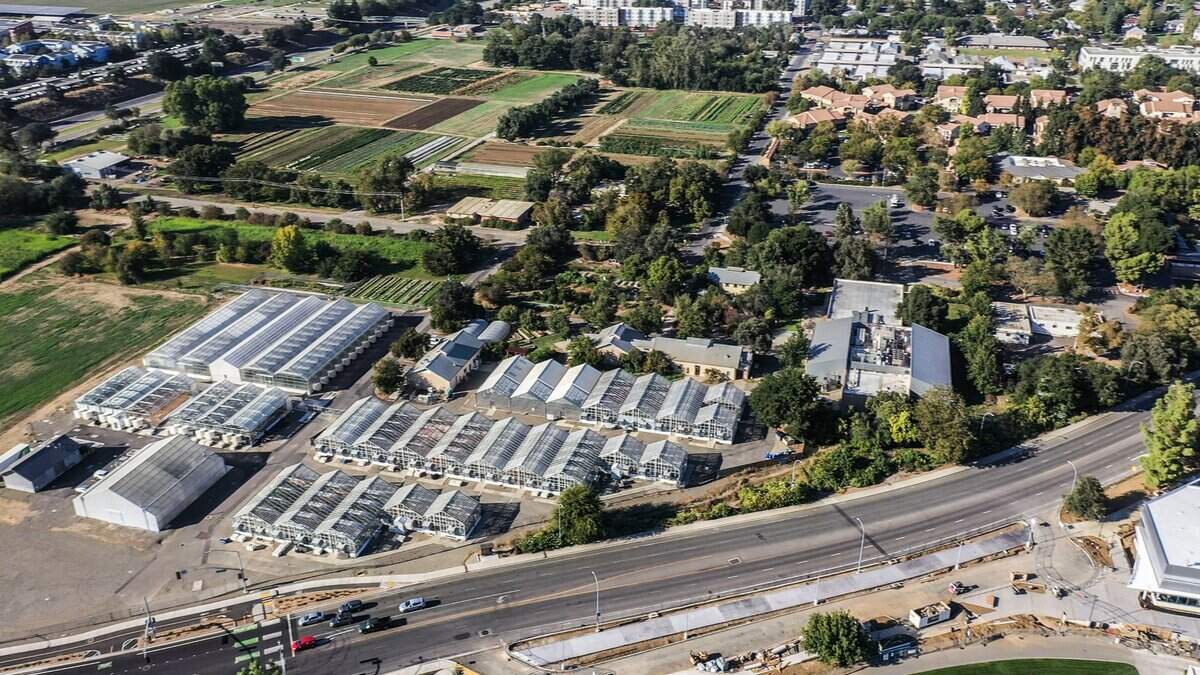
As California faces a continuing record drought, the Resnicks’ companies are the state’s biggest single water users — an estimated 150 billion gallons a year for their crops, Forbes Magazine estimated in 2021. The annual amount of water they use to grow more than 120,000 thousand acres of their produce in the southern San Joaquin Valley is equivalent to the entire city of San Francisco’s water usage for a decade.
Stewart Resnick, 85, got into owning agricultural land more than 40 years ago as a hedge against inflation. He became wealthy setting up a group of janitorial cleaning services in Los Angeles before even graduating law school at UCLA. The Resnicks met in 1970 when Stewart was looking for marketing help for his janitorial business. Lynda Resnick, 79, has run her own marketing business.
The Wonderful Company’s water issues
Water experts say what makes the Resnicks unique is that they have a controlling interest in the Kern Water Bank, a vast aquifer west of Bakersfield that can store more than 500 million gallons of water underground.
Even in the middle of a continuing drought, the Resnicks are able to draw 25% of their crops’ water needs from the water bank.
Taxpayers put forward more than $70 million in the 1980s to develop the aquifer after a state bond issue but the state had trouble managing the operation and abandoned the project in 1993.
It was transferred to farming groups in the 1990s, including companies that were controlled by Stewart Resnick, as part of a complicated and controversial settlement that was done behind closed doors.
The Resnick-controlled companies and other agricultural groups made an exchange. They gave up rights to acquire water from the state of California in exchange for the water bank. They also spent more than $60 million to make the facility operational.
One Washington, D.C. environmental group, the Center For Food Safety, called the transfer of the water bank to private interests “an unconstitutional rip-off.”
However, officials of the Wonderful Co. and the other water districts that make up the water bank said they saved the project that the state abandoned, preserving a vast backup supply of water that serves the needs of agriculture as well as residents of some parts of Bakersfield.
The dispute over the transfer of the Kern Water Bank to private interests has dragged on for more than 25 years. Only last year did a state appeals panel in Sacramento dismiss the lawsuits filed by a number of environmental groups including The Center for Food Safety and The Center for Biological Diversity.
The appeals panel upheld a lower judge’s 2016 ruling in the case that the land transfer was legal and that an environmental review of it was satisfactory.
Last year’s appeal ruling was a defeat for the Center For Food Safety, which had argued that the Kern Water Bank’s transfer to private ownership led to less sustainable agriculture.
Alvar Escriva-Bou, a senior fellow at the PPIC Water Policy Center, didn’t want to comment specifically on the Resnicks, but noted “people like stories with villains, and it looks like almonds and pistachios are the new villains in California water (because they are expensive, they are profitable, and they are also thirsty crops).”
Escriva-Bou questioned what would happen if we ban “almond farms in California”?
“Farmers would switch to other crops like vineyards (grapes), citrus, veggies,” he said. “But they would keep using the same amount of water because they have ‘water rights’ to do it. So as a result, we would have the same overall water use and a less vibrant economy, with less farm income, less jobs, and less value added in our agricultural and food processing industries.”
Around 800 wells went dry in the Central Valley this past summer alone, affecting dozens of farms, while the Resnicks were able to continue to draw on the Kern Water Bank, said Miller, the professor at Pomona College.
He said the Resnicks’ control of the water has created an unfair playing field among water users.
“These are monopolists of water forcing money at a well-funded state university,” said Miller. “It’s a kind of restitution for the work that they’ve done and the exploitation that they’ve achieved.”
The Wonderful Co. noted in its statement that the company has made ongoing efforts to conserve water and operate sustainably.
“Our teams are actively exploring scalable solutions to minimize water usage, convert our popular bottled brands to recyclable plastic, and divert half a billion pounds of material from landfills every year.”
At the announcement of the Resnicks’ gift to UC Davis, Fiji Water was stocked up on a table outside the theater for people to enjoy, but with no reference to the fact that Resnicks owned the water company.
Fiji Water has also caused controversy for the Resnicks.
It has been criticized by environmental advocates for its use of plastic bottles that end up polluting oceans. The Wonderful Co. subsidiary announced in August that it had switched to recycled plastic for its smaller sizes that are sold in the U.S. and would transfer all of its bottles to the recycled plastic by 2025.
Advocates have questioned the negative carbon footprint created by transporting the water more than 5,000 miles from the isolated South Pacific island to the U.S.

Philanthropic legacy of Stewart and Lynda Resnick
While the controversy over the Resnicks’ water usage shows no sign of abating, the couple in the last several years has invested to improve conditions for many of their Central Valley agricultural workers.
The company has built its own charter schools in Delano and Lost Hills — both locations are under an hour from Bakersfield — and offers college scholarships to encourage students to achieve academic success.
Also, a health clinic and a community park have been built. And healthy nutrition programs inside the company’s processing plant work to reduce the high diabetes rate in rural Kern County.
At the UC Davis ceremony announcing the Resnicks’ gift, 40 UC Davis students from the Central Valley were also in attendance: their tuition paid in part by the Resnicks-created Wonderful Scholarship program.
Deysi Alvaro Ceja, 21, a junior plant science major, said the $30,000 Wonderful Scholarship has made a major difference in her life.
“The Resnicks’ scholarship has enabled me to stay focused on my education without worrying about not having enough money to pay for tuition,” she said.

Alvaro Ceja, who is a first generation college student and whose parents are agricultural workers, said the Resnicks’ scholarship enabled her to earn an associate degree in agricultural studies while in high school.
The Resnicks may not have been there in person, but their name was repeated by the speakers at the UC Davis ceremony that resembled a pep rally. The couple were praised as environmental saints for their contributions to sustainability research.
“We are racing to make crops more productive, using fewer resources and feeding the world,” Chancellor May said.
A Wonderful Co. executive read the remarks that Stewart Resnick would have given if he was at the ceremony.
“If humanity can’t rise to this challenge with science and bold action, then nothing else we have done will have meaning … Science will be our salvation,” he quoted Resnick as saying.
The Resnicks did arrive after the ceremony was over, but went straight to Chancellor May’s house for a private luncheon.
The $50 million contribution to UC Davis is small compared to Resnicks’ $750 million donation to California Institute of Technology in Pasadena in 2019 for its sustainability institute.
That gift included a $100 million to build a sustainability resource center to be named after the Resnicks. Construction of the new building is expected to be completed in 2024.
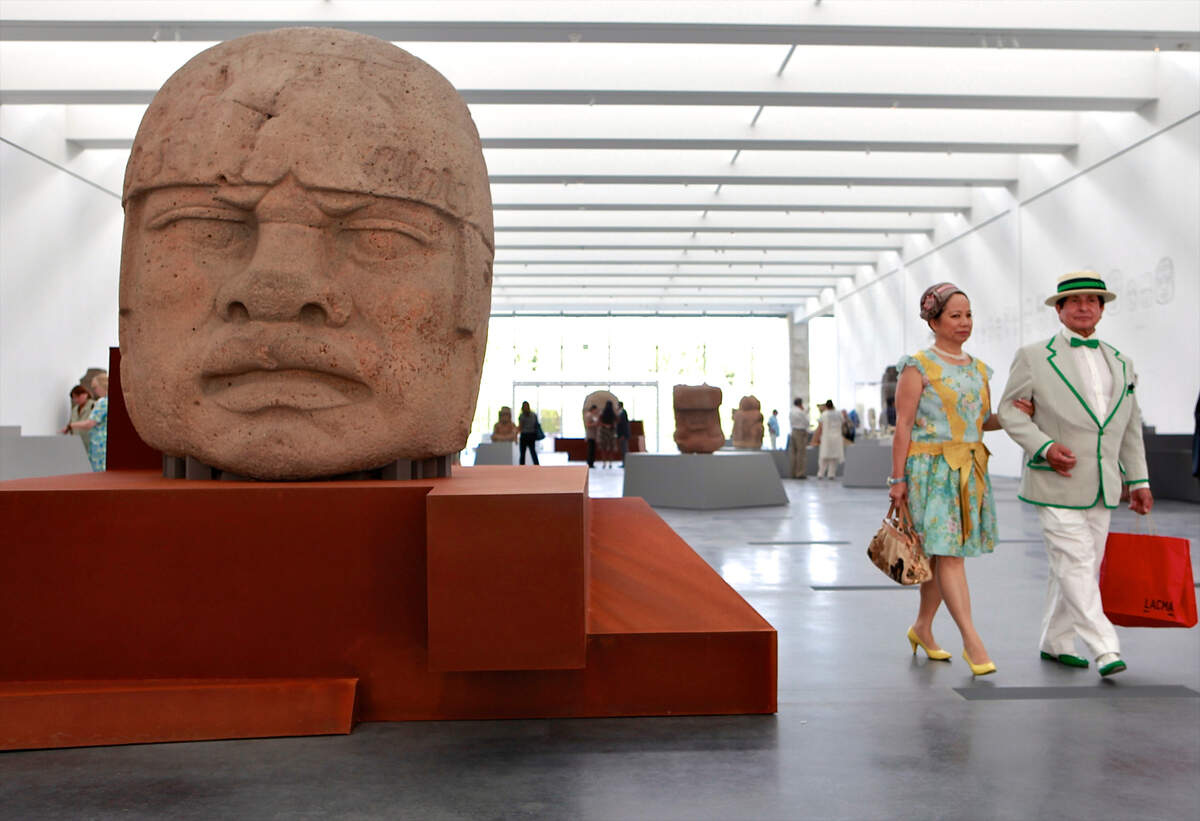
It was not the Resnicks’ first contribution to Caltech. In 2009 the couple gave an initial $20 million to create a sustainability studies program.
At UC Davis, $40 million of the Resnicks’ gift will go toward building a 40,000-square-foot, LEED-certified “hub” named after them — the Lynda and Stewart Resnick Center for Agricultural Innovation.
In early October, the Lynda and Stewart Resnick Student Center at Fresno State opened. The Resnicks donated $10 million.
Among those wielding a ceremonial shovel at the Caltech groundbreaking in May 2022 was Gov. Gavin Newsom, who has received hefty campaign contributions from the Resnicks.
In 2021, they donated $125,000 to help fight his recall and another $64,000 to support his 2022 re-election bid.
The Resnicks have also donated hundreds of thousands of dollars to former governors Jerry Brown, Arnold Schwarzenegger and U.S. Sen. Dianne Feinstein.