Kaiser breaks ground on new 310-bed hospital in Sacramento’s Railyards
Kaiser Permanente officially broke ground, Wednesday, on a 310-bed hospital, a project that will fill a long-vacant swath of land that borders Sacramento’s downtown.
Officials said Kaiser will serve as the anchor for a long-awaited wave of development in the Railyards. And it will offer visible progress for a district that has spent decades in cleanup and ownership changes, and has remained largely undeveloped since railroad operators moved out in the 1990s.
“This is a difficult, complicated and expensive piece of land,” said State Senator Angelique Ashby.
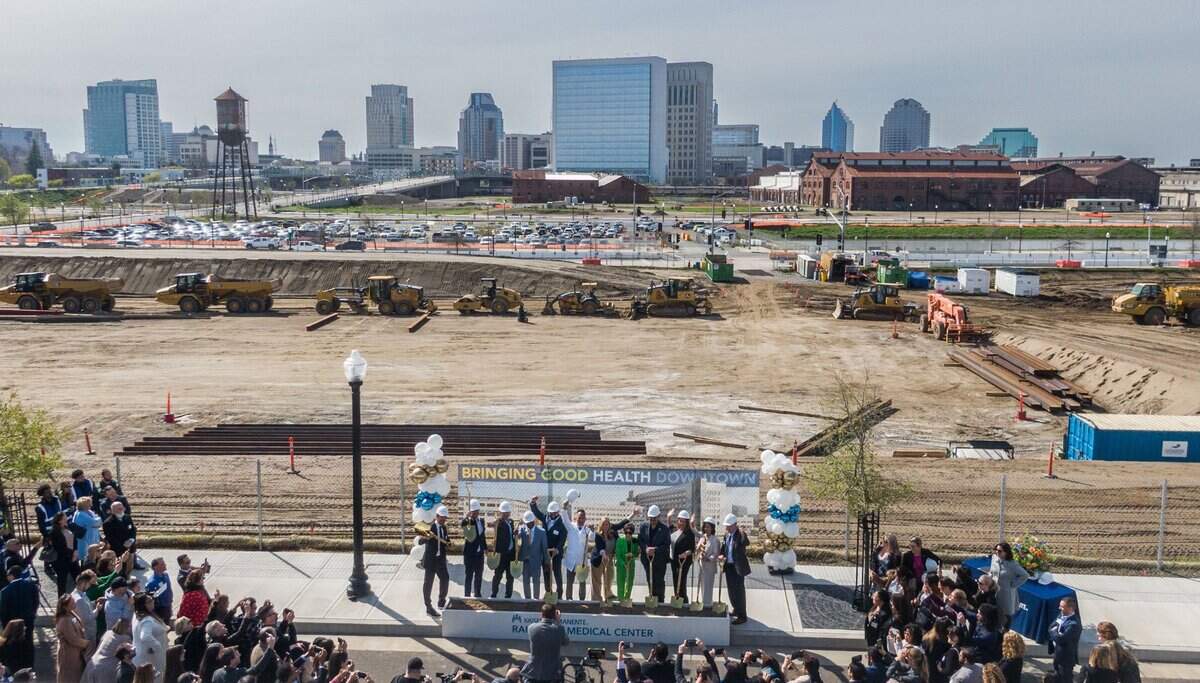
The Railyards are often described as one of the country’s largest urban infill projects, and an opportunity for Sacramento to double the size of its downtown. For years it lacked roads and infrastructure, the land was contaminated and railroad tracks needed to be removed, Ashby said.
“This site required three tiers of government to invest heavily,” Ashby said.
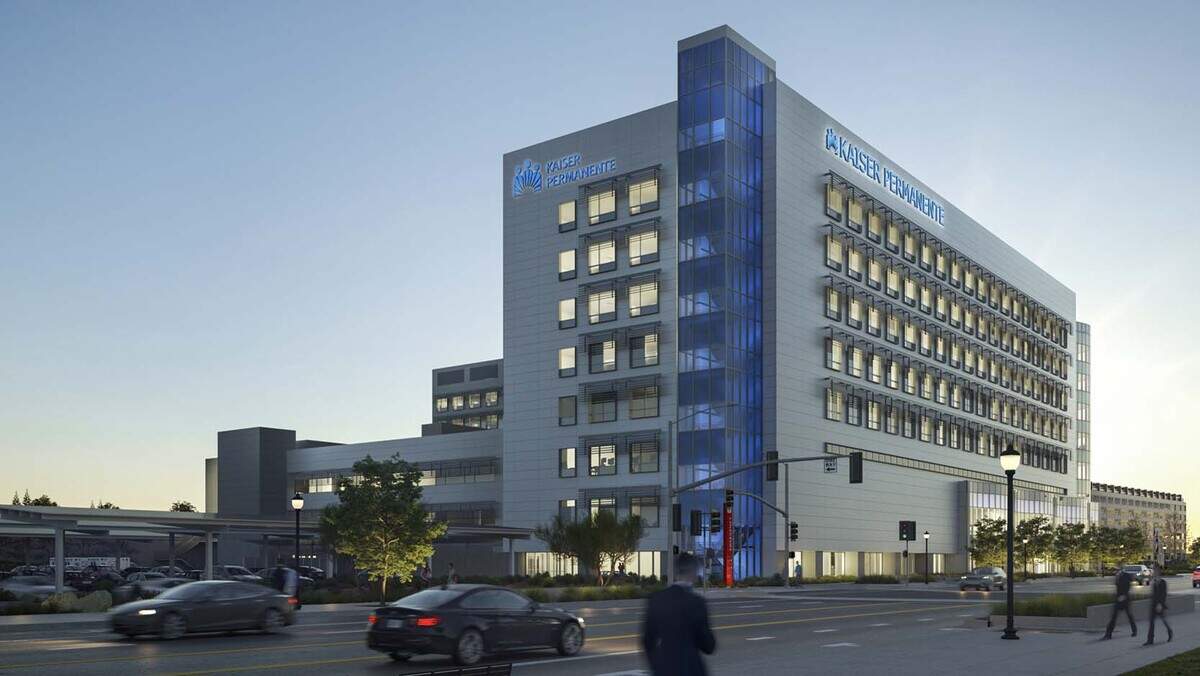
Slated for completion in 2029, Kaiser’s project includes an 8-story hospital building with an emergency department, intensive care unit, neonatal intensive care, surgery, pharmacy, imaging services, plus labor, delivery and postpartum care.
The project, officials said, will expand Kaiser’s maternal care in Sacramento. Today, the health system’s closest maternal services are in Roseville and south Sacramento, said Roderick Vitangcol, physician-in-chief for Kaiser Permanente Sacramento.
There will be an attached, five-story medical office building with 174 offices and 66 exam rooms. The site will also have a seven-story, 1,500-stall parking structure, and a central utility plant to power the hospital.
When it opens, the campus is expected to employ thousands. And in the meantime, up to 600 union construction workers will work on the site, said Jay Robinson, Kaiser’s senior vice president and area manager.
“When our railyard opens, the site will transform back into a thriving job center it once was when the Central Pacific Railroad was the largest employer in the west,” Robinson said. “We expect nearly 3,000 of our health care professionals and support staff to be working here, making it, again, an employment mecca.”
The building will be the third all-electric hospital in the state, said Murat Karakas, mechanical engineer for Arup, the project’s engineering firm. It was preceded by a University of California, Irvine site and a Kaiser hospital under construction in San Jose, also scheduled for completion in 2029.

The region’s health systems have been expanding aggressively, building out new units in existing hospitals and adding dozens of outpatient clinics and urgent care locations. Vitangcol said those moves are driven, in part, by population growth.
“We’re on the march toward having over 1 million members here, probably in the next five years,” Vitangcol said. “The community is growing. Businesses are expanding. People are realizing Sacramento is this hidden gem… We’re here to help serve them.”
The hospital is one piece of developers’ vision for the district. In November the city approved two deals that would pave the way for construction of a 12,000-seat soccer stadium in the Railyards, and for a 3,600-person music venue nearby.
In the past 10 to 15 years, former Mayor Darrell Steinberg said, the Railyards has gone from a “wouldn’t-it-be-nice-if,” project to reality.
“I know future generations might not ask the question: ‘How did this come to be,’” Steinberg said. “But they will certainly benefit.”

This story was originally published March 19, 2025 at 2:42 PM.
CORRECTION: Several captions had the incorrect day of the week.