Sacramento-area health care providers fret proposed Medicaid cuts
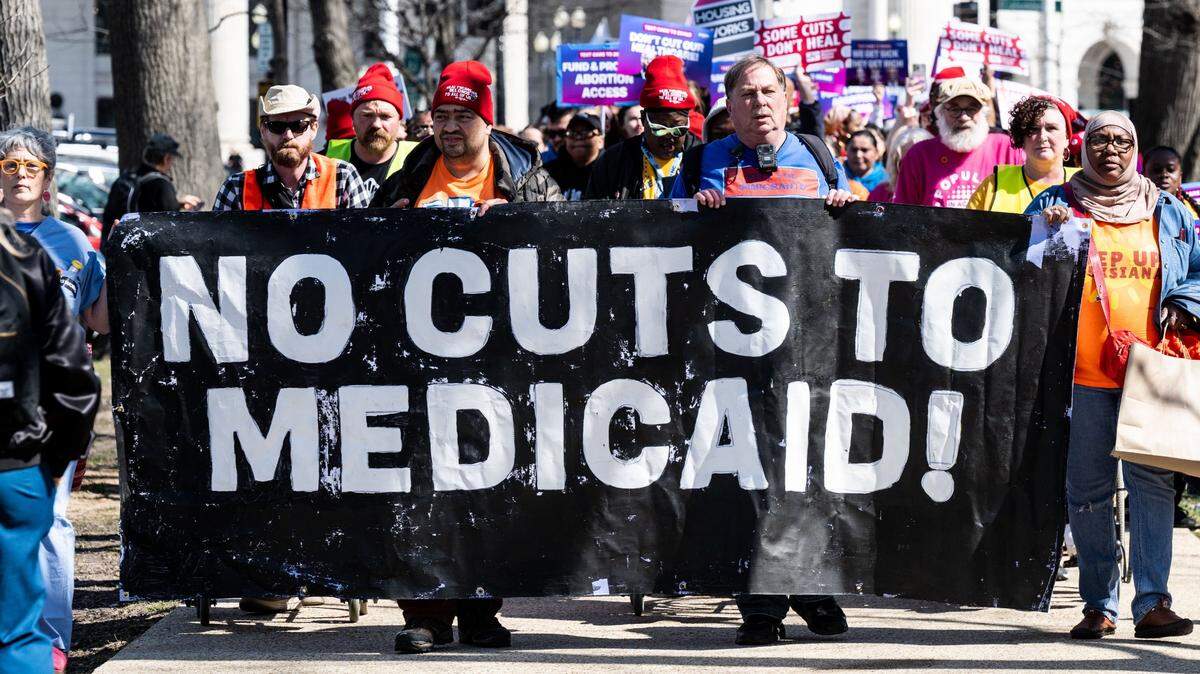
Health care providers across northern California have been rattled, in recent weeks, as federal lawmakers’ telegraphed that they are considering making cuts to Medicaid, the insurance program that covers many disabled and low-income residents.
Officials from safety-net clinics, which treat larger portions of patients on government-funded insurance, said they are making contingency plans, considering what services they would eliminate if the budget reductions pass, and fretting over scenarios in which they must treat a larger portion of uninsured patients.
“We currently are breakeven,” said Jonathan Porteus, CEO of WellSpace Health, a local health system that operates a network of federally qualified health centers. “We don’t have some sort of slush fund we can go to for uninsured care.”
Officials from two area hospitals said that if budget cuts lead to a drop in Medicaid enrollment, they fear that newly uninsured patients will delay care until their health conditions become more serious, placing further burdens on emergency rooms.
Still, they are mired in uncertainty: It’s unclear what form the budgetary changes would take, whether there is political will to make significant changes to program, or how states — which administer Medicaid programs, like California’s Medi-Cal — would react.
The House committee overseeing the Medicaid budget will meet Wednesday for further discussion.
‘Inescapable’ math
Congress’ budget outline, passed earlier this year, called for $880 billion in cuts over the course of a decade by the House Energy and Commerce Committee, which has jurisdiction over Medicaid.
“Looking at the money that’s on the table, it basically is inescapable that the vast majority of the cuts would have to come from Medicaid,” said Liz Williams, senior policy manager for the Program on Medicaid and the Uninsured at KFF, a health care policy research group.
Budget cuts of that scale, she said, could be accomplished in several ways. They might be achieved, for instance, by lowering the federal contribution for certain enrollees — like those who qualify for coverage as a result of Medicaid expansion — or imposing work requirements.
Forty-one states have expanded Medicaid to include patients with incomes up to 138% of the federal poverty level, according to KFF, as authorized by the Affordable Care Act. States’ adoption was incentivized by the federal government’s commitment to cover 90% of the costs for the new tier of enrollees.
“Any reductions in federal Medicaid spending would leave states with tough choices,” Williams said. “The states are the ones that ultimately have to respond.”
States could choose to make up the difference through tax increases or cuts to other areas of the budget, she said. If states are unable or unwilling to do that, they could reduce Medicaid spending by covering fewer people, offering fewer benefits or paying health care providers less.
The California Department of Health Care Services said in a statement that it would continue working with federal agencies to keep patients healthy. More than 14 million people in California are enrolled in Medicaid, according to a department spokesperson.
Medi-Cal’s budget for the current fiscal year is $178.6 billion, of which $107.9 billion is federal funding.
“While we don’t typically speculate on the potential impacts of federal action, we remain committed to protecting Californians’ access to the critical services and programs they need,” the statement read.
Rep. Doris Matsui said in an interview last week that while some Republicans have moderated on the proposed Medicaid cuts, they haven’t presented alternative means of trimming the budget, which they will have to do if they are committed to delivering major tax cuts.
“There’s a little bit of backing off,” Matsui said. “They’re caught between a rock and a hard place.”
In February, eight House Republicans signed a letter to House Speaker Mike Johnson, R-La, raising concerns about the prospect of Medicaid cuts, the Bee previously reported. Last month, President Donald Trump said he did not want to touch Medicaid funding, the Associated Press reported.
Many Republicans represent rural areas with higher portions of Medicaid patients, Matsui said. Those communities often have smaller hospitals and clinics that already struggle financially.
“I’m not sure where it’s going,” Matsui said. “We’re certainly going to make it difficult for them, and challenge them at every turn.”
Two or three budgets
Chloe Guazzone, executive director of Anderson Valley Health Center, said the talk of Medicaid cuts comes as she and other providers budget for the upcoming fiscal year. Guazzone’s clinic is located in Mendocino County’s grape-growing region, where she estimated that about one-third of the patients are farmworkers or family members of farmworkers.
“Some sites are doing two, three different scenarios depending on what they think might go away,” Guazzone said. “We’re kind of shooting in the dark.”
At WellSpace Health in Sacramento, about 85% of patients are covered by Medicaid, and 5% by Medicare, said Porteus, the CEO. WellSpace uses the revenues from those patients to offset the costs of caring for the remaining 10%, who are uninsured.
If Congress made significant cuts to Medicaid, Porteus said WellSpace may have to reduce services, leaving patients with longer wait times for care — a scenario he described as “totally unacceptable.”
“We will be here,” Porteus said. “We will provide as many services as we can.”
At the clinic in Mendocino County, Guazzone said that if Medicaid is cut, her staff may have to pull back on some of the services that they provide at little or no cost, like case management for complex patients, or in-school programs.
As a federally qualified health center, the clinic is required to provide some basic services, like medical, dental and behavioral health care.
“We’d have to keep those going somehow. I don’t know how you do that when you don’t have good revenue,” Guazzone said. “We’re already running so tight.”
Margins are also thin at Adventist Health Rideout in Marysville, which serves 50% Medicare patients and 33% Medicaid, said Chris Champlin, the hospital’s president.
“The natural tendency is, ‘Well, reduce your costs,’” Champlin said.
But between a minimum wage hike, rising costs for supplies and a $2 million increase in the hospital’s utility bills last year, that’s largely unfeasible, he said.
“Eighty percent to 90% of the costs of a hospital are not controllable by just going out and reducing costs,” he said. “It’s not that simple.”
Beyond budget cuts, officials forecast other knock-on effects. Guazzone worries the financial uncertainty will make it more difficult to hire. Clinics like hers can’t compete with the wages hospitals pay, so finding and keeping workers is already challenging. And officials said uninsured patients often delay seeking care until their health conditions become serious — and more expensive — causing further delays in hospitals’ emergency rooms.
“Ambulance times will be longer. Wait times for the entire population in the ER will be longer,” said Adam Dougherty, chief of emergency medicine at Sutter Medical Center.
Uncertainty
Early in her career, Dr. Kimberly Buss treated many patients who couldn’t afford basic care like medications, doctors’ visits or blood tests.
A Sacramento resident who spent most of her career as a family physician with Sutter Health, Buss recalled watching diabetic patients go through a vicious cycle: An employed, otherwise healthy person would develop a complication from diabetes that would prevent them from working for a time. They’d lose their insurance, which would make it harder to pay for insulin. Without good access to medication, their complications would worsen, making it more difficult to go back to work.
After the passage of the ACA, which established health insurance exchanges and laid the groundwork for states to expand Medicaid, she said her patients’ lives improved. Some were able to get their chronic conditions under control, and go back to work.
“Over time, I’ve seen how Medi-Cal’s become part of the infrastructure of our society,” Buss said. “I think a lot of physicians who didn’t practice in that time-frame before 2010 just don’t know what that was like.”
The talk of Medicaid cuts has weighed on Buss as a doctor and as a parent. Her 26-year-old son, Eli Frankel, has a congenital brain anomaly. He lives with Buss, and though he receives his primary insurance through his parents, he has supplemental insurance through Medi-Cal, which also provides funding to many of the programs he benefits from.
Medicaid has, at least in part, Buss said, funded her son’s speech, physical and occupational therapy, his attendance at a local day program, job training, independent living skills and assistive technology that helps him communicate.
“Eli is a gift to me, he’s a gift to my family, he’s a gift to Sacramento,” Buss said. “But that gift requires care.”