Sacramento’s financing plan for Railyards hits a snag at final hearing
The multimillion-dollar financing agreement for the Railyards hit a snag Tuesday when a group of Sacramento residents triggered a rarely-used piece of state law.
Though the deal was approved by the full City Council earlier this month, the expansion of a special taxing district for the Railyards required one additional vote by a subcommittee, scheduled for Tuesday morning. Members were unaware, said Councilmember Karina Talamantes, that a group of residents from the two apartment complexes in the Railyards — The Wong Center and The A.J. — would show up to voice their dissent. Others filed written protests against the agreement.
State code says that if written or oral protests have been lodged by 25% to 50% of adult residents and landowners in a proposed special taxing district, the city must hold an election for the district’s residents and landowners to vote on the issue. If protests have been lodged by more than 50%, the proceedings are effectively stopped, and the city cannot revisit them for one year, said Constantine Baranoff, an attorney with Lozano Smith who represents the city’s Railyards financing committee.
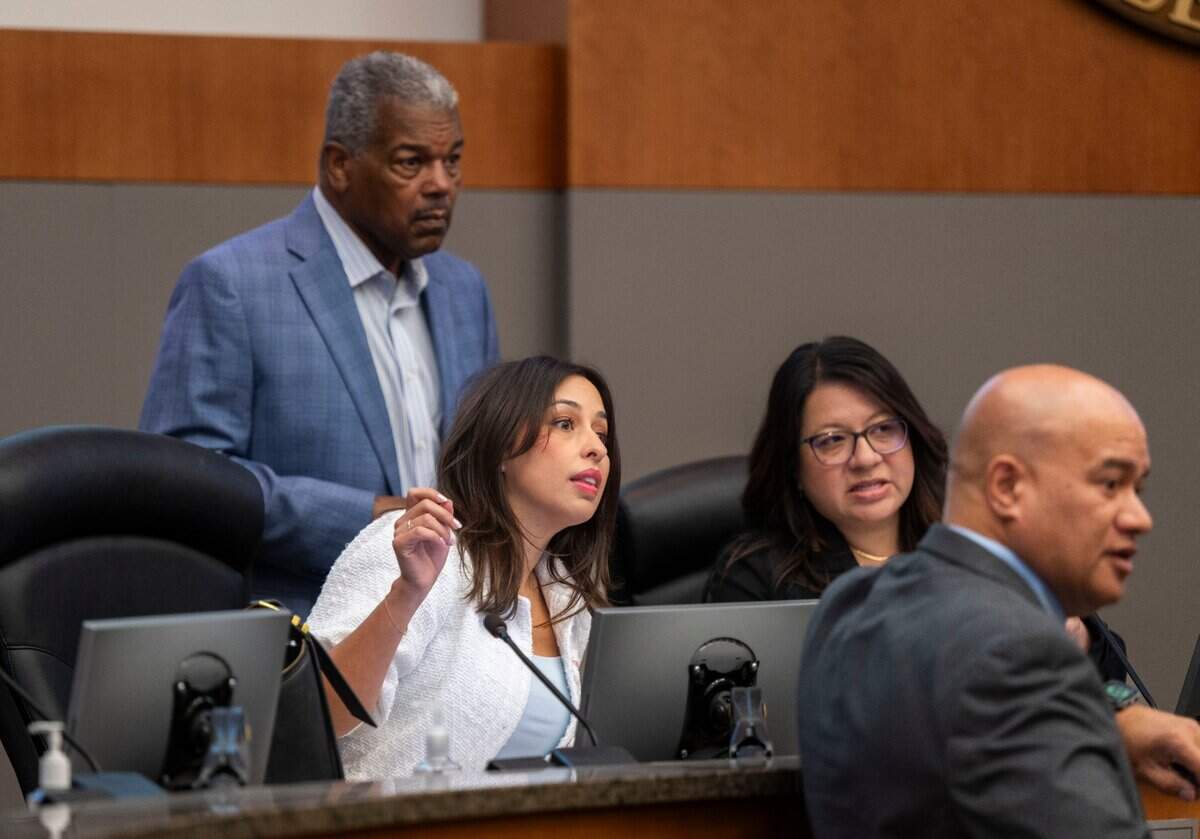
Baranoff told the committee that the city clerk’s preliminary count showed that the protests had surpassed 25%, but it was unclear if they had exceeded 50%.
Denton Kelley, president and CEO of Downtown Railyard Ventures, acknowledged the protests in an email Tuesday morning, but signaled that his firm was still gauging what they would mean for the project. He said Downtown Railyard Ventures had no further comment as the city evaluates “the nature of this opposition” and what it means for the special taxing district.
Downtown Railyard Ventures owns much of the real estate in the district. Kelley is also president and CEO of LDK Ventures, the lead developer on the project.
Sacramento Republic FC — the soccer team that plans to build a stadium in the Railyards — said in a statement Tuesday afternoon that the benefits of moving forward with the project “have been clearly demonstrated.” Jesus Tarango, chairman of the Wilton Rancheria, which is the majority owner of the soccer team, said in a statement Tuesday evening that the city’s future should not be “shaped by outside interests looking to leverage our efforts for their own gain.” He described the protest effort as “an attempt to strong-arm” the Wilton Rancheria, at the risk of a major economic driver for the region.
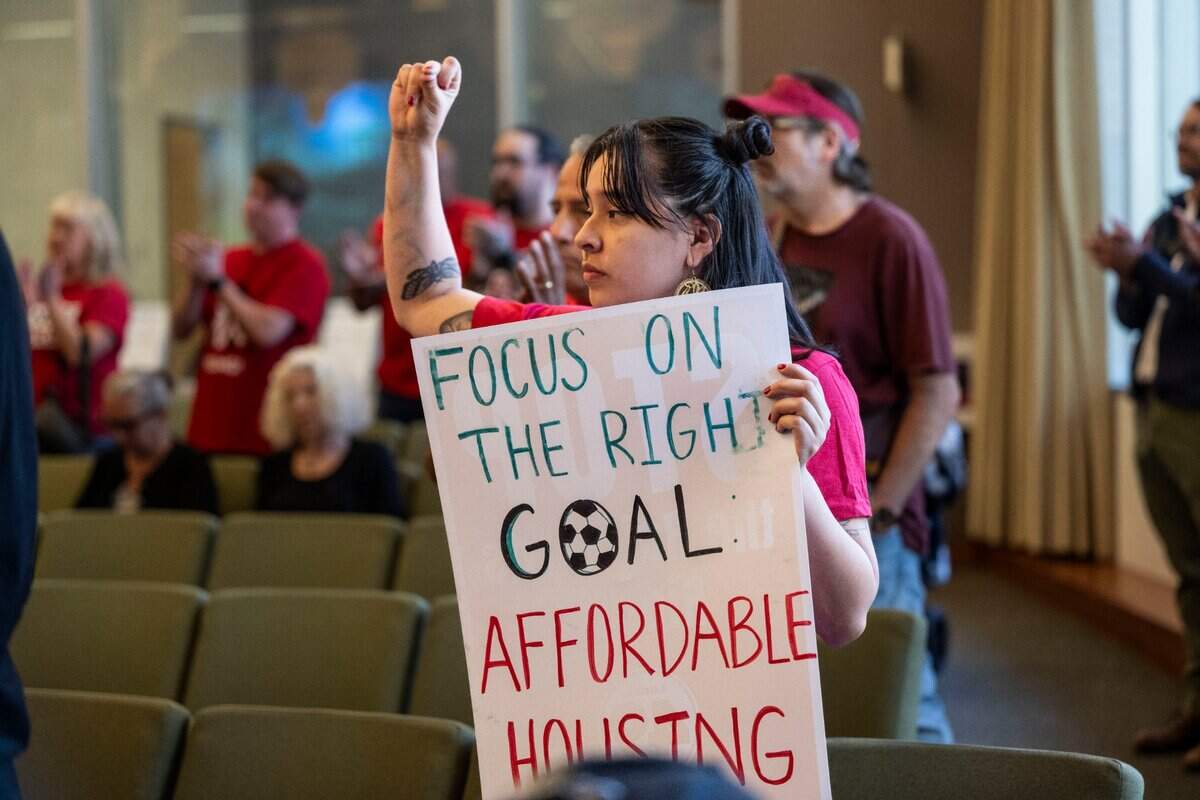
The residents who appeared Tuesday, organized by Unite Here Local 49, a union chapter that represents local casino, hotel and food service workers, called for the city to require developers to build more affordable housing in the Railyards.
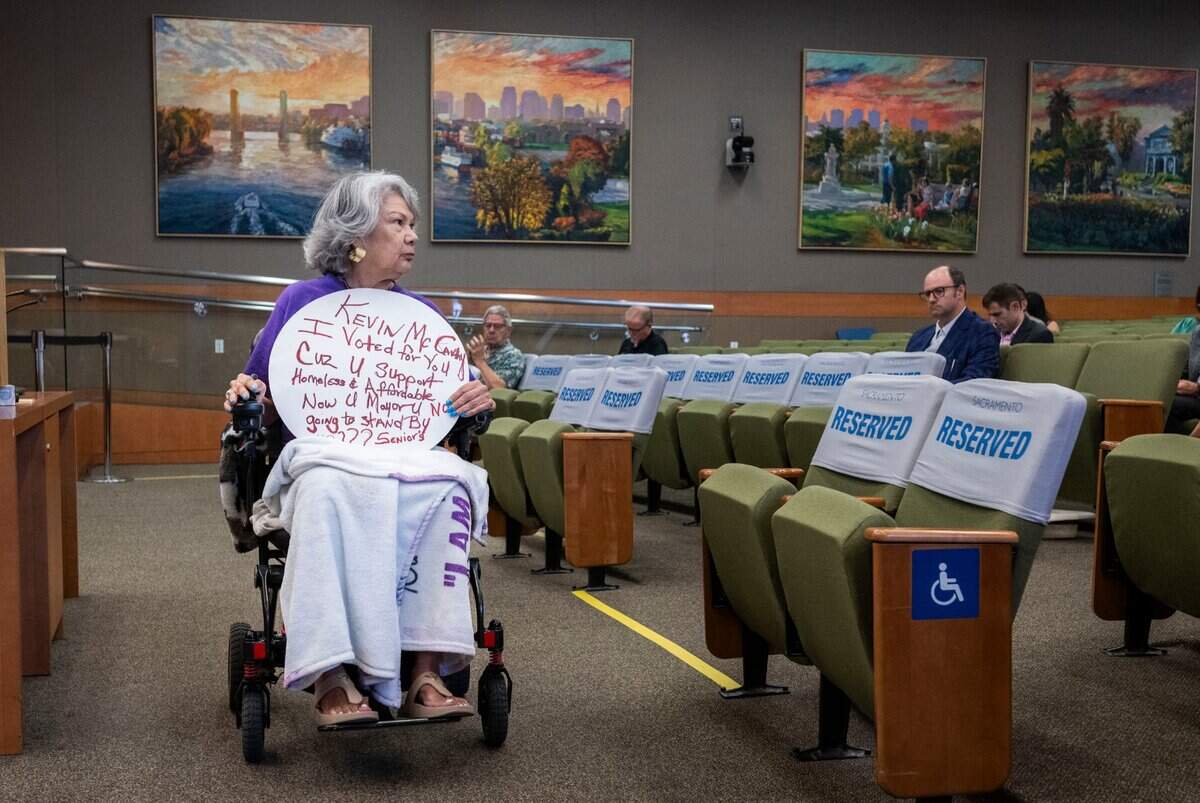
Pamela Freemon, 77, who lives at the Wong Center, told the committee Tuesday that the affordable housing requirements in the current deal “shameful.”
“We want soccer here in Sacramento, but we also need to address the housing crisis,” Freemon said.
Kelley said earlier this month that 500 of the first 6,000 units built in the Railyards would be affordable, or about 8%. The union and its allies have suggested that the rate should be closer to 20%.
The deal is structured so that as the land is developed and housing, entertainment and a soccer stadium are built out, the expected increases in property taxes would be used to repay developer’s up-front spending on infrastructure. Kelley said earlier this month that many of those expenses would be for roads, sidewalks and water and sewer connections.
Proponents have argued that without public support in the form of a special taxing district, the Railyards will sit vacant, as they largely have since railroad operators pulled out of the district in the 1990s.
At the June 10 meeting, the council heard public comment and deliberated over the financing plan for nearly three-and-a-half hours. Dozens of construction union members and soccer fans spoke in favor of the deal, as did business groups like the Downtown Sacramento Partnership and Greater Sacramento Economic Council. Despite opposition from several members of Unite Here Local 49, the council passed the agreement unanimously.
Just after the June 10 meeting, representatives from Sacramento Republic FC told reporters that the financing agreement was “critical” for the development. Team President and General Manager Todd Dunivant said the project “doesn’t happen” without it.
However, critics have cast the deal as a giveaway to developers, and a financial burden for the city, which is expected to see deficits on the agreement through 2033. And the union, Unite Here Local 49, has called for neutrality agreements for the planned soccer stadium and any hotels that might be built in the district. Under such agreements, an employer agrees to voluntarily recognize a union if the majority of its workers sign union cards, rather than requiring organizers to hold an election overseen by the National Labor Relations Board.
On Tuesday, the committee overseeing the Railyards financing agreement said that it would reconvene after the clerk had confirmed the count.
City staff said they would likely need a week to verify the numbers.
This story was originally published June 24, 2025 at 12:09 PM.