How Nevada County food entrepreneurs can take ideas to the next level
AI-generated summary reviewed by our newsroom.
- Sierra Commons launches Food Accelerator to help rural entrepreneurs scale.
- Program supports underserved founders with free child care, advising and stipends.
- 2024 pilot created 8 jobs and helped launch 2 restaurants now hiring in Nevada County.
In just a few weeks, aspiring food entrepreneurs in and near Nevada County can learn how to take their products or concepts and land them on store shelves, in food trucks or in restaurants.
Sierra Commons, a business incubator based in Nevada City, is inviting local residents to sign up for its Food Accelerator, and to lower barriers, founder Robert Trent has found a way to cover the cost of the 10 classes as well as child care for potential students juggling financial or family pressures.
The classes, which start Oct. 6, are funded in part through California’s Jobs First initiative, which prioritizes disinvested communities, and supported by local partners including the Sierra Small Business Development Center.
Of the clients that Trent has met with since Oct. 1, 2024, 82% have identified as a member of an underserved community, according to Jessica Carr, director of the development group.
“Food entrepreneurs face unique challenges when starting out,” Trent said. “The Food Accelerator provides the knowledge, resources, and community support to move from idea to action.”
Trent actually began a pilot Food Accelerator program last year, training 20 entrepreneurs and scoring successes that they gave him the confidence to seek the state funding.
He estimated that eight jobs have been created — three full time, five part time — since the Food Accelerator launched last year. Two restaurants, Comedor and Petra, launched and are currently hiring. Other businesses run by graduates: Gold Lantern Baking, The Ham Stand, Hola! Tortilla, Nevada City Crepes and Yes! Have Some.
Behind the scenes, Sierra Commons is mapping every step a foodmaker needs — licensing, kitchens, suppliers, branding, legal, e-commerce — to create a resource database for food entrepreneurs in the region, Trent said, and they are documenting how they do everything to allow others to replicate what they’re doing.
They also show entrepreneurs how to access state funding that could help their businesses grow.
Success story: Meet Petra’s Jade Benetatos
In the middle of juggling construction contractors, menu development and building permits, Jade Benetatos carved out time to stress-test her plans for a new restaurant by enrolling in the program.
Just months earlier, Benetatos had been invited to the program as an expert, sharing insights from her years in the food world. But when it came time to launch Petra, she realized she needed the program as a student rather than as an adviser.
The move was a validation of ”the network, mentorship, and perspective” that Trent had labored to establish.
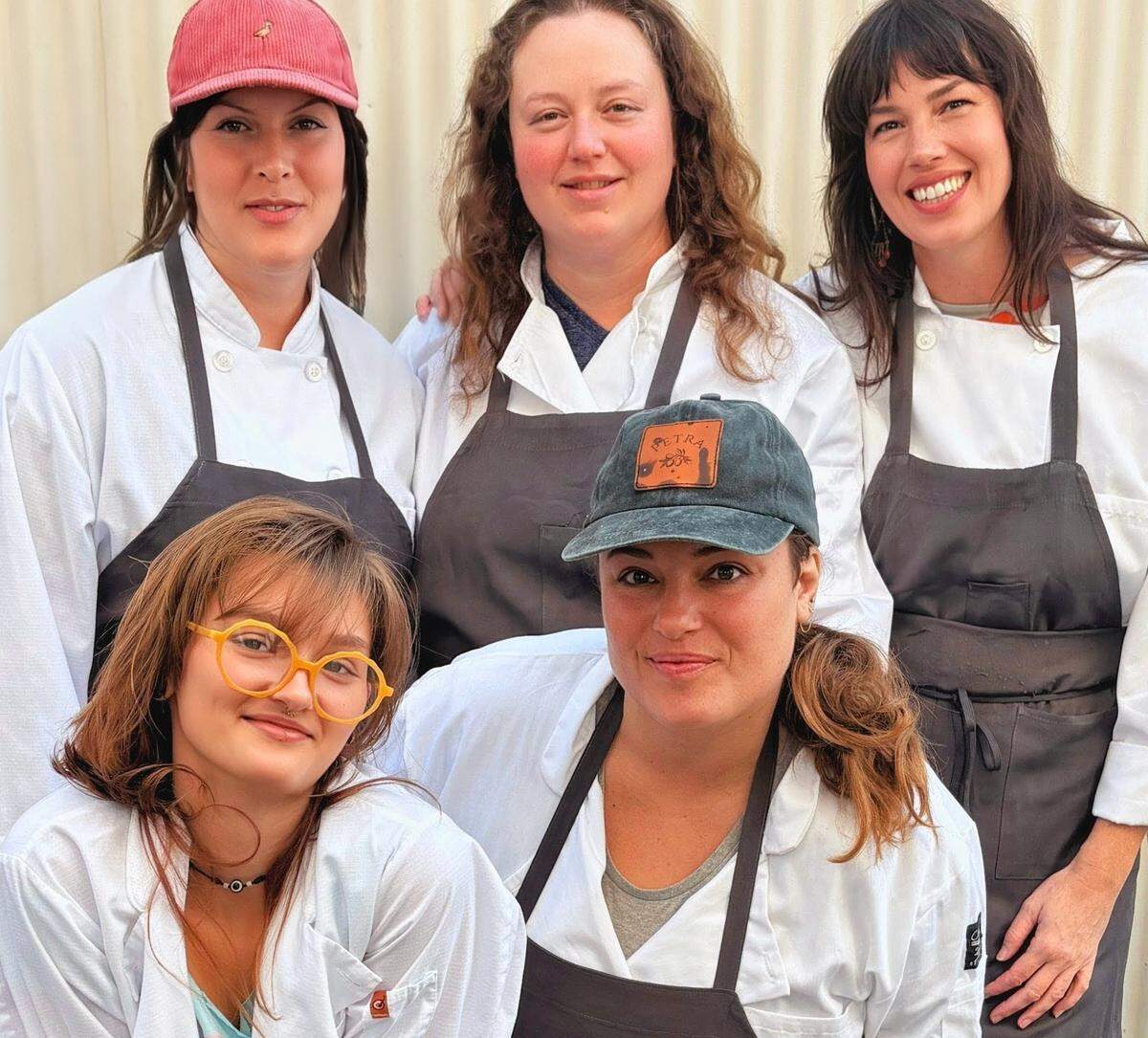
“Time, money, and unwavering dedication create the foundation for every successful food entrepreneur. Consistently maintaining all three is challenging to say the least,” Trent said. “I believed in Jade and her vision.”
Time was Benetatos’ biggest enemy when she joined the Food Accelerator.
“Opening a restaurant is a full-time, all-consuming effort,” said Benetatos. “Balancing the chaos of permits, contractors, and menu testing with carving out the headspace to learn and reflect was not easy. But that challenge made the lessons sink in even deeper.”
The accelerator also helped her think beyond the dining room. During the program, she said, she realized Petra could expand into grab-and-go products, leading to a new line of organic dips — hummus, baba ganoush, lemon yogurt labneh, and muhammara. She now serves them both at Petra and through other local eateries.
Benetatos showed grit not just in the long nights she spent working on her Mediterranean-themed restaurant concept, but also in her eagerness to stretch herself in class, said instructor Mani Niall. What set her apart, he added, was her awareness that experience alone wasn’t enough.
“She embraced it all,” Niall said. “If there was something that might hold her back, she leaned into it even harder. It felt like failure was not an option for her.”
Now in its second year, the program is open to adults 18 and older, regardless of formal education or income.
The upcoming sessions run Oct. 6-29 with classes held from 6 to 7:30 p.m. Monday through Wednesday. Tuition is $199, with scholarships and child care stipends available.
Applications are due Sept. 29, one week before the program begins. To apply, visit sierracommons.org/food-accelerator.