Rancho Cordova seeks a central gathering place in ambitious arena project
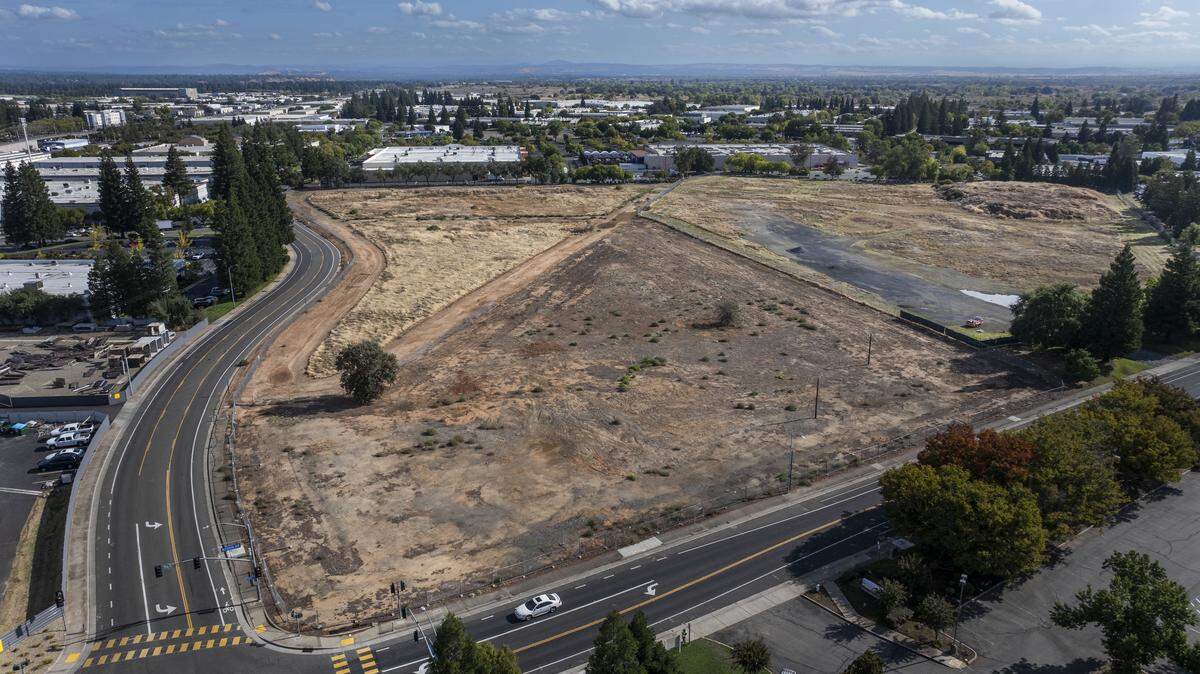
An indoor soccer arena was a surprising proposition, to some, for the corner of Kilgore Road and Trade Center Drive, in a section of Rancho Cordova dominated by large, commercial buildings.
But an initial agreement for the project won unanimous approval from the City Council last month, on the belief that the district could create a long-awaited, Main Street-style central gathering place for Rancho Cordova.
“This project gives us the beginning of what could be a future downtown,” said City Manager Micah Runner.
Rancho Cordova was shaped in part by Folsom Boulevard, which bisects the densest section of the city and served, historically, as a highway stretching northeast from downtown Sacramento, said City Councilmember Linda Budge.
“Every corner had a gas station, every other corner had a motel, and every other corner had a Pancake House,” Budge said.
These days, the city has gathering places like the Village Green and Hagan Community Park. It also has plenty of activities, Budge said. A local community council recently reported that it holds 200 annual events in Rancho Cordova, she said.
But none are of the scale imagined by the latest proposal.
“But we don’t really have a downtown, per se, and we need to create one,” Budge said.
So when city officials were approached by developers looking to build an indoor soccer arena, they mapped out the agreement, which contemplates offering city-owned land to the project and sharing expected tax revenues.
Not just soccer
The project is led by Joshua Wood, the CEO of KozPure Development, which will serve as the developer, and Alpha One Sports and Entertainment Group, the property owner. Alpha One was incorporated in late 2023, and KozPure in 2024.
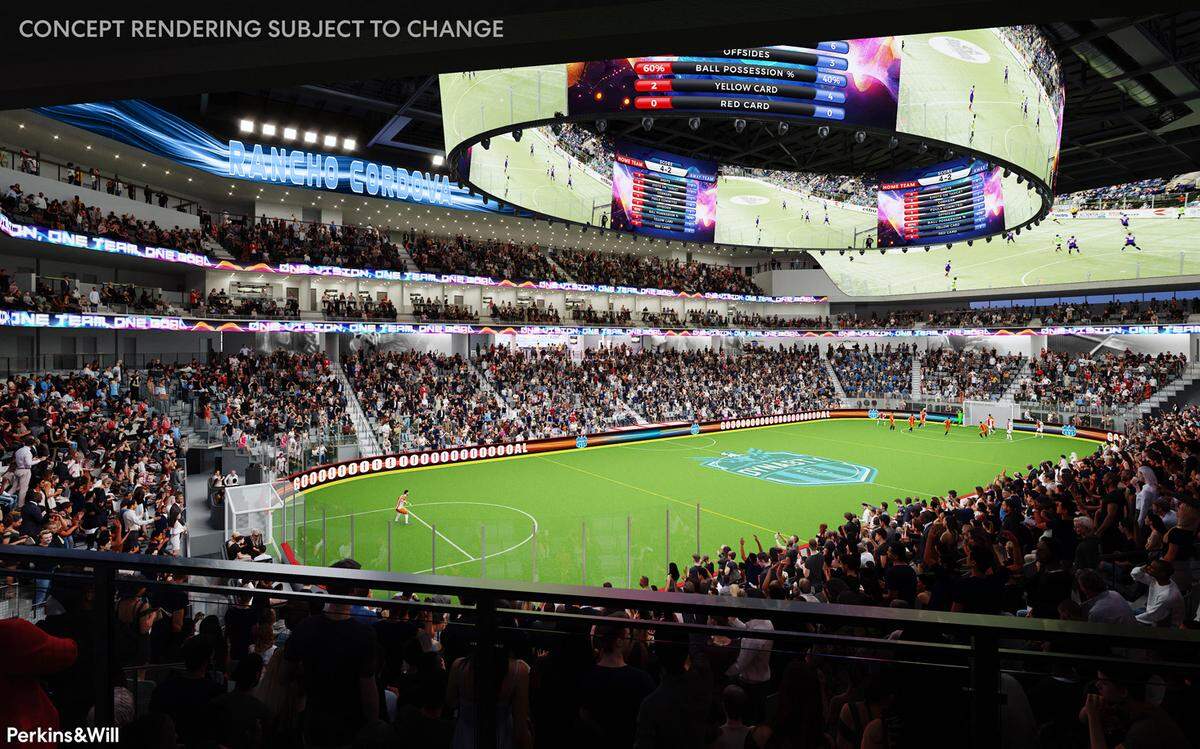
The project would be anchored by the soccer arena, but would also include hotels, retail, dining, a movie theater, housing, a cardroom, parking and a plaza.
Wood, a 13-year resident of Rancho Cordova, said he wanted to bring more entertainment options to his city. He was sold on the indoor Major Arena Soccer League after attending a game in San Diego.
“It’s intense, high-scoring, fast, physical — kind of like 1990s basketball used to be,” Wood said. “You could go to a match and it could be 16 to 14.”
Keith Tozer, the league’s commissioner, said Sacramento teams would help build out the MASL’s presence in California. Many of its U.S. players come from the state, he said, because they grow up playing soccer year-round. The MASL season runs from November through March, with playoffs in April, so it would not overlap with Sacramento Republic FC’s schedule.
Wood said he is still assembling an ownership group for the soccer teams. He said the teams will not be the only ones to play in the arena.
“We have a range of other tenants that we’ll be announcing,” he said.
Win or fail
Scott Kingston, a senior vice president at Turton Commercial Real Estate, admitted that he was surprised when he first sat down with the development team.
“Even I was like, ‘You’re going to do what?’” Kingston said.
But the new, 7,500-seat venue, he said, would be a “Goldilocks” size for the region: About three times the capacity of Channel 24 in Sacramento, but less than half the capacity of Golden 1 Center and the outdoor amphitheaters on the outskirts of the metro area.
“I support anyone who is willing to think absolutely out of the box,” said Kingston, who is brokering land deals for the project, and leasing its retail spaces. Plus, he added, “I think there’s enough demand from residents, customers, tourists — to lease apartment buildings, to stay in hotel rooms, to shop, and dine, and play.”
The agreement approved by the council commits to transfer the property ownership if the development moves forward.
“That only happens if they get the financing put together and build the project,” Runner said.
It’s envisioned, Runner said, that the property owner would receive the transit occupancy tax revenues generated by the site, for a set period of time, and the city would receive the sales tax revenues. The city also left open the possibility of other agreements in the future, like an Enhanced Infrastructure Financing District, which the city of Sacramento used to incentivize Sacramento Republic’s stadium construction in the Railyards.
“Those revenue shares don’t take place unless they build some of these things that generate revenue,” Runner said. “From a financial standpoint, yes, there’s some revenue sharing … but what we’ll see in return is that property across the street that will turn into a much more interesting development — that will generate additional revenue and sales tax and economic benefit and jobs.”
Wood said several members of the ownership group are residents of Rancho Cordova, as is his business partner in the project.
Budge, the city councilmember, said that helped win her favor.
“Win or fail,” she said, “it’s their city.”
This story was originally published October 9, 2025 at 1:09 PM.