Group of Sacramento-area Kaiser workers strike. Here are their complaints
Anesthetists, midwives and other health care workers picketed outside Kaiser Permanente’s hospital in Roseville, Tuesday morning, joining a smattering of union chapters in California, Oregon and Hawaii in a five-day strike.
Kaiser workers organized the strike to push the health system for greater influence in patient scheduling, wage hikes to address inflation, and to preserve historic retirement and health benefits for newly-unionized workers.
“We want to work for Kaiser Permanente. We believe in the mission,” said Christopher Sato, a certified registered nurse anesthetist who works at Kaiser’s South Sacramento Medical Center. “But we also want to be compensated for the work that we do.”
A Kaiser official said Monday that the health system has made strong contract offers, and is already cutting internal costs to meet its proposed wage increase.
“Despite our best efforts to reach a fair agreement that supports our employees and sustains high-quality, affordable care, some of the Alliance unions have called a strike that serves no one, least of all, our members and patients,” Lionel Sims, senior vice president of human resources for Kaiser in Northern California, said in a statement.
The strike was scheduled to begin at 7 a.m. Tuesday and end at 7 a.m. Sunday. Kaiser hospitals and medical offices would remain open, though some appointments would be shifted from in-person to virtual, and some elective care would be postponed, Sims said.
The union leading the effort in the Sacramento area — UNAC/UHCP — represents nearly 2,800 workers in Northern California, Kaiser said. The health system spent months preparing for a potential strike, and planned to redeploy some employees to fill in at strike locations, and onboard up to 7,600 people to work during the walkout, many of them former Kaiser employees, Sims said.
The Oakland-based health system has been engaged in sweeping contract talks since May with the Alliance of Health Care Unions — a federation of 23 unions of Kaiser workers — as the health system also negotiated for individual contracts with the local bargaining groups. Several in the Sacramento area are newly-organized, looking to hammer out first contracts with the health system.
Sato, the nurse anesthetist, said his bargaining unit is negotiating its first contract. They joined the union, he said, because existing staffing shortages became worse during the pandemic, and have not fully returned to normal.
Strong health and retirement benefits and good wages, Sato said, will help recruitment and retention, and alleviate staffing problems.
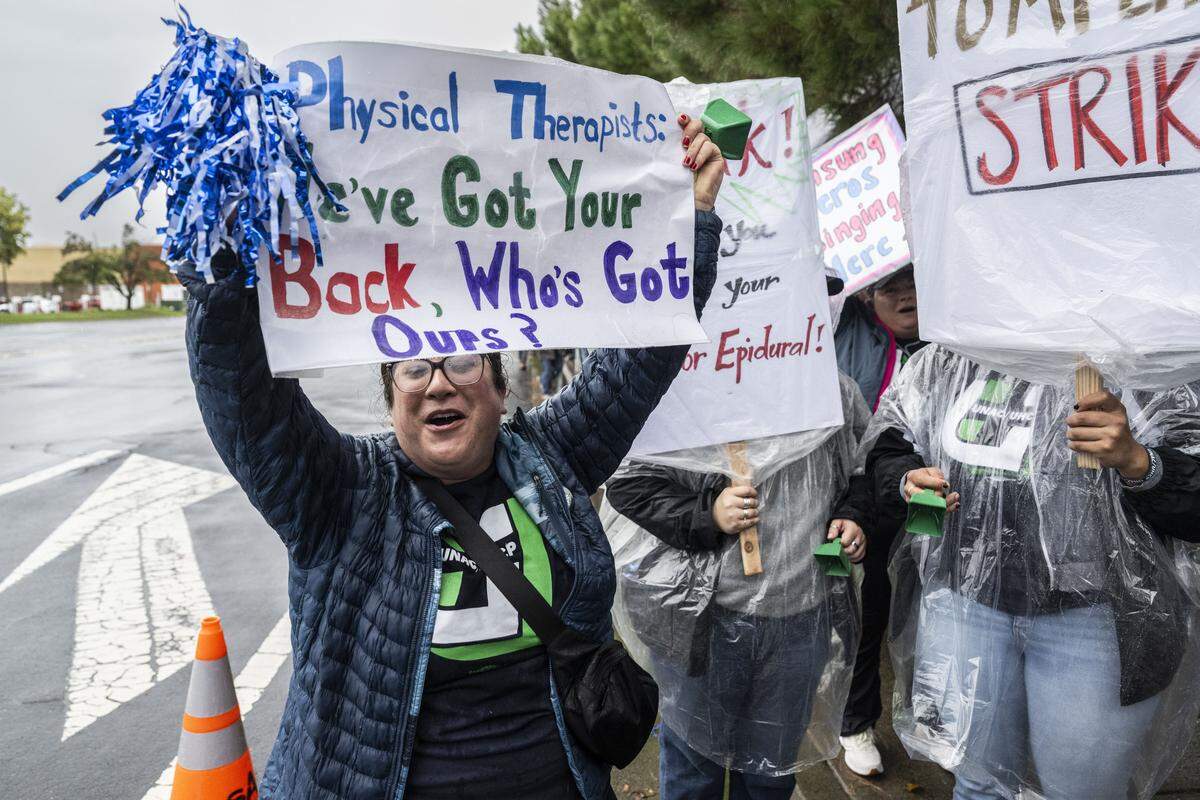
Rita Cole, a physical therapist who works at Kaiser South Sacramento Medical Center, said she wants a greater voice in issues around working conditions, like the number of new patients therapists take on, and the length of appointment times.
Cole said she primarily sees patients with neurological issues, like strokes, multiple sclerosis and Parkinson’s disease, and it’s crucial to see them frequently.
The health system said Monday that it had reached agreements with 17 of 54 local bargaining groups, and remained at loggerheads with the federation over the broader agreement.
Hal Ruddick, executive director of the AHCU, said five of the alliance’s unions had notified the health system of plans to strike, including the UNAC/UHCP. At Kaiser’s three area hospitals, the UNAC/UHCP represents nurse anesthetists, midwives, physician associates, acupuncture providers, physical therapists, occupational therapists and speech therapists.
The health system’s latest offer included a 21.5% wage increase over the term of a four-year contract, with enhanced health and retirement benefits, Sims said. The Alliance of Health Care Unions called for 25%, a number “out of step with today’s economic realities and rising health care costs” that would result in higher prices for patients, Sims said.
Ruddick, the union director, countered that the Alliance’s previous contract — which included 10% wage increases over four years — was negotiated in the summer and fall of 2021, before the worst of the U.S. inflation spike.
“Now it’s time to catch up,” he said in an interview Monday. “They are a well-resourced organization… They can afford to meet the reasonable needs of our members.”
The union is advocating to add language to its contract that would give members more influence in patient scheduling. Ruddick said it would not require Kaiser to make any commitments to specific schedules, but rather establish a “joint decision-making process.”
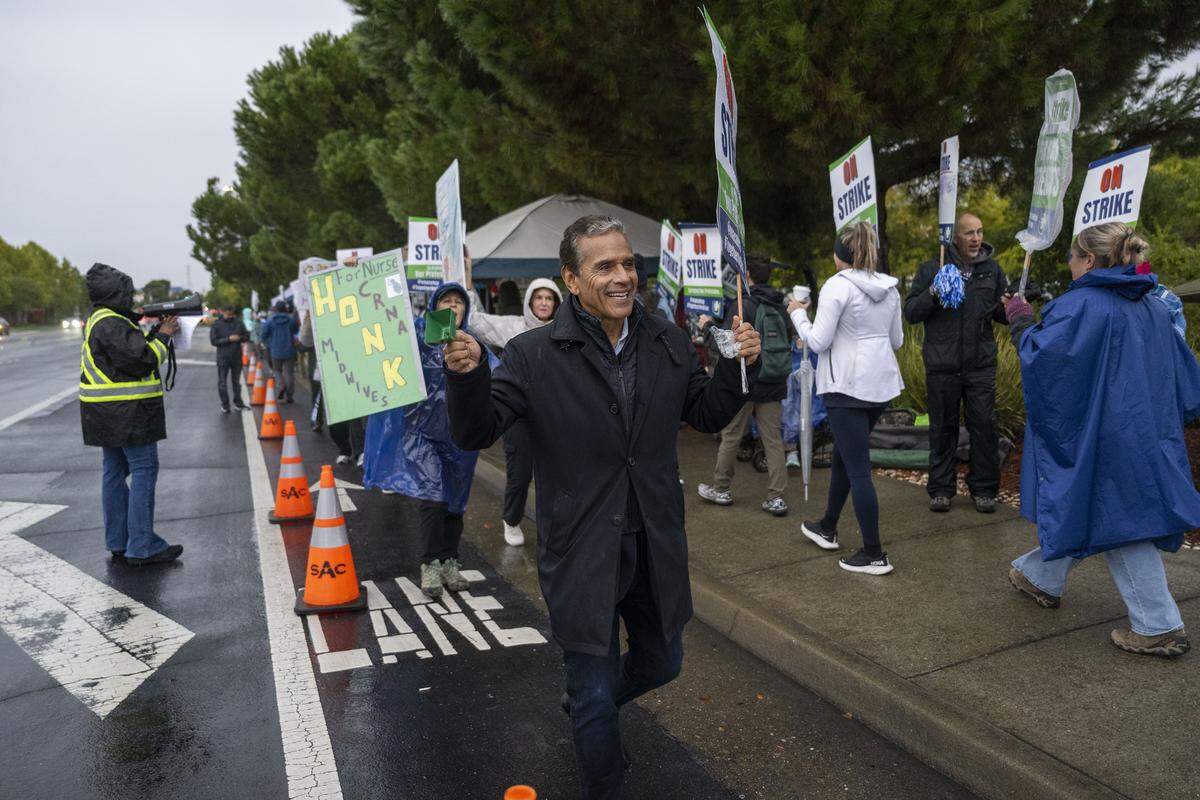
Dozens of health care workers walked the picket line outside the medical center in Roseville Tuesday morning, chanting and carrying signs, many wearing raincoats and ponchos.
“We’re here. We don’t want to be,” said Heather Olmsted Hamlin, a certified nurse midwife at Kaiser’s Roseville hospital. “But we’re going to stick it out.”
This story was originally published October 14, 2025 at 10:00 AM.